Adhyaya 87
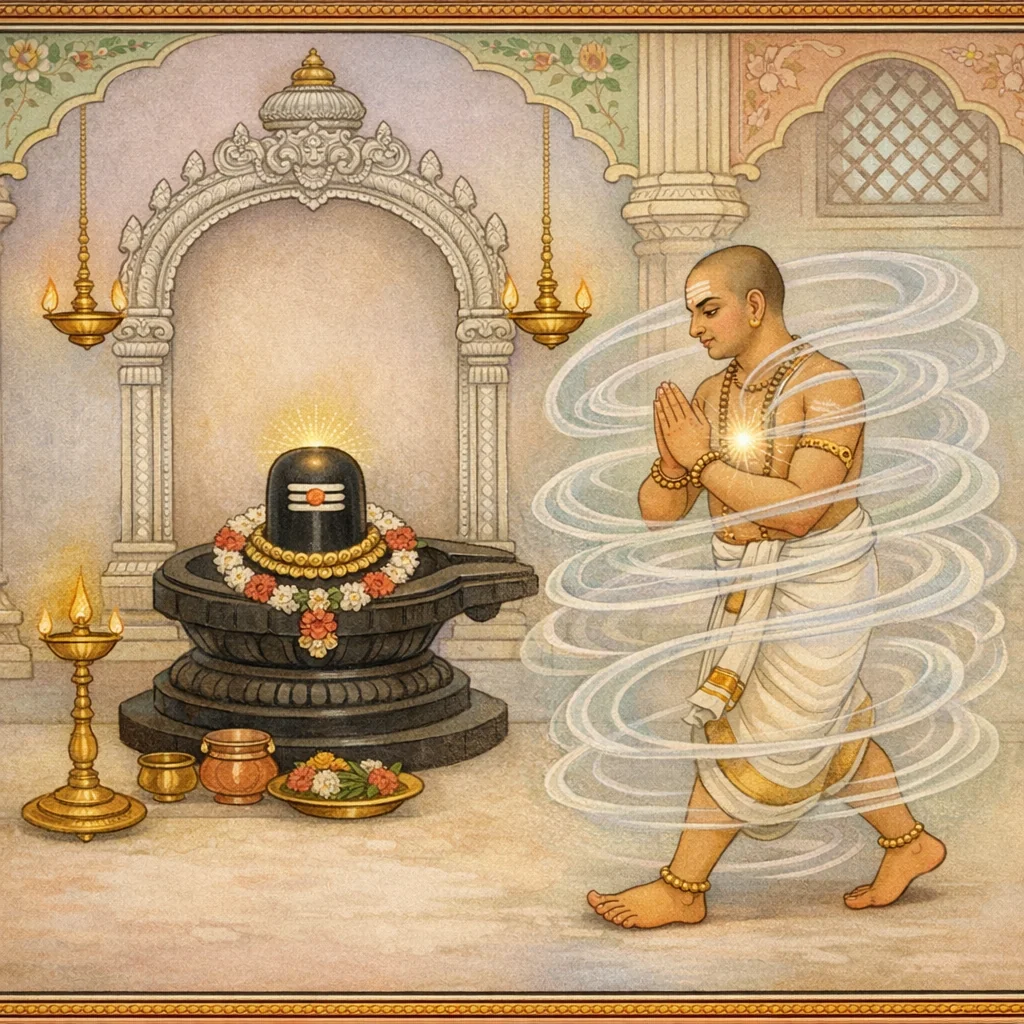
Chapter 87 lays out a technical liturgical program for a Prabhāsa pilgrimage focused on the sequential worship of the eleven Rudras. Īśvara teaches that one who has completed the yātrā with śraddhā should worship the eleven Rudras in a prescribed order, especially at sacral times such as saṅkrānti, ayana transitions, eclipses, and other auspicious tithis. Two correlated name-sets are given: an older nomenclature and a Kali-yuga nomenclature (Bhūteśa, Nīlarudra, Kapālī, Vṛṣavāhana, Tryambaka, Ghora, Mahākāla, Bhairava, Mṛtyuñjaya, Kāmeśa, Yogeśa). Devī asks for fuller procedural detail regarding the eleven-liṅga sequence, mantras, timing, and place-based distinctions. Īśvara then offers an interpretive key: ten Rudras correspond to ten vāyus (prāṇa, apāna, samāna, udāna, vyāna, nāga, kūrma, kṛkala, devadatta, dhanañjaya), while the eleventh is the ātman—linking outward ritual plurality to an inward physiological-metaphysical model. The practical route begins at Somanātha, naming the first station Bhūteśvara (with Somēśvara honored as the ādi-deva). Royal-style offerings (rājopacāra), pañcāmṛta ablution, and worship with the Sadyōjāta formula are prescribed, followed by circumambulation and prostration. The chapter also explains “Bhūteśvara” as lordship over the bhūta-jāla through a 25-tattva framework; knowledge of these tattvas is tied to liberation, and worship of Bhūteśarudra is praised as leading to imperishable release.
Shlokas
Verse 1
ईश्वर उवाच । एवं कृत्वा नरो यात्रां सम्यक्छ्रद्धासमन्वितः । ततो गच्छेन्महादेवि रुद्रानेकादश क्रमात्
Īśvara said: “Having thus performed the pilgrimage with proper faith, O Mahādevī, one should then proceed in due order to the Eleven Rudras.”
Verse 2
प्रभासक्षेत्रमध्यस्थान्महापातकनाशनान् । यदेकादशधा पापमर्जितं मनुजैः पृथक्
In the very heart of Prabhāsa Kṣetra are powers that destroy great sins; for the sin amassed by human beings appears, as it were, divided into eleven kinds, to be removed there.
Verse 3
तदेकादशरुद्राणां पूजनात्क्षयमेष्यति । संक्रांतावयने वापि चंद्रसूर्यग्रहेऽथवा
That accumulated sin is destroyed by worship of the Eleven Rudras—whether at a saṅkrānti, at an ayana (solstice), or during a lunar or solar eclipse.
Verse 4
अन्यासु पुण्यतिथिषु सम्यग्भावेन भावितः । पूजयेदानुपूर्व्येण रुद्रैकादशकं क्रमात्
On other holy dates as well, filled with the right inner disposition, one should worship the set of Eleven Rudras in due order, step by step.
Verse 5
तेषां नामानि वक्ष्यामि यान्यतीतानि मे पुरा । आद्ये कृतयुगे तानि शृणु देवि यथार्थतः
I shall declare to you their names as they were in the ancient past. Hear, O Goddess, the names they bore in the first age, the Kṛtayuga—truly and exactly as they are.
Verse 6
अजैकपादहिर्बुध्न्यो विरूपाक्षोऽथ रैवतः । हरश्च बहुरूपश्च त्र्यंबकश्च सुरेश्वरः । वृषाकपिश्च शंभुश्च कपर्दी चापराजितः
Ajaikapād, Ahirbudhnya, Virūpākṣa, and Raivata; Hara and Bahurūpa; Tryambaka and Sureśvara; Vṛṣākapi, Śambhu; Kapardī and Aparājita—these are the names as recounted.
Verse 7
आदौ कृतयुगे देवि त्रेतायां द्वापरेऽपि च । कलौ युगे तु संप्राप्ते जातं नामांतरं पुनः
In the beginning—in the Kṛtayuga, and also in the Tretā and Dvāpara—these were the names. But when the age of Kali arrived, once again a different set of names arose.
Verse 8
एकादशधा रुद्राणां तानि ते वच्मि सांप्रतम् । भूतेशो नीलरुद्रश्च कपाली वृषवाहनः
Now I shall tell you the names of the Rudras in their elevenfold division: Bhūteśa, Nīlarudra, Kapālī, and Vṛṣavāhana.
Verse 9
त्र्यंबको घोरनामा च महाकालोऽथ भैरवः । मृत्युंजयोऽथ कामेशो योगेश इति कीर्तितः । एकादशैते रुद्रास्ते कथिताः क्रमशः प्रिये
Tryambaka, Ghoranāman, Mahākāla, and Bhairava; Mṛtyuṃjaya, Kāmeśa, and Yogeśa—thus they are celebrated. These are your eleven Rudras, O beloved, declared in due order.
Verse 10
अनादिनिधना देवि भेदभिन्नास्तु ते पृथक् । एकादशस्वरूपेण पृथङ्नामप्रभेदतः
Beginningless and endless, O Goddess, they are distinguished separately by their differences—manifesting in eleven forms, and differentiated by distinct names.
Verse 11
देव्युवाच । भगवन्विस्तराद्ब्रूहि लिंगैकादशकक्रमम् । स्थानसीमाप्रभेदेन माहात्म्योत्पत्तिकारणैः
The Goddess said: O Lord, explain in detail the sequence of the eleven liṅgas—along with the distinctions of their places and boundaries, and the causes by which their greatness (māhātmya) arises.
Verse 12
कथं पूज्यानि तानीश के मंत्राः को विधिः स्मृतः । कस्मिन्पर्वणि काले वा सर्वं विस्तरतो वद
How are they to be worshipped, O Lord? Which mantras are to be used, and what procedure is taught? On which sacred occasion, or at what time—tell me everything in detail.
Verse 13
ईश्वर उवाच । शृणु देवि प्रवक्ष्यामि रहस्यं पापनाशनम् । सोमनाथादितः कृत्वा सिद्धिनाथादिकारणम्
Īśvara said: Listen, O Goddess; I shall reveal a secret that destroys sin—beginning with Somanātha, and then the foundational principle that starts with Siddhinātha.
Verse 14
यच्छ्रुत्वा मुच्यते जंतुः पातकैः पूर्वसंचितैः । ये चैकादश रुद्रा वै तव प्रोक्ता मया प्रिये
By hearing this, a being is freed from sins accumulated in the past. And those eleven Rudras, O beloved, I have indeed already declared to you.
Verse 15
दश ते वायवः प्रोक्ता आत्मा चैकादशः स्मृतः । तेषां नामानि वक्ष्यामि वायूनां शृणु मे क्रमात्
Ten vital airs (vāyus) have been taught, and the Ātman is remembered as the eleventh. Now I shall state their names—listen in proper order.
Verse 16
प्राणोऽपानः समानश्च ह्युदानो व्यान एव च । नागश्च कूर्मः कृकलो देवदत्तो धनंजयः
They are: Prāṇa, Apāna, Samāna, Udāna, and Vyāna; and also Nāga, Kūrma, Kṛkala, Devadatta, and Dhanaṃjaya.
Verse 17
आत्मा चेति क्रमाज्ज्ञेया रुद्राधिपतयः क्रमात् । तेषां यात्रां क्रमाद्वक्ष्ये सर्वप्राणिहिताय वै
And the Ātman is to be known as the next in sequence; likewise, in due order, the presiding lords in the form of Rudras. I shall describe their pilgrimage-route in order, for the welfare of all living beings.
Verse 18
रुद्राणामादिदेवोऽसौ पूर्वं सोमेश्वरः प्रिये । भूतेश्वरेति नाम्ना वै पूजयेत्तं विधानतः
Beloved, that deity is the primordial god among the Rudras—formerly known as Someśvara. One should worship him, according to proper rite, by the name “Bhūteśvara”.
Verse 19
राजोपचारयोगेन श्रद्धापूतेन चेतसा । पंचामृतेन संस्नाप्य सद्योजातेन पूजयेत्
With royal offerings, and with a mind purified by faith, having bathed (the liṅga) with pañcāmṛta, one should worship with the Sadyojāta mantra/hymn.
Verse 20
पुष्पैर्मनोहरैर्भक्त्या ध्यात्वा देवं सदाशिवम् । त्रिभिः प्रदक्षिणीकृत्य साष्टांगं प्रणिपत्य च
With devotion, offering delightful flowers and meditating on the god Sadāśiva, having circumambulated three times, one should then bow down in full prostration.
Verse 21
रुद्रैकादशयात्रार्थी निर्विघ्नार्थं व्रजेत्ततः । भूतेश्वरेति यन्नाम प्रोक्तं तत्ते ब्रवीम्यहम्
One who seeks to undertake the pilgrimage to the Eleven Rudras should then proceed for the sake of freedom from obstacles. And the name that has been spoken—“Bhūteśvara”—that I now explain to you.
Verse 22
महदादि विशेषांतं भूतजालं यदीरितम् । पंचविंशति संख्याकं तेषामीशो यतः स्मृतः
That aggregate of beings/principles spoken of—from Mahat down to the specific elements—is counted as twenty-five. Since he is remembered as the Lord of them, (he is called) Bhūteśvara.
Verse 23
तेन भूतेश्वरेत्युक्तं नाम तस्य पुरा किल । पंचविंशतितत्त्वानि ज्ञात्वा मुक्तिमवाप्नुयात्
Therefore, in ancient times indeed, his name was spoken as “Bhūteśvara.” Having known the twenty-five tattvas, one may attain liberation (mokṣa).
Verse 24
भूतेशरुद्रं संपूज्य गच्छेद्वै मुक्तिमव्ययाम् । इति संक्षेपतः प्रोक्तमादि रुद्रस्य कीर्तनम् । कीर्तनीयं द्विजातीनां कीर्तितं पुण्यवर्द्धनम्
Having fully worshipped Bhūteśa-Rudra, one indeed attains imperishable liberation. Thus, in brief, the glorification of the primordial Rudra has been stated. This praise should be recited by the twice-born; when recited, it increases merit.
Verse 87
इति श्रीस्कान्दे महापुराण एकाशीतिसाहस्र्यां संहितायां सप्तमे प्रभास खण्डे प्रथमे प्रभासक्षेत्रमाहात्म्य एकादशरुद्रमाहात्म्ये भूतेश्वरमाहात्म्यवर्णनंनाम सप्ताशीतितमोऽध्यायः
Thus ends the eighty-seventh chapter, entitled “The Description of the Greatness of Bhūteśvara,” in the Prabhāsa Khaṇḍa of the holy Skanda Mahāpurāṇa, within the Prabhāsa-kṣetra Māhātmya and the glorification of the Eleven Rudras.