Adhyaya 86
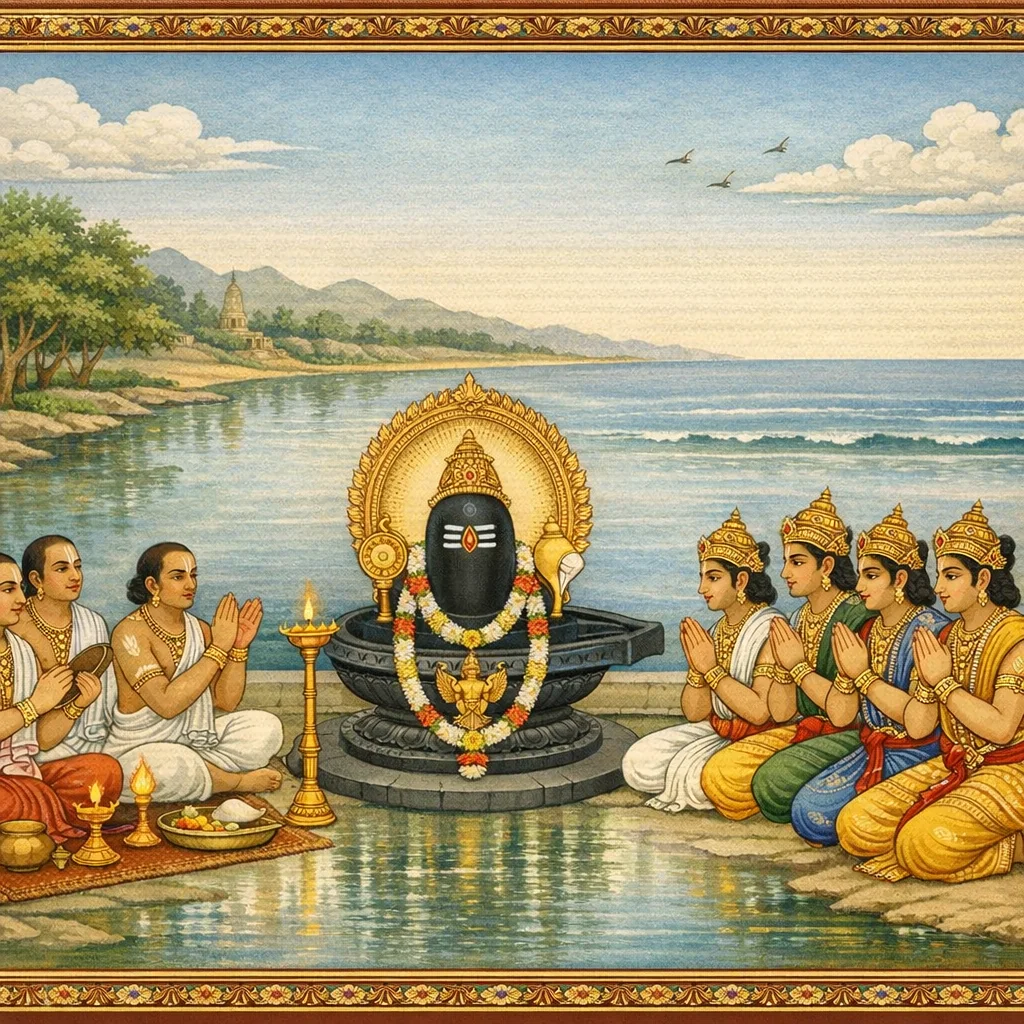
This adhyāya identifies a renowned liṅga called Pāṇḍaveśvara in the southern part of the sacred complex and credits its installation, in sequence, to the five Pāṇḍavas. The episode is set during their time of concealed wandering and forest life, when a pilgrimage occasion brings them to Prabhāsa Kṣetra. On the calendrical observance of Somaparvan, they consecrate the liṅga on the riverbank/shore in the presence of officiating priests. Ṛṣi Mārkaṇḍeya and other eminent brāhmaṇa ṛtvijs are appointed; a Veda-recited abhiṣeka is performed, along with ritual gifting, including the donation of cattle. Pleased with the liṅga duly established, the sages proclaim a phalaśruti: worshippers of this Pāṇḍava-consecrated liṅga become honored even among devas and non-human orders, and faithful worship yields merit equal to an Aśvamedha. The text further specifies that merit is especially linked to bathing at Sannihitā Kuṇḍa and worship of Pāṇḍaveśvara, particularly throughout the month of Māgha, culminating in an exalted identification with Puruṣottama. Even mere darśana is said to multiply the destruction of sin, and the liṅga is described in Vaiṣṇava form, signaling sectarian integration within a Śaiva shrine context.
Shlokas
Verse 1
ईश्वर उवाच । तस्यास्तु दक्षिणे भागे स्थितं लिंगं महाप्रभम् । पांडवेश्वरनामाढ्यं पंचभिः स्थापितं क्रमात्
Īśvara said: To the south of that place stands a greatly radiant liṅga, the Mahāprabha, renowned as Pāṇḍaveśvara, established in due order by the five (Pāṇḍavas).
Verse 2
गुप्तचर्यां यदा याताः पांडवा वनवासिनः । तीर्थयात्राप्रसंगेन प्रभासं क्षेत्रमागताः
When the Pāṇḍavas, dwelling in the forest, entered their period of living incognito (guptacaryā), they came to the sacred field of Prabhāsa on the occasion of a pilgrimage to tīrthas.
Verse 3
तस्मिन्काले महादेवि सं प्राप्ते सोमपर्वणि । स्थापयामासुस्ते सर्वे लिंगं संनिहिता तटे
At that time, O great Goddess, when the Soma festival-day had arrived, they all established a liṅga upon the bank at Saṃnihityā.
Verse 4
मार्कण्डप्रमुखान्कृत्वा ऋत्विजो ब्राह्मणोत्तमान् । वेदोक्तैः कारयामासुरभिषेकं वृषान्ददुः
Appointing as officiating priests the finest brāhmaṇas, headed by Mārkaṇḍa, they had the consecratory ablution performed according to Vedic injunctions, and they gifted bulls in charity.
Verse 5
ततः प्रसन्ना ऋषयो मार्कंडप्रमुखाः प्रिये । प्रतिष्ठितस्य लिंगस्य पांडवैर्वरवर्णिनि
Then, O beloved one, the sages—led by Mārkaṇḍa—became pleased, O fair-complexioned lady, at the liṅga that had been duly installed by the Pāṇḍavas.
Verse 6
ऋषय ऊचुः । ये चैतत्पूजयिष्यंति लिंगं पांडवपूजितम् । ते वै पूज्या भविष्यंति देवदानवरक्षसाम्
The sages said: “Those who will worship this liṅga—worshipped by the Pāṇḍavas—shall indeed become worthy of worship even among the gods, Dānavas, and Rākṣasas.”
Verse 7
अश्वमेधफलं तेषां सम्यक्छ्रद्धार्चनेन वै । भविष्यति न संदेहो ह्यस्मद्वाक्यप्रभावतः
By proper worship performed with faith, they shall obtain the fruit of an Aśvamedha sacrifice—of this there is no doubt—by the power of our word.
Verse 8
स्नात्वा संनिहिताकुंडे योऽर्चयेत्पांडवेश्वरम् । माघे मासि समग्रे तु स साक्षात्पुरुषोत्तमः
Whoever bathes in the Saṃnihitā-kuṇḍa and then worships Pāṇḍaveśvara—especially throughout the full month of Māgha—becomes manifestly blessed, as though one had attained Puruṣottama, the Supreme Person.
Verse 9
दर्शनेनापि तस्यापि पापं याति सहस्रधा । विष्णुरूपो हि स प्रोक्तो नात्र कार्या विचारणा
Even by merely beholding Him, sin is shattered a thousandfold. For He is proclaimed to be Viṣṇu’s very form—here no deliberation is needed.
Verse 86
इति श्रीस्कांदे महापुराण एकाशीतिसाहस्र्यां संहितायां सप्तमे प्रभासखंडे प्रथमे प्रभासक्षेत्रमाहात्म्ये संनिहित्यामाहात्म्ये पांडवेश्वरमाहात्म्यवर्णनंनाम षडशीतितमोऽध्यायः
Thus ends the eighty-sixth chapter, called “The Description of the Greatness of Pāṇḍaveśvara,” in the Saṃnihitī-māhātmya within the Prabhāsakṣetra-māhātmya, in the seventh division—the Prabhāsa Khaṇḍa—of the holy Skanda Mahāpurāṇa, in the Saṃhitā of eighty-one thousand verses.