Adhyaya 68
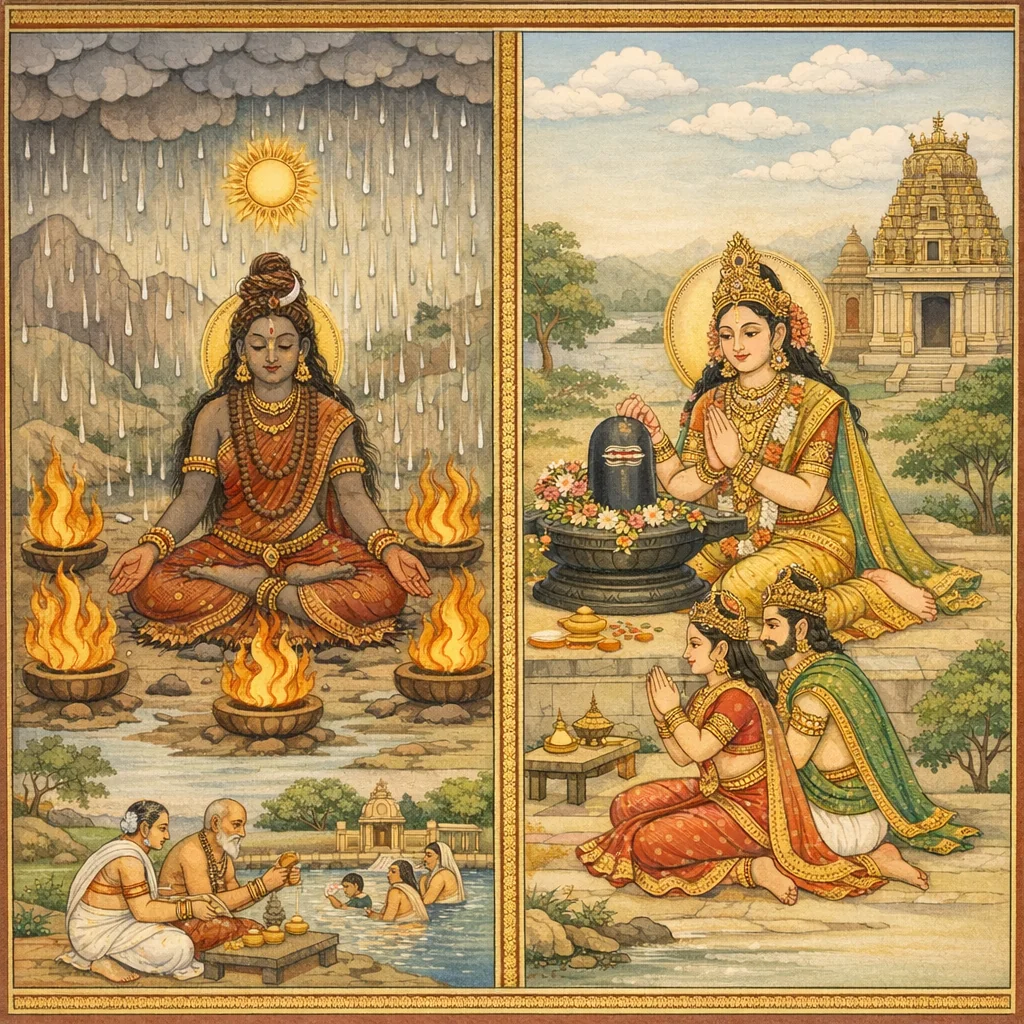
Chapter 68 unfolds as a Śiva–Devī dialogue praising the Māhātmya of Gaurī’s Forest of Austerity in Prabhāsa. Īśvara points out the supremely potent sacred spot east of Someśa and recounts Devī’s earlier-life tapas: once dark-complexioned and privately called “Kālī,” she vows—by the logic of vrata—to become “Gaurī” through disciplined austerity. She comes to Prabhāsa, installs and worships a liṅga famed as Gaurīśvara, and performs severe practices—standing on one foot, pañcāgni in summer, enduring rain, and winter rest in water—until her body becomes fair, portraying transformation as the fruit of steadfast bhakti. Śiva grants boons, and Devī declares the phalaśrutis: those who behold her there gain auspicious progeny and marital/lineage fortune; those who offer music and dance are freed from misfortune; and those who worship the liṅga first and then her attain the highest goal. The chapter further prescribes charity and rites—gifts to brāhmaṇas, a coconut offering for childlessness, and a ghee lamp with a red wick for lasting auspiciousness—along with a nearby tīrtha whose bath removes sins, śrāddha that benefits ancestors, and night-vigil with devotional performance. It concludes by affirming the deity’s abiding presence through seasonal change and by praising recitation and hearing of the chapter, especially on the third lunar day and in Devī’s presence, as a source of enduring благословение.
Shlokas
Verse 1
ईश्वर उवाच । इति प्रोक्तानि ते देवि वक्त्रलिंगानि पंच वै । अथ ते संप्रवक्ष्यामि यत्र गौर्यास्तपो वनम् । स्थानं महाप्रभावं हि सुरसिद्धनिषेवितम्
Īśvara said: “Thus, O Devī, the five ‘Vaktra-liṅgas’ have been described to you. Now I shall explain to you the place where Gaurī performed austerities—the Tapovana—a site of great power, frequented by gods and perfected beings.”
Verse 2
सोमेशात्पूर्वदिग्भागे षष्टिधन्वंतरे स्थितम् । यत्र देव्या तपस्तप्तं सत्या वै पूर्वजन्मनि
To the east of Someśa lies that place, sixty bow-lengths away—where the Goddess, in a former birth as Satī, performed sacred austerities (tapas).
Verse 3
कृत्वा च प्रणयात्कोपं मया सार्द्धं वरानने । प्रभासक्षेत्रमासाद्य संस्थिता सा तपस्विनी
O fair-faced one, after taking offense with me out of love, she—the ascetic lady—came to Prabhāsakṣetra and remained there, steadfast in tapas.
Verse 4
देव्युवाच । किमर्थं सा परित्यज्य सती त्वां तपसि स्थिता । कस्मिन्स्थाने स्थिता देवी एतन्मे विस्तराद्वद
The Goddess said: “For what reason did Satī abandon (her former state) and stand engaged in tapas for your sake? In what place did that Goddess take her stand? Tell me this in full detail.”
Verse 5
ईचरौवाच । पुराऽसीस्त्वं महादेवि श्यामवर्णा मनस्विनी । नामार्थं च मया प्रोक्ता कालीति रहसि स्थिता
Īśvara said: “Formerly, O Great Goddess, you were dark-hued and resolute. And while you dwelt in seclusion, I declared the meaning of your name—‘Kālī’—in secret.”
Verse 6
सा श्रुत्वा विस्मयं वाक्यं भृशं रोषपरायणा । अब्रवीत्परुषं वाक्यं भृकुटी कुटिलानना
Hearing those astonishing words, she became intensely inclined to wrath. With a furrowed brow and a stern face, she spoke harshly.
Verse 7
यस्मात्कालीत्यहं प्रोक्ता त्वया शंभोऽतिविप्लवात् । तस्माद्यास्यामि गौरीति भविष्यामि च यत्र हि
“Since, O Śambhu, you called me ‘Kālī’ in a moment of great impropriety, therefore I shall depart and become known as ‘Gaurī’—in that very place where I take my stand.”
Verse 8
एवमुक्त्वा महाभागा सखीगणसमावृता । गत्वा प्रभासक्षेत्रं सा प्रतिष्ठाप्य महेश्वरम् । गौरीश्वरेति विख्यातं पूजयंती विधानतः
Having spoken thus, that most fortunate Goddess—surrounded by her circle of companions—went to the sacred field of Prabhāsa. There she established Maheśvara (as a liṅga), renowned as ‘Gaurīśvara’, and worshipped him according to proper rite.
Verse 9
ततो लिंगसमीपस्था एकपादे स्थिता सती । लिंगमाराधयंती सा चकार सुमहत्तपः
Then, staying near the liṅga, Satī stood upon one foot. Worshipping the liṅga, she performed exceedingly great austerity.
Verse 10
पंचाग्निसाधिका देवी ग्रीष्म जाप्यपरायणा । वर्षास्वाकाशशयना हेमंते सलिलाशया
The Goddess practiced the discipline of the five fires; in summer she was devoted to japa. In the rainy season she lay exposed beneath the open sky, and in winter she rested in water.
Verse 11
यथा यथा तपो वृद्धिं याति तस्या महाप्रभा । तथातथा शरीरस्य गौरत्वं प्रतिपद्यते
As her mighty austerity increased more and more, so too did her body attain increasing fairness and radiance.
Verse 12
कालेन महता गौरी सर्वांगेणाथ साऽभवत् । ततो विहस्य भगवानुवाच शशिशेखरः
After a long time, she became Gaurī in every limb. Then the Blessed Lord, the Moon-crested One, smiled and spoke.
Verse 13
गौरीति च मुहुर्वाक्यमुत्तिष्ठ व्रज मन्दिरम् । वरं वरय कल्याणि यत्ते मनसि वर्त्तते
Again and again he addressed her as “Gaurī”: “Rise, go to your abode. Choose a boon, O auspicious one—whatever rests in your heart.”
Verse 14
गौर्युवाच । यो मामत्र स्थितां पश्येन्नारी वा पुरुषोऽथ वा । स भूयात्सुतसौभाग्यैः सप्तजन्मानि संयुतः
Gaurī said: “Whoever—whether woman or man—beholds me here as I abide in this sacred place, shall be endowed with the good fortune of children for seven births.”
Verse 15
गीतवाद्यादिकं नृत्यं यः कुर्यात्पुरतो मम । तस्यान्वये न दौर्भाग्यं भूयात्तव प्रसादतः
“Whoever performs dance accompanied by song, instruments, and the like before me—by your grace, no misfortune shall arise in that person’s lineage.”
Verse 16
मया प्रतिष्ठितं लिंगं पूर्वमभ्यर्च्य मां ततः । पूजयिष्यति यो भक्त्या स यास्यति परं पदम्
“Whoever first worships the liṅga established by me, and thereafter worships me with devotion, shall attain the supreme state.”
Verse 17
गौरीश्वरेति विख्यातं नाम तस्य भवेत्प्रभो । तथेत्यहं प्रतिज्ञाय तत्र स्थाने स्थितो ऽभवम्
“O Lord, let its renowned name be ‘Gaurīśvara.’” Saying, “So be it,” I made this vow and came to dwell in that very place.
Verse 18
देव्या सह महादेवि प्रहृष्टेनांतरात्मना । अद्यापि अयने प्राप्ते उत्तरे दक्षिणेऽपि वा
“O great Goddess, even today—when the ayana arrives, whether the northern or the southern— I come together with the Goddess, my inmost heart rejoicing.”
Verse 19
गौरींस्थानं समभ्येति तत्र देव गुणैर्युतः । तस्मिन्नहनि यस्तत्र विशिष्टानि फलानि च । संप्रयच्छति विप्रेभ्यस्तस्य पुत्रा भवंति च
He attains the sacred abode of Gaurī and becomes endowed with divine virtues. On that very day, whoever there offers choice fruits to the brāhmaṇas is granted offspring as well—children are born to him.
Verse 20
पुत्रहीना तु या नारी नालिकेरं प्रयच्छति । पुत्रं सा लभते शीघ्रं सबलं लक्षणान्वितम्
A woman who is without a son, if she offers a coconut as a sacred gift, quickly obtains a son—strong and endowed with auspicious marks.
Verse 21
घृतेन दीपकं तत्र या नारी संप्रयच्छति । रक्तवर्त्त्या महादेवि यावत्तस्यैव तंतव
“O great Goddess, the woman who there offers a lamp filled with ghee (ghṛta), with a red wick—so long as the threads of that wick endure…”
Verse 22
तावज्जन्मांतराण्येव सा सौभाग्यमवाप्नुयात्
For that many successive births, she indeed attains auspicious fortune.
Verse 23
या नृत्यं कुरुते तत्र भक्त्या परमया युता । आरोग्यसुखसौभाग्यैः संयुक्ता सा भवेच्चिरम्
A woman who dances there, endowed with supreme devotion, remains for a long time united with health, happiness, and auspicious fortune.
Verse 24
तत्रांते सुमहत्कुडं तीर्थं स्वच्छोदपूरितम् । यः स्नानमाचरेत्तत्र मुच्यते सर्वपातकैः
There, at the far end, lies a very great sacred pool (tīrtha), filled with clear water. Whoever bathes there is freed from all sins.
Verse 25
यः श्राद्धं कुरुते तत्र पितॄनुद्दिश्य भक्तितः । स याति परमं स्थानं पितृभिः सह पुण्यभाक्
Whoever performs śrāddha there with devotion, intending it for the Pitṛs (ancestors), attains the supreme abode together with the ancestors, endowed with merit.
Verse 26
तस्मात्सर्वप्रयत्नेन श्राद्धं तत्र समाचरेत् । गीतवाद्यादिभिर्नृत्यै रात्रौ कुर्वीत जागरम्
Therefore, with every effort one should duly perform śrāddha there; and at night one should keep vigil (jāgara) with singing, instruments, and dancing.
Verse 27
दंपत्योः परिधानं च तत्र देयं सदक्षिणम् । यश्चैतत्पठते नित्यं तृतीयायां विशेषतः । पार्वत्याः पुरतो देवि स सौभाग्यमवाप्नुयात्
There, one should give as a gift clothing for husband and wife, together with a fitting dakṣiṇā. Whoever recites this daily—especially on the third lunar day (tṛtīyā)—before Pārvatī, O Goddess, attains auspicious good fortune (saubhāgya).
Verse 28
शृणुयाद्वाऽपि यो भक्त्या सम्यग्भक्तिपरायणः । सोऽपि सौभाग्यमाप्नोति यावज्जीवं न संशयः
Even one who merely listens with devotion—truly devoted to bhakti—also attains auspicious good fortune throughout life; of this there is no doubt.
Verse 68
इति श्रीस्कांदे महापुराण एकाशीतिसाहस्र्यां संहितायां सप्तमे प्रभासखंडे प्रथमे प्रभासक्षेत्रमाहात्म्ये गौरीतपोवनमाहात्म्यवर्णनंनामाष्टषष्टितमोऽध्यायः
Thus ends the sixty-eighth chapter, entitled “The Description of the Greatness of Gaurī’s Grove of Austerities,” in the Prabhāsa Khaṇḍa—within the Prabhāsa Kṣetra Māhātmya—of the revered Skanda Mahāpurāṇa, in the Saṃhitā of eighty-one thousand verses.