Adhyaya 37
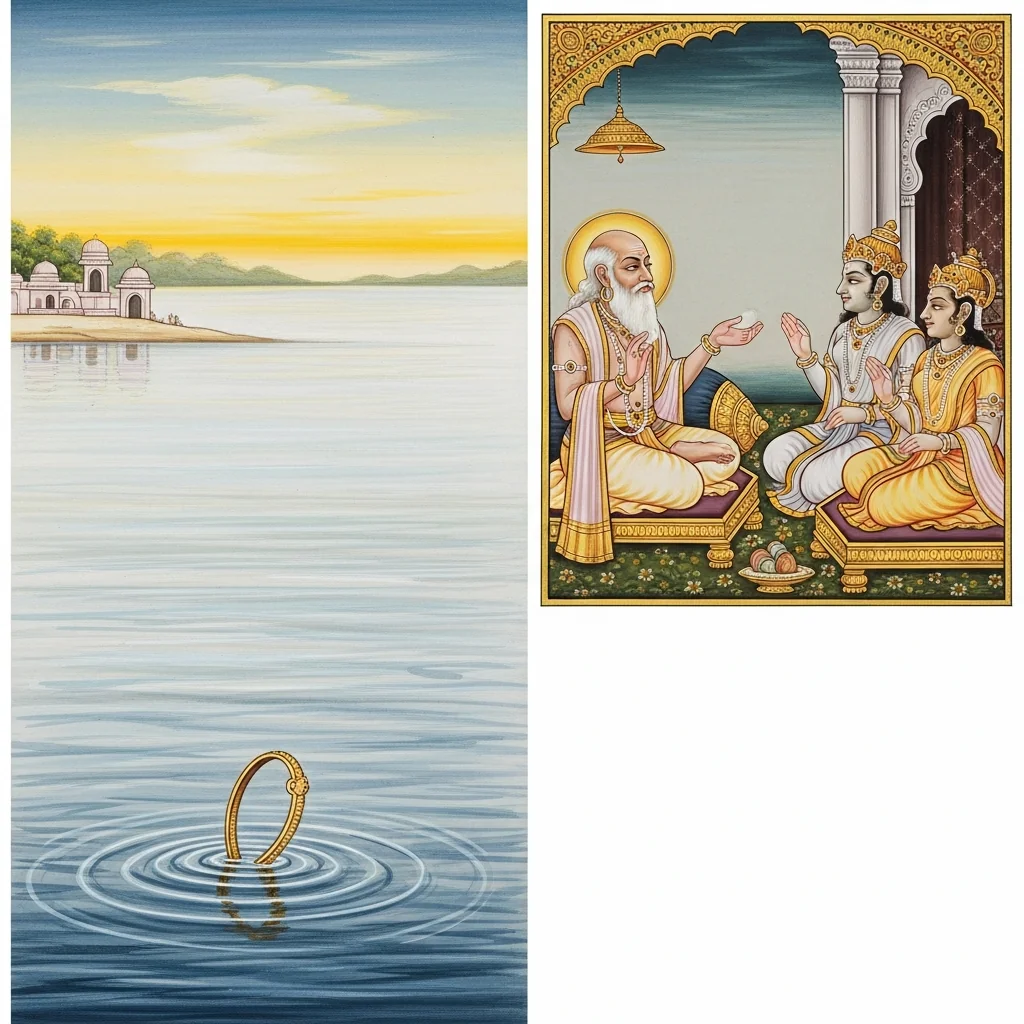
Chapter 37 unfolds as a dialogue in which the Goddess asks Īśvara why the kankana rite—casting a bracelet into the ocean at Prabhāsa in connection with Someshvara—has such power. She seeks clear guidance on mantras, vidhi (procedure), proper timing, and the story that establishes its authority. Īśvara replies with a Purāṇic exemplum: King Bṛhadratha and his virtuous queen Indumatī host the sage Kaṇva. After discourse on dharma, Kaṇva reveals Indumatī’s former birth: she had been a poor Ābhīrī woman with five husbands who went to Someshvara; while bathing in the sea she was overwhelmed by waves, lost a golden bracelet, later died, and was reborn into royal fortune. Kaṇva explains that her present prosperity did not arise from formal vrata, tapas, or dāna, but from that bracelet event and the place-specific fruit of the tīrtha. The rite is then understood and adopted as an annual practice after bathing in Someshvara’s salt waters, praised as pāpa-nāśana (destroyer of sin) and sarva-kāma-prada (bestower of all desires), teaching how a small act in a charged sacred place yields vast merit.
Shlokas
Verse 1
देव्युवाच । किमर्थं कंकणं देव क्षिप्यते लवणांभसि । तस्या पुण्यं न पूर्वोक्तं यथावद्वक्तुमर्हसि
The Goddess said: “For what reason, O Lord, is a bracelet (kankaṇa) cast into the salty sea? Its merit has not been explained earlier—please describe it properly, as it truly is.”
Verse 2
के मंत्राः किं विधानं तत्कस्मिन्काले महत्फलम् । किं पुराभूच्च तद्वृत्तं भगवन्कंकणाश्रितम्
“Which mantras are to be recited, what is the rite, and at what time does it yield great fruit? And what ancient account is connected with that kankaṇa, O Blessed Lord?”
Verse 3
ईश्वर उवाच । आसीत्पुरा महीपालो बृहद्रथ इति श्रुतः । तस्य भार्याऽभवत्साध्वी नाम्ना चेंदुमती प्रिया
Īśvara said: “Formerly there was a king, renowned by the name Bṛhadratha. His beloved wife was a virtuous woman named Indumatī.”
Verse 4
न देवी न च गन्धर्वी नासुरी न च किंनरी । तादृग्रूपा महादेवि यादृशी सा सुमध्यमा
“She was not a goddess, nor a Gandharva maiden, nor an Asurī, nor a Kinnarī—yet, O Mahādevī, that slender-waisted woman possessed a beauty just like theirs.”
Verse 5
शीलरूपगुणोपेता नित्यं सा तु पतिवता । सर्वयोषिद्गुणैर्युक्ता यथा साध्वी ह्यरुन्धती
“Endowed with good conduct, beauty, and virtues, she was ever devoted to her husband. She possessed every excellence of womanhood—like the chaste Arundhatī.”
Verse 6
प्रधान हस्रस्य सौभाग्यमदगर्विता । न विना स तया रेमे मुहूर्त्तमपि पार्थिवः
“Proud with the intoxication of her good fortune, she stood foremost among women. The king did not delight even for a moment without her.”
Verse 7
एकदा तस्यराजर्षेरर्द्धासनगता सती । यावत्तिष्ठति राजेंद्रमृषिस्तावदुपागतः । कण्वो नाम महातेजास्तपस्वी वेदपारगः
Once, as the virtuous queen of that royal sage sat upon half the throne, a seer arrived at the king’s court. He was the mighty sage Kaṇva—an ascetic of great splendor, and one who had mastered the Vedas.
Verse 8
तमागतमथो दृष्ट्वा सहसोत्थाय पार्थिवः । पूजां कृत्वा यथान्यायं दत्त्वा चार्घ्यमनुत्तमम्
Seeing him arrive, the king rose at once. Worshiping him according to proper rule, he offered an excellent arghya—the honoring water-offering.
Verse 9
सुखासीनं ततो मत्वा विश्रांतं मुनिपुंगवम् । आपृच्छत्कुशलं राजा स सर्वं चान्वमोदयत्
Seeing the foremost of sages—like a bull among seers—seated at ease and well-rested, the king inquired after his welfare; and the sage graciously replied to all that was asked.
Verse 10
ततो धर्मकथां चक्रे स ऋषिर्नृपसन्निधौ
Then that sage discoursed on Dharma in the presence of the king.
Verse 11
ततः कथावसाने सा भार्या तस्य महीपतेः । अब्रवीदमृतं वाक्यं कृतांजलिपुटा सती
When the discourse concluded, the king’s wife—virtuous and with hands folded in reverence—spoke nectar-like words.
Verse 12
इन्दुमत्युवाच । त्वं वेत्सि भगवन्सर्वमतीतानागतं विभो । पृच्छे त्वां कौतुकाविष्टा तस्मात्त्वं क्षंतुमर्हसि
Indumatī said: “O Blessed Lord, O mighty Master, you know all things—past and future. I ask you, seized by curiosity; therefore, please bear with me.”
Verse 13
अन्यदेहोद्भवं कर्म मम सर्वं प्रकीर्त्तय । ईदृशं मम सौभाग्यं पतिर्देवसुतोपमः
“Declare to me all the deeds of mine that arose from a former body. How is it that I possess such good fortune—having a husband like a son of the gods?”
Verse 14
सौभाग्यं पतिदेवत्वं शीलं त्रैलोक्यविश्रुतम् । किं प्रभावो व्रतस्यैष उताहोपोषितस्य वा
“This good fortune, this reverence for the husband as a deity, and this conduct famed through the three worlds—what is its cause? Is it the power of a vow, or perhaps of fasting?”
Verse 15
दानस्य वा मुनिश्रेष्ठ यन्मे सौभाग्यमुत्तमम् । वशो राजा महाबाहुर्मम वाक्यानुगः सदा
“Or is it due to charity, O best of sages, that I possess supreme good fortune—so that the mighty-armed king remains ever under my influence, always following my words?”
Verse 16
एतन्मे सर्वमाचक्ष्व परं कौतूहलं हि मे
“Tell me all of this; for my curiosity is indeed great.”
Verse 17
सूत उवाच । तस्यास्तद्वचनं श्रुत्वा ध्यात्वा च सुचिरं मुनिः । अब्रवीत्प्रहसन्वाक्यं कण्वो वेदविदां वरः
Sūta said: Having heard her words, the sage pondered for a long while; then Kaṇva—foremost among the knowers of the Veda—spoke with a smile.
Verse 18
कण्व उवाच । शृणु राज्ञि प्रवक्ष्यामि अन्यदेहोद्भवं तव । न रोषश्च त्वया कार्यो लज्जा वापि सुमध्यमे
Kaṇva said: “Listen, O queen; I shall tell you what arose from your former embodiment. Do not grow angry, nor feel shame, O slender-waisted one.”
Verse 19
त्वमासीदन्यदेहे तु आभीरी पंचभर्तृका । सौराष्ट्रविषये हीना देवं सोमेश्वरं गता
In another body you were an Ābhīrī woman with five husbands. Though destitute in the land of Saurāṣṭra, you went to Lord Someśvara (Somnātha).
Verse 20
ततः स्नातुं प्रविष्टा च सागरे लवणांभसि । हता कल्लोलमालाभिर्विह्वलत्वमुपागता
Then, to bathe, she entered the ocean of salty waters; struck by successive rows of waves, she became distressed and overwhelmed.
Verse 21
तव हस्ताच्च्युतं तत्र हैमं कंकणमेव च । नष्टं समुद्रसलिले पश्चात्तापस्तु ते स्थितः
There, a golden bracelet slipped from your hand and was lost in the sea-water; thereafter, remorse took hold of you.
Verse 22
अथ कालेन महता पंचत्वं त्वमुपागता । दशार्णाधिपतेर्गेहे ततो जातासि सुन्दरि
After a long time, you met death; then, O fair one, you were born in the house of the lord of Daśārṇa.
Verse 23
बृहद्रथेन चोढासि कंकणस्य प्रभा वतः । न व्रतं न तपो दानं त्वया चीर्णं पुरा शुभे
You were married to Bṛhadratha—astonishingly, by the power of that bracelet. Formerly, O auspicious lady, you had performed neither vow, nor austerity, nor charity.
Verse 24
एतत्ते सर्वमाख्यातं यन्मां त्वं परिपृच्छसि । तच्छ्रुत्वा सा विशालाक्षी त्रपयाऽधो मुखी तथा । आसीत्तूष्णीं तदा देवी श्रुत्वा वाक्यं च तादृशम्
“All this has been told to you, in response to what you asked me.” Hearing it, the wide-eyed lady, ashamed, lowered her face; and the queen then remained silent, having heard such words.
Verse 25
एवं निवेद्य स मुनी राजपत्नीं वरानने । जगाम भवनं स्वं च आमंत्र्य वसुधाधिपम्
Having thus informed the king’s wife, the sage departed for his own dwelling, after taking leave of the lord of the land (the king).
Verse 26
ज्ञात्वा फलं कंकणस्य मुनेस्तस्य प्रभावतः । गत्वा सोमेश्वरं देवं स्नात्वा च लवणांभसि
Knowing the fruit of the bracelet through the power of that sage’s words, she went to Lord Someśvara and bathed in the salt waters.
Verse 27
प्राक्षिपत्कंकणं तत्र प्रतिवर्षं महाप्रभे । ततो देवत्वमापन्ना प्रभावात्तस्य भामिनि
There she cast that bracelet each year, O greatly radiant One; and by its power, O lovely lady, she attained divine status.
Verse 28
ईश्वर उवाच । एष प्रभावः सुमहान्कंकणस्य प्रकीर्तितः । सर्वकामप्रदो देवि सर्वपापप्रणाशनः
Īśvara said: “Thus has the exceedingly great power of the bracelet been proclaimed—O Goddess—bestowing all desired aims and destroying all sins.”
Verse 37
इति श्रीस्कान्दे महापुराण एकाशीतिसाहस्र्यां संहितायां सप्तमे प्रभास खण्डे प्रथमे प्रभासक्षेत्रमाहात्म्ये सोमेश्वरमाहात्म्ये कंकणमाहात्म्यवर्णनंनाम सप्तत्रिंशोऽध्यायः
Thus ends the thirty-seventh chapter, entitled “The Description of the Greatness of Kaṅkaṇa,” in the Someśvara Māhātmya within the Prabhāsakṣetra Māhātmya, in the first division of the Prabhāsa Khaṇḍa of the glorious Skanda Mahāpurāṇa (of eighty-one thousand verses).