Adhyaya 347
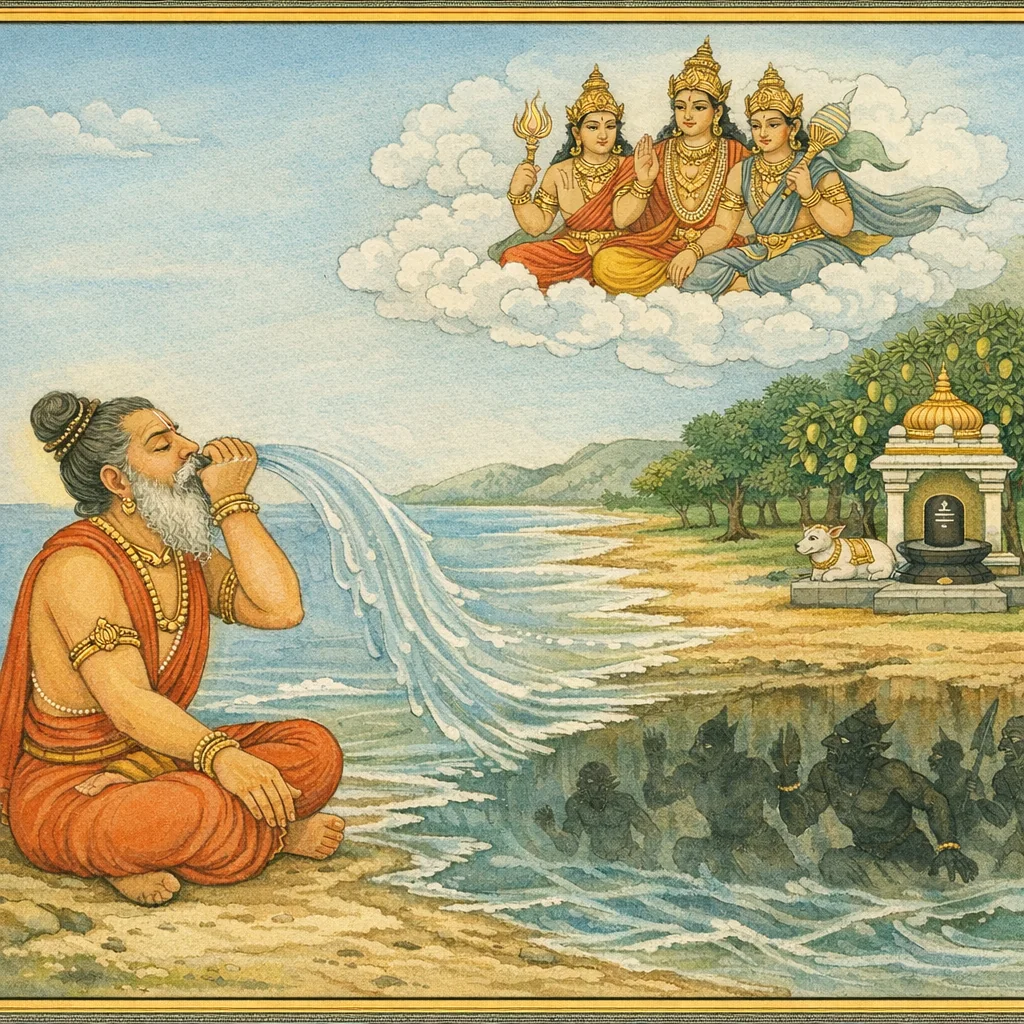
Īśvara tells Devī of the place and sanctity of Hāṭakeśvara-liṅga, situated near Naleśvara and the grove called Agastyāmra-vana, where the sage Agastya formerly performed austerities. An origin-legend follows: after Viṣṇu destroys the fierce Kālakeya daityas, some remnants hide in the ocean and begin nightly raids in the Prabhāsa region, devouring ascetics and shattering the culture of yajña and dāna, so that the marks of dharma—svādhyāya, the vaṣaṭ-cry, and ritual continuity—collapse. The distressed devas approach Brahmā, who identifies the Kālakeyas and directs them to seek Agastya at Prabhāsa. Agastya goes to the sea and drinks it like a single mouthful (gandūṣa), exposing the daityas to be defeated; some flee to pātāla. Asked to restore the ocean, he says the water has become “aged/impure” and foretells that Bhāgīratha will later bring the Gaṅgā to fill it again. The chapter ends with Agastya’s boons: worship and bathing near his āśrama and Hāṭakeśvara yield lofty spiritual fruits, with certain rites assigned specific merits; and the phalaśruti declares that faithful hearing of this account instantly frees one from sins incurred by day and by night.
Shlokas
Verse 1
ईश्वर उवाच । ततो गच्छेन्महादेवि लिंगं वै हाटकेश्वरम् । नलेश्वरात्पूर्वभागे शतधन्वंतरद्वये
Īśvara said: “Then, O Great Goddess, one should go to the liṅga called Hāṭakeśvara, located to the east of Naleśvara at a distance of two hundred dhanuṣ-lengths.”
Verse 2
अगस्त्याम्रवनंनाम तत्र स्थाने तु संस्थितम् । चिंतामणेस्तु पूर्वेण ईशाने त्रिशतंधनुः । तत्र पूर्वं तपस्तप्तमगस्त्येन महात्मना
In that region stands a place called Agastyāmravana. To the east-northeast of Cintāmaṇi—at a distance of three hundred dhanuṣ—this is the very spot where the great-souled sage Agastya formerly performed his austerities.
Verse 3
देव्युवाच । कस्मिन्काले महादेव सर्वं विस्तरतो वद
The Goddess said: “At what time did this occur, O Mahādeva? Tell me everything in full detail.”
Verse 4
ईश्वर उवाच । पुरा दैत्यगणा रौद्रा बभूवुर्वरवर्णिनि । कालकेया इति ख्यातास्त्रैलोक्योच्छेदकारकाः
Īśvara said: “Long ago, O fair-complexioned one, there arose fierce hosts of Dānavas, famed as the Kālakeyas—destroyers who sought the ruin of the three worlds.”
Verse 5
अथ ते निहताः सर्वे विष्णुना प्रभविष्णुना । दैत्यसूदननाम्ना तु प्रभासक्षेत्रवासिना
Then all of them were slain by Viṣṇu, the mighty Lord. Dwelling in Prabhāsa-kṣetra, he was renowned there by the name “Daityasūdana”, the Slayer of the Daityas.
Verse 6
कृत्वा व्याघ्रस्य रूपं तु नाम्ना चक्रमुखीति च । हता वै तेन रूपेण ततोऽभूद्दैत्यसूदनः
Assuming the form of a tiger, also known as Cakramukhī, he slew them in that very manifestation; and from that deed he came to be called Daityasūdana.
Verse 7
हतशेषाः समुद्रांते प्रविष्टा भयविह्वलाः । ततस्ते मंत्रयामासुः पीड्यंते देवताः कथम्
Those who survived the slaughter, terrified, entered the ocean’s edge. Then they held counsel: “How can the gods be harassed again?”
Verse 9
अथ ते समयं कृत्वा रात्रौ निष्क्रम्य सागरात् । निर्जघ्नुस्तापसांस्तत्र यज्ञदानरतान्प्रिये
Then, having made their pact, they came out of the ocean at night and struck down the ascetics there—those devoted to sacrifice and charity, O beloved one.
Verse 10
प्रभासे तु महादेवि तत्र द्वादशयोजने । वसिष्ठस्याश्रमे तत्र महर्षीणां महात्मनाम्
In Prabhāsa, O great Goddess, within a span of twelve yojanas, there was the hermitage of Vasiṣṭha—abode of great-souled maharṣis.
Verse 11
भक्षितानि सहस्राणि पंच सप्त च तापसान् । शतानि पंच रैभ्यस्य विश्वामित्रस्य षोडश
They devoured thousands of ascetics—five thousand and seven more; and they consumed five hundred of Raibhya’s, and sixteen of Viśvāmitra’s.
Verse 12
च्यवनस्य च सप्तैव जाबालेर्द्विशतं मुनेः । वालखिल्याश्रमे पुण्ये षट्छतानि दुरात्मभिः
Seven of Cyavana’s were consumed as well, and two hundred of the sage Jābāli; in the holy Vālakhilya hermitage, those wicked ones devoured six hundred more.
Verse 13
यत्र क्वचिद्भवेद्यज्ञस्तत्र गत्वा निशागमे । यज्ञदानसमायुक्तानृत्विजो भक्षयंति च
Wherever a sacrifice (yajña) was being performed, they would go there at nightfall and devour the ṛtvij priests—those engaged in the rite and in sacred gifting.
Verse 14
ततो भयाकुलाः सर्वे बभूवुर्जगती तले । न च कश्चिद्विजानाति दैत्यानां तु विचेष्टितम्
Then all upon the earth were overwhelmed with fear, and no one could discern the Daityas’ secret doings.
Verse 15
रात्रौ स्वपंति मुनयः सुखशय्यागताश्च ते । प्रभाते त्वध्वरे तेषामस्थिसंघाश्च केवलम्
At night the sages slept, having lain upon comfortable beds; but at dawn, at their adhvara—the sacrificial ground—only heaps of bones remained.
Verse 16
ततो धर्मक्रियास्त्यक्ता भूतले सर्वमानवैः । निःस्वाध्यायवषट्कारं भूतलं समपद्यत
Then all human beings upon the earth abandoned the rites of dharma, and the world became bereft of Vedic study and of the “vaṣaṭ” exclamation in sacrificial offerings.
Verse 17
अथान्ये तापसा रात्रौ संयुताश्च च धृतायुधाः । अथोच्छेदं गते धर्मे पीडितास्त्रिदिवौकसः
Then other ascetics, assembled by night and bearing weapons, rose up; and as dharma was being driven toward extinction, the dwellers of heaven were grievously afflicted.
Verse 18
किमेतदिति जल्पंतो ब्रह्माणं शरणं गताः । भगवंस्तापसाः सर्वे तथा ये ज्ञानशीलिनः
Saying, “What is this?”, all the ascetics—together with those devoted to wisdom—went to Brahmā for refuge, addressing him: “O Blessed Lord.”
Verse 19
भक्ष्यन्ते केनचिद्रात्रौ मृत्युमेव प्रयान्ति च । नष्टधर्मक्रियाः सर्वे भूतले प्रपितामह
“At night we are being eaten by some unknown being, and we meet only death. All religious observances have perished on earth, O Great-Grandfather!”
Verse 20
यो धर्ममाचरेदह्नि स रात्रौ मृत्युमेति च । न स्वाध्यायवषट्कारं समस्ते भूतले विभो
“Whoever practices dharma by day meets death at night; and throughout the entire earth there is no Vedic study and no ‘vaṣaṭ’ chant, O Mighty One.”
Verse 21
धर्माभावाद्वयं सर्वे संदेहं परमं गताः । तेषां तद्वचनं श्रुत्वा ध्यात्वा देवः पितामहः । अब्रवीत्त्रिदशान्सर्वान्सन्देहं परमं गतान्
‘Because dharma is absent, we all have fallen into the deepest doubt.’ Hearing their words and meditating, the divine Grandfather (Brahmā) spoke to all the gods who had likewise sunk into extreme uncertainty.
Verse 22
कालेया इति विख्याता दानवा रौद्रकारिणः । ते समुद्रं समासाद्य तापसान्भक्षयंति च
‘They are Dānavas known as the Kāleyas, doers of dreadful deeds. Reaching the sea, they devour the ascetics.’
Verse 23
युष्माकं च विनाशाय ते न शक्या निषूदितुम् । यतध्वमेषां नाशाय नो चेन्नाशो भविष्यति
They cannot be slain—yet they are destined to bring about your ruin. Therefore strive for their destruction; otherwise, your own destruction will surely come to pass.
Verse 24
व्रजध्वं भूतले शीघ्रमगस्त्यो यत्र तिष्ठति । व्रतचर्यारतो नित्यं प्रभासे क्षेत्र उत्तमे
Go quickly upon the earth to where Agastya dwells—ever devoted to the observance of sacred vows—in Prabhāsa, the most excellent of holy fields.
Verse 25
स शक्तः सागरं पातुं मित्रावरुणसंभवः । प्रसाद्यश्च स युष्माभिः समुद्रं पिब सत्तम
He—born of Mitra and Varuṇa—is able to drink up the ocean. Win his favor, and that best of men will drink the sea.
Verse 26
ततस्तथा कृते तेन ते सर्वे दानवाधमाः । वध्या युष्माकं भविष्यंति एवं च त्रिदिवेश्वराः
Then, when he has done so, all those vile Dānavas will become slayable by you—so it shall be, O lords of heaven.
Verse 27
ईश्वर उवाच । एवमुक्ताः सुराः सर्वे ब्रह्मणा लोककारिणा । प्रभासं क्षेत्रमासाद्य अगस्त्यं शरणं गताः
Īśvara said: Thus addressed by Brahmā, the benefactor of the worlds, all the Devas reached the sacred field of Prabhāsa and took refuge in Agastya.
Verse 28
देवा ऊचुः । रक्षरक्ष द्विजश्रेष्ठ त्रैलोक्यं संशयं गतम् । कालकेयैः प्रतिध्वस्तं समुद्रं समुपाश्रितैः
The Devas said: Protect us, protect us, O best of Brahmins! The three worlds have fallen into peril, being assailed by the Kālakeyas who have taken shelter in the ocean.
Verse 29
तं शोषय द्विजश्रेष्ठ हितार्थं त्रिदिवौकसाम् । नान्यः शक्तः पुमान्कश्चित्कर्तुमीदृक्क्रिया विभो
Dry up that ocean, O best of Brahmins, for the welfare of the dwellers in heaven. No other person is capable of accomplishing such a deed, O mighty one.
Verse 30
ईश्वर उवाच । एवमुक्तः सुरगणैरगस्त्यो मुनिपुङ्गवः । जगाम त्रिदशैः सार्धं समुद्रं प्रति हर्षितः
Īśvara said: Thus addressed by the hosts of Devas, Agastya—the foremost of sages—set out joyfully with the gods toward the ocean.
Verse 31
गीयमानस्तु गंधर्वैः स्तूयमानस्तु किन्नरैः । श्लाघ्यमानस्तु विबुधैर्वाक्यमेतदुवाच ह
Sung by the Gandharvas, praised by the Kinnaras, and lauded by the Devas, he then spoke these words.
Verse 32
एष त्रैलोक्यरक्षार्थं शोषयामि महार्णवम् । द्रक्ष्यध्वं कौतुकं देवाः समीनमकरैर्महत्
“For the protection of the three worlds, I shall now dry up the great ocean. Behold, O Devas, this wondrous sight—vast with its fish and sea-monsters (Makaras).”
Verse 33
एवमुक्त्वा द्विजश्रेष्ठो ह्यगस्त्यो भगवान्मुनिः । गंडूषमकरोत्सर्वं सागरं सरितांपतिम्
Having spoken thus, the blessed sage Agastya—foremost among the twice-born—made the entire ocean, lord of rivers, into a mere mouthful and drank it all.
Verse 34
पीते तत्र महासिन्धावगत्स्ये न महात्मना । दानवा भयसंत्रस्ता इतश्चेतश्च बभ्रमुः
When the great-souled Agastya had drunk up the mighty ocean there, the Dānavas, terrified with fear, ran about in all directions.
Verse 35
वध्यमानाः सुरैस्तत्र शस्त्रैः सुनिशितैस्तथा । कांतारमन्ये गच्छंतः पलायनपरायणा
As they were being cut down there by the gods with exceedingly sharp weapons, some fled toward the wilderness, intent only on escape.
Verse 36
हतभूयेषु दैत्येषु विदार्य धरणीतलम् । पातालं विविशुस्तूर्णं रुधिरेण परिप्लुताः
When most of the Daityas had been slain, the survivors—splitting open the surface of the earth—quickly entered Pātāla, drenched in blood.
Verse 37
अथोचुस्त्रिदशा हृष्टा अगस्त्यं मुनिसत्तमम् । सिद्धं नो वांछितं सर्वं पूर्यतां सागरः पुनः
Then the delighted gods said to Agastya, best of sages: “All that we desired has been accomplished; now let the ocean be filled again.”
Verse 38
अगस्त्य उवाच । जीर्णं तोयं मया देवास्तथैवामेध्यतां गतम् । उत्पत्स्यति रघूणां हि कुले नृपतिसत्तमः
Agastya said: “O gods, the water has been drunk and digested by me, and it has likewise become unfit. But in the lineage of the Raghus there will arise an excellent king.”
Verse 39
भगीरथेति विख्यातः सर्वशस्त्रभृतां वरः । स ज्ञातिकारणादेव गंगां तत्रानयिष्यति
Renowned as Bhāgīratha, the foremost among all weapon-bearers, he—out of concern for his ancestors—will bring the Gaṅgā there.
Verse 40
ब्रह्मलोकात्सरिच्छ्रेष्ठां तया पूर्णो भविष्यति । एवमुक्त्वा सुरैः सार्द्धं स्वस्थानं चागमन्मुनिः
“From Brahmaloka the best of rivers will come; by her the ocean will be filled again.” Having said this, the sage departed with the gods to his own abode.
Verse 41
ततः स्वमाश्रमं प्राप्तं देवा वाक्यमथाबुवन् । अनेन कर्मणा ब्रह्मन्परितुष्टा वयं मुने
Then, when he had reached his own hermitage, the gods spoke: “O Brahman, O sage, we are greatly pleased by this deed.”
Verse 42
किं कुर्मो ब्रूहि तेऽभीष्टं यद्यपि स्यात्सुदुर्लभम्
“What shall we do? Tell us what you desire—even if it be exceedingly difficult to obtain.”
Verse 43
अगस्त्य उवाच । यावद्ब्रह्मसहस्राणि पंचविंशतिकोटयः । वैमानिको भविष्यामि दक्षिणांबरमूर्द्धनि
Agastya said: “For as long as twenty-five crores of thousands of Brahmā-cycles endure, I shall remain as a Vaīmānika, a celestial being who moves in a divine aerial car, upon the summit of the southern hemisphere.”
Verse 44
अत्रागत्य नरो यस्तु ममाश्रमपदे शुभे । हाटकेश्वरसांनिध्ये प्रभासक्षेत्र उत्तमे
Whoever comes here—to my auspicious hermitage-ground, in the very presence of Hāṭakeśvara, in the supremely excellent Prabhāsa sacred field—
Verse 45
स्नानमाचरते सम्यक्स यातु परमां गतिम् । पातालादवतीर्णं तं लिंगरूपं महेश्वरम्
—and performs bathing properly, he attains the supreme state. That Mahādeva, Maheśvara, who descended from Pātāla, abides here in the form of a liṅga.
Verse 46
मया तपः प्रभावेन स्थापितं यः प्रपूजयेत् । दिनेदिने भवेत्तस्य गोशतस्य फलं ध्रुवम्
Whoever worships, day after day, that which I established by the power of my austerities—surely for him the fruit is equal to the merit of gifting a hundred cows.
Verse 47
लोपामुद्रासहायं मां यो मर्त्यः संप्रपूजयेत् । अर्घ्यं दद्याद्विधानेन काश पुष्पैः समाहितः
Whatever mortal worships me with Lopāmudrā as my companion, and—mind collected—offers arghya according to rule with kāśa flowers,
Verse 48
प्राप्ते शरदि काले च स यातु परमां गतिम् । लोपामुद्रासहायं मां हाटकेश्वरसंयुतम्
When the autumn season arrives, he attains the supreme state, worshipping me with Lopāmudrā, conjoined with Hāṭakeśvara, the Lord of that place.
Verse 49
अयने चोत्तरे पूज्य गोलक्ष फलमाप्नुयात् । यः श्राद्धं कुरुते चात्र अयने चोत्तरे द्विजः । भूयात्तस्य फलं कृत्स्नं गयाश्राद्धस्य सत्तमाः
If worship is performed at uttarāyaṇa, the northern solstice, one gains the fruit of gifting a hundred thousand cows. And the twice-born who performs śrāddha here at uttarāyaṇa obtains the entire merit of the famed Gayā-śrāddha, O best of the good.
Verse 50
ईश्वर उवाच । बाढमित्ये व ते चोक्त्वा सर्वे देवाः सवासवाः । स्वस्थानं तु गताः सर्वे संहृष्टमनसस्तदा
Īśvara said: “So be it.” Having thus spoken, all the gods—along with Indra—departed to their own abodes, their minds delighted at that time.
Verse 51
तस्मात्सर्वप्रयत्नेन प्राप्ते शरदि मानवः । अगस्त्यस्याश्रमं गत्वा हाटकेशं प्रपूजयेत्
Therefore, with every effort, when autumn arrives, a person should go to Agastya’s hermitage and worship Hāṭakeśa.
Verse 52
अगस्त्येश्वरनामानं कल्पलिंगं सुरप्रियम् । यश्चैतच्छुणुयाद्भक्त्या ऋषेस्तस्य विचेष्टितम् । अहोरात्रकृतात्पापात्तत्क्षणा देव मुच्यते
This is the wish-fulfilling liṅga named Agastyeśvara, beloved of the gods. Whoever listens with devotion to the account of that ṛṣi’s deeds is instantly freed, O Lord, from the sins committed day and night.
Verse 346
इति श्रीस्कांदे महापुराण एकाशीतिसाहस्र्यां संहितायां सप्तमे प्रभासखंडे प्रथमे प्रभासक्षेत्रमाहात्म्ये हाटकेश्वरमाहात्म्य वर्णनंनाम षट्चत्वारिंशदुत्तरत्रिशततमोऽध्यायः
Thus ends the three-hundred-and-forty-seventh chapter, called “The Account of the Greatness of Hāṭakeśvara,” in the Prabhāsa Khaṇḍa of the Śrī Skanda Mahāpurāṇa, within the Prabhāsa-kṣetra Māhātmya.