Adhyaya 341
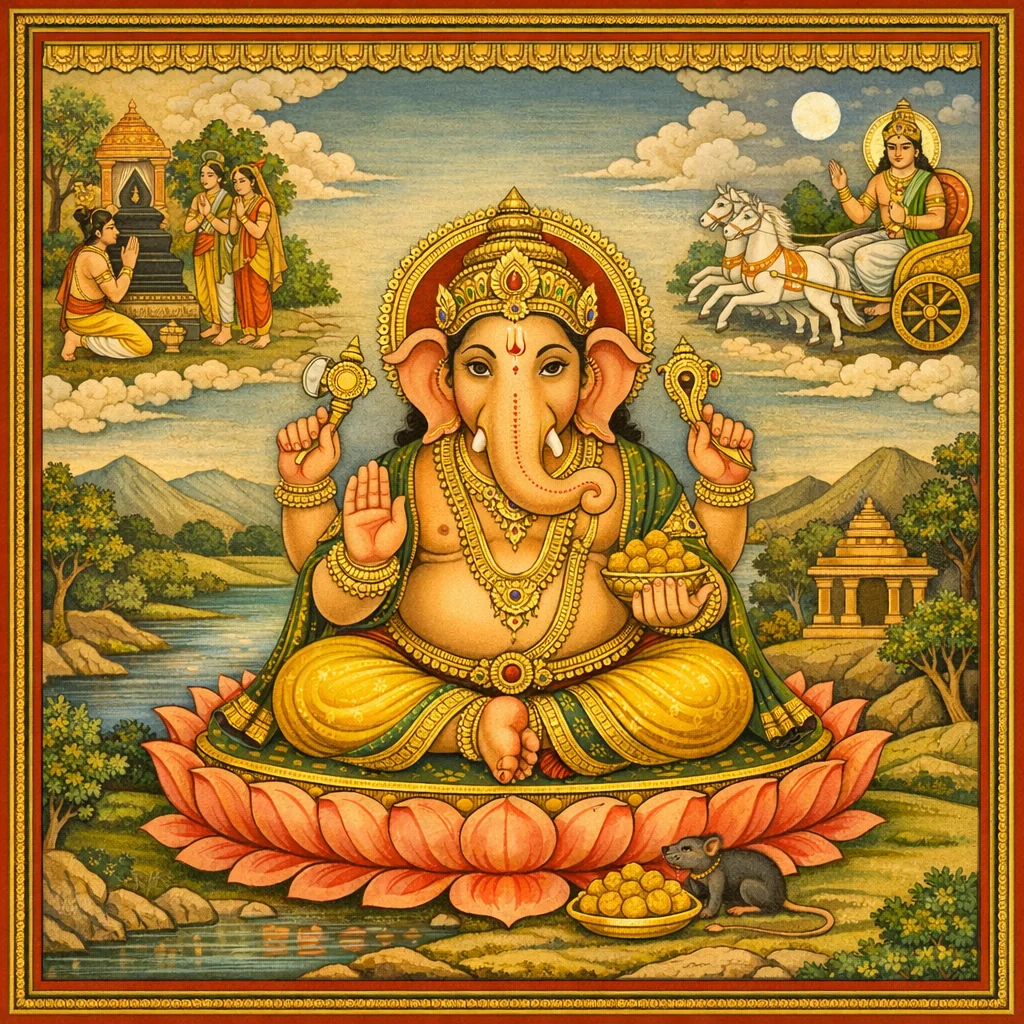
Chapter 341 records Īśvara’s theological account of the shrine of Āśāpūra Vighnarāja, situated in the Vāyavya (northwest) direction, praised as akalmaṣa (untainted) and as vighna-nāśana, the remover of obstacles. The title Āśāpūraka—“fulfiller of hopes and desires”—is explained as arising from the deity’s power to grant aspirations. The shrine’s potency is affirmed through exemplary acts of worship: Rāma, Sītā, and Lakṣmaṇa are said to have revered Gaṇeśa/Vighneśa there and attained their sought aim. Candra (the Moon) likewise worshiped Gaṇādhipa and received the wished-for boon, explicitly including the destruction of all kuṣṭha (skin disease) as a healing result. A ritual prescription is given: on the bright fortnight’s fourth lunar day (śukla-caturthī) in Bhādrapada, one should worship the deity and feed brāhmaṇas with modakas (sweet offerings). The phala declares that desired success is gained by Vighnarāja’s grace, and the chapter closes by stating that Īśvara appointed this deity to protect the kṣetra and to remove obstacles for travelers.
Shlokas
Verse 1
ईश्वर उवाच । आशापूरं ततो गच्छेद्विघ्नराजमकल्मषम् । शशिभूषण वायव्ये संस्थितं विघ्ननाशनम् । आशां पूरयते यस्मात्तेनाशापूरकः स्मृतः
Īśvara said: “Then one should go to Āśāpūra, to Vighnarāja, the stainless Lord of Obstacles, the destroyer of impediments, established in the north-west of Śaśibhūṣaṇa. Because he fulfills one’s hopes, he is remembered as ‘Āśāpūraka’—the Fulfiller of Desires.”
Verse 2
यत्र रामेण देवेशि सीतया लक्ष्मणेन च । समाराध्य च विघ्नेशं प्राप्तं काममभीप्सितम्
O Goddess of the gods, it was there that Rāma—together with Sītā and Lakṣmaṇa—worshiped Vighneśa with full devotion and obtained the desired aim.
Verse 3
यत्र चंद्रमसा देवि समाराध्य गणाधिपम् । लब्धं तद्वांछितं पूर्वं सर्वकुष्ठविनाशनम्
O Goddess, in that very place, the Moon-god formerly worshipped Gaṇādhipa (Gaṇeśa) with full devotion and obtained his desired boon—namely, the complete destruction of all leprosy.
Verse 4
चतुर्थ्यां शुक्लपक्षे च मासि भाद्रपदे तथा । तत्र संपूज्य देवेशं मोदकैर्भोजयेद्द्विजान्
On the fourth lunar day in the bright fortnight, in the month of Bhādrapada, one should worship the Lord there with due rites and then feed the twice-born (brāhmaṇas) with modakas.
Verse 5
वाञ्छितां लभते सिद्धिं विघ्नराजप्रसादतः । क्षेत्रस्यास्य महादेवि रक्षार्थं तु मया पुरा
By the grace of Vighnarāja one attains the fulfillment one desires. And, O great Goddess, long ago I appointed him for the protection of this sacred kṣetra.
Verse 6
ततो नियुक्तो देवेशि यायिनां विघ्ननाशनः
Therefore, O Lady of the Lord, the Remover of Obstacles (Vighnanāśana) was appointed here to destroy the hindrances of travelers and pilgrims.
Verse 341
इति श्रीस्कांदे महापुराण एकाशीतिसाहस्र्यां संहितायां सप्तमे प्रभास खण्डे प्रथमे प्रभासक्षेत्रमाहात्म्य आशापूरविघ्नराज माहात्म्यवर्णनंनामैकचत्शरिंशदुत्तर त्रिशततमोऽध्यायः
Thus ends the three-hundred and forty-first chapter, called “The Description of the Greatness of Āśāpūra Vighnarāja,” in the first Prabhāsakṣetra Māhātmya of the seventh, Prabhāsa Khaṇḍa of the Śrī Skanda Mahāpurāṇa, in the Saṃhitā of eighty-one thousand verses.