Adhyaya 334
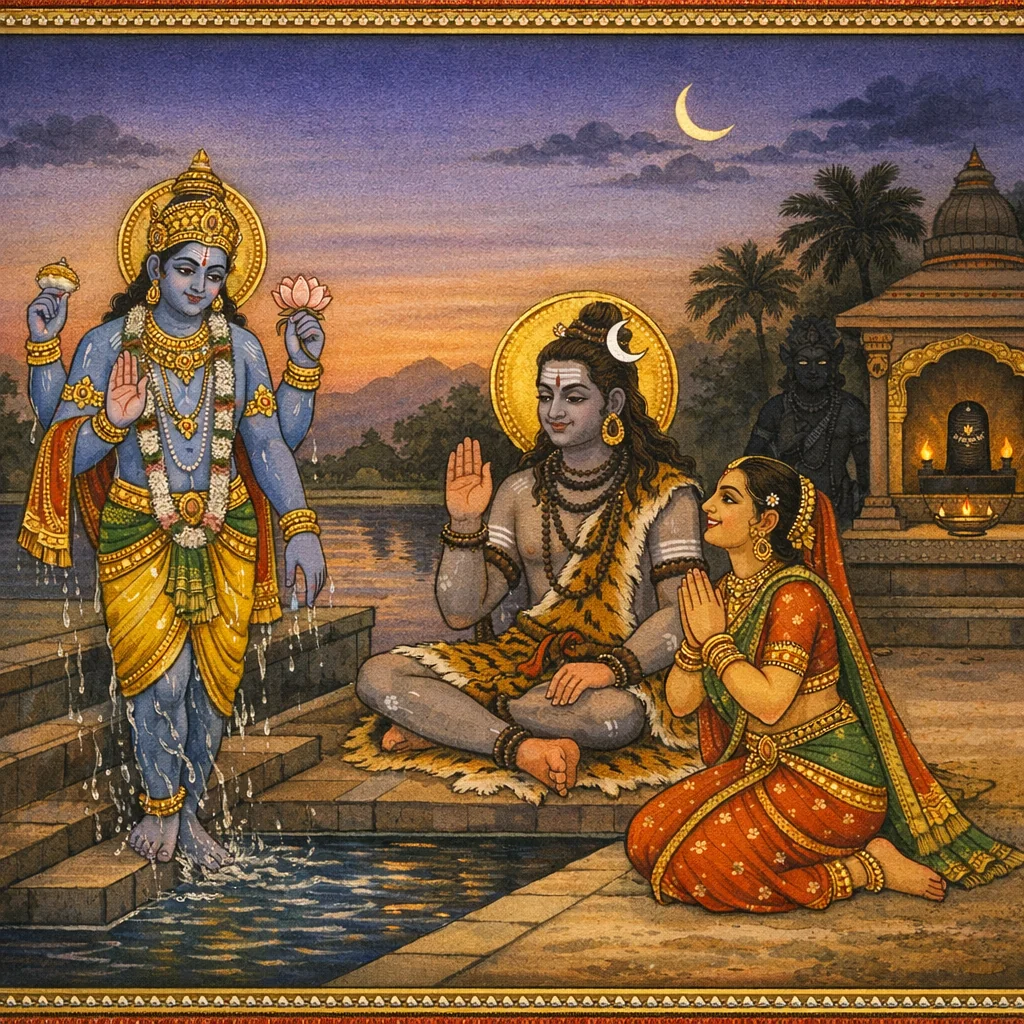
This chapter unfolds as a theological dialogue: Devī asks Īśvara about the earlier-mentioned “fall” of Tala and why Talasvāmi is renowned. Īśvara reveals a secret origin: the fierce dānava Mahendra performs long austerities, conquers the devas, and demands a ruinous duel. From Rudra’s embodied fiery energy a being named Tala arises; empowered by Rudra-vīrya, Tala slays Mahendra and then dances in triumph, shaking the three worlds, darkening the sky, and filling beings with fear. The devas appeal to Rudra, but Rudra declares Tala inviolable as his “son” and directs them to Hṛṣīkeśa (Viṣṇu) at Prabhāsa, near the Taptodaka-kuṇḍa and the shrine linked with the name Stutisvāmi. Viṣṇu wrestles Tala in malla-yuddha, grows weary, and asks Rudra to restore the heat of the Taptodaka waters to remove fatigue; Rudra heats the kuṇḍa with his third eye, Viṣṇu bathes and regains strength, and then defeats Tala. Tala laughs, saying that despite impure intent he has attained Viṣṇu’s supreme state; Viṣṇu offers a boon. Tala asks that his fame endure and that those who behold Viṣṇu with devotion on the bright ekādaśī of Mārgāśīrṣa have their sins destroyed. The chapter concludes by praising the tīrtha’s powers—sin-destruction, fatigue-removal, and expiation even of grave faults—mentioning Nārāyaṇa’s presence and a Śaiva kṣetrapāla form called Kāla-megha, and prescribing a pilgrimage rite: remember Viṣṇu as Talasvāmi, recite mantras (including the Sahasraśīrṣa), bathe, offer arghya, perform pūjā with scents, flowers, and cloth, apply unguents, present naivedya, listen to dharma, keep night vigil, give gifts (a bull, gold, cloth) to a qualified Vedic brāhmaṇa, fast, and revere Rukmiṇī. A phalaśruti proclaims wide-ranging merits, uplift of ancestors, and multi-birth benefits from Talasvāmi-darśana and bathing in the kuṇḍa.
Shlokas
Verse 1
ईश्वर उवाच । भगवन्देवदेवेश संसारार्णवतारक पृच्छामि त्वामहं भक्त्या किञ्चित्कौतूहलात्पुनः
Īśvara said: O Blessed One, Lord of the gods, ferryman across the ocean of saṃsāra—out of devotion I ask you again, prompted by a certain curiosity.
Verse 2
यत्त्वया कथितं देव तलस्वामिमहोदयम् । किं तत्र कारणं देव तलो येन निपातितः
O Lord, regarding what you described as the great manifestation of Tala-svāmi—what was the cause there, O Deva, by which Tala was struck down?
Verse 3
कोऽसौ तलः समाख्यातः किंवीर्यः किंपरायणः । कस्मात्स्थानात्समुत्पन्नः कथं जातश्च मे वद
Who is that Tala, so named? What is his power, and what is he devoted to as his refuge? From what place did he arise, and how was he born? Tell me.
Verse 4
ईश्वर उवाच । शृणु देवि प्रवक्ष्यामि रहस्यं पापनाशनम् । यन्न कस्यचिदाख्यातं तत्ते वक्ष्याम्य शेषतः
Īśvara said: Listen, O Goddess; I shall proclaim a secret that destroys sin—one not disclosed to just anyone. To you I will tell it in full, without remainder.
Verse 5
देवा अपि न जानंति तलसोत्पत्तिकारणम् । पूर्वं कृतयुगे देवि गोविन्देति प्रकीर्तितः
Even the gods do not know the cause of Tala’s origin. Formerly, in the Kṛta Yuga, O Goddess, he was renowned by the name “Govinda.”
Verse 6
त्रेतायां वामनः स्वामी स्तुतिस्वामी तृतीयके । कलौ युगे महादेवि तलस्वामी प्रकीर्तितः
O Mahādevī, in the Tretā-yuga the Lord here is famed as Vāmana-svāmin; in the third age (Dvāpara) He is praised as Stuti-svāmin; and in the Kali-yuga He is celebrated as Tala-svāmin.
Verse 7
तथा तप्तोदकस्वामी तस्य नामांतरं प्रिये । अधुना संप्रवक्ष्यामि तलोत्पत्तिं तव प्रिये
And, beloved, “Taptodaka-svāmin” is another name of that Lord. Now, dear one, I shall fully recount to you the origin of Tala.
Verse 8
आसीन्महेन्द्रनामा च दानवो रौद्ररूपधृक् । कोटिवर्षाणि तेनैव तपस्तप्तं पुरा प्रिये
Long ago, beloved, there was a Dānava named Mahendra, fierce in form. For millions of years he practiced severe austerities.
Verse 9
स तपोबलमाविष्टो जिग्ये देवान्सवासवान् । जित्वा देवांस्ततः सर्वांस्ततः काले समागतः
Filled with the power born of austerity (tapas), he conquered the gods—even Indra among them. Having subdued all the devas, in due time he arrived for the next encounter.
Verse 10
युद्धं स प्रार्थयामास मया सार्द्धं सुभीषणम् । ततोऽभवन्महायुद्धं ब्रह्माण्डक्षयकारकम्
He demanded of me a dreadful battle. Then a great war arose, one that could bring ruin even upon the cosmic sphere (Brahmāṇḍa).
Verse 11
ततः कोपान्महायुद्धे मम देहाद्वरानने । ज्वाला तत्र समुत्पन्ना तन्मध्ये स तलोऽभवत्
Then, in that great battle—O fair-faced one—from my body, in wrath, a flame arose; and in the midst of that blaze, Tala came into being.
Verse 12
तेन दृष्टो महेन्द्रोऽसौ गर्जन्गिरिगुहाश्रयः
Seen by Tala, Mahendra (Indra) roared and took refuge in a cave within the mountain.
Verse 13
कथं गर्जसि हे मूढ युद्धं कुरु मया सह । इत्युक्ते तत्र देवेशि तेन युद्धमवर्तत
“Why do you roar, O fool? Fight with me!”—when this was spoken there, O Goddess of the gods, he engaged in battle.
Verse 14
तत्र प्रवर्त्तिते युद्धे तलमाहेन्द्रयोस्तयोः
There, when the battle was set in motion, between those two—Tala and Mahendra—
Verse 15
रुद्रवीर्यस्य युक्तेन तलेनोदारकर्मणा । मल्लयुद्धेन बलिना महेन्द्रो विनिपातितः
Then Mahendra was struck down by the mighty Tala—noble in action, endowed with Rudra’s potency—through a powerful wrestler’s combat.
Verse 16
ततस्तं पतितं दृष्ट्वा विस्मयं स तलो गतः । गतप्राणं तदा ज्ञात्वा हर्षान्नृत्यमथाकरोत्
Then Talo, seeing him fallen, was seized with astonishment; and realizing that he was lifeless, he began to dance in delight.
Verse 17
तस्मिन्संनृत्यमाने तु सर्वे स्थावरजंगमम् । चकंपे तु वरारोहे प्रभावात्तस्य वीर्यतः
While he was thus dancing, O fair lady, everything—both the immovable and the moving—began to quake, by the force of his power and prowess.
Verse 18
ततो भारभराकान्ता धरणी तलपीडिता । अतीवभयसंत्रस्ताः सदेवासुरमानुषाः
Then the Earth, oppressed and crushed beneath Talo’s pounding, became overwhelmed by the burden; and gods, asuras, and humans alike were exceedingly terrified.
Verse 19
क्षुभिता गिरयः सर्वे विद्रुताश्च महार्णवाः । तरवो निधनं जग्मुर्नद्यो वाहांश्च तत्यजुः
All the mountains were shaken; the great oceans surged and ran wild. Trees met destruction, and the rivers abandoned their currents.
Verse 20
गतप्रभावाः सूर्याद्या ज्योतींषि न विरेजिरे । त्रैलोक्यं व्याकुलीभूतं तलनृत्यप्रभावतः
The luminaries, beginning with the Sun, lost their brilliance and did not shine; the three worlds were thrown into distress by the power of Talo’s dance.
Verse 21
ततो देवगणाः सर्वे शरणं रुद्रमाययुः । वृत्तं यथावत्कथितं ततो रुद्र उवाच तान्
Then all the hosts of gods went for refuge to Rudra. After the events were related exactly as they had occurred, Rudra spoke to them.
Verse 22
अवध्यो मे तलो देवाः पुत्रत्वे हि प्रतिष्ठितः । एवमुक्त्वा हृषीकेशं प्रभासक्षेत्रवासिनम्
“Talo is not to be slain by me, O gods, for he stands established in the status of my son.” Having spoken thus, Rudra turned his attention to Hṛṣīkeśa, the Lord abiding in the Prabhāsa sacred region.
Verse 23
स्तुतिस्वामीतिनामानं स्थितं दुर्वाससः पुरः । प्रभासक्षेत्रसामीप्ये पूर्वभागे प्रतिष्ठितम्
(He indicated) the one named Stutisvāmin, situated in front of Durvāsas’s abode, established near Prabhāsakṣetra on its eastern side.
Verse 24
तप्तोदकुंडसामीप्ये तत्र गच्छत भोः सुराः । कल्पेकल्पे तु तेनैव विध्यतेऽसौ हि दानवः
Near the Taptodaka pond—go there, O gods. In every aeon, by that very one (Stutisvāmin), this dānava is struck down.
Verse 25
एवमुक्ते तदा देवाः प्रभासं क्षेत्रमागताः । तत्र ते विबुधा जग्मुर्यत्र तप्तोदकाधिपः
When this was said, the gods came to the sacred field of Prabhāsa; and there those wise beings went to the place where the Lord of Taptodaka resides.
Verse 26
दृष्ट्वा नारायणं तत्र देवाः श्रद्धासमन्विताः । तुष्टुवुः परया भक्त्या देवदेवं जनार्द्दनम्
Seeing Nārāyaṇa there, the gods—filled with faith—praised Janārdana, the God of gods, with supreme devotion.
Verse 27
वैकुंठ त्राहि नो देवांस्तलेनोच्चाटिता वयम् । महेन्द्रक्रोधसंभूतरुद्रतेजोद्भवेन वै
“O Vaikuṇṭha, save us gods! We have been driven from our place by a blow—by one born of Mahendra’s wrath, sprung from Rudra’s fiery energy.”
Verse 28
अस्माभी रुद्रसामीप्ये कार्यं सर्वं निवेदितम् । ततः प्रस्थापिताः सर्वे रुद्रेण परमेष्ठिना । तव पार्श्वे महादेव नस्त्वं देव गतिर्भव
“Near Rudra we submitted our entire matter; then that supreme Lord Rudra sent us all onward. Now, by your side, O Great God—be our refuge and our course, O Deva.”
Verse 29
इति श्रुत्वा वचस्तेषां देवदेवो जनार्द्दनः । दानवस्यवधार्थाय देवानां रक्षणाय च । चक्रे यत्नं महाबाहुः प्रभासक्षेत्रवल्लभः
Hearing their words, Janārdana—the God of gods—made ready his endeavor: to slay the Dānava and to safeguard the Devas. The mighty-armed Lord, beloved of Prabhāsa Kṣetra, set himself to the task.
Verse 30
समाहूय तदा दैत्यं प्रभासक्षेत्रमध्यतः । युद्धं चक्रे ततो देवि विश्वप्रलयकारकम्
Then, summoning the Daitya into the very midst of Prabhāsa Kṣetra, he commenced battle—O Devī—an earth-shaking war as though capable of world-destruction.
Verse 31
ततस्तु देवाः सर्वे च स्वसैन्यपरिवारिताः । चक्रुर्युद्धं च दैत्येन सुमहल्लोमहर्षणम्
Thereupon all the gods, surrounded by their own armies, waged war with the Daitya—a tremendous battle that made the hairs stand on end.
Verse 32
ततः पर्वतसंकाशं दृष्ट्वा दैत्यं महाबलम् । उवाच चपलापांगो गरुडकृतवाहनः
Then, seeing the immensely strong Daitya, mountain-like in form, the Lord with swift-glancing eyes—he whose mount is Garuḍa—spoke.
Verse 33
अहो दैत्य महाबाहो मल्लयुद्धं ददस्व मे । त्वद्बाहुयुगलं दृष्ट्वा न युद्धे वांछितं मम
“Ah, O Daitya of mighty arms—grant me a wrestler’s combat, malla-yuddha! Having seen the pair of your arms, I desire no other kind of battle.”
Verse 34
नारायणवचः श्रुत्वा करमुद्यम्य दानवः । अभ्यधावत्तदा दैत्यः कालान्तकसमप्रभः
Hearing Nārāyaṇa’s words, the Dānava raised his hand and rushed forward; then the Daitya charged, blazing like Kālântaka, the destroyer at the end of time.
Verse 35
ततः प्रवर्तितं युद्धमन्योन्यं जयकांक्षिणोः । जंघाभ्यां पादबन्धेन बाहुभ्यां बाहुबंधनम्
Then began their mutual combat, each seeking victory—feet locked with shins, and arms bound against arms in close grappling.
Verse 36
कंठेन बन्धयन्कंठमुदरेणोदरं तथा एतस्मिन्नन्तरे देवाः सभयाः संबभूविरे
Locking neck with neck and belly with belly in close wrestling, at that very moment the gods became fearful.
Verse 37
ततः पीडासमाक्रांतो विष्णुः संस्मरते हरम् । तत्क्षणादागतो रुद्रः किं करोमि महाबलः
Then Viṣṇu, pressed by strain, remembered Hara (Śiva). In that very instant Rudra arrived and said, “Mighty one, what shall I do?”
Verse 38
विष्णुरुवाच । श्रांतोऽहं देवदेवेश मल्लयुद्धेन शंकर । तप्तोदकं कुरुष्वेह श्रमनाशाय सांप्रतम्
Viṣṇu said: “O Lord of gods, O Śaṅkara, I am weary from this wrestler’s combat. Here and now, create hot water to remove my fatigue.”
Verse 39
ततस्तलं हनिष्यामि क्षण मात्रेण भैरवम्
Then, in but a single moment, I shall strike the earth and bring forth the power of Bhairava.
Verse 40
ईश्वर उवाच । आदौ कृतयुगे कृष्ण उमया यत्कृतं पुरा । ऋषीणां श्रमनाशार्थं तप्तोदं तत्र निर्मितम्
Īśvara said: “O Kṛṣṇa, in the beginning, in the Kṛta Yuga, what Umā once fashioned: there a hot-water spring was created to dispel the weariness of the ṛṣis.”
Verse 41
तद्दैत्यपापमाहात्म्यात्पुनः शीतलतां गतम् । पुनस्तदुष्णतां नीतं ततः कल्पांतसंस्थितौ
By the force of a demon’s sin it became cool again; later it was led back to heat, and thus it endured so until the end of the aeon.
Verse 42
एवमुक्त्वा तदा देवं वीक्षांचक्रे महेश्वरः । तृतीय लोचनेनैव ज्वालामालोपशोभिना
Having spoken thus, Mahēśvara fixed his gaze upon the deity, with his third eye—resplendent as though adorned with a garland of flames.
Verse 43
तेन ज्वालासमूहेन व्याप्तं कुण्डं चतुर्दिशम् । तप्तोदकुण्डमभवत्तेन ख्यातं धरातले
By that mass of flames, the pool spread to the four quarters. It became the Taptodakuṇḍa, and by that name it was renowned upon the earth.
Verse 44
ततो नारायणेनेह क्षालितं गात्रसुत्तमम् । क्षालनात्तस्य देवस्य श्रमो नाशमुपागमत्
Then Nārāyaṇa bathed there and washed his most excellent body. By that cleansing, the fatigue of that god was utterly dispelled.
Verse 45
ततस्तुष्टमना देवस्तीर्थानां दशकोटिकाः । स स्मृत्वा तत्र विधिवत्क्षिप्त्वा स्नात्वा वरानने
Then the god, pleased in heart, remembered the ten crores of tīrthas; and there, O fair-faced one, having duly offered the oblations and bathed, he performed the rite in proper order.
Verse 46
ततश्चक्रे महायुद्धं तलेनातिभयंकरम् । जघान स तलं दैत्यं मुष्टिघातेन मस्तके
Then a mighty battle, exceedingly fearsome, arose with Tala. With a blow of his fist upon the demon’s head, he smote the daitya Tala.
Verse 47
तस्मिन्प्रवृत्ते तुमुले तु युद्धे चकंपिरे भूभिसमेतलोकाः । वित्रस्तदेवा न दिशो विरेजुर्महांधकारावृतमूर्छितं जगत्
When that tumultuous battle began, the worlds along with the earth shook. The gods were terrified; the directions no longer shone, and the universe grew faint, veiled in great darkness.
Verse 48
नष्टाश्च सिद्धा जगतोऽस्य शांतिं करोतु वै पापविनाशनो हरिः । त्राहीति देवेशि महर्षिसंघा भूतानि भीतानि तथा वदन्ति
The Siddhas were scattered, and they cried: “May Hari, the destroyer of sin, bring peace to this world! Protect us, O Lord of the gods!” Thus spoke the hosts of great sages and the frightened beings.
Verse 49
ततो वै मल्लयुद्धेन पातितो भुवि दानवः । कंठमाक्रम्य पादेन खङ्गेन परिपीडितः
Then, in a wrestler’s combat, the demon was hurled down upon the earth. His throat was pinned beneath a foot, and he was pressed hard with a sword.
Verse 50
हास्यं चकार दैत्योऽथ विष्णुनाऽक्रांतकंधरः । तमाह पुण्डरीकाक्ष किमेतद्धास्यकारणम्
Then the demon—his neck trodden down by Viṣṇu—laughed. Puṇḍarīkākṣa, the Lotus-eyed Lord, said to him: “What is the reason for this laughter?”
Verse 51
वृद्धौ हर्षमवाप्नोति क्षये भवति दुःखितः । इत्येषा लौकिकी गाथा तत्ते दैत्य विपर्ययः
“In prosperity one attains joy; in decline one becomes sorrowful”—such is the common saying of the world. But for you, O demon, it is the reverse.
Verse 52
इत्युक्तस्तु तदा दैत्यः प्रत्युवाच जनार्द्दनम् । अग्निष्टोमादिभिर्यज्ञैवेदाभ्यासैरनेकधा
Thus addressed, the demon then replied to Janārdana: “By sacrifices such as the Agniṣṭoma, and by repeated Vedic study in many ways…”
Verse 53
नित्योपवासनियमैः स्नानदानैर्जपादिभिः । निर्मलैर्योगयुक्तैश्च प्राप्यते यत्परं पदम्
“By daily fasts and disciplines, by bathing, charity, recitation and the like—by pure practices joined with yoga—one attains that supreme state.”
Verse 54
तन्मया दुष्टभावेन प्राप्तं विष्णोः परं पदम् । इत्युक्ते भगवान्विष्णुर्वरदानपरोऽभवत्
“Yet I, with a wicked disposition, have attained Viṣṇu’s supreme abode.” When this was spoken, the Blessed Lord Viṣṇu turned His mind to granting a boon.
Verse 55
उवाच परमं वाक्यं तलं दैत्याधिनायकम् । वरं वरय दैत्येंद्र यत्ते मनसि संस्थितम्
He spoke these supreme words to Tala, the leader of the demons: “Choose a boon, O lord of the Daityas—whatever abides in your mind.”
Verse 56
इति विष्णोर्वचः श्रुत्वा प्रार्थयामास दानवः । ममाख्या वर्त्तते लोके तथा कुरु महीधर
Having heard Viṣṇu’s words, the Dānava made his request: “O Mahīdhara, ordain it so that my name may endure in the world and be spoken of.”
Verse 57
मार्गमासे तु शुक्लायामेकादश्यां समाहितः । यस्त्वां पश्यति भावेन तस्य पापं विनश्यतु
On the bright Ekādaśī of the month of Mārgaśīrṣa, with the mind composed—whoever beholds you with devotion, may that person’s sin be destroyed.
Verse 58
एवं भविष्यतीत्युक्त्वा देवो हर्षमुपागतः । नानादुंदुभयो नेदुः पुष्पवर्षं पपात च
Saying, “So shall it be,” the Lord was filled with joy. Many celestial drums resounded, and a rain of flowers fell from above.
Verse 59
विष्णोर्मूर्ध्नि महाभागे लोकाः स्वस्था बभूविरे । ततो देवगणाः सर्वे नृत्यंति च मुदान्विताः । वदंति हर्षसंयुक्ता नारायणपरायणाः
Upon the glorious head of Viṣṇu, the worlds became settled and at peace. Then all the hosts of gods, filled with delight, danced and spoke joyfully—devoted wholly to Nārāyaṇa.
Verse 60
एतत्तीर्थं महातीर्थं सर्वपापप्रणाशनम् । श्रमापनोदनं विष्णोर्ब्रह्महत्यादिशोधनम्
This ford is a great tīrtha, the destroyer of all sins—removing fatigue as well—sanctified by Viṣṇu, and a purifier even of grave taints such as brahmahatyā and the like.
Verse 61
स्थितो नारायणस्तत्र भैरवस्तत्र शंकरः । क्षेत्रपालस्वरूपेण कालमेघेति विश्रुतः
There Nārāyaṇa abides; there too is Śaṅkara as Bhairava—renowned in the form of the guardian of the sacred field, famed by the name Kālamegha.
Verse 62
तस्य यात्राविधिं वक्ष्ये गत्वा तत्र शुचिर्नरः । स्मरेद्विष्णुं महादेवि तलस्वामीति यः श्रुतः
I shall declare the procedure for pilgrimage to it. Having gone there, a man—purified—should remember Viṣṇu, O Mahādevī, who is heard of there as ‘Talasvāmin.’
Verse 63
स्तुयाद्विष्णुं महादेवि इदं विष्णुऋचा प्रिये । सहस्रशीर्षामंत्रेण तर्पणादि प्रकारयेत्
He should praise Viṣṇu, O Mahādevī—dear one—using this Viṣṇu-ṛc; and with the ‘Sahasraśīrṣā’ mantra he should perform tarpaṇa and the other rites accordingly.
Verse 64
एवं स्नात्वा विधानेन दत्त्वा चार्घ्यं जनार्द्दने । संपूज्य गंधपुष्पैश्च वस्त्रैः पुष्पानुलेपनैः
Having bathed according to the prescribed rite and offered arghya to Janārdana, one should worship Him fully with fragrances and flowers, with garments, and with floral unguents.
Verse 65
मधुनेक्षुरसेनैव कुंकुमेन विलेपयेत् । कर्पूरोशीरमिश्रेण मृगनाभियुतेन च
He should anoint (the deity) with honey and sugarcane juice, and with saffron; and also with a mixture of camphor and uśīra, combined with musk.
Verse 66
वस्त्रैः संवेष्टयेत्पश्चाद्दद्यान्नैवेद्यमुत्तमम् । धर्मश्रवणसंयुक्तं कार्यं जागरणं ततः
Afterwards one should wrap (the sacred offering or the deity) with cloths and present the finest food-offering (naivedya). Then one should keep a night-vigil (jāgaraṇa), accompanied by listening to discourses on Dharma.
Verse 67
वृषभस्तत्र दातव्यः सुवर्णं वस्त्रयुग्मकम् । विप्राय वेदयुक्ताय श्रोत्रियाय प्रदापयेत्
There one should donate a bull, along with gold and a pair of garments; and one should give these to a Brāhmaṇa who is learned in the Vedas and established as a śrotriya.
Verse 68
उपवासं ततः कुर्यात्तस्मिन्नहनि भामिनि । रुक्मिणीं च प्रपश्येत नमस्कृत्य जनार्द्दनम्
Then, O fair one, one should observe a fast (upavāsa) on that day; and after bowing to Janārdana, one should also behold Rukmiṇī.
Verse 69
एवं कृत्वा नरो भक्त्या लभते जन्मजं फलम् । सर्वेषामेव यज्ञानां दानानां लभते फलम्
A man who does thus with devotion attains the fruit that follows him across births; he gains the merit of all sacrifices and all acts of charity.
Verse 70
तथा च सर्वतीर्थानां व्रतानां लभते फलम् । उद्धरेत्तु पितुर्वर्गं मातृवर्गं तथैव च
Likewise, one obtains the fruit of all sacred pilgrimages and all vows; and one uplifts the lineage of one’s father and likewise the lineage of one’s mother.
Verse 71
जन्मप्रभृतिपापानां कृतानां नाशनं भवेत् । न दुःखं च न दारिद्र्यं दुर्भगत्वं न जायते
The sins committed from birth onward are destroyed. Neither sorrow nor poverty arises, nor does misfortune befall one.
Verse 72
सप्त जन्मांतरं यावत्तलस्वामिप्रदर्शनात् । सुवर्णानां सहस्रेण ब्राह्मणे वेदपारगे । दत्तेन यत्फलं देवि तत्कुण्डे स्नानतो लभेत्
For as long as seven lifetimes, from the mere sight of Talasvāmi, one gains the fruit—O Goddess—that would come from gifting a thousand pieces of gold to a Brāhmaṇa who has mastered the Vedas; that very merit is obtained by bathing in the sacred pond (kuṇḍa).
Verse 73
एवं तलस्वामिचरित्रमुत्तमं श्रुतं पुरा सिद्धमहर्षिसंघैः । श्रुत्वा प्रभावं तलदेवसन्निधौ प्राप्नोति सर्वं मनसा यदीप्सितम्
Thus this excellent account of Talasvāmi was heard long ago by assemblies of perfected sages. Hearing of his power, in the very presence of the deity of Tala, one obtains everything one desires in the heart.
Verse 334
इति श्रीस्कांदे महापुराण एकाशीतिसाहस्र्यां संहितायां सप्तमे प्रभासखण्डे प्रथमे प्रभासक्षेत्रमाहात्म्ये तलस्वामिमाहात्म्यवर्णनंनाम चतुस्त्रिंशदुत्तरत्रिशततमो ऽध्यायः
Thus ends the three-hundred-and-thirty-fourth chapter, entitled “The Description of the Greatness of Talasvāmi,” in the first part, the Prabhāsakṣetra Māhātmya, of the seventh division, the Prabhāsa Khaṇḍa, in the Śrī Skanda Mahāpurāṇa, in the recension of eighty-one thousand ślokas.