Adhyaya 31
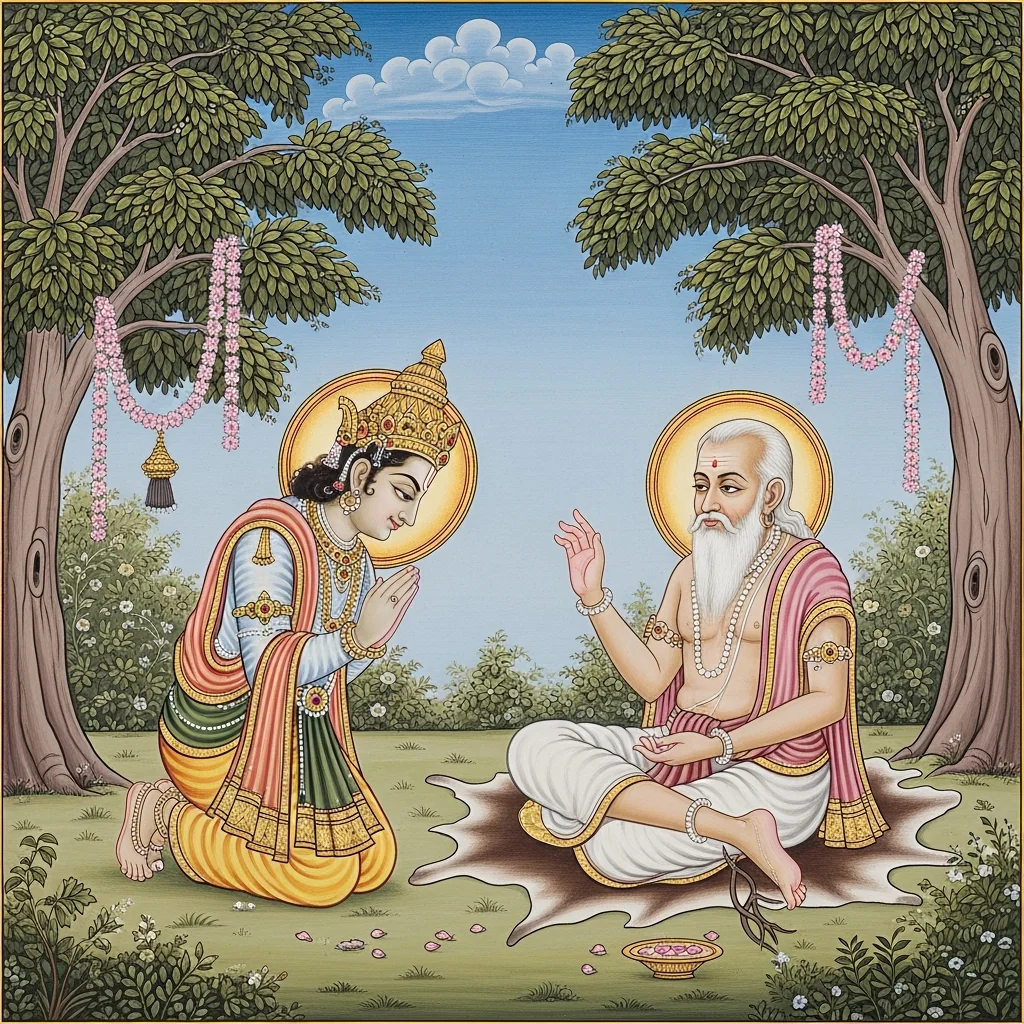
Chapter 31 is framed as a Devī–Īśvara dialogue seeking the causes behind (1) the previously taught “sa-kāra-pañcaka,” (2) Sarasvatī’s presence and manifestation in the sacred kṣetra, and (3) the origin and timing of the vādavānala motif. Īśvara explains that Sarasvatī manifests at Prabhāsa as a purifying power, spoken of through five names: Hiraṇyā, Vajriṇī, Nyaṅku, Kapilā, and Sarasvatī. The account then turns to an origin-episode: when a deva–asura conflict subsides due to a Soma-related cause, Candra returns Tārā at Brahmā’s command. The devas look down to earth and behold a heaven-like āśrama—Maharṣi Dadhīci’s renowned hermitage, rich with seasonal blossoms and fragrant plants. With reverent restraint they approach in humanlike manner, are received with arghya and pādya honors, and take their seats. Indra requests the sage to accept the devas’ weapons for safekeeping; Dadhīci first advises them to return to heaven, but Indra insists the arms must be retrievable in time of need. Dadhīci consents, promising to return them in wartime; Indra, trusting the ṛṣi’s truthfulness, deposits the weapons and departs. A concluding phalaśruti verse declares that one who hears this narrative with disciplined attention gains victory in battle and is blessed with worthy offspring, along with dharma, artha, and fame.
Shlokas
Verse 1
देव्युवाच । सकारपंचकं प्रोक्तं यत्त्वया मम शंकर । कथं तदत्र संवृत्तमेतन्मे संशयं महत्
The Goddess said: “O Śaṅkara, you have spoken to me of the sakāra-pañcaka, the five that begin with ‘sa’. How did that become established here? A great doubt has arisen in my mind.”
Verse 2
कथं वात्र समायाता कुतश्चापि सरस्वती । कथं स वाडवो जातः कस्मिन्काले कथं ह्यभूत् । तत्सर्वं विस्तरेणेदं यथावद्वक्तुमर्हसि
“How did Sarasvatī come to this place, and from where did she arrive? How was that Vāḍava—the submarine fire—born: at what time, and by what means did it come to be? Tell me all of this correctly and in full detail.”
Verse 3
ईश्वर उवाच । शृणु देवि यथा जाता तस्मिन्क्षेत्रे सरस्वती । यतश्चैव समुद्भूता सर्वपापप्रणाशिनी
Īśvara said: “Listen, O Devī, how Sarasvatī came to be in that sacred region, and from what source she arose—she who destroys all sins.”
Verse 4
हिरण्या वज्रिणी न्यंकुः कपिला च सरस्वती
Hiraṇyā, Vajriṇī, Nyaṃku, Kapilā—and Sarasvatī.
Verse 5
ऋषिभिः पञ्चभिश्चात्र समाहूता यथा पुरा । वाडवेनाग्निना युक्ता यथा जाता शृणुष्व तत्
Hear, then, how in ancient times she was summoned here by five ṛṣis, and how she came to be united with the Vāḍava fire.
Verse 6
पुरा देवासुरे युद्धे निवृत्ते सोमकारणात् । पितामहस्य वचनात्तारां चन्द्रः समर्पयत्
In former times, when the war between the gods and the asuras had ceased because of the Soma affair, the Moon, at the command of the Grandsire, returned Tārā.
Verse 7
ततो याताः सुराः स्वर्गं पश्यन्तोऽधोमुखा महीम् । ददृशुस्ते ततो देवा भूम्यां स्वर्गमिवापरम्
Then the gods departed for heaven, gazing downward upon the earth; and there they beheld upon the ground another heaven, as it were.
Verse 8
आश्रमं मुनिमुख्यस्य दधीचेर्लोक विश्रुतम् । सर्वर्त्तुकुसुमोपेतं पादपैरुपशोभितम् । केतकीकुटजोद्भूत बकुलामोदमोदितम्
They saw the hermitage of Dadhīci, foremost of sages and renowned in the worlds—adorned with trees and flowers of every season, and made delightful by the fragrance of ketakī, kuṭaja, and bakula blossoms.
Verse 9
एवंविधं समासाद्य तदाश्रमपदं गुरु । कौतुकाद्द्रष्टुमारब्धाः सर्वे देवा मनोरमम्
Having reached that venerable hermitage, so marvelous in form, all the gods, out of eager curiosity, began to look upon that enchanting place.
Verse 10
ते च तीर्थाश्रमे तस्मिन्यानान्युत्सृज्य संयताः । प्रवृत्तास्तमृषिं द्रष्टुं प्राकृताः पुरुषा यथा
There, at that tīrtha-hermitage, they set aside their vehicles, composed themselves, and went forth to behold the sage—like ordinary men.
Verse 11
दृष्टवंतः सुराः सर्वे पितामहमिवापरम् । ततस्त ऋषिणा सर्वे पाद्यार्घ्यादिभिरर्च्चिताः
When all the gods beheld him, they regarded him as another Pitāmaha (Brahmā); then the sage honored them all with water for the feet, arghya of welcome, and other customary rites.
Verse 12
यथोक्तमासनं भेजुः सर्वे देवाः सवासवाः । तेषां मध्ये समुत्थाय शक्रः प्रोवाच तं मुनिम्
All the gods, together with Vāsava (Indra), took their seats as instructed. Then, rising in their midst, Śakra addressed that sage.
Verse 13
आयुधानि विमुच्याग्रे भवान्गृह्णात्विमानि हि । तन्निशम्य वचः प्राह दधीचिः पाकशासनम्
“First lay aside your weapons, and accept these indeed.” Hearing these words, Dadhīci replied to Pākaśāsana (Indra).
Verse 14
मुक्तास्त्राणि ममाभ्याशे यूयं यात त्रिविष्टपम् । तं शक्रः प्राह चैतानि कार्यकाले ह्युपस्थिते
“With your weapons laid down near me, you may go to Triviṣṭapa (heaven).” Then Śakra said to him: “These weapons are to be returned when the time of action arrives.”
Verse 15
देयानि ते पुनः शत्रूनभिजेष्यामहे रणे । पुनःपुनस्ततः शक्रः संदिश्य मुनिसत्तमम्
“Let them be given back to us again; then we shall conquer the enemies in battle.” Thus, again and again, Śakra instructed the best of sages.
Verse 16
अस्माकमेव देयानि न चान्यस्य त्वया मुने । बाढमित्युदिते शक्रमुक्तवान्मुनिसत्तमः
“They are to be given only to us, and to no one else by you, O sage.” When Śakra spoke thus, the best of sages replied, “So be it.”
Verse 17
दास्यामि ते समस्तानि युद्धकाले विशेषतः । नास्य मिथ्या भवेद्वाक्यमिति मत्वा शचीपतिः । मुक्त्वास्त्राणि तदभ्याशे पुनः स्वर्गं गतस्तदा
“I shall give them all to you—especially at the time of war.” Convinced that his word would not prove false, Śacī’s lord (Indra), leaving the weapons there beside him, then returned again to heaven.
Verse 18
अस्त्रार्पणं यः प्रयतः प्रयत्नाच्छृणोति राजा भुवि भावितातात्मा । सोऽभ्येति युद्धे विजयं परं हि सुतांश्च धर्मार्थयशोभिरामाः
Any king on earth who, disciplined and with attentive effort, listens to this account of the depositing of weapons—his inner self refined—attains supreme victory in war, and also sons who delight in dharma, prosperity, and fame.
Verse 31
इति श्रीस्कांदे महापुराण एकाशीतिसाहस्र्यां संहितायां सप्तमे प्रभा सखण्डे प्रथमे प्रभासक्षेत्रमाहात्म्ये वडवानलोत्पत्तिवृत्तान्ते दधीचिमहर्षये सर्वदेवकृतस्वस्वशस्त्रसमर्पणवर्णनंनामैकत्रिंशोध्यायः
Thus ends the thirty-first chapter, entitled “The Account of all the Gods depositing their respective weapons with Maharṣi Dadhīci,” in the Prabhāsa-khaṇḍa of the auspicious Skanda Mahāpurāṇa, within the Prabhāsa-kṣetra Māhātmya, in the narrative concerning the origin of Vaḍavānala.