Adhyaya 300
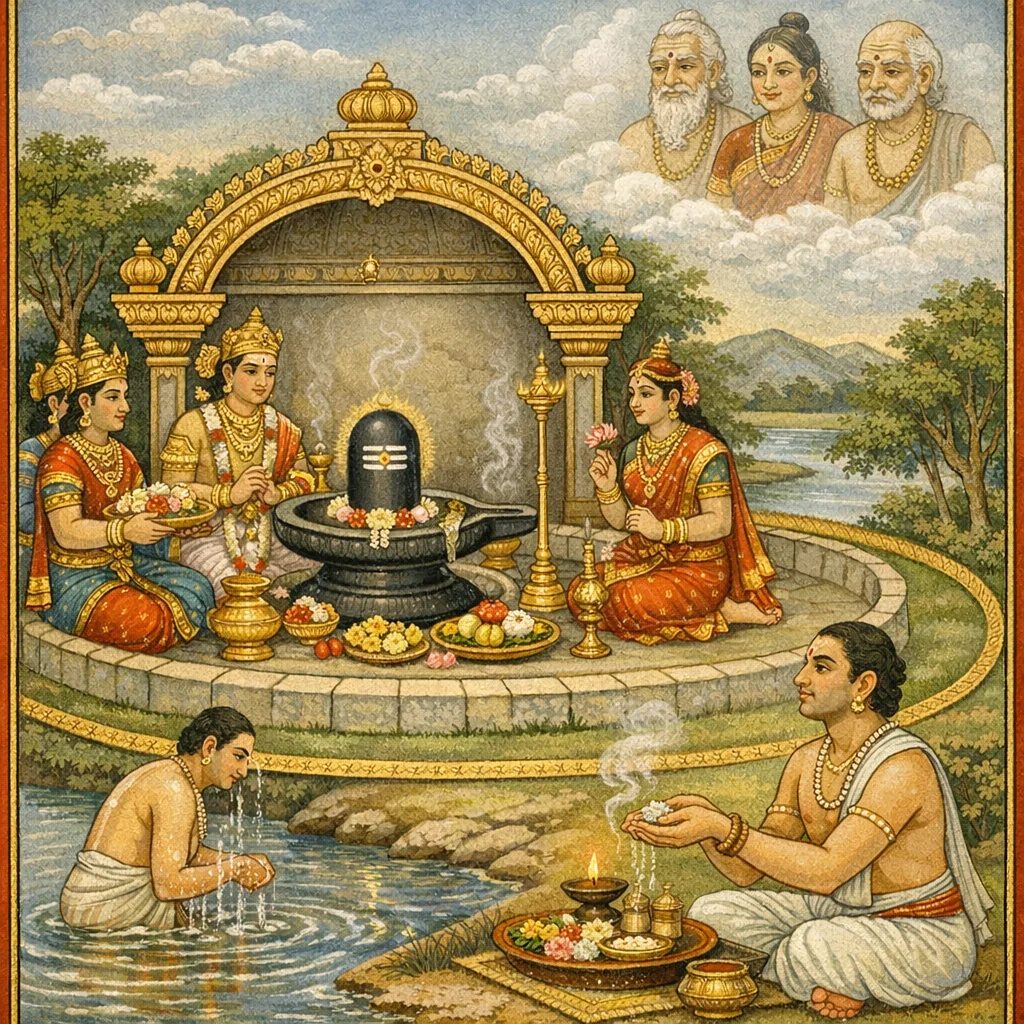
This chapter places the Sangāleśvara liṅga in the northern part of Prabhāsa-kṣetra, aligned to the vāyavya (northwest) quarter, and proclaims it “sarva-pātaka-nāśana,” the destroyer of all sins. Īśvara relates that Brahmā, Viṣṇu, Indra (Śakra), and other Lokapālas—together with the Ādityas and Vasus—worshipped the liṅga there, and then explained its name: since assemblies of devas gathered and established the worship, the shrine would be known on earth as Sangāleśvara. A series of merit-statements follows: human worship of Sangāleśvara brings prosperity to one’s lineage, especially freedom from poverty, and mere darśana is said to equal the fruit of gifting a thousand cows at Kurukṣetra. The text prescribes bathing on Amāvāsyā and then performing śrāddha without anger, promising long-lasting satisfaction for the ancestors. The kṣetra’s extent is defined as a circumferential “half-krośa,” described as wish-fulfilling and sin-destroying. Any being who dies within this field—whether “uttama” or “madhyama”—attains a higher destiny; those who fast unto death are said to merge into Parameśvara. Even deaths normally deemed ritually troubling (violent, accidental, suicide, snakebite, death without purity) are, in this mahāpuṇya tīrtha, reinterpreted as capable of granting apunarbhava (non-return). Liberation is further linked to rites such as sixteen śrāddhas, vṛṣotsarga, and proper feeding of brāhmaṇas, and the chapter closes with a brief phalaśruti: hearing this māhātmya removes sins, sorrow, and grief.
Shlokas
Verse 1
ईश्वर उवाच । तस्यैवोत्तरदिग्भागे किञ्चिद्वायव्यसंस्थितम् । संगालेश्वरनामास्ति सर्वपातकनाशनम्
Īśvara said: In the northern quarter of that same place, situated slightly to the northwest, there is a shrine of Saṅgāleśvara, famed as the destroyer of all sins.
Verse 2
तत्र ब्रह्मा च विष्णुश्च लिंगस्याराधनोद्यतौ । शक्रश्चैव महातेजा लिंगं पूजितवान्प्रिये
There, Brahmā and Viṣṇu were intent on worshipping the Liṅga; and mighty, radiant Śakra (Indra) too, O beloved, worshipped that Liṅga.
Verse 3
वरुणो धनदश्चैव धर्मराजोऽथ पावकः । आदित्यैर्वसुभिश्चैव लोकपालैः समंततः
Varuṇa, Kubera (Dhanada), and Dharmarāja, and also Pāvaka (Agni)—together with the Ādityas, the Vasus, and the guardians of the worlds—assembled all around.
Verse 4
आराधितं महालिंगं संगालेश्वरनामभृत् । पूजयित्वा तु ते सर्वे दृष्ट्वा माहात्म्यमुत्तमम्
That great Liṅga, bearing the name Saṅgāleśvara, was duly propitiated. After worshipping it, all of them, beholding its supreme greatness, were filled with reverence.
Verse 5
ऊचुश्च सहसा देवि परमानंदसंयुताः । देवानां निवहैर्यस्मात्समागत्य प्रतिष्ठितम् । संगालेश्वरनामास्य भविष्यति धरातले
At once they spoke, O Goddess, filled with supreme bliss: “Since this Liṅga has been established here after the hosts of the gods assembled, therefore upon the earth its name shall be Saṅgāleśvara.”
Verse 6
संगालेश्वरनामानं पूजयिष्यंति मानवाः । न तेषामन्वये कश्चिन्निर्धनः संभविष्यति
People will worship the Liṅga known as Saṅgāleśvara; and in their lineage no one shall arise in destitution.
Verse 7
गोसहस्रस्य दत्तस्य कुरुक्षेत्रे च यत्फलम् । तत्फलं समवाप्नोति संगालेश्वरदर्शनात्
Whatever merit arises from gifting a thousand cows at Kurukṣetra—one attains that very merit merely by the darśana of Saṅgāleśvara.
Verse 8
अमावास्यां च संप्राप्य स्नानं कृत्वा विधानतः । यः करोति नरः श्राद्धं पितॄणां रोषवर्जितः । पितरस्तस्य तृप्यंति यावदाभूतसंप्लवम्
And on reaching the new-moon day (Amāvāsyā), having bathed according to rule, the man who performs śrāddha for the Pitṛs without anger—his ancestors remain satisfied until the end of cosmic dissolution.
Verse 9
अर्धक्रोशं च तत्क्षेत्रं समंतात्परिमण्डलम् । सर्वकामप्रदं नृणां सर्वपातकनाशनम्
That sacred area extends for half a krośa, encircled all around; it grants all desired aims to people and destroys every sin.
Verse 10
अस्मिन्क्षेत्रे महादेवि जीवा उत्तममध्यमाः । कालेन निधनं प्राप्तास्तेऽपि यांति परां गतिम्
In this kṣetra, O Great Goddess, beings of middling or better condition who, in due time, meet their end—those too attain the supreme state.
Verse 11
गृहीत्वानशनं ये तु प्राणांस्त्यक्ष्यंति मानवाः । निश्चयं ते महादेवि लीयंते परमेश्वरे
Those who undertake anasana—fasting unto death—and then relinquish their life-breath, O Great Goddess, certainly merge into Parameśvara, the Supreme Lord.
Verse 12
गवा हता द्विजहता ये च वै दंष्ट्रिभिर्हता । आत्मनो घातका ये तु सर्पदष्टाश्च ये मृताः
Those slain by a cow through mischance, those who die under the burden of the sin of killing a brāhmaṇa, those killed by tusked beasts, those who take their own life, and those who die of snakebite—even such persons are encompassed by the redemptive power of this sacred field.
Verse 13
शय्यायां विगतप्राणा ये च शौचविवर्जिताः । अस्मिंस्तीर्थे महापुण्ये अपुनर्भवदायके
Those who die upon a bed, and those who die lacking śauca—ritual purity—here, in this supremely meritorious tīrtha that grants apunarbhava, freedom from rebirth, their condition too is transformed by its sanctity.
Verse 14
दत्तैः षोडशभिः श्राद्धैर्वृषोत्सर्गे कृते पुनः । विधिवद्भोजितैर्विप्रैर्भवेन्मुक्तिर्न संशयः
When sixteen śrāddha-offerings have been duly given, and the rite of vṛṣotsarga—the releasing of a bull—has been performed, and brāhmaṇas have been fed according to rule, liberation (mukti) arises, without any doubt.
Verse 15
एवमुक्त्वा सुराः सर्वे गतवंतस्त्रिविष्टपम्
Having spoken thus, all the gods departed for Triviṣṭapa (heaven).
Verse 16
संगालेश्वरमाहात्म्यं संक्षेपात्कथितं तव । श्रुतं हरति पापानि दुःखशोकांस्तथैव च
The greatness of Saṃgāleśvara has been told to you in brief. Merely hearing it destroys sins, and likewise removes suffering and grief.
Verse 300
इति श्रीस्कांदे महापुराण एकाशीतिसाहस्र्यां संहितायां सप्तमे प्रभासखंडे प्रथमे प्रभासक्षेत्रमाहात्म्ये संगालेश्वरमाहात्म्यवर्णनंनाम त्रिशततमोऽध्यायः
Thus, in the revered Skanda Mahāpurāṇa, in the compilation of eighty-one thousand (verses), in the seventh book—Prabhāsa Khaṇḍa—within the first division, the Prabhāsakṣetra Māhātmya, ends the three-hundredth chapter, entitled “The Description of the Greatness of Saṃgāleśvara.”