Adhyaya 295
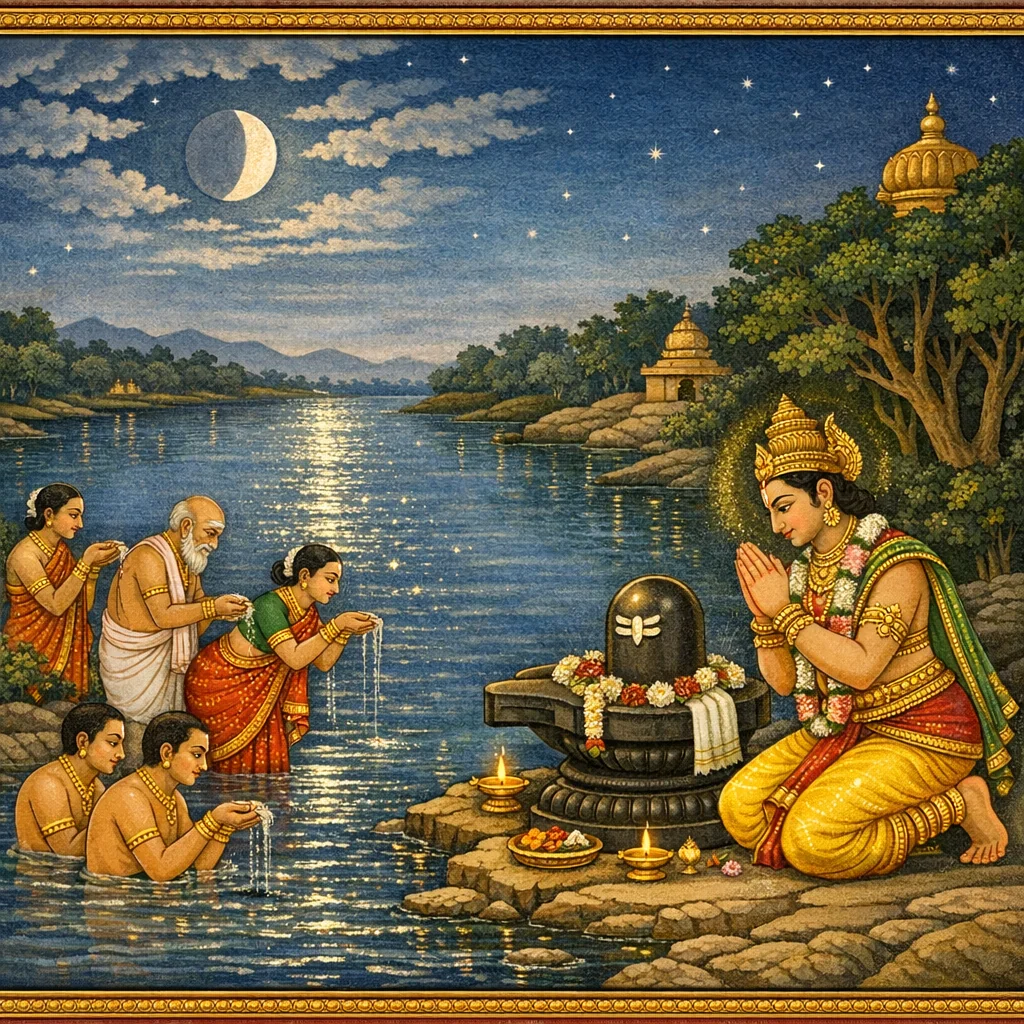
Īśvara tells Devī of a sacred complex in the Īśāna (northeast) direction: an excellent Indra-sthāna at a measured gavyūti distance, connected with Candrasaras and the Candrodaka waters. Those waters are praised for remedial power, easing jarā (decay/aging) and dāridrya (poverty). The tīrtha waxes with the waxing moon and wanes with the waning moon, yet remains perceptible even in a sinful age (pāpa-yuga). A phala is then assured: bathing there is a decisive act of expiation, requiring little deliberation even for one burdened with many wrongs. The narrative recalls Indra’s earlier ritual response to a grave moral crisis involving Ahalyā and Gautama’s curse: Indra worships with abundant gifts and installs Śiva for a thousand years. That installed form is called Indreśvara, famed as the destroyer of all transgressions. The chapter ends with a practical pilgrimage order: bathe at Candratīrtha, offer to satisfy the pitṛs and the deities, worship Indreśvara, and without doubt become freed from sin.
Shlokas
Verse 1
ईश्वर उवाच । तस्मादीशान दिग्भागे इन्द्रस्थानमनुत्तमम् । गव्यूतिपञ्चमात्रेण यत्र चन्द्रसरः प्रिये
Īśvara said: From there, in the north‑eastern quarter, lies the unsurpassed Indra-sthāna; at a distance of five gavyūtis is the lake called Candrasaras, O beloved.
Verse 2
तस्मादुत्तरदिग्भागे नातिदूरे व्यवस्थितम् । यत्र चन्द्रोदकं देवि जरादारिद्र्यनाशनम्
From there, in the northern direction, not far away, is the place where Candrodaka, the “water of the Moon,” is found, O Goddess—destroyer of old age and poverty.
Verse 3
चन्द्रानुवृद्ध्या तद्वृद्धिः क्षयस्तत्संक्षये भवेत् । तस्मिन्पापयुगेऽप्येवं कदाचित्संप्रदृश्यते
As the Moon waxes, this sacred power increases; as the Moon wanes, it diminishes accordingly. Even in that sinful age, it is sometimes seen to occur in just this way.
Verse 4
तत्र स्नात्वा महादेवि यदि पापसहस्रकम् । कृतं सोऽत्र समायाति नात्र कार्या विचारणा
O Great Goddess, after bathing there, even if a person has committed thousands of sins, he attains purification right there; no further doubt or deliberation is needed.
Verse 5
तत्राहिल्याप्रसंगोत्थमहापातकभीरुणा । गौतमोद्भवशापेन विलक्ष्यीकृतचेतसा
There, Indra—terrified by the great sin arising from his involvement with Ahalyā—his mind cast into shame and confusion by the curse that issued from Gautama,
Verse 6
इन्द्रेण च पुरा देवि इष्टं विपुलदक्षिणैः । तत्र वर्षसहस्राणि संस्थाप्य शिवमीश्वरम् । इन्द्रेश्वरेति नाम्ना वै सर्वपातक नाशनम्
O Goddess, in former times Indra worshipped there with abundant gifts. Having established Lord Śiva, the Supreme Īśvara, there for thousands of years, He became famed by the name “Indreśvara,” the destroyer of all sins.
Verse 7
चन्द्रतीर्थे नरः स्नात्वा संतर्प्य पितृदेवताः । इन्द्रेश्वरं च संपूज्य मुच्यते नात्र संशयः
He who bathes at Candratīrtha, satisfies the Pitṛs and the gods with offerings, and duly worships Indreśvara is set free; of this there is no doubt.
Verse 295
इति श्रीस्कांदे महापुराण एकाशीतिसाहस्र्यां संहितायां सप्तमे प्रभासखण्डे प्रथमे प्रभासक्षेत्रमाहात्म्ये चन्द्रोदकतीर्थमाहात्म्य इन्द्रेश्वरमाहात्म्यवर्णनंनाम पञ्चनवत्युत्तर द्विशततमोऽध्यायः
Thus ends, in the revered Skanda Mahāpurāṇa—within the compendium of eighty-one thousand verses—within the seventh division, the Prabhāsa-khaṇḍa, and within the first section, the Prabhāsa-kṣetra-māhātmya, the chapter entitled “The Greatness of Candrodaka Tīrtha and the Description of the Greatness of Indreśvara,” being Chapter 295.