Adhyaya 285
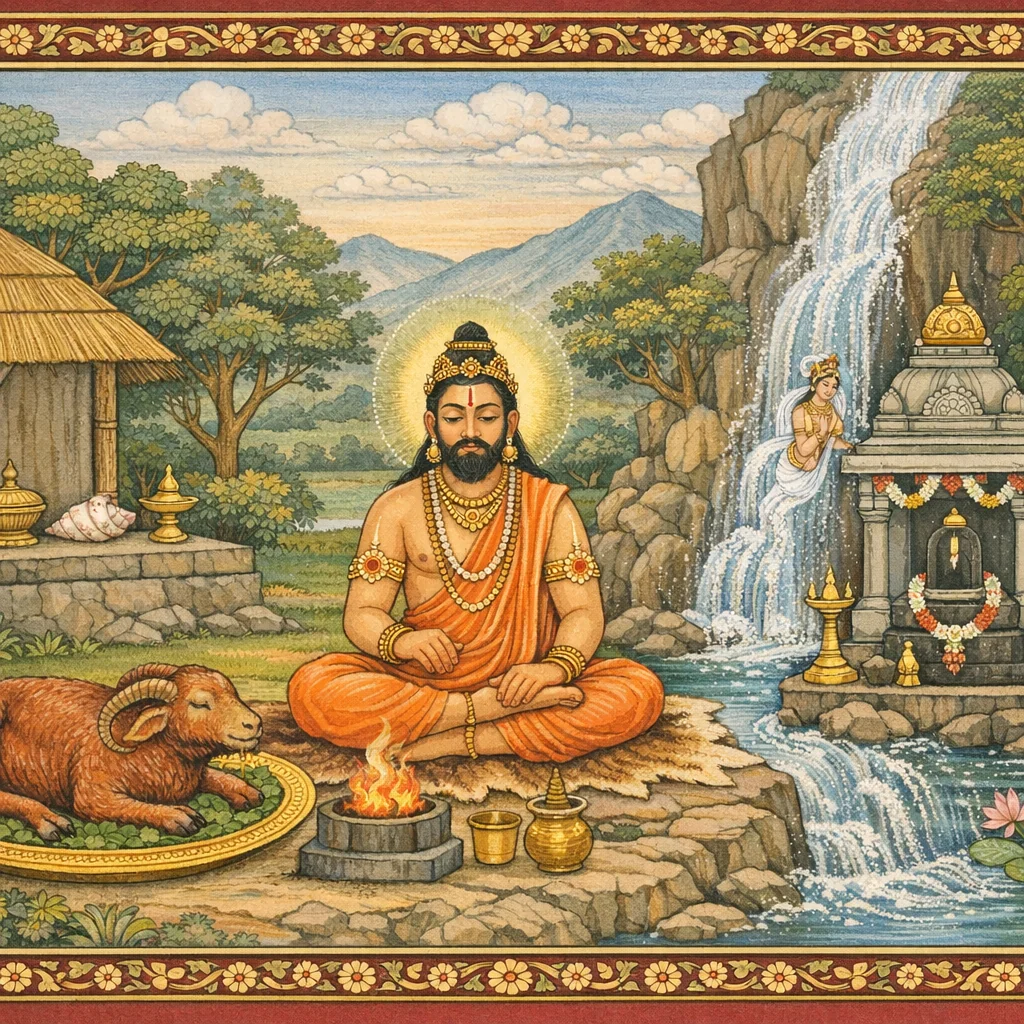
Chapter 285 unfolds as a Śiva–Devī theological dialogue set within a tīrtha itinerary. Īśvara directs Devī to the Nyanku-matī River and its sacred stations: performing Gayā-śrāddha at the renowned tīrtha Goṣpada, beholding Varāha, proceeding to Hari’s abode, honoring the Mothers (Mātṛs), and bathing at the river–ocean confluence. The account then turns eastward to the divine āśrama of Agastya on the pleasant bank of Nyanku-matī, praised as a “hunger-removing” place (kṣudhā-hara) and a destroyer of sins. Asked why Vātāpi was subdued and what stirred Agastya’s wrath, Īśvara recounts the Ilvala–Vātāpi episode: the demon brothers, through deceptive hospitality, repeatedly killed brāhmaṇas, who sought Agastya’s protection. At Prabhāsa, Agastya confronts the asuras, consumes Vātāpi prepared in the form of a ram, nullifies the resurrection ruse, and reduces Ilvala to ashes. He then grants the recovered, wealth-filled place to the brāhmaṇas, giving rise to the site-name associated with the removal of hunger. Since eating a demon is said to produce a specific impurity, Gaṅgā is invoked to purify Agastya; she becomes established there, and the shrine is named Gaṅgeśvara. The chapter concludes with a tīrtha promise: seeing Gaṅgeśvara and practicing snāna, dāna, and japa frees one from the sin of “forbidden consumption,” through the power of place, rite, and sacred remembrance.
Shlokas
Verse 1
ईश्वर उवाच । ततो गच्छेन्महादेवि पुनर्न्यंकुमतीं नदीम् । तत्र कृत्वा गयाश्राद्धं गोष्पदे तीर्थ उत्तमे
Īśvara said: “Then, O Great Goddess, one should go again to the river Nyaṅkumatī. There, at the excellent sacred ford called Goṣpada, having performed the Gayā-śrāddha rite for the ancestors, one attains great merit.”
Verse 2
ततः पश्येद्वराहं तु तस्माद्धरिगृहं व्रजेत् । तत्र मातृस्तु संपूज्य स्नात्वा सागरसंगमे
Then one should behold Varāha; from there one should go to Hari’s shrine. There, having duly worshipped the Mother-goddesses (Mātṛs) and bathed at the confluence with the ocean, one gains sanctity and purity.
Verse 3
न्यंकुमत्यर्णवोपेते ततः पूर्वमनु व्रजेत् । अगस्तेराश्रमं दिव्यं क्षुधाहरमितिस्मृतम्
Then, near where the Nyaṅkumatī meets the ocean, one should proceed eastward and go to the radiant hermitage (āśrama) of Agastya, remembered as “the remover of hunger.”
Verse 4
यत्रेल्वलं च वातापिं संहृत्य भगवान्मुनिः । मुक्त्वाऽपद्भ्यो ब्राह्मणांश्च तेभ्यः स्थानं ततो ददौ
There the blessed sage destroyed Ilvala and Vātāpi; and having freed the brāhmaṇas from calamity, he then granted them a secure abode.
Verse 5
अगस्त्याश्रममेतद्धि अगस्तिप्रियमुत्तमम् । न्यंकुमत्यास्तटे रम्ये सर्वपातकनाशने
Indeed, this is Agastya’s hermitage—supremely dear to Agastya—on the lovely bank of the Nyaṅkumatī, the river that destroys all sins.
Verse 6
देव्युवाच । अगस्तिनेह वातापिः किमर्थमुपशामितः । अत्र वै किंप्रभावश्च स दैत्यो ब्राह्मणांतकः । किमर्थं चोद्गतो मन्युरगस्तेस्तु महात्मनः
The Goddess said: “Why was Vātāpi subdued here by Agastya? What special power abides in this place, since that demon was a slayer of brāhmaṇas? And for what reason did anger arise in the great-souled Agastya?”
Verse 7
ईश्वर उवाच । इल्वलो नाम दैत्येन्द्र आसीद्वै वरवर्णिनि । मणिमत्यां पुरा पुर्यां वातापिस्तस्य चानुजः
Īśvara said: “O fair one, there once was a lord of demons named Ilvala in the city called Maṇimatī; and Vātāpi was his younger brother.”
Verse 8
स ब्राह्मणं तपोयुक्तमुवाच दितिनंदनः । पुत्र मे भगवन्नेकमिंद्रतुल्यं प्रयच्छतु
Then the son of Diti addressed that austerity-endowed brāhmaṇa: “O venerable one, grant me a single son—one equal to Indra.”
Verse 9
तस्मिन्स ब्राह्मणो नैच्छत्पुत्रं दातुं तथाविधम् । चुक्रोध दितिजस्तस्य ब्राह्मणस्य ततो भृशम्
But that brāhmaṇa did not wish to give such a son. Then the Daitya grew fiercely enraged with that brāhmaṇa.
Verse 10
प्रभासक्षेत्रमासाद्य स दैत्यः पापबुद्धिमान् । मेषरूपी च वातापिः कामरूपोऽभवत्क्षणात्
Reaching the sacred region of Prabhāsa, that sinful-minded Daitya—Vātāpi—instantly became a ram in form, a shape-shifter at will.
Verse 11
संस्कृत्य भोजयेत्तत्र विप्रान्स च जिघांसति । समा ह्वयति तं वाचा गतं चैव ततः क्षयम्
There he would prepare the offering and feed the Brahmins, yet he intended to kill them. Then he would call him back with words, and the victim would go to destruction.
Verse 12
स पुनर्देहमास्थाय जीवन्स्म प्रत्यदृश्यत । ततो वातापिरपि तं छागं कृत्वा सुसंस्कृतम् । ब्राह्मणं भोजयित्वा तु पुनरेव समाह्वयत्
He, taking up a body again, was seen alive once more. Then Vatapi too, having become a well-prepared goat, and after feeding the Brahmin, was again summoned back.
Verse 13
स तस्य पार्श्वं निर्भिद्य ब्राह्मणस्य महात्मनः । वातापिः प्रहसंस्तत्र निश्चक्राम द्विजोदरात्
Splitting open the side of that great-souled Brahmin, Vatapi—laughing there—burst forth from the twice-born’s belly.
Verse 14
एवं स ब्राह्मणान्देवि भोजयित्वा पुनःपुनः । विनिर्भिद्योदरं तेषामेवं हंति द्विजान्बहून्
Thus, O Goddess, after feeding Brahmins again and again, he would tear open their bellies; in this manner he slew many twice-borns.
Verse 15
ततो वै ब्राह्मणाः सर्वे भयभीताः प्रदुद्रुवुः । अगस्तेराश्रमं जग्मुः कथयामासुरग्रतः
Then all the Brahmins, terrified with fear, fled. They went to Agastya’s hermitage and reported everything to him directly.
Verse 16
भगवञ्छृणु नो वाक्यमस्माकं तु भयावहम् । निमंत्रिताः स्म सर्वे वा इल्वलेन वयं प्रभो
O Blessed One, hear our words, for they are filled with fear for us. O Lord, we have all been invited by Ilvala.
Verse 17
अस्माकं मृत्युरूपं तद्भोजनं नास्ति संशयः । तदस्मान्रक्ष भगवन्विषण्णागतचेतसः
That meal is death itself for us—there is no doubt. Therefore protect us, O Blessed One, for we have come with minds cast down in distress.
Verse 18
ततः प्रभासमासाद्य यत्र तौ दैत्यपुंगवौ । ब्रह्मघ्रौ पापनिरतौ ददर्श स महामुनिः
Then, arriving at Prabhāsa—the sacred field—the great sage beheld there those two foremost of Dānavas, slayers of brāhmaṇas, ever intent on sin.
Verse 19
वातापिं संस्कृतं दृष्ट्वा मेषरूपं महासुरम् । उवाच देहि मे भोज्यं बुभुक्षा मम वर्तते
Seeing Vātāpi prepared as food, that great Asura in the form of a ram, he said: “Give me something to eat; hunger has arisen in me.”
Verse 20
इत्युक्तौ स्वागतं तत्र चक्राते मुनये तदा । भगवन्भोजनं तुभ्यं दास्येऽहं बहुविस्तरम् । कियन्मानस्तवाहारस्तावन्मानं पचाम्यहम्
When he had spoken thus, they then welcomed the sage. “O venerable one, I shall give you a lavish meal. Whatever the measure of your appetite, to that very measure I will cook.”
Verse 21
अगस्त्य उवाच । अन्नं पचस्व दैत्येन्द्र किंचित्तृप्तिर्भविष्यति । एवमस्त्विति दैत्येन्द्रः पक्वमाह महामुने
Agastya said: “Cook the food, O lord of the Daityas; some satisfaction will surely arise.” The Daitya-chief replied, “So be it,” and told the great sage, “It is cooked.”
Verse 22
आस्यतामासनमिदं भुज्यतां स्वेच्छया मुने । इत्युक्तोऽघोरमंत्रं स जपन्कल्पांतकारकम् । धुर्यासनमथासाद्य निषसाद महामुनिः
“Be seated on this seat, O sage; eat as you wish.” Thus addressed, the great muni—muttering the Aghora-mantra, a power that destroys even at the end of a kalpa—approached the honored seat and sat down.
Verse 23
तं पर्यवेषद्दैत्येंद्र इल्वलः प्रहसन्निव । शतहस्तप्रमाणेन राशिमन्नस्य सोऽकरोत्
Then Ilvala, the Daitya-chief, served him—smiling as though in amusement—and he made a heap of food measuring a hundred hands in extent.
Verse 24
ततो हष्टमनाऽगस्त्यः प्राग्रसत्कवलद्वयम् । रूपं कृत्वा महत्तद्वद्यद्वत्सागरशोषणे
Then Agastya, delighted in mind, first swallowed a couple of mouthfuls—having assumed a vast form, just as he did when he drank up the ocean.
Verse 25
समस्तमेव तद्भोज्यं वातापिं बुभुजे ततः । भुक्तवत्यसुरो ह्वानमकरोत्तस्य इल्वलः
Then he ate up that entire meal—Vātāpi as well. When the Asura had been eaten, Ilvala called out to him (to come forth).
Verse 26
ततोऽसौ दत्तवानन्नमगस्त्यस्य महात्मनः । भस्मीचकार सर्वं स तदन्नं च सदानवम्
Then, after the meal had been offered to the great-souled Agastya, he reduced everything to ashes—both that food and the Dānava hidden within it.
Verse 27
इल्वलं क्रोधमुष्ट्या तु भस्मीचक्रे महामुनिः । ततो हाहारवं कृत्वा सर्वे दैत्या ननंशिरे
Then the great sage, with a wrathful blow of his fist, reduced Ilvala to ashes. Thereupon, crying “Alas!”, all the Daityas fled away.
Verse 28
ततोऽगस्त्यो महातेजा आहूय द्विजपुंगवान् । तत्स्थानं च ददौ तेभ्यो दैत्य्रानां द्रव्यपूरितम्
Then the greatly radiant sage Agastya summoned the foremost among the twice-born (brāhmaṇas) and bestowed upon them that place, filled with the wealth of the demons.
Verse 29
क्षुधा हृता ततो देवि तत्रागस्त्यस्य दानवैः । तेन क्षुधा हरंनाम स्थानमासीद्विजन्मनाम्
O Goddess, there the Dānavas removed Agastya’s hunger; therefore, among the twice-born that place came to be known as “Kṣudhā-hara”—the Hunger-Remover.
Verse 30
तस्य पश्चिमभागे तु नातिदूरे व्यवस्थितम् । गंगेश्वरमिति ख्यातं गंगया यत्प्रतिष्ठितम्
On its western side, not far away, stands a shrine famed as Gaṅgeśvara, established there by the river-goddess Gaṅgā.
Verse 31
वातापिभक्षणेपूर्वमगस्त्येन महात्मना । दैत्यसंभक्षणोत्पन्नसर्वपातकशुद्धये । समाहूता महादेवि गंगापातकनाशिनी
Before the great-souled Agastya consumed Vātāpi, O Great Goddess, Gaṅgā—the destroyer of sins—was invoked to cleanse all faults that might arise from devouring a demon.
Verse 32
ततो देवि समा याता गंगा पातकनाशिनी । शुद्धिं चकार तस्यर्षेस्तत्र स्थाने स्थिताऽभवत्
Then, O Goddess, Gaṅgā the destroyer of sins arrived; she purified that sage and remained established at that very spot.
Verse 33
अगस्त्यस्याऽश्रमे रम्ये नृणां पापभयापहे । तत्र गंगेश्वरं दृष्ट्वा अभक्ष्योद्भवपातकात् । मुच्यते नात्र संदेहः स्नानदानजपादिना
In Agastya’s delightful āśrama, which removes people’s fear of sin, by beholding Gaṅgeśvara one is freed from sins arising from forbidden food—of this there is no doubt—especially through bathing, charity, japa, and the like.
Verse 285
इति श्रीस्कान्दे महापुराण एकाशीतिसाहस्र्यां संहितायां सप्तमे प्रभासखण्डे प्रथमेप्रभासक्षेत्रमाहात्म्ये न्यंकुमतीमाहात्म्येऽगस्त्याश्रमगंगेश्वरमाहात्म्यवर्णनंनाम पञ्चाशीत्युत्तरद्विशततमोऽध्यायः
Thus ends the two-hundred-and-eighty-fifth chapter, entitled “The Description of the Greatness of Gaṅgeśvara at Agastya’s Āśrama,” within the Nyaṅkumatī Māhātmya, in the Prabhāsa-kṣetra Māhātmya, in the seventh book—the Prabhāsa Khaṇḍa—of the Śrī Skanda Mahāpurāṇa (of 81,000 verses).