Adhyaya 283
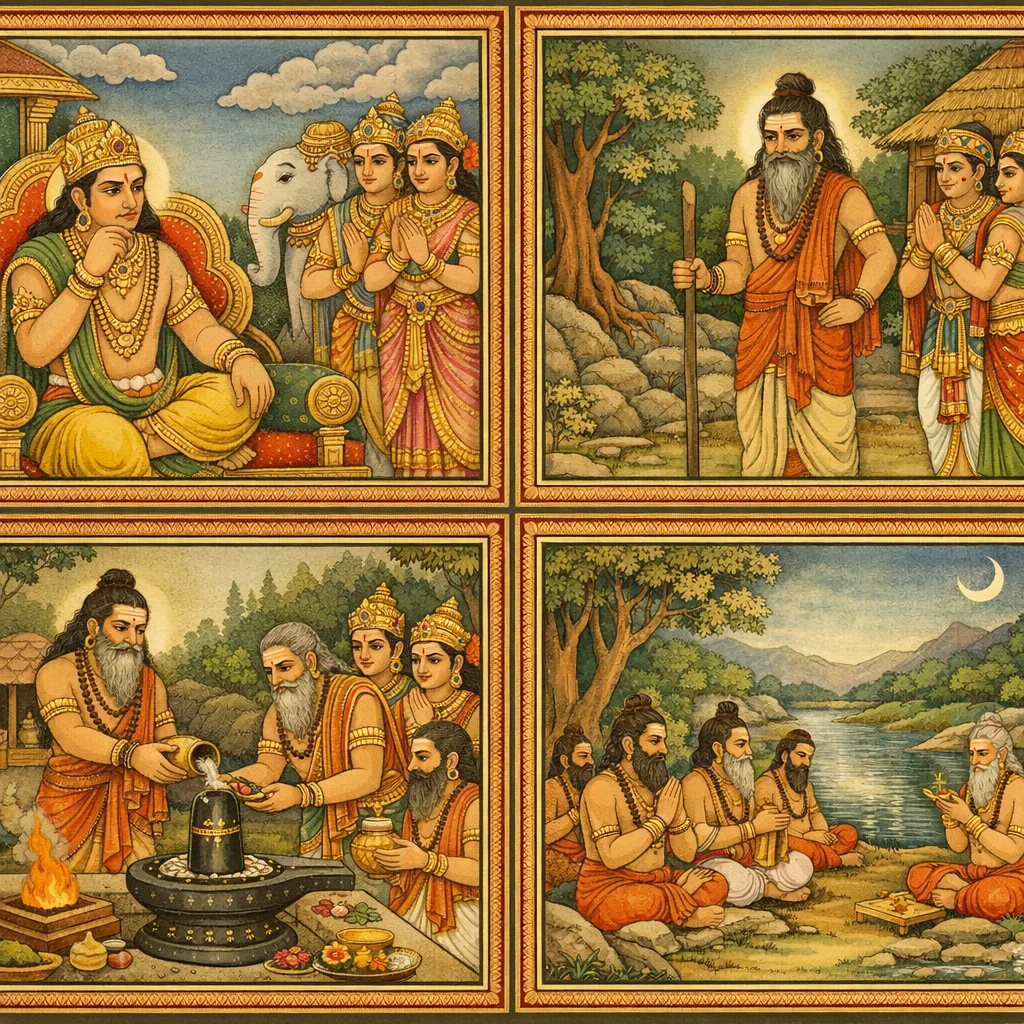
This chapter sets forth the origin and ritual charter of the liṅga called Chyavaneśvara in Prabhāsa-kṣetra. Spoken in Īśvara’s voice, it recalls a tense confrontation in which Śakra (Indra) is seized with fear before a formidable presence, while the Bhārgava ṛṣi Chyavana stands forth as the decisive ascetic authority. The narrative links the Aśvins’ rights and Soma-entitlements to Chyavana’s deeds, stressing that the outcome was not accidental but arranged to make manifest (prakāśana) the ṛṣi’s power and to establish lasting renown for Sukanyā and her lineage. Chyavana is then said to have sported (vijahāra) with Sukanyā in this forested sacred tract and to have installed here a sin-destroying liṅga. A clear injunction follows: proper worship of this liṅga yields merit equal to an Aśvamedha. The chapter also points to Candramas-tīrtha, frequented by Vaikhānasa and Vālakhilya sages, and prescribes a calendrical śrāddha: on the full-moon day (pauṇamāsī), especially in the month of Aśvin, one should perform śrāddha by rule and feed brāhmaṇas separately, gaining the fruit of “koṭi-tīrthas.” The closing phalaśruti declares that hearing this sin-destroying account frees one from accumulated sins across many births.
Shlokas
Verse 1
ईश्वर उवाच । तं दृष्ट्वा घोरवदनं मदं देवः शतक्रतुः । आयांतं भक्षयिष्यन्तं व्यात्ताननमिवान्तकम्
Īśvara said: Seeing Mada with his dreadful face, the god Śatakratu (Indra) beheld him approaching to devour—like Death itself, mouth gaping wide.
Verse 2
भयात्स्तंभितरूपेण लेलिहानं मुहुर्मुहुः । प्रणतोऽब्रवीन्महादेवि च्यवनं भयपीडितः
Paralyzed by fear as it licked again and again, he bowed down and spoke to Cyavana, distressed by terror: “O Mahādevī…”
Verse 3
सोमार्हावश्विनावेतावद्यप्रभृति भार्गव । भविष्यतः सर्वमेतद्वचः सत्यं ब्रवीमि ते
“O Bhārgava, from this day onward these two Aśvins shall be entitled to Soma. All this shall come to pass—I speak to you truthfully.”
Verse 4
मा ते मिथ्या समारम्भो भवत्वथ तपोधन । जानामि चाहं विप्रर्षे न मिथ्या त्वं करिष्यसि
“O treasure of austerity, let your undertaking not be in vain. O brahmin-sage, I know you well—you will not act falsely.”
Verse 5
सोमार्हावश्विनावेतौ यथैवाद्य त्वया कृतौ । भूय एव तु ते वीर्यं प्रकाशेदिति भार्गव
Just as today you have made these two Aśvins worthy of Soma, so too may your spiritual might shine forth again and again, O Bhārgava.
Verse 6
सुकन्यायाः पितुश्चास्य लोके कीर्तिर्भवेदिति । अतो मयैतद्विहितं तद्वीर्यस्य प्रकाशनम् । तस्मात्प्रसादं कुरु मे भवत्वेतद्यथेच्छसि
So that fame may arise in the world for Sukanyā and for her father as well, I have arranged this manifestation of your power. Therefore, show me favor; let it be as you wish.
Verse 7
एवमुक्तस्य शक्रेण च्यवनस्य महात्मनः । मन्युर्व्युपारमच्छीघ्रं मानश्चैव सुरेशितुः
When Indra (Śakra) had thus spoken to the great-souled sage Cyavana, Cyavana’s anger quickly subsided—and the pride of the lord of the gods also came to rest.
Verse 8
मदं च व्यभजद्देवि पाने स्त्रीषु च वीर्यवान् । अक्षेषु मृगयायां च पूर्वं सृष्टं पुनःपुनः । तथा मदं विनिक्षिप्य शक्रं संतर्प्य चेंदुना
O Devī, that mighty one then redistributed the “intoxication of pride”: into drinking, into attachment to women, into gambling, and into hunting—those impulses that had been created before, again and again. Having thus cast away that arrogance, he satisfied Indra and also offered Soma-like refreshment.
Verse 9
अश्विभ्यां सहितान्सर्वान्याजयित्वा च तं नृपम् । विख्याप्य वीर्यं सर्वेषु लोकेषु वरवर्णिनि
O fair-complexioned one, together with the Aśvins he enabled all of them to perform sacrifices, and he also caused that king to offer rites; and his prowess became renowned throughout all the worlds.
Verse 10
सुकन्यया महारण्ये क्षेत्रेऽस्मिन्विजहार सः । तस्यैतद्देवि संयुक्तं च्यवनेश्वरनामभृत्
With Sukanyā he dwelt in joy in this sacred kṣetra amid the great forest. Therefore, O Devī, this place became bound to him and came to bear the name “Cyavaneśvara”.
Verse 11
लिंगं महापापहरं च्यव नेन प्रतिष्ठितम् । पूजयेत्तं विधानेन सोऽश्वमेधफलं लभेत्
Cyavana established a liṅga that removes great sins. Whoever worships it according to the proper rite attains merit equal to that of the Aśvamedha sacrifice.
Verse 12
तस्माच्चन्द्रमसस्तीर्थमृषयः पर्युपासते । वैखानसाख्या ऋषयो वालखिल्यास्तथैव च
Therefore the sages constantly revere the Candramas-tīrtha. The Ṛṣis known as the Vaikhānas, and likewise the Vālakhilyas, also attend upon it.
Verse 13
अत्राश्विने मासि नरः पौर्णमास्यां विशेषतः । श्राद्धं कुर्याद्विधानेन ब्राह्मणान्भोजयेत्पृथक् । कोटितीर्थफलं तस्य भवेन्नैऽवात्र संशयः
Here, in the month of Āśvina—especially on the full-moon day—one should perform śrāddha according to proper rule and feed Brāhmaṇas separately. The fruit for him becomes equal to that of “a crore of tīrthas”; of this there is no doubt.
Verse 14
य इमां शृणुयाद्देवि कथां पातकनाशिनीम् । समस्तजन्मसंभूतात्पापान्मुक्तो भवेन्नरः
O Devī, whoever listens to this sin-destroying sacred account becomes freed from the sins accumulated across all births.
Verse 283
इति श्रीस्कांदे महापुराण एकाशीतिसाहस्र्यां संहितायां सप्तमे प्रभासखण्डे प्रथमे प्रभासक्षेत्रमाहात्म्ये च्यवनेश्वरमाहात्म्यवर्णनंनाम त्र्यशीत्युत्तरद्विशततमोऽध्यायः
Thus ends the two-hundred-and-eighty-third chapter, entitled “The Description of the Greatness of Cyavaneśvara,” in the first part of the Prabhāsa-kṣetra Māhātmya, within the seventh section, the Prabhāsa Khaṇḍa, of the venerable Skanda Mahāpurāṇa in the Ekāśīti-sāhasrī Saṃhitā.