Adhyaya 264
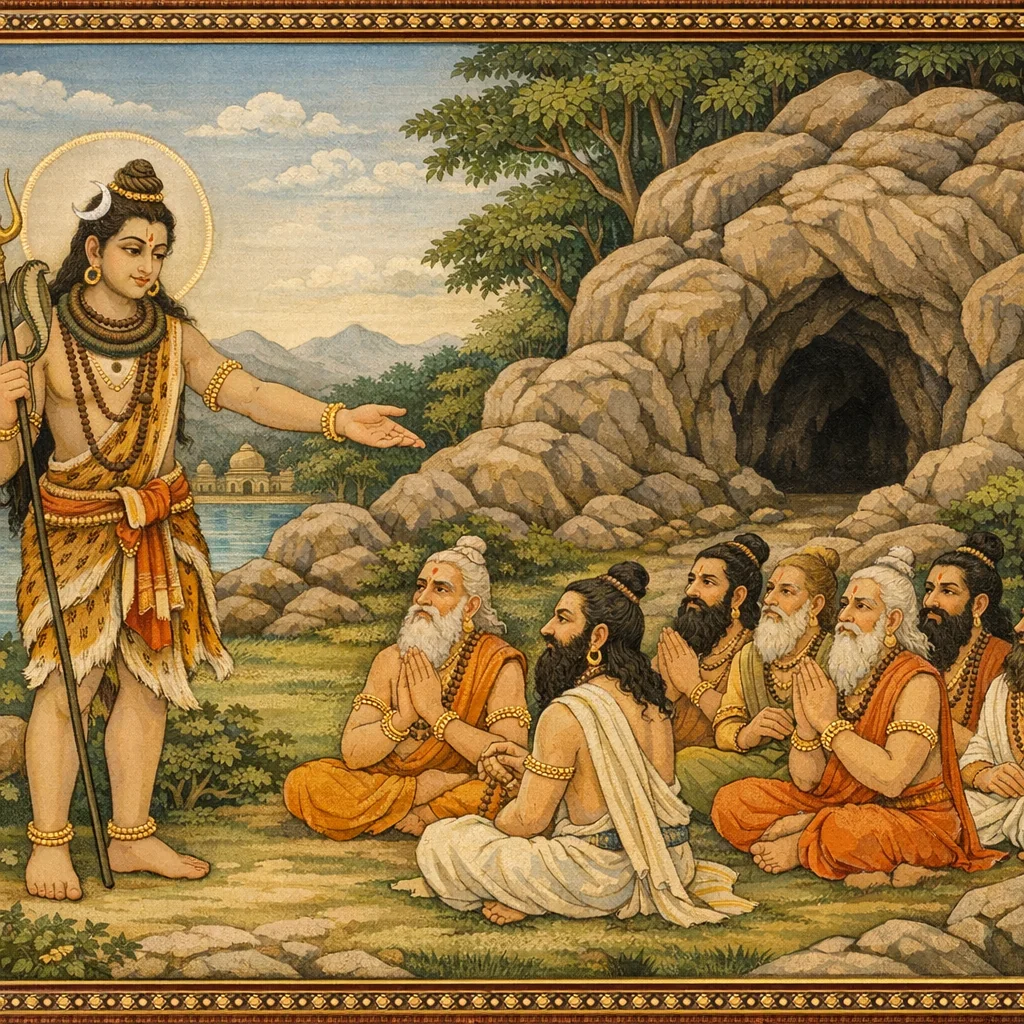
This adhyāya presents a brief Śaiva dialogue between Īśvara and the Devī, in which Īśvara describes the Nandinī Cave in Prabhāsa-kṣetra as inherently purifying and sin-destroying (pātaka-nāśinī). It is portrayed as a dwelling or meeting-place of meritorious ṛṣis and siddhas, thereby establishing it as a sanctified point within the section’s ritual geography. The teaching centers on darśana: one who goes there and beholds the cave is freed from all sins and gains the fruit of the Cāndrāyaṇa observance, a recognized expiatory and disciplinary vrata. Thus the chapter identifies the site, confirms its holiness through association with perfected beings, and declares a phalāśruti equating pilgrimage-darśana with a formal rite of penitence.
Shlokas
Verse 1
ईश्वर उवाच । तत्रैव संस्थिता देवि गुफा पातकनाशिनी । ऋषीणां संस्थितिर्यत्र सिद्धानां पुण्यचेतसाम्
Īśvara said: Right there, O Goddess, is a cave that destroys sin—where the sages (ṛṣi) have their abode, and where perfected beings (siddha) of purified minds dwell.
Verse 2
तत्र गत्वा महादेवि गुफां यः पश्यते नरः । स मुक्तः सर्वपापेभ्यश्चांद्रायणफलं लभेत्
Having gone there, O great Goddess, whoever beholds that cave is freed from all sins and gains merit equal to the Cāndrāyaṇa observance.
Verse 264
इति श्रीस्कांदे महापुराण एकाशीतिसाहस्र्यां संहितायां सप्तमे प्रभासखंडे प्रथमे प्रभासक्षेत्रमाहात्म्ये नंदिनीगुफामाहात्म्यवर्णनंनाम चतुःषष्ट्यु त्तरद्विशततमोऽध्यायः
Thus ends the 264th chapter, entitled “The Description of the Greatness of the Nandinī Cave,” in the Prabhāsa Khaṇḍa (Book Seven) of the Śrī Skanda Mahāpurāṇa, within the Prabhāsakṣetra Māhātmya (first division).