Adhyaya 263
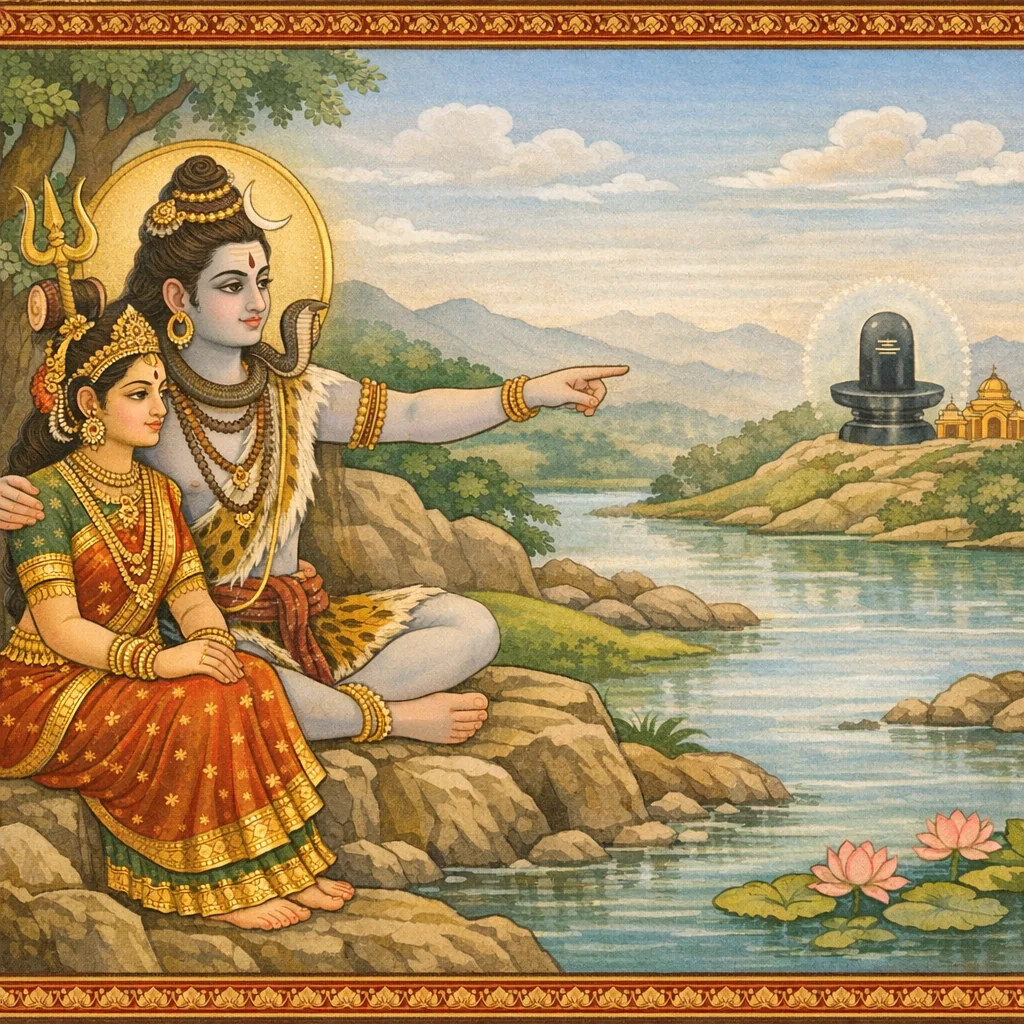
In this chapter, Īśvara speaks to Devī and directs her attention to a particular liṅga known as Chāyā-liṅga, the “Shadow Liṅga.” The sacred site is located with a clear directional marker—north of Nyanku(m)atī—thus placing holiness within a landscape that can be sought and found. Following the standard māhātmya pattern, the text (1) names and situates the shrine, (2) proclaims its extraordinary power and “great fruit,” and (3) declares purification for the devotee who gains its darśana, the reverent vision of the liṅga. A contrasting point is added: those burdened with heavy demerit are said not to perceive it, making visibility itself both a ritual act and a moral-spiritual qualification. The closing colophon identifies the passage as part of the Skanda Purāṇa’s Prabhāsa Khaṇḍa, within the Prabhāsakṣetra-māhātmya sequence, and labels it as the narration of the Chāyā-liṅga māhātmya.
Shlokas
Verse 1
ईश्वर उवाच । ततो गच्छेन्महादेवि च्छायालिंगमिति स्मृतम् । उत्तरे न्यंकुमत्याश्च बह्वाश्चर्यं महत्फलम्
Īśvara said: Then, O great goddess, one should go to what is known as the Chāyāliṅga. To the north of Nyaṅkumatī it is found—wondrous indeed—and it yields great spiritual fruit.
Verse 2
तं दृष्ट्वा मानवो देवि मुच्यते पंचपातकैः । सार्द्धद्वादशहस्तं तु योजनत्रितयेन तु । न पश्यंति महादेवि पापिष्ठा ये तु मानवाः
Having seen it, O goddess, a person is freed from the five great sins. Yet, O great goddess, those people who are most sinful do not behold it—even though it is evident, measuring twelve and a half hastas, and visible within a range of three yojanas.
Verse 263
इति श्रीस्कांदे महापुराण एकाशीतिसाहस्र्यां संहितायां सप्तमे प्रभासखंडे प्रथमे प्रभासक्षेत्रमाहात्म्ये छायालिंग माहात्म्यवर्णनंनाम त्रिषष्ट्युत्तरद्विशततमोऽध्यायः
Thus, in the Śrī Skanda Mahāpurāṇa, in the 81,000-verse compilation, in the seventh—Prabhāsa Khaṇḍa—within the Prabhāsakṣetra Māhātmya, ends the chapter entitled “The Description of the Greatness of Chāyāliṅga,” being Chapter 263.