Adhyaya 260
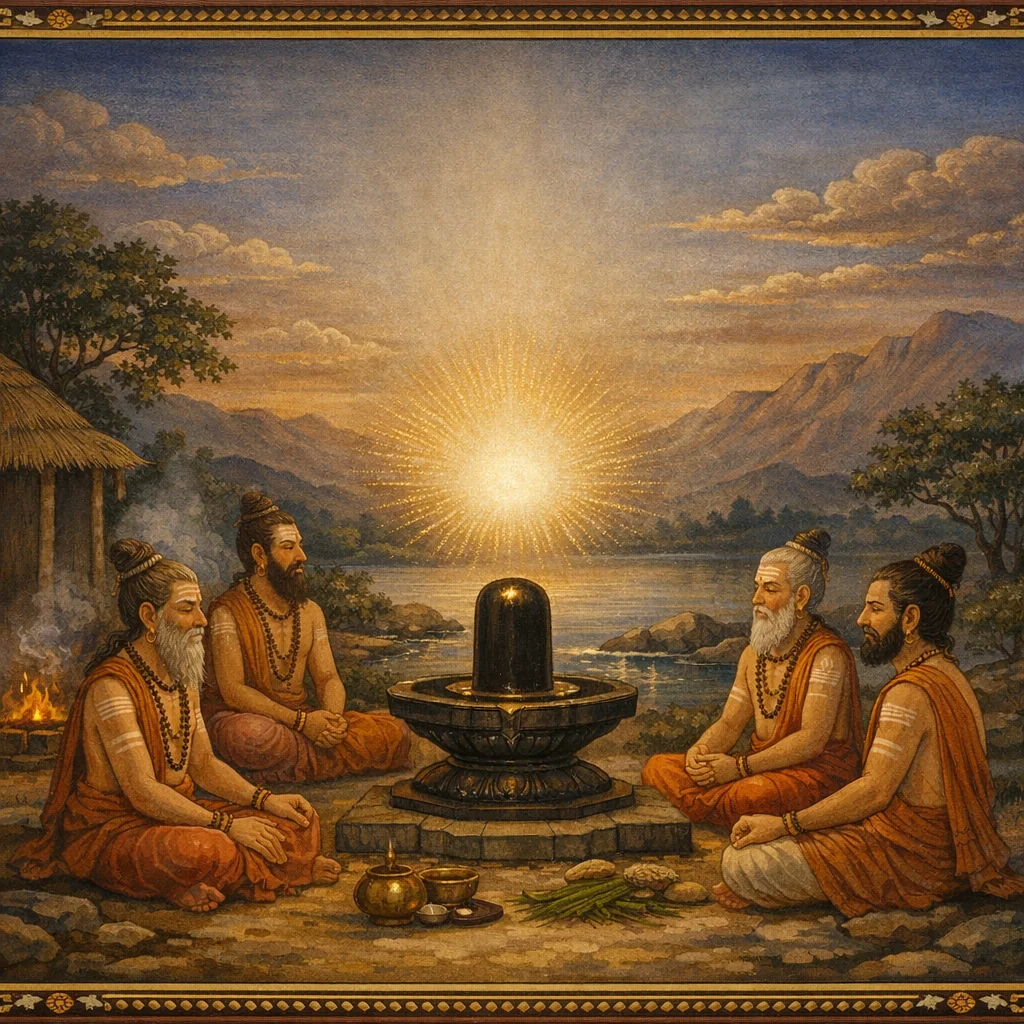
Īśvara (Śiva) speaks to Devī and directs her to Siddheśvara, a supreme divine form situated in the western part of the region, first established by the siddhas. The siddhas—divine beings—arrive and consecrate a liṅga, expressly seeking siddhi, success and perfection in all undertakings. Pleased by their intense tapas (austerity), Śiva grants them extraordinary powers such as aṇimā and other aiśvarya (sovereign divine capacities), and proclaims his perpetual nearness at that holy site (nitya-sānidhya). A sacred observance is then given: whoever worships Śiva there on the bright fourteenth day (śukla-caturdaśī) of the month of Caitra attains the supreme state by Śiva’s grace. Śiva then vanishes from sight while the siddhas continue their worship; and a general injunction concludes that devoted veneration of Siddheśvara brings remarkable accomplishment and desired fruits, therefore it should be honored continually.
Shlokas
Verse 1
ईश्वर उवाच । ततो गच्छेन्महादेवि देवं सिद्धेश्वरं परम् । तस्यैव पश्चिमे भागे सिद्धैः संस्थापितं पुरा
Īśvara said: “Then, O Great Goddess, one should go to the supreme Lord Siddheśvara. On the western side of that very sacred spot, a liṅga was established long ago by the Siddhas.”
Verse 2
सिद्धा नाम सुराः पूर्वं तत्रागत्य वरानने । लिंगं संस्थापयामासुः सिद्ध्यर्थं सर्ववस्तुषु
O fair-faced Lady, in ancient times the divine beings known as Siddhas came there and installed a liṅga, desiring success and perfection in all undertakings.
Verse 3
ततस्तुष्टो महादेवि तेषां दृष्ट्वा तपो महत् । अणिमादिकमैश्वर्यं तेषां सर्वं ददौ शिवः
Then, O Great Goddess, Śiva—pleased upon seeing their great austerity—bestowed upon them all the sovereign powers beginning with aṇimā (the subtle yogic perfections).
Verse 4
अब्रवीदत्र मे नित्यं सानिध्यं च भविष्यति
He declared: “Here, indeed, my presence shall abide forever.”
Verse 5
चैत्रे शुक्लचतुर्द्दश्यां योऽत्र मां पूजयिष्यति । स यास्यति परं स्थानं प्रसादान्मम पुण्यकृत्
Whoever worships me here on the fourteenth lunar day (caturdaśī) of the bright fortnight in the month of Caitra—having performed meritorious deeds—shall, by my grace, attain the supreme abode.
Verse 6
एवमुक्त्वाऽथ भगवाञ्जगामादर्शनं ततः । सिद्धाश्चैव तदाऽगत्य पूजयंति महेश्वरम्
Having spoken thus, the Blessed Lord then vanished from sight. Thereupon the Siddhas came again and worshipped Maheśvara.
Verse 7
यस्तमाराधयेद्भक्त्या संसिद्धिं लभतेऽद्भुताम् । ईप्सितां च सुरश्रेष्ठे तस्मात्तं पूजयेत्सदा
Whoever propitiates him with devotion attains wondrous, complete success—and also the desired boon, O best of goddesses. Therefore one should worship him always.
Verse 260
इति श्रीस्कान्दे महापुराण एकाशीतिसाहस्र्यां संहितायां सप्तमे प्रभासखण्डे प्रथमे प्रभासक्षेत्रमाहात्म्ये सिद्धेश्वरमाहात्म्यवर्णनंनाम षष्ट्युत्तरद्विशततमोऽध्यायः
Thus ends the two-hundred-and-sixtieth chapter, called “The Description of the Greatness of Siddheśvara,” in the Prabhāsa Khaṇḍa—within the Prabhāsa-kṣetra-māhātmya—of the Śrī Skanda Mahāpurāṇa, in the Ekāśīti-sāhasrī Saṃhitā.