Adhyaya 239
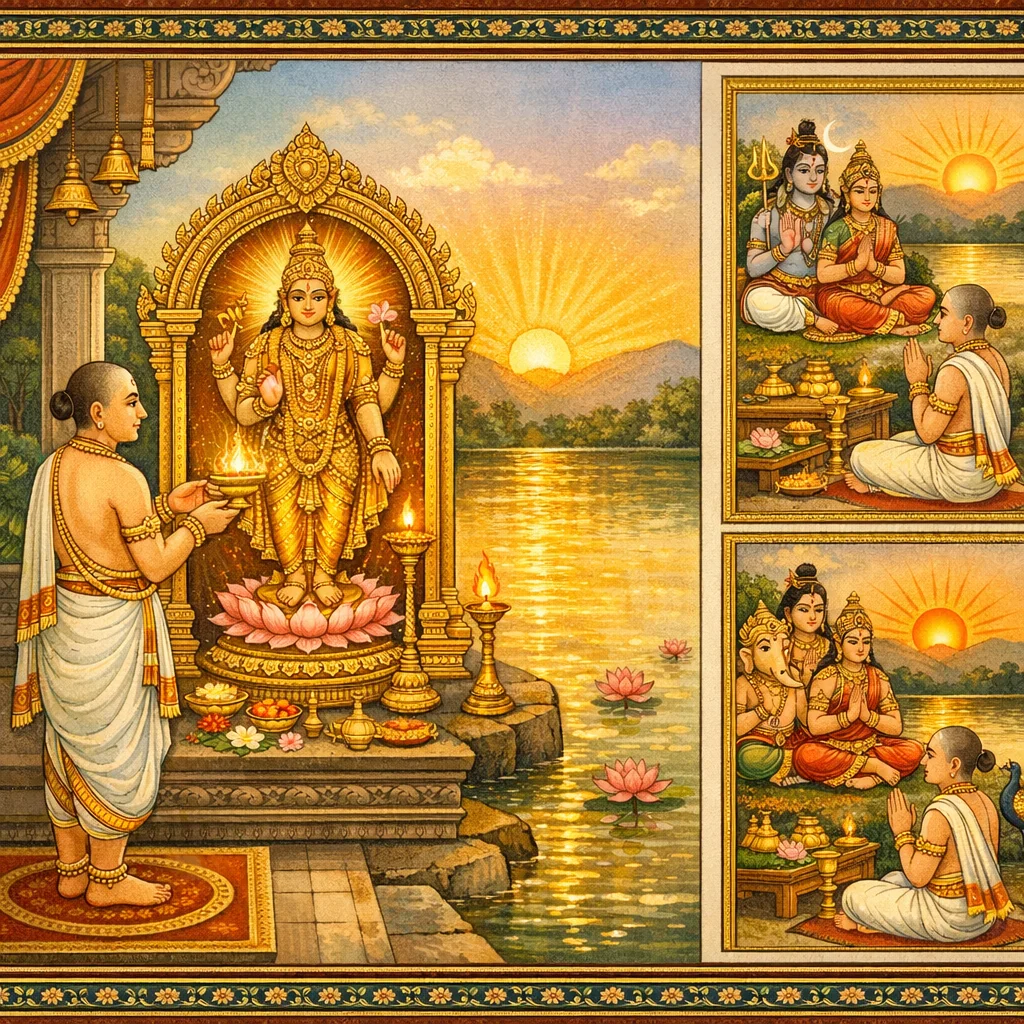
Īśvara tells Devī of the holiness of a solar icon called Nāgarāditya/Nāgarabhāskara, set near the sacred waters of Hiranyā. He first relates its origin: Satrājit, a Yādava king, undertakes a great vow and austerities to please Bhāskara (the Sun) and receives the Syamantaka jewel, which yields gold each day. When asked to choose a boon, Satrājit requests the Sun’s perpetual presence in the local hermitage; a radiant image is installed, and Brahmins and the city’s people are charged with guarding it—hence the shrine’s name, Nāgarāditya. The phalaśruti then proclaims that mere darśana of Nāgarārka equals major gifts at Prayāga. The deity is praised as the remover of poverty, sorrow, and disease, the true “physician” of afflictions. Prescribed observances include bathing with Hiranyā-water, worship of the icon, and keeping the bright-fortnight Saptamī connected with solar transition (saṅkramaṇa), when the efficacy of all rites is multiplied. The chapter ends with a compact 21-name stotra of the Sun (e.g., Vikartana, Vivasvān, Mārtaṇḍa, Bhāskara, Ravi), called a “stavarāja” that increases bodily health; recited at dawn and sunset, it grants desired fruits and culminates in reaching Bhāskara’s abode.
Shlokas
Verse 1
ईश्वर उवाच । ततो गच्छेन्महादेवि हिरण्यापार्श्वतः स्थितम् । प्रत्युक्तं नागरादित्यं सर्वव्याधिविनाशनम्
Īśvara said: “Then, O great goddess, one should go to Nāgarāditya, situated beside Hiraṇyā. That revered Āditya is renowned as the destroyer of all diseases.”
Verse 2
पुरा सत्राजिता राज्ञा द्वारवत्यां गतेन तु । आराधितो भास्करोऽभूद्यादवेन महात्मना
Formerly, the noble Yādava king Satrājit, having gone to Dvāravatī, worshipped Bhāskara (the Sun); and the Sun became well-pleased through that devotion.
Verse 3
महाव्रतमुपास्थाय निघ्नपुत्रेण धीमता । तस्य तुष्टस्तदा भानुः स्यमन्तकमणिं ददौ
Having undertaken the great vow, the wise son of Nighna (Satrājit) performed the observance; then Bhānu (the Sun), pleased with him, bestowed the Syamantaka jewel.
Verse 4
स मणिः सवते नित्यं भारानष्टौ दिनेदिने सुवर्णस्य सुशुद्धस्य भक्त्या व्रततपोयुतः
That jewel, unceasingly, day after day, yielded eight bhāras of supremely pure gold—a fruit bestowed upon one endowed with devotion (bhakti), sacred vow (vrata), and austerity (tapas).
Verse 5
भूयोऽपि भानुना प्रोक्तो वरं ब्रूहि वरानने । स चाह देवदेवेशं भास्करं वारितस्करम्
Again Bhānu said, “Speak your boon, O fair-faced one.” Then Satrājit addressed Bhāskara, Lord of the gods, the one who drives away thieves.
Verse 6
यदि तुष्टोऽसि मे देव वरदानं करोषि च । अत्रैव चाश्रमे पुण्ये नित्यं संनिहितो भव
“If you are pleased with me, O God, and you grant boons, then remain here indeed, in this holy hermitage, ever present.”
Verse 7
एवं भविष्यतीत्युक्त्वा सूर्यः सत्राजितं नृपम् । अभिनंद्य वरं तस्य तत्रैवादर्शनं गतः
Saying, “So it shall be,” Sūrya honored King Satrājit and his boon; and then, right there, the Sun vanished from sight.
Verse 8
तेनापि निघ्नपुत्रेण देवदेवस्य भास्वतः । स्थापिता प्रतिमा शुभ्रा तत्रैव वरवर्णिनि
And Satrājit, the son of Nighna, also installed right there a radiant and auspicious sacred image of the shining Deva of gods, Sūrya, O fair-complexioned one.
Verse 9
शंखदुंदुभिनिर्घोषैर्ब्रह्मघोषैश्चपुष्कलैः । ततस्तुनागरान्सर्वान्समाहूय द्विजोत्तमान् । अब्रवीत्प्रणतो भूत्वा दत्त्वा वृत्तिमनुत्तमाम्
Amid the resounding of conches and dundubhi drums, and abundant Vedic chants, he then summoned all the townspeople and the foremost of the twice-born. Bowing in reverence, and having granted them excellent means of livelihood, he spoke.
Verse 10
युष्मत्पादप्रसादेन सूर्यस्यानुग्रहेण वै । साधयित्वा तपश्चोग्रं स्थापिता प्रतिमा मया
“By the grace of your feet, and indeed by the Sun-god Sūrya’s favor, having accomplished fierce austerity, I have installed this sacred image.”
Verse 11
इंद्रलोकादिहानीता जित्वा शक्रं सुरारिणा । दशाननस्य पुत्रेण लंकायां स्थापिता पुरा
Once, after conquering Śakra (Indra), the enemy of the gods carried it away from Indra’s world and long ago installed it in Laṅkā—by the son of Daśānana (Rāvaṇa).
Verse 12
तं निहत्य तु रामेण लक्ष्मणानुगतेन वै । अयोध्यायां समानीता सौमित्रिजयलक्षिका
After Rāma—accompanied by Lakṣmaṇa—had slain him, it was brought to Ayodhyā as a visible emblem of Saumitrī’s (Lakṣmaṇa’s) victory.
Verse 13
मित्रावरुणपुत्राय वसिष्ठाय समर्पिता । तेनापि मम तुष्टेन द्वारकायां निवेदिता
It was presented to Vasiṣṭha, the son of Mitra and Varuṇa; and he too—pleased with me—offered it at Dvārakā.
Verse 14
मयापि स्थापिता चात्र ज्ञात्वा क्षेत्रमनुत्तमम् । किमत्र बहुनोक्तेन भवद्भिः सर्वथैव हि
I too established it here, knowing this kṣetra to be unsurpassed. What need is there to say more? Truly, in every way it is supreme for you.
Verse 15
परिपाल्या प्रयत्नेन यावच्चंद्रार्कतारकम् । तस्माद्युष्माकमादिष्टा प्रतिमेयं मया शुभा
It should be diligently protected as long as the moon, the sun, and the stars endure. Therefore I have enjoined upon you this auspicious image—guard it and maintain it.
Verse 16
नागराणां तु विप्राणां सोमेशपुरवासिनाम् । तस्मान्नाम मया दत्तं नागरादित्यमेव हि
And because it is connected with the Nāgara brāhmaṇas dwelling in Someśapura, I therefore bestowed the name ‘Nāgarāditya’ indeed.
Verse 17
ब्राह्मणा ऊचुः । सर्वमेव करिष्यामो देवस्य परिपालनम् । यावन्मही च चंद्रार्कौ यावत्तिष्ठति सागरः । तावत्ते ह्यक्षया कीर्तिः स्थाने चास्मिन्भविष्यति
The brāhmaṇas said: “We shall indeed do everything for the Lord’s protection and upkeep. As long as the earth endures, as long as the moon and sun endure, as long as the ocean remains—so long shall your fame be imperishable, and in this very place it shall abide.”
Verse 18
एवमुक्त्वा तु ते सर्वे नागरा द्विजपुंगवाः । राजापि तुष्टः प्रययौ तदा द्वारवतीं पुरीम्
Having spoken thus, all those eminent Nāgara brāhmaṇas, foremost among the twice-born, departed; and the king too, satisfied, then set out for the city of Dvāravatī.
Verse 19
ईश्वर उवाच । शृणु देवि प्रवक्ष्यामि तस्मिन्दृष्टे तु यत्फलम् । गोशतस्य प्रयागेषु सम्यग्दत्तस्य यत्फलम् । तत्फलं समवाप्नोति नागरार्कस्य दर्शनात्
Īśvara said: “Listen, O Goddess; I shall declare the fruit of beholding it. Whatever merit is gained by rightly gifting a hundred cows at the Prayāgas—one attains that very merit by the darśana of Nāgarārka.”
Verse 20
दारिद्र्यदुःखशोकार्त्तेः कोन्योस्ति हरणक्षमः । प्रभासे पावने क्षेत्रे मुक्त्वा नागरभास्करम्
Who else can remove poverty, suffering, grief, and affliction—especially in the purifying kṣetra of Prabhāsa—apart from Nāgarabhāskara?
Verse 21
बंधकुष्ठादिकं दुःखं ये भजंत्यल्पबुद्धयः । तत्र ते नैव जानंति वैद्यं नागरभास्करम्
Those of little understanding who suffer pains such as bondage and leprosy do not recognize, even in that condition, the true physician—Nāgarabhāskara, the Sun, who can heal them.
Verse 22
स्नात्वा हिरण्यातोयेन यस्तं पूजयते नरः । कल्पकोटिसहस्राणि सूर्यलोके महीयते
That man who bathes with “golden water” and worships Him is honored in the world of the Sun for thousands of crores of kalpas.
Verse 23
शुक्लपक्षे तु सप्तम्यां यदा संक्रमते रविः । महाजया तदा ख्याता सप्तमी भास्करप्रिया
When, on the Saptamī (seventh lunar day) of the bright fortnight, Ravi (the Sun) enters a new sign in saṅkrānti, that Saptamī is renowned as Mahājayā—dear to Bhāskara.
Verse 24
स्नानं दानं जपो होमः पितृदेवाभिपूजनम् । सर्वं कोटिगुणं प्रोक्तं भास्करस्यवचो यथा
Bathing, charity, japa, the fire-offering (homa), and the worship of ancestors and gods—all of it is declared to become a crore-fold in merit, according to Bhāskara’s word.
Verse 25
एकं यो भोजयेत्तत्र ब्राह्मणं सूर्यसंनिधौ । कोटिभोज्यं कृतं तेन इत्याह भगवान्हरिः
Whoever there, in the presence of the Sun, feeds even one Brāhmaṇa—by him it is as though a crore have been fed; thus declares Lord Hari.
Verse 26
एतन्मया ते कथितं पुरा नोक्तं वरानने । यः शृणोति नरो भक्त्या स गच्छेद्भास्करं पदम्
This I have told you, O fair-faced one—something not spoken before. The person who listens with devotion attains the abode of Bhāskara.
Verse 27
सूर्यस्य देवि नामानि रहस्यानि शृणुश्व मे । अलं नामसहस्रेण पठस्वैनं शुभं स्तवम्
O Goddess, listen to me—the secret names of Sūrya. Enough of a thousand names; recite this auspicious hymn instead.
Verse 28
विकर्त्तनो विवस्वांश्च मार्त्तंडो भास्करो रविः । लोकप्रकाशकः श्रीमांल्लोकचक्षुर्ग्रहेश्वरः
Vikartana, Vivasvān, Mārtaṇḍa, Bhāskara, Ravi—He is the illuminator of the worlds, the radiant one, the eye of the universe, the lord of the planets.
Verse 29
लोकसाक्षी त्रिलोकेशः कर्त्ता हर्त्ता तमिस्रहा । तपनस्तापनश्चैव शुचिः सप्ताश्ववाहनः
He is the witness of the world, the Lord of the three worlds, the creator and the withdrawer, the destroyer of darkness; Tāpana and Tapana, the Pure One, whose chariot is drawn by seven horses.
Verse 30
गभस्तिहस्तो ब्रह्मा च सर्वदेवनमस्कृतः । एकविंशक इत्येष नागरार्कस्तवः स्मृतः
He is called Gabhastihasta, and also Brahmā, the One saluted by all the gods; this hymn is remembered as the “Ekaviṃśaka”, the Nāgarārka-stava (the Nāgara Sun-hymn).
Verse 31
स्तवराज इति ख्यातः शरीरारोग्यवृद्धिदः
It is renowned as the “King of Hymns” (Stavarāja), bestowing increase of bodily health and freedom from disease.
Verse 32
य एतेन महादेवि द्वे संध्येऽस्तमनोदये । नागरार्कं तु संस्तौति स लभेद्वांछितं फलम्
O Great Goddess, whoever with this hymn praises Nāgarārka at the two sandhyās—at sunset and at sunrise—attains the desired fruit.
Verse 239
इति श्रीस्कांदे महापुराण एकाशीतिसाहस्र्यां सहितायां सप्तमे प्रभासखंडे प्रथमे प्रभासक्षेत्रमाहात्म्ये नागरार्कमाहात्म्यवर्णनंनामैकोनचत्वारिंशदुत्तरद्विशततमो ऽध्यायः
Thus ends the two-hundred-and-thirty-ninth chapter, called “The Description of the Greatness of Nāgarārka,” in the first part, the Prabhāsakṣetra-māhātmya, of the seventh book, the Prabhāsa-khaṇḍa, of the Śrī Skanda Mahāpurāṇa, in the compilation of eighty-one thousand verses.