Adhyaya 219
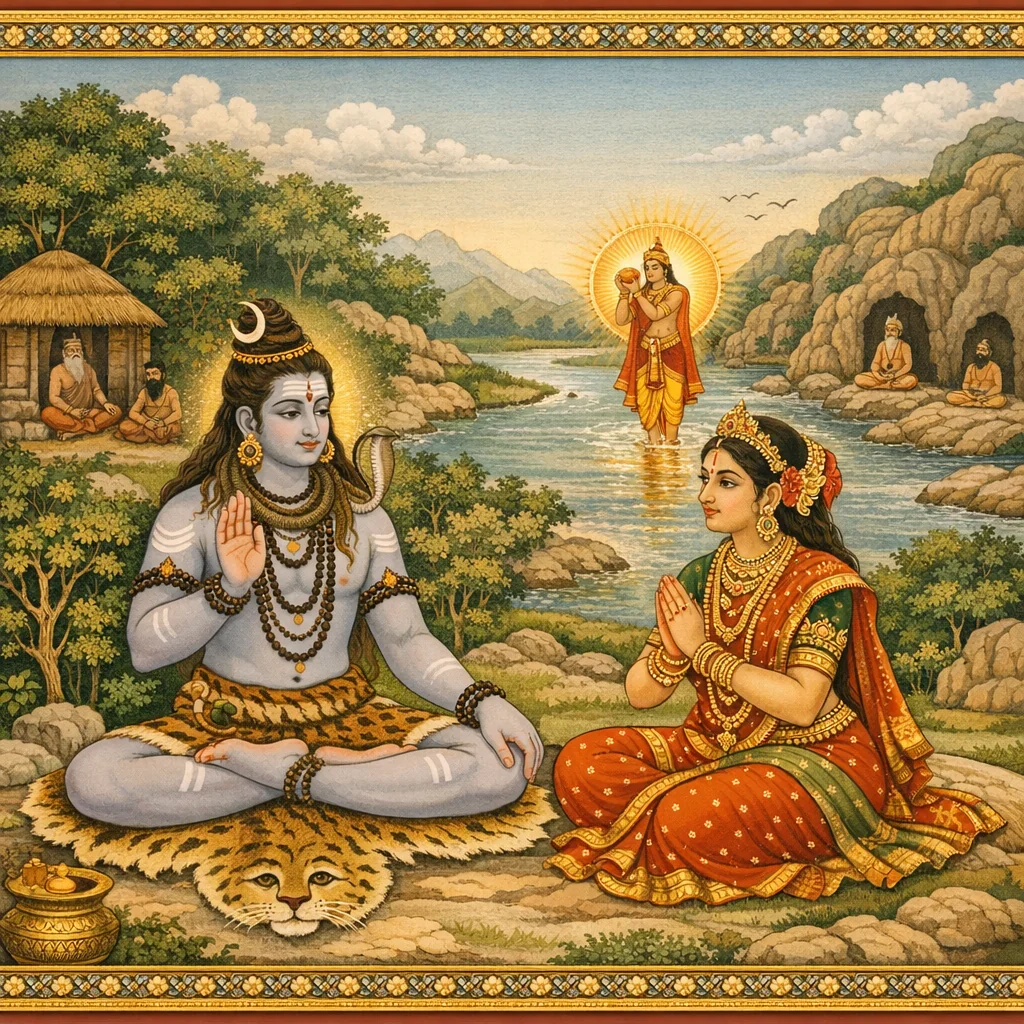
This chapter is a Śaiva teaching in which Īśvara speaks to Devī, mapping a local cluster of sacred sites in the āgneya (southeastern) quarter near Mārkaṇḍeya’s āśrama. It first points to the famed shrine Guhāliṅga—also called Nīlakaṇṭha—said to have been worshiped by Viṣṇu in former times and praised as the “destroyer of all remaining sin.” The discourse then links bhakti-filled worship with tangible blessings—prosperity, children, cattle, and contentment—and broadens the sacred landscape by noting visible hermitages and ascetics’ caves, many connected with liṅgas. A key injunction follows: installing a liṅga near Mārkaṇḍeya is said to uplift extensive lineages, presenting the act as a socially expansive religious means. Its theology is universalizing: “all worlds are Śiva-formed; all is established in Śiva,” and thus the learned seeker of prosperity should worship Śiva. Through exempla of devas, kings, and humans, liṅga worship and liṅga-installation are normalized and held forth as remedies even for grave transgressions through “Śiva’s radiance.” Brief origin-notes—Indra after Vṛtra, the Sun at confluences, Ahalyā’s restoration, and others attaining higher states—serve as narrative proofs, and the chapter closes by reaffirming the essence of Prabhāsa-kṣetra in relation to Mārkaṇḍeya’s āśrama.
Shlokas
Verse 1
ईश्वर उवाच । तस्मादाग्नेयकोणे तु मार्कंडेयसमीपगम् । गुहालिंगं महादेवि नीलकण्ठेति विश्रुतम्
Īśvara said: “From there, in the south-eastern direction, near Mārkaṇḍeya, is the Guhā-liṅga, O Mahādevī, renowned by the name Nīlakaṇṭha.”
Verse 2
विष्णुना पूजितं पूर्वं सर्व पातकनाशनम्
Formerly worshipped by Viṣṇu, it destroys all sins.
Verse 3
तत्र यः पूजयेद्भक्त्या तल्लिंगं पापमोचनम् । स पुत्रपशुमान्धीमान्मोदते पृथिवीतले
Whoever worships that sin-liberating liṅga there with devotion becomes endowed with children and cattle, possessed of good understanding, and rejoices upon the earth.
Verse 4
एवं तत्र महादेवि मार्कण्डेयेश सन्निधौ । ऋषीणामाश्रमा येऽत्र दृश्यन्तेऽद्यापि भामिनि
Thus, O Great Goddess, in the very vicinity of Mārkaṇḍeyeśa, the hermitages of the sages that are there are seen even to this day, O radiant one.
Verse 5
अष्टाशीतिसहस्राणि ऋषीणामूर्ध्वरेतसाम् । तत्र स्थितानि देवेशि मार्कण्डेयाश्रमांतिके
Eighty-eight thousand sages, possessed of sublimated vital energy (celibate ascetics), reside there, O Lady of the gods, near the hermitage of Mārkaṇḍeya.
Verse 6
ऋषीणां च गुहास्तत्र सर्वा लिंगसमन्विताः । दृश्यन्ते पुण्यतपसां तदाश्रमनिवासिनाम्
And there, the caves of the sages—all furnished with Śiva-liṅgas—are seen; they belong to those of holy austerities who dwell in those hermitages.
Verse 7
तत्र यः स्थापयेल्लिंगं मार्कंडेशसमीपगम् । कुलानां शतमुद्धृत्य मोदते दिवि देववत्
Whoever establishes a Śiva-liṅga there, near Mārkaṇḍeśa, uplifts a hundred generations of his lineage and rejoices in heaven like a god.
Verse 8
सर्वे शिवमया लोकाः शिवे सर्वं प्रतिष्ठितम् । तस्माच्छिवं यजेद्विद्वान्य इच्छेच्छ्रियमात्मनः
All worlds are pervaded by Śiva; in Śiva everything is established. Therefore, the wise person who seeks prosperity for himself should worship Śiva.
Verse 9
शिवभक्तो न यो राजा भक्तोऽन्येषु सुरेषु च । स्वपतिं युवती त्यक्त्वा रमतेऽन्येषु वै यथा
A king who is not devoted to Śiva but is devoted to other deities is like a young woman who, abandoning her own husband, takes pleasure with others.
Verse 10
ब्रह्मादयः सुराः सर्वे राजानश्च महर्द्धिकाः । मानवा मुनयश्चैव सर्वे लिंगं यजंति च
Brahmā and the other gods, mighty kings, human beings, and sages as well—all of them worship the Liṅga.
Verse 11
स्वनामकृतचिह्नानि लिंगानींद्रादिभिः क्रमात् । स्थापितानि यथा स्थाने मानवैरपि भूरिशः
Liṅgas bearing marks and names fashioned after their own names were established in due order by Indra and the other gods, each in its proper place—and likewise by many human beings as well.
Verse 12
स्थापनाद्ब्रह्महत्यां च भ्रूणहत्यां तथैव च । महापापानि चान्यानि निस्तीर्णाः शिवतेजसा
By the installation of the liṅga, even the sin of brahmin-slaying and the sin of foeticide—as well as other great sins—are crossed over, by the splendor of Śiva.
Verse 13
वृत्रं हत्वा पुरा शक्रो माहेन्द्रं स्थाप्य शंकरम् । लिंगं च मुक्तपापौघस्ततोऽसौ त्रिदिवं गतः
Formerly, after slaying Vṛtra, Śakra (Indra) established Śaṅkara as the Māhendra Liṅga; freed from torrents of sin, he then went to heaven.
Verse 14
स्थापयित्वा शिवं सूर्यो गंगासागरसंगमे । निरामयोऽभूत्सोमश्च प्रभासे पश्चिमोदधेः
Having installed Śiva at the confluence of the Gaṅgā and the ocean, Sūrya (the Sun) attained fulfillment; and Soma (the Moon) too became free from disease at Prabhāsa on the western sea.
Verse 15
काश्यां चैव तथादित्यः सह्ये गरुडकाश्यपौ । प्रतिष्ठां परमां प्राप्तौ प्रतिष्ठाप्य जगत्पतिम्
So too in Kāśī did Āditya (the Sun) attain the highest sanctity; and on the Sahya mountains, Garuḍa and Kaśyapa likewise obtained supreme establishment after installing the Lord of the world.
Verse 16
ख्यातदोषा ह्यहिल्याऽपि भर्तृशप्ताऽभवत्तदा । स्थाप्येशानं पुनः स्त्रीत्वं लेभे पुत्रांस्तथोत्तमान्
Ahalyā too—though her fault was widely known—became cursed by her husband then; but after installing Īśāna (Śiva), she regained her womanhood and obtained excellent sons.
Verse 17
पश्यंत्यद्यापि याः स्नात्वा तत्राहिल्येश्वरं स्त्रियः । पुरुषाश्चापि तद्दोषैर्मुच्यन्ते नात्र संशयः
Even today, women who bathe there and behold Ahilyeśvara are freed from such faults; men too are released from those blemishes—of this there is no doubt.
Verse 18
स्थापयित्वेश्वरं श्वेतशैले बलिविरोचनौ । उभावपि हि संजातावमरौ बलिनां वरौ
After installing the Lord on Śvetaśaila, Bali and Virocana—both indeed—became deathless, the foremost among the mighty.
Verse 19
रामेण रावणं हत्वा ससैन्यं त्रिदशेश्वरम् । स्थापितो विधिवद्भक्त्या तीरे नदनदीपतेः
After Rāma slew Rāvaṇa together with his forces, he established Tridaśeśvara with due rites and devotion on the bank of the lord of rivers.
Verse 20
स्वायंभुवर्षिदैवादिलिंगहीना न भूः क्वचित व्या । पारान्सकलांस्त्यक्त्वा पूजयध्वं शिवं सदा । निकटा इव दृश्यंते कृतांतनगरोपगाः
O Devī, nowhere on earth—whether among the realms of Svāyambhuvas, Ṛṣis, or gods—is there any region devoid of a liṅga. Forsaking all other pursuits, worship Śiva always; for those who go to the city of Death appear as though it were already close at hand.
Verse 21
देवि किं बहुनोक्तेन वर्णितेन पुनः पुनः । प्रभासक्षेत्रसारं तु मार्कण्डेयाश्रमं प्रति
O Devī, what is the use of saying much, described again and again? The very essence of Prabhāsa-kṣetra is found in the direction of Mārkaṇḍeya’s āśrama.
Verse 219
इति श्रीस्कांदे महापुराण एकाशीतिसाहस्र्यां संहितायां सप्तमे प्रभासखंडे प्रथमे प्रभास क्षेत्रमाहात्म्ये मार्कण्डेयेश्वरमाहात्म्यवर्णनंनामैकोनविंशत्युत्तरद्विशततमोऽध्यायः
Thus ends, in the Śrī Skanda Mahāpurāṇa—within the compendium of eighty-one thousand ślokas—within the seventh, the Prabhāsa-khaṇḍa, in the first Prabhāsa-kṣetra-māhātmya, the chapter called “The Description of the Greatness of Mārkaṇḍeyeśvara,” being Chapter 219.