Adhyaya 209
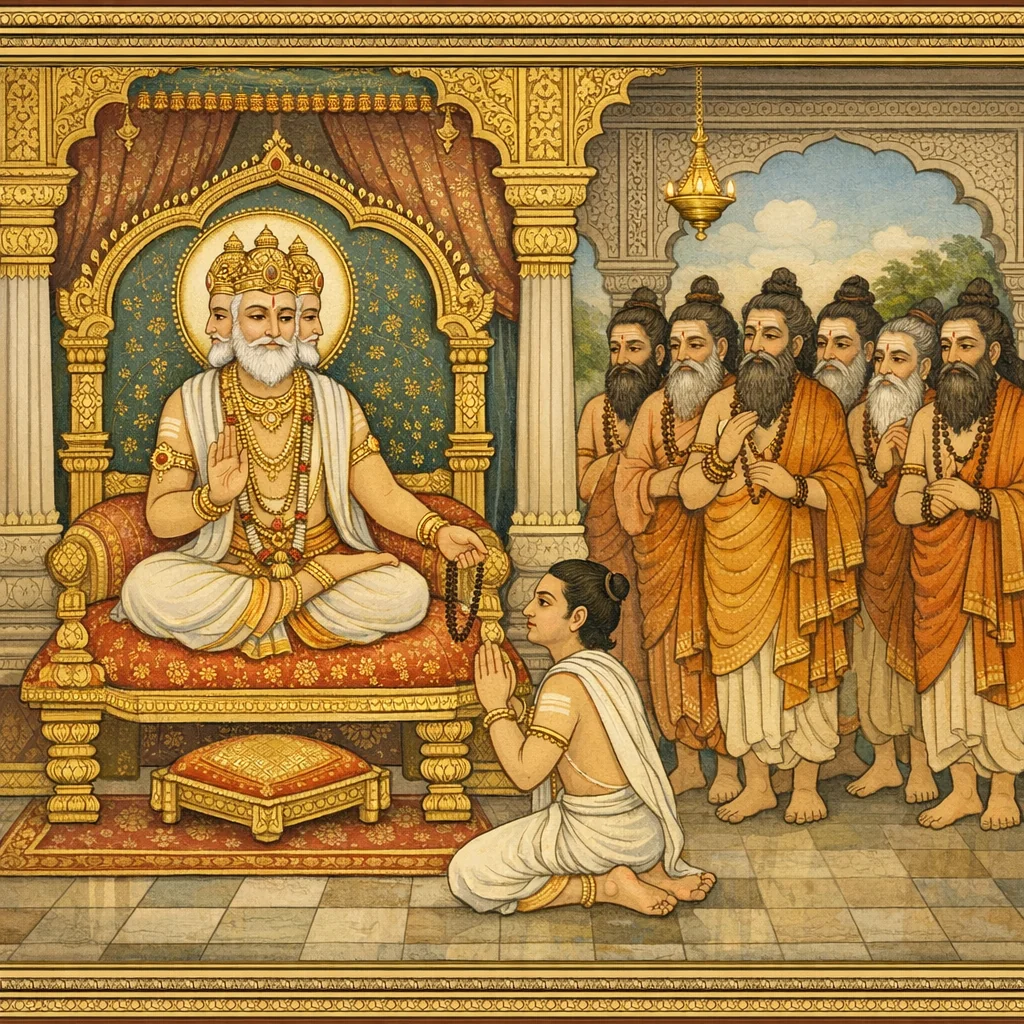
Chapter 209 presents a two-part discourse with Īśvara speaking to Devī. First, Devī is directed to the eminent shrine of Mārkaṇḍeyeśvara, to the north near the eastern quarter of Sāvitrī. Its sanctity is traced to the sage Mārkaṇḍeya who, by the grace of Padmayoni (Brahmā), became ageless and deathless in the Purāṇic sense. He establishes a Śiva-liṅga there and enters long dhyāna in padmāsana; after vast ages the Śaiva temple is buried by windblown dust, and on awakening he excavates it and reopens a great doorway for worship. The chapter adds a merit-fruit: whoever enters and devotionally worships Vṛṣabhadhvaja (Śiva) attains the supreme abode where Maheśvara dwells. In the second part, Devī asks how Mārkaṇḍeya can be called “immortal” when mortality is universal. Īśvara recounts an earlier kalpa: the sage Mṛkaṇḍu, son of Bhṛgu, begets a virtuous child fated to die in six months. The father performs upanayana and trains the child in daily reverent salutations. During pilgrimage the Saptarṣis bless the boy with “long life,” then fear their words may fail when they perceive his short span, and they bring the brahmacārin before Brahmā. Brahmā confirms a special destiny: the child will become Mārkaṇḍeya, equal in lifespan to Brahmā and a companion at the beginning and end of the kalpa. The chapter closes with the father’s relief and grateful devotion, affirming disciplined reverence, divine authorization, and the enduring accessibility of the kṣetra even after concealment.
Shlokas
Verse 1
ईश्वर उवाच । ततो गच्छेन्महादेवि मार्कण्डेयेशमुत्तमम् । तस्मादुत्तरदिग्भागे मार्कण्डेन प्रतिष्ठितम्
Īśvara said: Then, O Great Goddess, one should go to the supreme Mārkaṇḍeyeśvara; it is established by Mārkaṇḍa in the northern quarter from there.
Verse 2
सावित्र्याः पूर्वभागे तु नातिदूरे व्यवस्थितम् । महर्षिरभवत्पूर्वं मार्कण्डेय इति श्रुतः
It lies not far away, on the eastern side of Sāvitrī. In former times there was a great seer, renowned by the name Mārkaṇḍeya.
Verse 3
अजरश्चामरश्चैव प्रसादात्पद्मयोनिनः । स गत्वा तत्र विप्रेन्द्रो देवदेवस्य शूलिनः । लिंगं तु स्थापयामास ज्ञात्वा तत्क्षेत्रमुत्तमम्
By the grace of the Lotus-born (Brahmā), he became both ageless and deathless. Then that best of Brāhmaṇas went there and, knowing that place to be an excellent kṣetra, established a liṅga of the Trident-bearing Lord—the God of gods.
Verse 4
स तं पूज्य विधानेन स्थित्वा दक्षिणतो मुनिः । पद्मासनधरो भूत्वा ध्यानावस्थस्तदाऽभवत्
Having worshipped Him according to the proper rite, the sage stood to the south; then, assuming the lotus-posture, he entered a state of deep meditation.
Verse 5
तस्य ध्यानरतस्यैव प्रयुतान्यर्बुदानि च । युगानां समतीतानि न जानाति मुनीश्वरः
For that lordly sage, wholly devoted to meditation, tens of thousands and even crores of yugas passed by—yet he did not perceive the time that had elapsed.
Verse 6
अथ लोपं समापन्नः प्रासादः शांकरः स्थितः । कालेन महता देवि पांसुभिर्मारुतोद्भवैः
Then, O Goddess, with the passing of a very long time, the Śaiva temple-structure fell into ruin, becoming covered and choked by dust raised by the winds.
Verse 7
कस्यचित्त्वथ कालस्य प्रबुद्धो मुनिसत्तमः । अपश्यत्पांसुभिर्व्याप्तं तत्सर्वं शिवमन्दिरम्
After some time, the best of sages awoke and saw that the entire temple of Śiva had been covered over with dust.
Verse 8
ततः कृच्छ्रात्स निष्क्रान्तः खनित्वा मुनिपुंगवः । अकरोत्सुमहाद्वारं पूजार्थं तस्य भामिनि
Then, with great effort, that bull among sages emerged; having dug it out, O radiant lady, he made a very large doorway so that worship there could be performed.
Verse 9
प्रविश्य तत्र यो भक्त्या पूजयेद्वृषभध्वजम् । स याति परमं स्थानं यत्र देवो महेश्वरः
Whoever enters there and, with devotion, worships the Lord whose banner bears the bull, attains the supreme abode—where Lord Maheśvara dwells.
Verse 10
देव्युवाच । अमरत्वं कथं प्राप्तो मार्कंण्डो मुनिसत्तमः । अभवत्कौतुकं ह्येतत्तस्मात्त्वं वक्तुमर्हसि
The Goddess said: “How did Mārkaṇḍa, best of sages, attain immortality? This has indeed aroused my curiosity—therefore you should explain it.”
Verse 11
अमरत्वं यतो नास्ति प्राणिनां भुवि शंकर । देवानामपि कल्पांते स कथं न मृतो मुनिः
“Since immortality does not exist for living beings on earth, O Śaṅkara—and even the gods perish at the end of an aeon—how then did that sage not die?”
Verse 12
ईश्वर उवाच । अथातस्त्वां प्रव क्ष्यामि यथासावमरोऽभवत् । आसीन्मुनिः पुराकल्पे मृकण्ड इति विश्रुतः
Īśvara said: “Now I shall tell you how he became deathless. In a former kalpa there lived a sage renowned by the name Mṛkaṇḍa.”
Verse 13
भृगोः पुत्रो महाभागः सभार्यस्तपसि स्थितः । तस्य पुत्रस्तदा जातो वसतस्तु वनांतरे
He was the illustrious son of Bhṛgu, abiding in austerity together with his wife; and while he dwelt in a forest hermitage, a son was then born to him.
Verse 14
स पाञ्चवार्षिको भूत्वा बाल एव गुणान्वितः । कस्यचित्त्वथ कालस्य ज्ञानी तत्र समागतः
Though only five years old, the boy was already endowed with noble qualities. After some time, a realized knower—a jñānī—arrived there.
Verse 15
तेन दृष्टस्तदा बालः प्रांगणे विचरन्प्रिये । स्मृत्वाऽहसच्चिरं कालं भाव्यर्थं प्रति नोदितः
O beloved, seeing the boy wandering in the courtyard, the knower recalled a long span of time and was inwardly stirred by what was yet to come.
Verse 16
तस्य पित्रा स दृष्टस्तु सामुद्रज्ञो विदुत्तमः । हास्यस्य कारणं पृष्टो विस्मयान्वितचेतसा
The boy’s father then saw that excellent knower, skilled in reading signs; and, his mind filled with wonder, asked him the reason for his smile.
Verse 17
कस्मान्मे सुतमालोक्य स्मितं विप्र कृतं त्वया । तत्र मे कारणं ब्रह्मन्यथावद्वक्तुमर्हसि
“Why, O brāhmaṇa, did you smile upon seeing my son? O holy one, tell me the true reason for it, just as it is.”
Verse 18
इति तस्य वचः श्रुत्वा ज्ञानी विप्रो वचोऽब्रवीत्
Hearing his words, the wise brāhmaṇa replied.
Verse 19
अयं पुत्रस्तव मुने सर्वलक्षणसंयुतः । अद्यप्रभृति षण्मासमध्ये मृत्युमवाप्स्यति
“This son of yours, O sage, possesses all auspicious marks; yet from today, within six months, he will meet death.”
Verse 20
यदि जीवेत्पुनरयं चिरायुर्वै भविष्यति । अतो मया कृतं हास्यं विचित्रा कर्मणो गतिः
“But if he survives, he will indeed become long-lived. That is why I smiled—wondrous and unpredictable is the course of karma.”
Verse 21
एतच्छ्रुत्वा वचो रौद्रं ज्ञानिना समुदाहृतम् । व्रतोपनयनं चक्रे बालकस्य पिता तदा
Hearing those harsh words spoken by the knower, the boy’s father then performed the vow and the initiation (upanayana) for the child.
Verse 22
आह चैनमृषिः पुत्रं दृष्ट्वा ब्राह्मणमागतम् । अभिवाद्यास्त्रयो वर्णास्ततः श्रेयो ह्यवाप्स्यसि
And the sage said to his son: “When you see a brāhmaṇa arrive, offer reverent salutations. By honoring the three varṇas, you will surely attain welfare.”
Verse 23
एवमुक्तः स वै विप्रः करोत्येवाभिवादनम् । न वर्णावरजं वेत्ति बालभावाद्वरानने
Thus instructed, the boy indeed offered salutations; yet, because of childishness, O fair-faced one, he did not understand the proper order of precedence among the varṇas.
Verse 24
पंचमासा ह्यतिक्रान्ता दिवसाः पञ्चविंशतिः । एतस्मिन्नेव काले तु प्राप्ताः सप्तर्षयोऽमलाः
When five months and twenty-five days had passed, at that very time the stainless Seven Sages—the Saptarṣis—arrived.
Verse 25
तीर्थयात्राप्रसंगेन तेन मार्गेण भामिनि । कालेन तेन सर्वेऽथ यथावदभिवादनैः । आयुष्मान्भव तैरुक्तः स बालो दण्डवल्कली
O fair lady, while traveling on pilgrimage to the tīrthas along that route, in due course they all received proper salutations; and that boy—bearing a staff and clad in bark—was blessed by them with the words, “May you be long-lived.”
Verse 26
उक्त्वा ते तु पुनर्बालं वीक्ष्य वै क्षीणजीवितम् । दिनानि पंच ते ह्यायुर्ज्ञात्वा भीतास्ततोऽनृतात्
But after speaking so, they looked again at the boy and saw that his span of life was nearly spent. Realizing that only five days remained for him, they became afraid that their blessing might prove untrue.
Verse 27
ब्रह्मचारिणमादाय गतास्ते ब्रह्मणोऽन्तिके । प्रतिमुच्याग्रतो बालं प्रणेमुस्ते पितामहम्
Taking the brahmacārin boy with them, they went into Brahmā’s presence. Setting the child before them, they bowed down to Pitāmaha, the Grandfather.
Verse 28
ततस्तेनापि बालेन ब्रह्मा चैवाभिवादितः । चिरायुर्ब्रह्मणा बालः प्रोक्तोऽसावृषिसन्निधौ
Then the boy too duly saluted Brahmā. In the presence of the sages, Brahmā declared, “This boy shall be long-lived.”
Verse 29
ततस्ते मुनयः प्रीताः श्रुत्वा वाक्यं पितामहात् । पितामहस्तु तान्दृष्ट्वा ऋषीन्प्रोवाच विस्मितान् । केन कार्येण वाऽयाताः केन बालो निवेदितः
Hearing Pitāmaha’s words, the sages were delighted. Then Pitāmaha, seeing the astonished seers, said: “For what purpose have you come, and why has this boy been brought before me?”
Verse 30
ऋषय ऊचुः । भृगोः पुत्रो मृकण्डस्तु क्षीणायुस्तस्य बालकः । अकालेन पिता ज्ञात्वा बबंधास्य च मेखलाम्
The sages said: “Mṛkaṇḍa, the son of Bhṛgu, has a boy whose lifespan is short. Knowing this before the time (of death), the father bound upon him the mekhalā, the girdle of the brahmacārin.”
Verse 31
यज्ञोपवीतं च ततस्तेन विप्रेण बोधितः । यं कञ्चिद्द्रक्ष्यसे लोके भ्रमन्तं भूतले द्विजम्
Then, instructed by that brāhmaṇa, he was invested with the yajnopavīta, the sacred thread. “Whomever you see in this world—a dvija, a twice-born roaming upon the earth—…”
Verse 32
तस्याभिवादनं कार्यं नित्यमेव च पुत्रक । ततो वयमनेनैव दृष्टा बालेन सत्तम
“My son, you must always offer him reverent salutation.” Thus it was that we ourselves were seen by this very boy, O best of beings.
Verse 33
तीर्थयात्राप्रसंगेन दैवयोगात्पितामह । चिरायुरेष वै प्रोक्तो ह्यमीभिश्चाभिवादितैः
O Pitāmaha, in the course of pilgrimage—by a providential convergence—this boy was indeed pronounced “long-lived” by these very sages, after being duly saluted.
Verse 34
त्वत्सकाशं समानीतस्त्वया चैवमुदाहृतः । कथं वागनृता देव ह्यस्माकं भवता सह
“Having been brought into your presence and addressed by you in this way—how could any word prove untrue, O Deva, when spoken by you to us?”
Verse 35
उवाच बालमुद्दिश्य प्रहसन्पद्मसंभवः । मत्समानायुषो बालो मार्कण्डेयो भविष्यति
Smiling and indicating the child, Padmasaṃbhava (Brahmā) said: “This boy—Mārkaṇḍeya—shall have a lifespan equal to mine.”
Verse 36
कल्पस्यादौ तथा चान्ते सहायो मे भविष्यति । ततस्तु मुनयः प्रीता गृहीत्वा मुनिदारकम् । तस्मिन्नेव प्रदेशे तु मुमुचुश्चेष्टितं यतः
“At the beginning of a kalpa and again at its end, he will be my companion.” Then the sages, delighted, took the young sage and, in that very region, set aside their exertion and rested from their efforts.
Verse 37
तीर्थयात्रां गता विप्रा मार्कण्डेयो गृहं ययौ । गत्वा गृहमथोवाच मृकण्डं मुनिसत्तमम्
When the brāhmaṇa sages had set out on pilgrimage to the tīrthas, Mārkaṇḍeya went back home; reaching the house, he spoke to Mṛkaṇḍu, the foremost of sages.
Verse 38
ब्रह्मलोकमहं नीतो मुनिभिस्तात सप्तभिः । उक्तोऽयं ब्रह्मणा कल्पस्यादौ चान्ते च मे सखा
Mārkaṇḍeya said: “Father, seven sages took me to Brahmā’s world. Brahmā declared: ‘This one will be my friend at the beginning and at the end of the kalpa.’”
Verse 39
भविष्यति न संदेहो मत्समायुश्च बालकः । ततस्तैः पुनरानीतो मुक्तश्चैवाश्रमं प्रति
“So it shall be—without doubt: the boy will have a lifespan equal to mine.” Thereafter they brought him back again and released him to return toward the hermitage.
Verse 40
मत्कृते हि द्विजश्रेष्ठ यातु ते मनसो ज्वरः । मार्कण्डेयवचः श्रुत्वा मृकण्डो मुनिसत्तमः । जगाम परमं हर्षं क्षणमेकं सुदुःसहम्
“For my sake, O best of the twice-born, let the fever of your mind depart.” Hearing Mārkaṇḍeya’s words, Mṛkaṇḍu—the foremost of sages—was seized by supreme joy, overwhelming and hard to bear even for a moment.
Verse 41
ततौ धैर्यं समास्थाय वाक्यमेतदुवाच ह
Then, regaining composure and steady courage, he spoke these words.
Verse 42
अद्य मे सफलं जन्म जीवितं च सुजीवितम् । यत्त्वया मे सुपुत्रेण दृष्टो लोकपितामहः
Mṛkaṇḍu said: “Today my birth has borne fruit, and my life has been truly lived—because you, my noble son, have beheld the Grandfather of the worlds (Brahmā).”
Verse 43
वाजपेयसहस्रेण राजसूयशतेन च । यं न पश्यन्ति विद्वांसः स त्वया लीलया सुत
“Even through a thousand Vājapeya sacrifices and a hundred Rājasūyas, the learned do not behold Him—yet you, my son, have seen Him with ease, as if in play.”
Verse 44
दृष्टश्चिरायुरप्येवं कृतस्तेनाब्जयोनिना । दिवारात्रमहं तात तव दुःखेन दुखितः । न निद्रामनुगच्छामि तन्मेदुःखं गतं महत्
“Thus, the Lotus-born (Brahmā) granted him long life. Yet, dear child, day and night I grieve because of your sorrow. Sleep does not come to me—so great is the pain that has befallen me.”
Verse 209
इति श्रीस्कान्दे महा पुराण एकाशीतिसाहस्र्यां संहितायां सप्तमे प्रभासखंडे प्रथमे प्रभासक्षेत्रमाहात्म्ये मार्कण्डेयेश्वरमाहात्म्यवर्णनंनाम नवोत्तरद्विशततमोऽध्यायः
Thus ends, in the Śrī Skanda Mahāpurāṇa—within the collection of eighty-one thousand verses—within the seventh, the Prabhāsa Khaṇḍa, and within the first section, the Māhātmya of Prabhāsa Kṣetra, the chapter called “The Description of the Greatness of Mārkaṇḍeyeśvara,” being Chapter 209.