Adhyaya 206
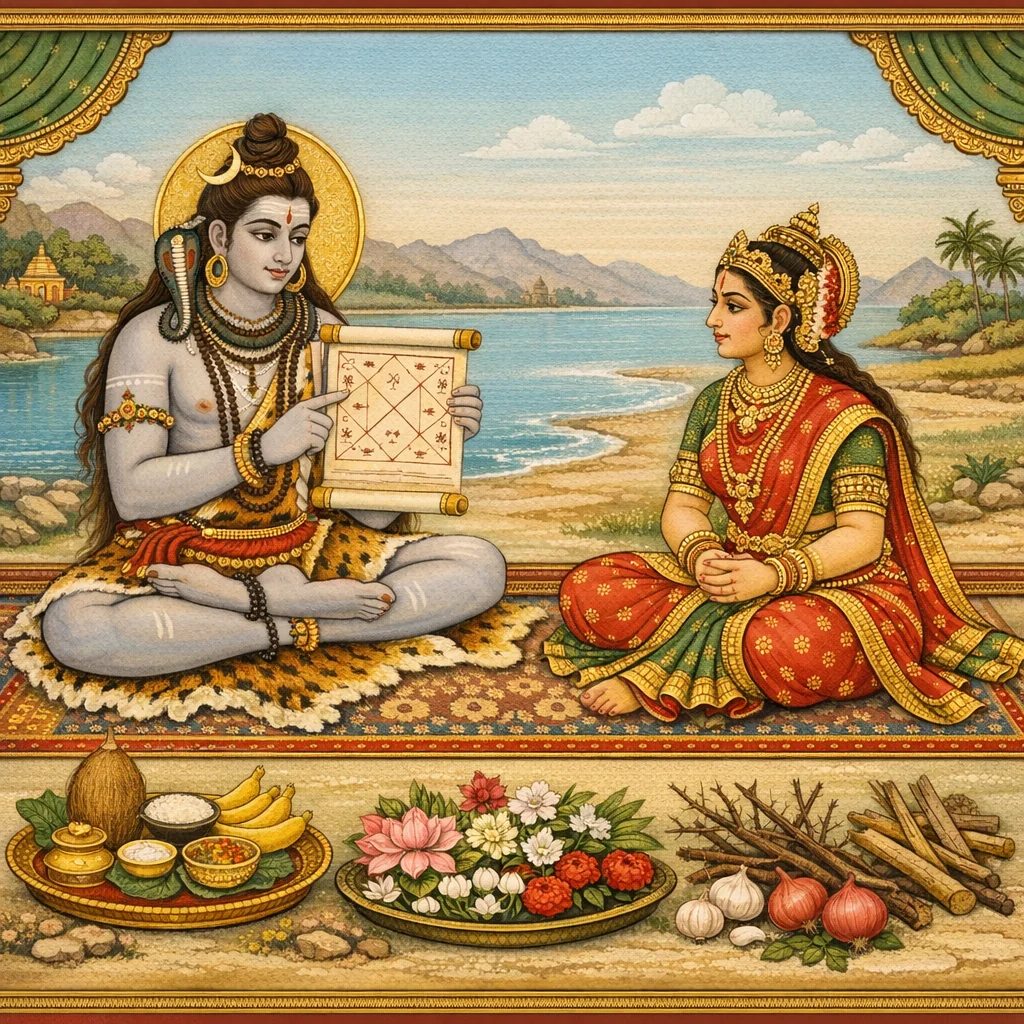
This adhyāya gives Īśvara’s technical teaching on śrāddha, especially the pārvaṇa system. It details invitation protocol, who is eligible and how they are seated, purity restrictions, the proper timing through muhūrta classifications, and the correct choice of vessels, fuels, flowers, foods, and ritual grasses. It warns that unethical commensality and procedural lapses can nullify ancestral reception. It also prescribes silence disciplines for specific acts (japa, eating, pitr̥-kārya, etc.), directional rules distinguishing deva rites from pitr̥ rites, and practical remedies for certain defects. The chapter catalogs auspicious and inauspicious materials (woods for samidh, flowers and foods to accept or avoid), notes regional exclusions for performing śrāddha, and clarifies calendrical issues such as malamāsa/adhimāsa constraints and proper month reckoning. It concludes with mantra sets (including a “saptārcis” praise) and explicit phala: correct recitation and performance bring purification, social-ritual validity, and benefits like prosperity, memory, and health—especially when done at Prabhāsa, at the Sarasvatī–ocean confluence.
Shlokas
Verse 1
ईश्वर उवाच । अथ श्राद्धविधिं वक्ष्ये पार्वणस्य विधानतः । यथाक्रमं महादेवि शृणुष्वैकमनाः प्रिये
Īśvara said: Now I shall declare, according to ordinance, the rite of the Pārvaṇa Śrāddha. Listen in proper sequence, O beloved Mahādevī, with a mind fixed in single-pointed attention.
Verse 2
कृत्वापसव्यं पूर्वेद्युः पितृपूर्वं निमंत्रयेत् । भवद्भिः पितृकार्यं नः संपाद्यं च प्रसीदथ
Having performed apasavya on the previous day (placing the sacred thread to the left), one should invite the brāhmaṇas, beginning with the Pitṛs: “May you accomplish our ancestral rite, and be gracious to us.”
Verse 3
सवर्णान्प्रेषयेदाप्तान्द्विजानामुपमन्त्रणे
For the Śrāddha invitation, one should send trustworthy persons of the same varṇa to summon the dvijas, the twice-born.
Verse 4
अभोज्यं ब्राह्मणस्यान्नं क्षत्रियाद्यैर्निमन्त्रितैः । तथैव ब्राह्मणस्यान्नं ब्राह्मणेन निमन्त्रितौः
A brāhmaṇa’s food is not to be eaten when (that brāhmaṇa) has been invited by a kṣatriya and others; likewise, a brāhmaṇa’s food becomes restricted when the invitation has been made improperly.
Verse 5
ब्राह्मणान्नं ददेच्छूद्रः शूद्रान्नं ब्राह्मणो ददेत् । उभावेतावभोज्यान्नौ भुक्त्वा चान्द्रायणं चरेत्
A Śūdra may give food intended for a Brāhmaṇa, and a Brāhmaṇa may give food intended for a Śūdra; yet both such foods are unfit to be eaten. If one has eaten them, one should undertake the Cāndrāyaṇa expiation.
Verse 6
उपनिक्षेपधर्मेण शूद्रान्नं यः पचेद्द्विजः । अभोज्यं तद्भवेदन्नं स च विप्रः पतेदधः
If a twice-born (dvija) cooks Śūdra-food under the pretext of the ‘upanikṣepa’ duty (custodial deposit), that food becomes unfit to be eaten; and that Brāhmaṇa falls from right conduct.
Verse 7
शूद्रान्नं शूद्रसंपर्कः शूद्रेण च सहासनम् । शूद्राज्ज्ञानागमश्चैव ज्वलंतमपि पातयेत्
Food received from a Śūdra, close association with a Śūdra, sitting on the same seat with a Śūdra, and receiving instruction from a Śūdra as an authoritative source of knowledge—these, it is said, can bring down even one who burns bright in austerity and purity.
Verse 8
शूद्रान्नोपहता विप्रा विह्वला रतिलालसाः । कुपिताः किं करिष्यंति निर्विषा इव पन्नगाः
Brāhmaṇas, once impaired by Śūdra-food, become unsteady and driven by sensual craving; even if angered, what can they accomplish—like serpents that have lost their venom?
Verse 9
नग्नः स्यान्मलवद्वासा नग्नः कौपीनवस्त्रधृक् । द्विकच्छोऽनुत्तरीयश्च विकच्छोऽवस्त्र एव च
One is deemed ‘naked’ when clothed in filthy garments; likewise, one who wears only a loincloth (kaupīna) is ‘naked’. So too are those who wear a two-tucked cloth without an upper garment, those whose cloth is loosely arranged, and those without any clothing at all.
Verse 10
नग्नः काषायवस्त्रः स्यान्नग्नश्चार्धपटः स्मृतः । अच्छिन्नाग्रं तु यद्वस्त्रं मृदा प्रक्षालितं तु यत्
By this rule, one who wears saffron-dyed cloth is deemed “naked,” and one who wears only a half-cloth is likewise remembered as “naked.” But a garment whose edge is not torn, and one washed with earth (purifying clay), is held to be acceptable.
Verse 11
अहतं धातुरक्तं वा तत्पवित्रमिति स्थितम् । अग्रतो वसते मूर्खो दूरे चास्य गुणान्वितः
Unworn cloth, or cloth dyed with mineral color, is established as pure. Yet a fool may sit close in front, while one endowed with virtue remains at a distance.
Verse 12
गुणान्विते च दातव्यं नास्ति मूर्खे व्यतिक्रमः । यस्त्वासन्नमतिक्रम्य ब्राह्मणं पतितादृते । दूरस्थं पूजयेन्मूढो गुणाढ्यं नरकं व्रजेत्
Honor and gifts should be given to the virtuous; there is no fault in passing over a fool. But one who disregards a nearby Brāhmaṇa (except one fallen from right conduct) and, in folly, honors a distant person—even if rich in qualities—goes to hell.
Verse 13
वेदविद्याव्रतस्नाते श्रोत्रिये गृहमागते । क्रीडन्त्योषधयः सर्वा यास्यामः परमां गतिम्
When a Śrotriya—purified by Vedic learning, vows, and sacred bathing—comes to one’s house, all healing herbs rejoice as though saying, “We shall attain the highest state.”
Verse 15
संध्ययोरुभयोर्जाप्ये भोजने दंतधावने । पितृकार्ये च दैवे च तथा मूत्रपुरीषयोः । गुरूणां संनिधौ दाने योगे चैव विशेषतः । एतेषु मौनमातिष्ठन्स्वर्गं प्राप्नोति मानवः
During japa at both sandhyās, while eating, while cleaning the teeth, during rites for the Pitṛs and during divine worship, and also while urinating or defecating; in the presence of one’s teachers, during charity, and especially during yoga—one who maintains silence on these occasions attains heaven.
Verse 16
यदि वाग्यमलोपः स्याज्जपादिषु कथंचन । व्याहरेद्वैष्णवं मंत्रं स्मरेद्वा विष्णुमव्ययम्
If, in any way, one’s restraint of speech is broken during japa and related observances, one should utter a Vaiṣṇava mantra—or else remember Viṣṇu, the imperishable.
Verse 17
दाने स्नाने जपे होमे भोजने देवतार्चने । देवानामृजवो दर्भाः पितॄणां द्विगुणास्तथा
In charity, bathing, japa, homa, eating, and the worship of deities: for the gods, darbha-grass should be placed straight; for the Pitṛs, it should be arranged double as well.
Verse 18
उदङ्मुखस्तु देवानां पितॄणां दक्षिणामुखः । अग्निना भस्मना वापि यवेनाप्युदकेन वा । द्वारसंक्रमणेनापि पंक्तिदोषो न विद्यते
Facing north is prescribed for rites to the Devas, and facing south for rites to the Pitṛs. And even if one performs purification with fire, ash, barley, water, or even merely by crossing a doorway, no ‘paṅkti-doṣa’—a defect of ritual impurity affecting the dining line—arises.
Verse 19
इष्टश्राद्धे क्रतुर्दक्षो वृद्धौ सत्यवसू स्मृतौ । नैमित्तिके कालकामौ काम्ये चाध्वविरोचनौ
For the iṣṭa-śrāddha, Kratu and Dakṣa are remembered as the presiding recipients. For the vṛddhi-śrāddha, Satyavasu is recalled. For the naimittika-śrāddha, Kāla and Kāma are invoked. And for the kāmya-śrāddha, Adhva and Virocana are invoked.
Verse 20
पुरूरवा आर्द्रवश्च पार्वणे समुदाहृतौ । पुष्टिं प्रजां च न्यग्रोधे बुद्धिं प्रज्ञां धृतिं स्मृतिम्
For the pārvaṇa-śrāddha, Purūravas and Ārdrava are declared as the invoked recipients. And when the rite is performed with nyagrodha (the banyan) as its supporting medium, it yields nourishment and progeny—along with intellect, discernment, steadfastness, and memory.
Verse 21
रक्षोघ्नं च यशस्यं च काश्मीर्यं पात्रमुच्यते । सौभाग्यमुत्तमं लोके मधूके समुदाहृतम्
A vessel made of kāśmīrya-wood is said to destroy malign forces and to bestow good fame. And with a madhūka vessel, supreme good fortune in the world is proclaimed.
Verse 22
फाल्गुनपात्रे तु कुर्वाणः सर्वकामानवाप्नुयात् । परां द्युतिमथार्के तु प्राकाश्यं च विशेषतः
One who performs the rite using a phālguna vessel obtains the fulfillment of all desires. And using an arka vessel, one gains supreme radiance and, especially, conspicuous brilliance.
Verse 23
बिल्वे लक्ष्मीं तपो मेधां नित्यमायुष्यमेव च । क्षेत्रारामतडागेषु सर्वपात्रेषु चैव हि
With a bilva vessel, one gains prosperity (Lakṣmī), ascetic merit, keen intelligence, and continual longevity. Indeed, this applies in fields, gardens, and ponds—and with all vessels there as well.
Verse 24
वर्षत्यजस्रं पर्जन्ये वेणुपात्रेषु कुर्वतः । एतेषां लभ्यते पुण्यं सुवर्णै रजतैस्तथा
When Parjanya, the rain-god, pours continuously, one who performs the rite using bamboo vessels gains merit comparable to that obtained by offerings of gold and likewise of silver.
Verse 25
पलाशफलन्यग्रोधप्लक्षाश्वत्थविकंकताः । औदुम्बरस्तथा बिल्वं चंदनं यज्ञियाश्च ये
Palāśa, phala-wood, nyagrodha, plakṣa, aśvattha, vikaṅkata, audumbara, bilva, sandalwood, and those woods that are fit for yajña (sacrifice)—all these are praised for ritual use.
Verse 26
सरलो देवदारुश्च शालाश्च खदिरास्तथा । समिदर्थं प्रशस्ताः स्युरेते वृक्षा विशेषतः
Saralā, devadāru, śālā, and khadira—these trees in particular are praised for use as samidh, the sacred kindling of sacrifice.
Verse 27
श्लेष्मातको नक्तमाल्यः कपित्थः शाल्मली तथा । निंबो बिभीतकश्चैव श्राद्धकर्मणि गर्हिताः
Śleṣmātaka, naktamālya, kapittha, śālmalī, nimba, and bibhītaka—these are censured for use in the Śrāddha rites.
Verse 28
अनिष्टशब्दां संकीर्णा रूक्षां जन्तुमतीमपि । प्रतिगंधां तु तां भूमिं श्राद्धकर्मणि गर्हयेत्
For the Śrāddha rite, one should reject any ground filled with inauspicious noise, crowded and disturbed, dry and harsh, infested with creatures, or tainted by a foul, opposing odour.
Verse 29
त्रैशंकवं त्यजेद्देशंसर्वद्वादशयोजनम् । उत्तरेण महानद्या दक्षिणेन च केवलम्
One should altogether avoid the region called Traiśaṃkava, extending twelve yojanas, bounded by the great river to the north and by the southern side as stated.
Verse 30
देशस्त्रैशं कवोनाम वर्जितः श्राद्धकर्मणि । कारस्काराः कलिंगाश्च सिंधोरुत्तरमेव च । प्रणष्टाश्रमधर्माश्च वर्ज्या देशाः प्रयत्नतः
The land known as Traiśaṃkava is to be avoided for Śrāddha. Likewise the Kāraskāras, the Kaliṅgas, and the northern region beyond the Sindhu; and in general, any countries where the disciplines of the āśramas have perished—these are to be shunned with care.
Verse 31
ब्राह्मणं तु कृतं प्रोक्तं त्रेता तु क्षत्रियं स्मृतम् । वैश्यं द्वापरमित्याहुः शूद्रं कलियुगं स्मृतम्
Kṛta-yuga is proclaimed as “brahminical” in nature; Tretā is remembered as “kṣatriya”; Dvāpara is said to be “vaiśya”; and Kali-yuga is remembered as “śūdra”—that is, according to the dominant disposition of each age.
Verse 32
कृते तु पितरः पूज्यास्त्रेतायां च सुरास्तथा । मुनयो द्वापरे नित्यं पाखंडाश्च कलौ युगे
In Kṛta-yuga the Pitṛs are to be worshipped; in Tretā, the gods likewise; in Dvāpara, the sages (munis) continually; but in Kali-yuga, heretical and hypocritical paths prevail.
Verse 33
शुक्लपक्षस्य पूर्वाह्णे श्राद्धं कुर्याद्विचक्षणः । कृष्णपक्षेऽपराह्ने तु रौहिणं न विलंघयेत्
A discerning person should perform Śrāddha in the forenoon during the bright fortnight (śukla-pakṣa); but in the dark fortnight (kṛṣṇa-pakṣa), in the afternoon—without transgressing the proper Rohiṇī observance or time-rule.
Verse 35
रत्निमात्रप्रमाणं च पितृतीर्थं तु संस्कृतम् । उपमूले तथा लूनाः प्रस्तरार्थे कुशोत्तमाः । तथा श्यामाकनीवारा दूर्वाश्च समुदाहृताः । स्व कीर्तिमतां श्रेष्ठो बहुकेशः प्रजापतिः
A Pitṛ-tīrtha should be duly prepared to the measure of one ratni (a span). Kuśa-grass, cut close to the root, is declared best for laying out the ritual base; likewise śyāmāka, nīvāra, and dūrvā grasses are also commended. Among the renowned, Prajāpati “Bahukeśa” is spoken of as the foremost.
Verse 36
तस्य केशा निपतिता भूमौ काशत्वमागताः । तस्मान्मेध्याः सदा काशाः श्राद्धकर्मणि पूजिताः
His hairs, having fallen upon the earth, became kāśa-grass. Therefore kāśa is ever pure and is honored in the performance of Śrāddha.
Verse 37
पिण्डनिर्वपणं तेषु कर्तव्यं भूतिमिच्छता । उष्णमन्नं द्विजातिभ्यः श्रद्धया विनिवेशयेत्
Seeking well-being and prosperity, one should offer the piṇḍas there; and with faith one should serve hot, freshly prepared food to the twice-born (dvija).
Verse 39
अन्यत्र फलपुष्पेभ्यः पानकेभ्यश्च पण्डितः । हस्ते दत्त्वा तु वै स्नेहाल्लवणं व्यञ्जनानि च । आयसेन च पात्रेण तद्वै रक्षांसि भुञ्जते । द्विजपात्रेषु दत्त्वान्नं तूष्णीं संकल्पमाचरेत्
Except for fruits, flowers, and beverages, the learned man should not, out of affection, place salt and side-dishes directly into the hand. If food is offered in an iron vessel, it is eaten by rākṣasas. Having placed the food in the vessels of the twice-born (dvija), one should then perform the saṃkalpa in silence.
Verse 40
दर्व्यादिस्थेन नो तेषां संबन्धो दृश्यते यतः । यश्च शूकरवद्भुंक्ते यश्च पाणितले द्विजः । न तदश्नंति पितरो यः सवाचं समश्नुते
Because no proper connection with the rite is seen when one eats while holding the ladle and such implements; and because one who eats like a boar, or a twice-born (dvija) who eats from the palm—of food eaten while speaking, the Pitṛs do not partake.
Verse 41
द्विहायनस्य वत्सस्य विशंत्यास्यं यथा सुखम् । तथा कुर्यात्प्रमाणेन पिण्डान्व्यासेन भाषितम्
Just as food enters comfortably into the mouth of a calf of two years, so should one prepare the piṇḍas in proper measure—so it has been taught by Vyāsa.
Verse 42
न स्त्री प्रचालयेत्तानि ज्ञानहीनो न चाव्रतः । स्वयं पुत्रोऽथवा यस्य वाञ्छेदभ्युदयं परम्
A woman should not handle those offerings (piṇḍas/Śrāddha), nor one devoid of ritual knowledge, nor one without observance (vrata). Rather, the son himself—or one who seeks the highest welfare—should perform it properly.
Verse 43
भाजनेषु च तिष्ठत्सु स्वस्तिं कुर्वन्ति ये द्विजाः । तदन्नमसुरैर्भुक्तं निराशाः पितरो गताः
While the vessels are still set in place, if the twice-born utter ‘svasti’ (benedictions) before the proper time, that food is consumed by the Asuras, and the Pitṛs depart disappointed.
Verse 44
अप्स्वेकं प्लावयेत्पिण्डमेकं पत्न्यै निवेदयेत् । एकं वै जुहुयादग्नावेषा तु त्रिविधा गतिः
One piṇḍa should be set afloat upon the water; one should be offered to the wife; and one should indeed be consigned as an oblation into the fire—this is the threefold procedure.
Verse 45
छन्दोगं भोजयेच्छ्राद्धे वैश्वदेवे च बह्वृचम् । पुष्टिकर्मण्यथाध्वर्युं शान्तिकर्मण्यथर्वणम्
In a Śrāddha one should feed a Chāndoga; in the Vaiśvadeva rite, a Bahvṛc. In rites of puṣṭi (nourishment and increase), one should feed an Adhvaryu; and in rites of śānti (pacification), an Atharvan priest.
Verse 46
द्वौ देवेऽथर्वणौ विप्रौ प्राङ्मुखौ च निवेशयेत् । पित्र्ये ह्युदङ्मुखान्कुर्याद्बह्वृचाध्वर्युसामगान्
For rites to the Devas, one should seat two Atharvan Brāhmaṇas facing east. But for rites to the Pitṛs, one should seat the Bahvṛc, Adhvaryu, and Sāmaga priests facing north.
Verse 47
जात्यश्च सर्वा दातव्या मल्लिका श्वेतयूथिका । जलोद्भवानि सर्वाणि कुसुमानि च चम्पकम्
All varieties of jasmine should be offered—mallikā and white yūthikā; all water-born flowers as well, and also campaka blossoms.
Verse 48
मधूकं रामठं चैव कर्पूरं मरिचं गुडम् । श्राद्धकर्मणि शस्तानि सैंधवं त्रपुसं तथा
Madhūka, rāmaṭha, camphor, black pepper, and jaggery—these are praised for the performance of Śrāddha; likewise rock-salt (saindhava) and trapusa.
Verse 49
ब्राह्मणः कम्बलो गावः सूर्योग्निरतिथिश्च वै । तिला दर्भाश्च कालश्च नवैते कुतपाः स्मृताः
A Brāhmaṇa, a blanket (kambala), cows, the sun, fire, and a guest; sesame, darbha-grass, and time—these nine are remembered as the ‘kutapas’.
Verse 50
आपद्यनग्नौ तीर्थे च चंद्रसूर्यग्रहे तथा । नाचरेत्संग्रहे चैव तथैवास्तमुपागते
When one is in distress, when there is a fire, at a tīrtha (sacred ford), during lunar or solar eclipse; at times of hoarding/accumulation, and likewise when the sun has set—one should not undertake the prescribed conduct or rites.
Verse 51
संशुद्धा स्याच्चतुर्थेऽह्नि स्नाता नारी रजस्वला । दैवे कर्मणि पित्र्ये च पञ्चमेऽहनि शुद्ध्यति
A menstruating woman, after bathing, is regarded as purified on the fourth day; but for rites to the gods and for ancestral rites, she becomes fit (pure) on the fifth day.
Verse 52
द्रव्याभावे द्विजाभावे प्रवासे पुत्रजन्मनि । आमश्राद्धं प्रकुर्वीत यस्य भार्या रजस्वला
In the absence of resources, in the absence of a brāhmaṇa, while away from home, or at the birth of a son—if one’s wife is menstruating, one should perform an āma-śrāddha, a simplified Śrāddha suited to such constraint.
Verse 53
सर्पविप्रहतानां च दंष्ट्रिशृंगिसरीसृपैः । आत्मनस्त्यागिनां चैव श्राद्धमेषां न कारयेत्
One should not cause śrāddha to be performed for those struck by a serpent or slain by biting, horned creeping creatures, nor for those who have abandoned their own lives (self-destruction).
Verse 54
चण्डालादुदकात्सर्पाद्ब्राह्मणाद्वैद्युतादपि । दंष्ट्रिभ्यश्च पशुभ्यश्च मरणं पापकर्मणाम्
Death arising from a caṇḍāla, from water, from a serpent, from a brāhmaṇa, even from lightning, and from biting creatures and beasts—such death is said to be the lot of those of sinful deeds.
Verse 55
सर्वैरनुमतं कृत्वा ज्येष्ठेनैव च यत्कृतम् । द्रव्येण च विभक्तेन सर्वैरेव कृतं भवेत्
When all have given consent, whatever is performed by the eldest (brother) is deemed performed by all—especially when the expense has been duly shared among them.
Verse 56
अमावास्यां पितृश्राद्धे मंथनं यस्तु कारयेत् । तत्तक्रं मदिरातुल्यं घृतं गोमांसवत्स्मृतम्
If, on the new-moon day (amāvāsyā), during the ancestral śrāddha (pitr-śrāddha), one has curd or milk churned, then that buttermilk is regarded as akin to liquor, and the ghee is remembered as akin to cow-flesh—ritually improper for that rite.
Verse 57
भुंजंति क्रमशः पूर्वे तथा पिंडाशिषो ऽपि च । निमंत्रितो द्विजः श्राद्धे न शयीत स्त्रिया सह
The elders and foremost eat in due order, and likewise the blessings connected with the piṇḍa offerings are received in sequence. A twice-born (dvija) invited for śrāddha should not lie down with a woman during that observance.
Verse 58
श्रादभुक्प्रातरुत्थाय प्रकुर्याद्दन्तधावनम् । श्राद्धकर्ता न कुर्वीत दन्तानां धावनं बुधः
One who has eaten the śrāddha meal should, upon rising in the morning, perform tooth-cleaning. But the wise performer of the śrāddha itself should not do tooth-cleaning during the śrāddha observance.
Verse 59
वर्षेवर्षे तु यच्छ्राद्धं मातापित्रोर्मृतेऽहनि । मलमासे न कर्तव्यं व्यासस्य वचनं यथा
The annual śrāddha performed each year on the death-date of one’s mother or father should not be done in the intercalary month (malamāsa), in accordance with Vyāsa’s statement.
Verse 60
गर्भे वार्धुषिके प्रेते भृत्ये मासानुमासिके । आब्दिके च तथा श्राद्धे नाधिमासो विधीयते
For rites connected with a miscarriage (garbha), for the vārddhuṣika observance, for funeral rites for the departed, for a servant’s death-rite, for the monthly śrāddha, and likewise for the annual śrāddha—an intercalary month (adhimāsa) is not to be used as the time of performance.
Verse 61
विवाहादौ स्मृतः सौरो यज्ञादौ सावनः स्मृतः । आब्दिके पितृकार्ये तु चान्द्रो मासः प्रशस्यते
For rites beginning with marriage, the solar (saura) reckoning is taught; for rites beginning with yajña, the sāvana (day-count) is taught. But for the annual rite for the ancestors, the lunar month (cāndra māsa) is praised as best.
Verse 62
यस्मिन्राशौ गते सूर्ये विपत्तिः स्याद्द्विजन्मनः । तद्राशावेव कर्तव्यं पितृकार्यं मृतेऽहनि
If, when the Sun enters a particular zodiac sign, misfortune would befall a dvija (twice-born), then the ancestral rite should be performed precisely in that very sign—on the day of death.
Verse 63
वषट्कारश्च होमश्च पर्व चाग्रायणं तथा । मलमासेऽपि कर्तव्यं काम्या इष्टीर्विवर्जयेत्
Vaṣaṭ-calls, homa, festival observances (parvan), and the first-grain offering (āgrāyaṇa) should be performed even in the intercalary “impure” month (malamāsa); but desire-driven iṣṭis—optional sacrifices for worldly gain—should be avoided.
Verse 64
अग्न्याध्येयं प्रतिष्ठां च यज्ञदानव्रतानि च । वेदव्रतवृषोत्सर्गचूडाकरणमेखलाः
The study and service of the sacred fire, consecrations (pratiṣṭhā), sacrifices, gifts, and vows—as well as Vedic student-vows, the gifting of a bull (vṛṣotsarga), the tonsure rite (cūḍākaraṇa), and the investiture with the girdle (mekhalā)—are enumerated here as ritual acts to be undertaken according to proper rule and season.
Verse 65
मांगल्यमभिषेकं च मलमासे विवर्जयेत् । नित्यनैमित्तिके कुर्यात्प्रयतः सन्मलिम्लुचे । तीर्थे स्नानं गज च्छायां प्रेतश्राद्धं तथैव च
In malamāsa one should avoid auspicious māṅgalya rites and consecratory anointings (abhiṣeka). Yet, disciplined, one should still perform the obligatory daily and occasional duties (nitya and naimittika) even in that malimluca month. Also commended are bathing at a tīrtha, giving “gaja-chāyā” charity, and performing śrāddha for the recently departed.
Verse 66
रसा यत्र प्रशस्यन्ते भोक्तारो बंधुगोत्रिणः । राजवार्तादि संक्रंदो रक्षःश्राद्धस्य लक्षणम्
Where the diners—being relatives and of the same lineage—praise the flavors of the food, and where there is clamorous talk of kings, gossip, and the like: these are marks of a rakṣaḥ-śrāddha, a śrāddha spoiled by improper conduct.
Verse 67
श्राद्धं कृत्वा परश्राद्धे यस्तु भुंक्ते च विह्वलः । पतंति पितरस्तस्य लुप्तपिण्डोदकक्रियाः
One who, after performing a śrāddha, then eats in another person’s śrāddha—bewildered by appetite—causes his own ancestors to fall, for his piṇḍa and water-offerings become as though lost and ineffective.
Verse 68
तैलमुद्वर्तनं स्नानं दन्तधावनमेव च । क्लृप्तरोमनखेभ्यश्च दद्याद्गत्वापरेऽहनि
Oil-anointing and rubbing, bathing, and cleansing the teeth—together with the cut hair and nails—should be disposed of properly only after one has entered the next day.
Verse 69
निमन्त्रिता यथान्यायं हव्ये कव्ये द्विजोत्तमाः । कथंचिदप्यतिक्रामेत्पापः शूकरतां व्रजेत्
When, in due order, the best of the twice-born are invited for offerings to the gods (havya) or to the ancestors (kavya), they should not in any way fail to attend or violate the appointment; the sinner who does so falls into the state of a pig.
Verse 70
दैवे च पितृ श्राद्धे चाप्याशौचं जायते यदा । आशौचान्तेऽथवा तत्र तेभ्यः श्राद्धं प्रदीयते
If, during an offering to the gods or during a śrāddha for the ancestors, a state of āśauca (ritual impurity) arises, then—either after that impurity has ended, or right there as the rite requires—śrāddha is to be duly offered for them, the Pitṛs.
Verse 71
अथ श्राद्धावसाने तु आशिषस्तत्र दापयेत् । दीर्घा नागास्तथा नद्यो विष्णोस्त्रीणि पदानि च । एवमेषां प्रमाणेन दीर्घमायुरवाप्नुयाम्
Then, at the conclusion of the śrāddha, one should have blessings pronounced there: “May (my life be) long like the great Nāgas, like the rivers, and like Viṣṇu’s three strides.” By such auspicious measures of comparison, may I obtain long life.
Verse 72
अपां मध्ये स्थिता देवाः सर्वमप्सु प्रतिष्ठितम् । ब्राह्मणस्य करे न्यस्ताः शिवा आपो भवन्तु नः
The gods abide in the midst of the waters; all things are established in water. Placed into the hand of a Brāhmaṇa, may those waters become auspicious and beneficent for us.
Verse 73
लक्ष्मीर्वसति पुष्पेषु लक्ष्मीर्वसति पुष्करे । लक्ष्मीर्वसतु वासे मे सौमनस्यं ददातु मे
Lakṣmī dwells in flowers; Lakṣmī dwells in the lotus. May Lakṣmī dwell in my home and grant me serenity and gladness of heart.
Verse 74
अक्षतं चाऽस्तु मे पुण्यं शांतिः पुष्टिर्धृतिश्च मे । यद्यच्छ्रेयस्करं लोके तत्तदस्तु सदा मम
May my merit remain unbroken; may peace, nourishment, and steadfastness be mine. Whatever in this world is truly conducive to welfare—may that always be mine.
Verse 75
दक्षिणायां तु सर्वत्र बहुदेयं तथास्तु नः । एवमस्त्विति तैर्वाच्यं मूर्ध्ना ग्राह्यं च तेन तत्
In the matter of dakṣiṇā, one should give generously everywhere—so may it be for us. The officiants should say, “So be it,” and the giver should receive that assent with bowed head in reverence.
Verse 76
पिंडमग्नौ सदा देयाद्भोगार्थी सततं नरः । प्रजार्थं पत्न्यै वै दद्यान्मध्यमं मंत्रपूर्वकम्
A man who seeks enjoyment should always offer a piṇḍa into the fire. For the sake of progeny, he should give the middle piṇḍa to his wife, accompanied by the proper mantras.
Verse 77
उत्तमां द्युतिमविच्छन्गोषु नित्यं प्रदापयेत् । आज्ञामिच्छेद्यशः कीर्तिमप्सु नित्यं प्रवेशयेत्
Seeking excellent radiance, one should continually make offerings to cows. Desiring authority, fame, and renown, one should continually consign them as offerings into waters.
Verse 78
प्रार्थयन्दीर्घमायुश्च वायसेभ्यः प्रदापयेत् । कुमारलोकमन्विच्छन्कुक्कुटेभ्यः प्रदापयेत्
Praying for long life, one should offer oblations to crows. Seeking attainment of the “Kumāra-world,” one should offer oblations to roosters.
Verse 79
आकाशे प्रक्षिपेद्वापि स्थितो वा दक्षिणामुखः । पितॄणां स्थानमाकाशं दक्षिणा चैव दिक्तथा
One may also cast (the offering) into the sky, or do so while standing facing south. For the Pitṛs, the sky is their abode—and the southern direction is likewise (their quarter).
Verse 80
नक्तं तु वर्जयेच्छ्राद्धं राहोरन्यत्र दर्शनात् । सर्वस्वेनापि कर्तव्यं क्षिप्रं वै राहुदर्शनात्
Night-time śrāddha should be avoided, except on the occasion of seeing Rāhu (the eclipse). When Rāhu is seen, the rite should be performed at once—even with one’s entire means—for that sight calls for prompt sacred action.
Verse 81
उपरागे न कुर्याद्यः पंके गौरिव सीदति । कुर्वाणस्तु तरेत्पापं सा च नौरिव सागरे
Whoever does not perform the prescribed rite at the time of eclipse sinks like a cow in mire. But one who performs it crosses beyond sin, as a boat carries one across the ocean.
Verse 82
कृष्णमाषास्तिलाश्चैव श्रेष्ठाः स्युर्यवशालयः । महायवा व्रीहियवास्तथैव च मसूरिकाः
For śrāddha offerings, black gram and sesame are declared excellent; likewise barley and grains such as large barley, rice-barley, and lentils are commended as fit provisions.
Verse 83
कृष्णाः श्वेताश्च वा ग्राह्याः श्राद्धकर्मणि सर्वदा । बिल्वामलकमृद्वीकं पनसाम्रातदाडिमम्
In the śrāddha rite, articles of either the dark or the white kind may always be accepted. Fruits such as bilva, āmalaka, grapes, jackfruit, mango, and pomegranate are likewise approved as offerings.
Verse 84
भव्यं पारापतं चैव खर्जूरं करमर्द्दकम् । सकोरका बदर्यश्च तालकंदं तथा बिसम्
Bhavya and pārāpata are also fitting, along with dates and karamarda; likewise sakorakā, badarī (jujube), palm-tubers, and lotus-stalk are approved.
Verse 85
तमालासनकंदं च मावेल्लं शतकंदली । कालेयं कालशाकं च मुद्गान्नं च सुवर्चलम्
Tamālāsana-tubers, māvella, and śata-kaṁdalī are acceptable; likewise kāleya, dark leafy greens, preparations of mung (mudga), and suvarcalā are approved for the rite.
Verse 86
मांसं क्षीरं दधि शाकं व्योषं वेत्रांकुरस्तथा । कट्फलं वज्रकं द्राक्षां लकुचं मोचमेव च
Meat, milk, curd (dadhi), leafy vegetables, and the three pungent spices (vyōṣa) are acceptable; likewise bamboo shoots, kaṭphala, vajraka, grapes, lakuca, and banana may be included as proper offerings.
Verse 87
प्रियामलकदुर्ग्रीवं तिंडुकं मधुसाह्वयम् । वैकंकतं नालिकेरं शृङ्गाटकपरूषकम्
Priyāmalaka, durgrīva, tiṇḍuka, and the fruit called madhusāhvaya are acceptable; likewise vaikaṅkata, coconut, water-chestnut, and parūṣaka may be offered.
Verse 88
पिप्पलीमरिचं चैव पटोली बृहतीफलम् । आरामस्य तु सीमाऽन्तः संभवं सर्वमेव तु
Long pepper and black pepper are acceptable, as are paṭolī and the fruit of bṛhatī. Indeed, whatever is produced within the boundary of an orchard may also be taken as suitable.
Verse 89
एवमादीनि चान्यानि पुष्पाणि श्राद्धकर्मणि । मसूराः शतपुष्प्याश्च कुसुमं श्रीनिकेतनम्
In the same manner, these and other flowers may be used in śrāddha rites—such as masūrā, śatapuṣpī, and the blossom known as ‘śrī-niketana’.
Verse 90
वर्या स्वातियवा नित्यं तथा वृषयवासकौ । वंशा करीरा सुरसा मार्जिता भूतृणानि च
For the rites of Śrāddha, one may regularly use (as suitable vegetables/greens) varyā, svātiyavā, and also vṛṣayavāsaka; likewise bamboo-shoots (vaṃśā), karīra, surasā, mārjitā, and bhūtṛṇa grasses as well.
Verse 91
वर्जनीयानि वक्ष्यामि श्राद्धकर्मणि नित्यशः । लशुनं गृंजनं चैव पलांडुं पिण्डमूलकम् । मोगरं चात्र वैदेहं दीर्घमूलकमेव च
Now I shall state what should always be avoided in the performance of Śrāddha: garlic, gṛñjana, onion, piṇḍamūlaka, and also mogara; likewise vaideha and dīrghamūlaka as well.
Verse 92
दिवसस्याष्टमे भागे मन्दीभूते दिवाकरे । आसुरं तद्भवेच्छ्राद्धं पितृणां नोपतिष्ठते
If Śrāddha is performed when the day has reached its eighth part and the sun has grown weak, that Śrāddha becomes ‘āsura’ in nature and does not reach the Pitṛs.
Verse 93
चतुर्थे प्रहरे प्राप्ते यः श्राद्धं कुरुते नरः । वृथा श्राद्धमवाप्नोति दाता च नरकं व्रजेत्
If a man performs Śrāddha when the fourth watch has arrived, he attains only a futile Śrāddha; and the giver, through neglect of the rule, may even go to hell.
Verse 94
लेखाप्रभृत्यथादित्ये मुहूर्तास्त्रय एव च । प्रातस्तस्योत्तरं कालं भगमाहुर्विपश्चितः
Beginning from the sun-related division called “Lekhā”, there are indeed three muhūrtas; and the time that follows that morning period, the wise call “Bhaga”.
Verse 95
संगवस्त्रिमुहूर्तोऽयं मध्याह्नस्तु समन्ततः । ततश्च त्रिमुहूर्ताश्च अपराह्णो विधीयते
Saṃgava consists of three muhūrtas. Midday (madhyāhna) extends in full; thereafter, another three muhūrtas are designated as the afternoon (aparāhṇa).
Verse 96
पञ्चमोऽथ दिनांशो यः स सायाह्न इति स्मृतः
The fifth division of the day is remembered as “sāyāhna”, the evening.
Verse 97
तथा च श्रुतिः । यदैवादित्योऽथ वसन्तो यदा संगविकोऽथ ग्रीष्मो यदा वा माध्यंदिनोऽथ वर्षा यदपराह्णोऽथ शरत् । घदेवास्तमेत्यथ हेमन्त इति
And thus says the śruti: when the sun rises, it is spring; when it is saṃgava, it is summer; when it is midday, it is the rains; when it is afternoon, it is autumn; and when the gods go to rest at sunset, it is winter—so it is said.
Verse 98
प्रारभ्य कुतपे श्राद्धे कुर्यादारोहणं बुधः । विधिज्ञो विधिमास्थाय रोहिणं न तु लंघयेत्
Beginning the Śrāddha in the Kutapa muhūrta, the wise should carry out the rite’s ārohaṇa (its ordered progression). Knowing the rule and abiding by it, one should not overstep the Rauhiṇa muhūrta.
Verse 99
अष्टमो यो मुहूर्तश्च कुतपः स निगद्यते । नवमो रौहिणः प्रोक्त इति श्राद्धविदो विदुः
The eighth muhūrta is called Kutapa; the ninth is declared to be Rauhiṇa—so know the experts in Śrāddha.
Verse 100
एकोद्दिष्टं तु मध्याह्नं प्रातर्वै जातकर्मणि । पित्र्यार्थं निर्वपेत्पाकं वैश्वदेवार्थमेव च
The ekoddiṣṭa—Śrāddha for a single ancestor—should be performed at midday, while birth-related rites are done in the morning. One should cook and offer the food both for the Pitṛs (ancestors) and also for the Vaiśvadeva offering.
Verse 101
वैश्वदेवे न पित्र्यार्थं न पित्र्यं वैश्वदेविके । कृत्वा श्राद्धं महादेवि ब्राह्मणांश्च विसर्ज्य च
In the Vaiśvadeva rite, one should not perform what is meant specifically for the Pitṛs; nor should one insert the Vaiśvadeva portion into the ancestral rite. Having performed the Śrāddha, O Mahādevī, and having respectfully dismissed the brāhmaṇas, one should proceed accordingly.
Verse 102
वैश्वदेवादिकं कर्म ततः कुर्याद्वरानने । बहुहव्येन्धने चाग्नौ सुसमिद्धे विशेषतः
Then, O fair-faced one, one should perform the rites beginning with Vaiśvadeva and the rest—especially when the fire is well kindled, with abundant oblations and fuel.
Verse 103
विधूमे लेलिहाने च कुर्यात्कर्म प्रसिद्धये । अप्रबुद्धे सधूमे च जुहुयाद्यो हुताशने
When the fire is smokeless and its flames lick upward, one should perform the rite for assured accomplishment. But whoever offers oblations into a dull, smoky fire acts contrary to proper practice.
Verse 104
यजमानो भवेदन्धः कुपुत्र इति निश्चितम् । दुर्गन्धश्चैव कृष्णश्च नीलश्चैव विशेषतः
It is declared for certain that the sacrificer meets misfortune—blindness and the birth of a wicked son—when the signs of the fire are foul-smelling, black, and especially bluish.
Verse 105
भूमिं विगाहते यत्र तत्र विद्यात्पराभवम् । अर्चिष्मान्पिंगलशिखः सर्पिःकांचनसप्रभः
Wherever the fire seems to plunge into the earth, one should know defeat and loss there. But the auspicious fire is radiant, with tawny flames, shining like ghee and gold.
Verse 106
स्निग्धः प्रदक्षिणश्चैव वह्निः स्यात्कार्यसिद्धये । अंजनाभ्यंजनं गंधान्मन्त्रप्रणयनं तथा
A bright, unctuous fire that turns to the right is conducive to success in one’s undertaking. Likewise recommended are collyrium and unguents, fragrances, and the proper application and recitation of mantras.
Verse 107
काशैः पुनर्भवेत्कार्यं हयमेधफलं लभेत् । अष्टजातिकपुष्पं च अञ्जनं नित्यमेव हि
With kāśa-grass, the rite may be successfully accomplished again, and one attains the fruit of an Aśvamedha. And the flowers of aṣṭajāti, as well as collyrium, are indeed to be used regularly.
Verse 108
कृष्णेभ्यश्च तिलेभ्यश्च तैलं यत्नात्सुरक्षितम् । चन्दनागरुणी चोभे तमालोशीरपद्मकम्
Oil carefully preserved from black sesame seeds is recommended. Likewise sandalwood and agaru—both—and also tamāla, uśīra (vetiver), and padmaka.
Verse 109
धूपश्च गौग्गुलः श्रेष्ठस्तौरुष्को धूप एव च । शुक्लाः सुमनसः श्रेष्ठास्तथा पद्मोत्पलानि च
Among incenses, guggulu is the best; and tauruṣka too is excellent as incense. Among flowers, white blossoms are best—likewise lotus and water-lily.
Verse 110
गन्धवन्त्युपपन्नानि यानि चान्यानि कृत्स्नशः । निशिगंधा जपा भिण्डिरूपकः सकुरंटकः
All strongly fragrant flowers, and any others of that kind—such as night-fragrant blossoms, japā (hibiscus), bhiṇḍirūpaka, and kuraṇṭaka—are indicated here in the context of what should be avoided for the Śrāddha rite.
Verse 111
पुष्पाणि वर्जनीयानि श्राद्धकर्मणि नित्यशः । सौवर्णं राजतं ताम्रं पितॄणां पात्रमुच्यते
In the rites of Śrāddha, flowers are to be avoided regularly. For the Pitṛs, vessels of gold, silver, and copper are declared to be proper receptacles.
Verse 112
रजतस्य तथा किञ्चिद्दर्शनं पुण्यदायकम् । कृष्णाजिनस्य सान्निध्यं दर्शनं दानमेव च
Likewise, even the mere sight of silver bestows merit. The presence and sight of a black antelope skin (kṛṣṇājina)—and also gifting it—are meritorious.
Verse 113
रक्षोघ्नं चैव वर्चस्यं पशून्पुत्रांश्च तारयेत् । अथ मन्त्रं प्रवक्ष्यामि अमृतं ब्रह्मनिर्मितम्
It destroys hostile spirits and increases spiritual luster, granting protection and uplift to cattle and sons. Now I shall declare the mantra—nectar-like, fashioned by Brahmā.
Verse 114
देवताभ्यः पितृभ्यश्च महायोगिभ्य एव च । नमः स्वाहायै स्वधायै नित्यमेव नमोनमः
Obeisance to the Devas, to the Pitṛs, and to the great Yogins as well. Salutations to Svāhā and to Svadhā—ever and again, my repeated homage.
Verse 115
आद्यावसाने श्राद्धस्य त्रिरावर्तमिमं जपन् । अश्वमेधफलं ह्येतद्विप्रैः संज्ञाय पूजितम्
Chanting this mantra three times at the beginning and at the conclusion of the Śrāddha, one gains the fruit of an Aśvamedha sacrifice—so it is recognized and revered by the learned Brāhmaṇas.
Verse 116
पिण्डनिर्वपणे वापि जपेदेनं समाहितः । पितरः क्षिप्रमायान्ति राक्षसाः प्रद्रवन्ति च
Or, at the time of offering the piṇḍas, one should chant it with focused mind. The Pitṛs arrive swiftly, and the rākṣasas flee away.
Verse 117
सप्तार्चिषं प्रवक्ष्यामि सर्वकामशुभप्रदम्
I shall declare the ‘Saptārciṣ’ (seven-flamed) hymn/mantra, which bestows auspiciousness and the fulfillment of all worthy desires.
Verse 118
अमूर्तानां च मूर्तानां पितॄणां दीप्ततेजसाम् । नमस्यामि सदा तेषां ध्यायिनां दिव्यचक्षुषाम्
I ever bow to those Pitṛs—formless and embodied—radiant with blazing splendor, meditative, and endowed with divine sight.
Verse 119
इन्द्रादीनां च नेतारो दक्षमारीचयस्तया । तान्नमस्यामि सर्वान्वै पितॄंश्चैवौषधीस्तथा
I bow to them all—leaders connected with Indra and the rest, and the lineages of Dakṣa and Marīci; and I bow to the Pitṛs, and likewise to the medicinal herbs as well.
Verse 120
नक्षत्राणां ग्रहाणां च वाय्वग्न्योश्च पितॄनपि । द्यावापृथिव्योश्च सदा नमस्यामि कृताञ्जलिः
With hands joined in reverence, I ever bow to the constellations and the planets, to Wind and Fire, to the Ancestors, and also to Heaven and Earth.
Verse 121
नमः पितृभ्यः सप्तभ्यो नमो लोकेषु सप्तसु । स्वयंभुवे नमस्यामो ब्रह्मणे योगचक्षुषे
Salutations to the seven classes of Ancestors; salutations within the seven worlds. We bow to the Self-born Brahmā, the seer endowed with yogic vision.
Verse 122
एतत्त्वदुक्तं सप्तर्षिब्रह्मर्षिगणसेवितम् । पवित्रं परमं ह्येतच्छ्रीमद्रक्षोविनाशनम्
This teaching, spoken by you, is upheld by hosts of Saptarṣis and Brahmarṣis. It is supremely purifying, auspicious, and a destroyer of malignant forces.
Verse 123
अनेन विधिना युक्तस्त्रीन्वारांस्तु जपेन्नरः । भक्त्या परमया युक्तः श्रद्दधानो जितेन्द्रियः
A man, following this rite, should recite it three times—endowed with supreme devotion, firm faith (śraddhā), and mastery over the senses.
Verse 124
सप्तार्चिषं जपेद्यस्तु नित्यमेव समाहितः । स तु सप्तसमुद्रायाः पृथिव्या एकराड्भवेत्
Whoever, with mind collected, daily recites the “Seven-flamed” (Saptārciṣa) hymn/mantra becomes the sole sovereign over the earth encircled by the seven seas.
Verse 125
श्राद्धकल्पं पठेद्यो वै स भवेत्पंक्तिपावनः । अष्टादशानां विद्यानां स च वै पारगः स्मृतः
Whoever recites the Śrāddha-kalpa becomes a purifier of the entire dining line (paṅkti). He is also remembered as one who has mastered the eighteen branches of knowledge.
Verse 126
पूजां पुष्टिं स्मृतिं मेधां राज्यमारोग्यमेव च । प्रीता नित्यं प्रयच्छन्ति मानुषाणां पितामहाः
Pleased, the forefathers of humankind ever bestow honor, nourishment, memory, intelligence, sovereignty, and health.
Verse 127
एवं प्रभासक्षेत्रे स सरस्वत्यब्धिसंगमे । कुर्याच्छ्राद्धं विधानेन प्रभासे चैव भामिनि
Thus, in Prabhāsa-kṣetra—at the confluence of the Sarasvatī and the ocean—one should perform Śrāddha according to the prescribed rule, there in Prabhāsa, O fair one.
Verse 206
इति श्रीस्कांदे महापुराण एकाशीतिसाहस्र्यां संहितायां सप्तमे प्रभासखण्डे प्रथमे प्रभास क्षेत्रमाहात्म्ये सरस्वत्यब्धिसंगमे श्राद्धकल्पे श्राद्धविधिवर्णनंनाम षडुत्तरद्विशततमोऽध्यायः
Thus ends, in the revered Skanda Mahāpurāṇa—within the compendium of eighty-one thousand ślokas—the 206th chapter, entitled “Description of the Procedure for Śrāddha,” in the Prabhāsa Khaṇḍa, in the Prabhāsa-kṣetra Māhātmya, in the Śrāddha-kalpa at the confluence of the Sarasvatī and the ocean.