Adhyaya 201
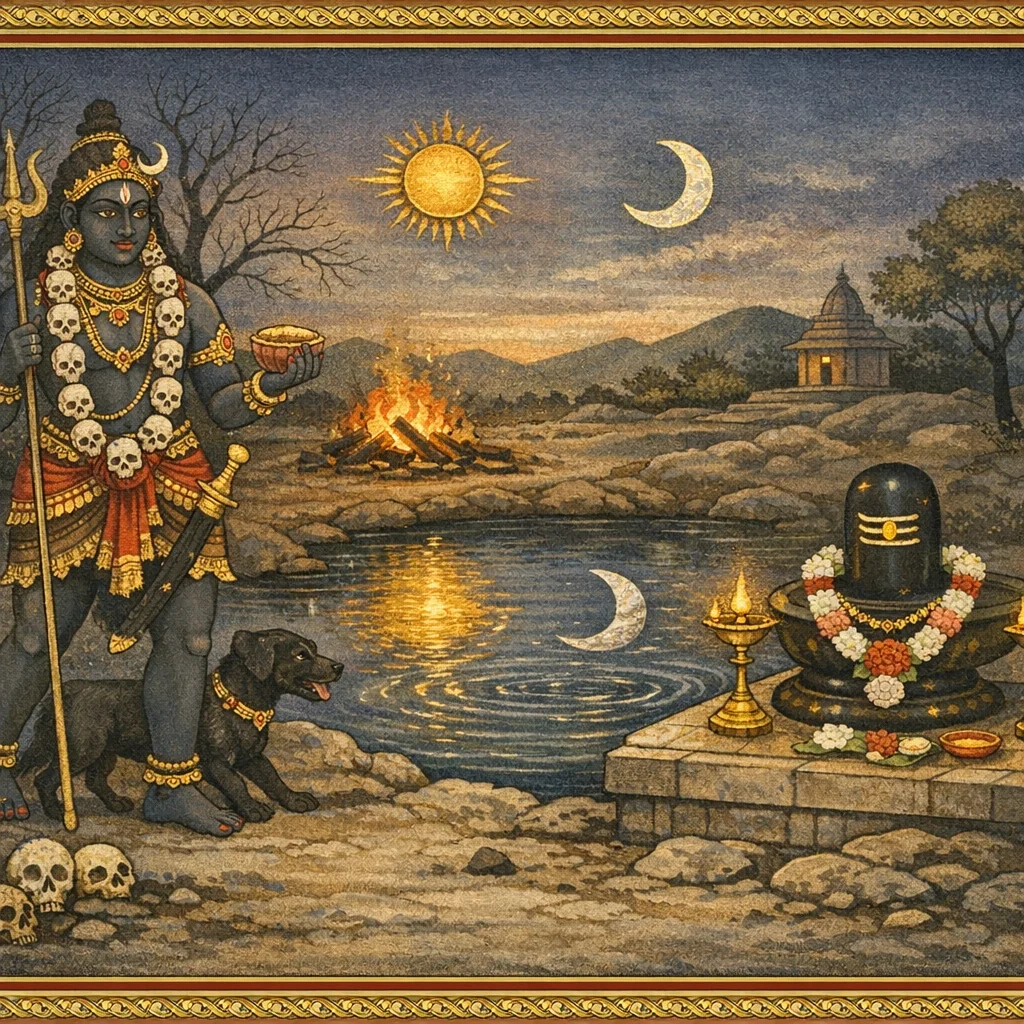
This adhyāya sets forth a Śaiva theological discourse in which Īśvara (Śiva) points out a specific sacred locus in Prabhāsa: a great cremation-ground (śmaśāna) associated with Kālabhairava, along with the nearby Brahma-kuṇḍa. The chapter’s central claim is soteriological and place-specific, extolling the liberating power of this kṣetra. Śiva declares that beings who die there or are cremated there—even in adverse conditions or through an untimely, disordered death (kāla-viparyaya)—are said to attain mokṣa. This assurance is extended even to those classed as major transgressors in the text’s ethical taxonomy. He further connects the site’s efficacy to the presence of Maṅkīśvara and to “kṛtasmaratā” (being firmly established in remembrance), portraying the cremation-ground as an “apunarbhava-dāyaka” zone that grants freedom from rebirth. The discourse also notes the calendrical/astronomical junction called viṣuva as a meaningful temporal marker for the place’s ritual valuation. It concludes with Śiva’s proclamation of enduring attachment to this beloved kṣetra, rhetorically presented here as dearer even than Avimukta.
Shlokas
Verse 1
ईश्वर उवाच । तस्मिन्स्थाने महादेवि स्मशानं कालभैरवम् । ब्रह्मकुण्डं वरारोहे यावद्देवः कृतस्मरः
Īśvara said: In that very place, O Mahādevī—O fair-hipped one—there is the Kālabhairava cremation-ground and the Brahmakuṇḍa, within the sacred precinct as far as the deity Kṛtasmara extends.
Verse 2
तत्र ये प्राणिनो दग्धा मृताः कालविपर्ययात् । ते सर्वे मुक्तिमायांति महापातकिनोऽपि वा
Those living beings who are burned there and die due to the turn of time (death’s inevitability)—all of them attain liberation, even if they are great sinners.
Verse 3
कृतस्मरान्महादेवि यावन्मंकीश्वरः स्थितः । महास्मशानं तद्देवि अपुनर्भवदायकम्
O Mahādevī, from Kṛtasmara up to where Maṃkīśvara stands, that great cremation-ground, O Goddess, bestows freedom from rebirth.
Verse 4
तस्मिन्स्थाने वहेद्यत्र विषुवं प्राणिनां प्रिये । तत्रोषरं स्मृतं क्षेत्रं तन्मे प्रियतरं सदा
O beloved, in that place where the ‘viṣuva’ of beings—the fateful turning-point of life and death—is borne along, that region is remembered as Uṣara-kṣetra; it is always especially dear to Me.
Verse 5
कल्पांतेऽपि न मुंचामि अविमुक्तात्प्रियं मम
Even at the end of an aeon, I do not abandon Avimukta, for it is dear to Me.
Verse 201
इति श्रीस्कान्दे महापुराण एकाशीतिसाहस्र्यां संहितायां सप्तमे प्रभासखण्डे प्रथमे प्रभासक्षेत्रमाहात्म्ये कालभैरवस्मशानमाहात्म्यवर्णनं नामैकोत्तरद्विशततमोऽध्यायः
Thus, in the revered Skanda Mahāpurāṇa, in the Saṃhitā of eighty-one thousand verses, within the seventh book called the Prabhāsa Khaṇḍa, in the first division entitled the Prabhāsa-kṣetra-māhātmya, ends the two-hundred-and-first chapter, named “The Description of the Greatness of Kālabhairava’s Cremation-ground.”