Adhyaya 200
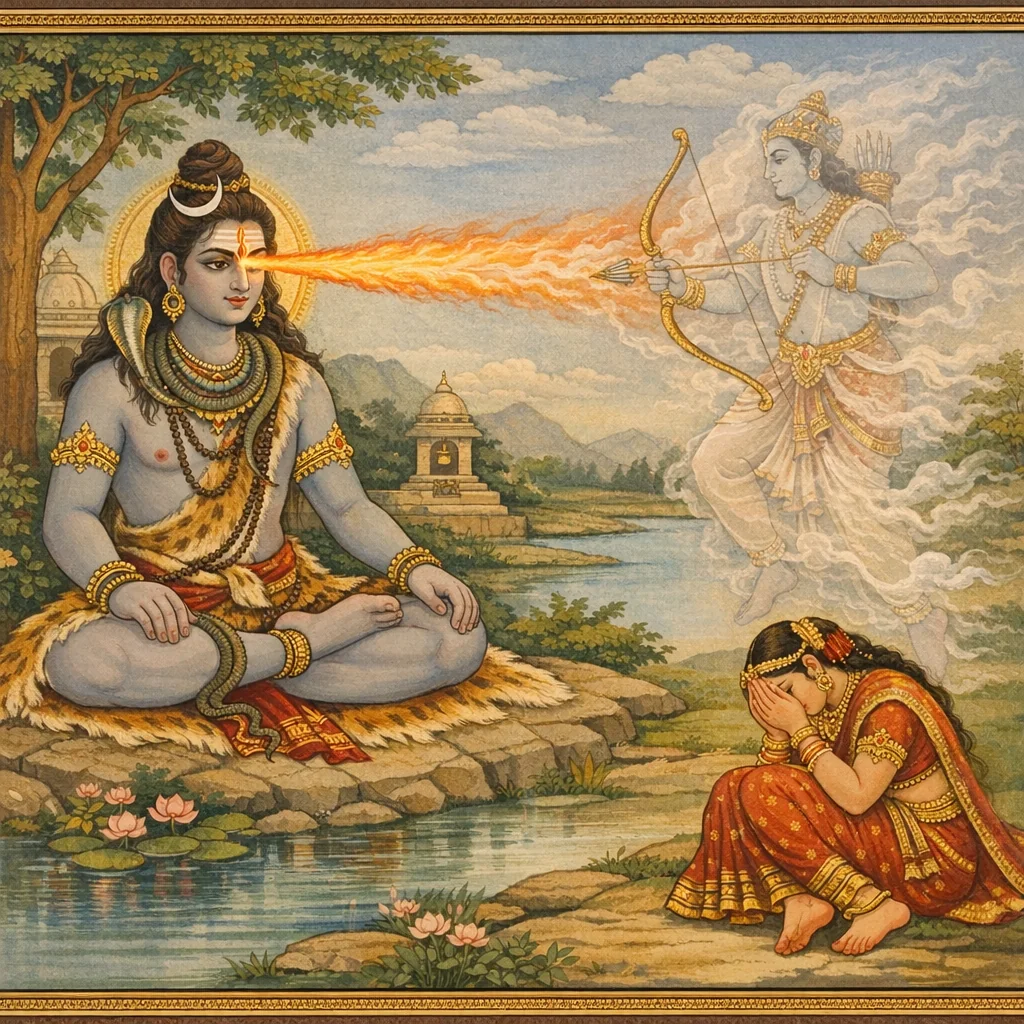
In a theological dialogue between Śiva and Devī, this chapter recounts the aftermath of a disrupted sacrificial setting and introduces the demon Tāraka as a destabilizing power who defeats the devas and drives them from Svarga. The devas appeal to Brahmā, who declares that only Śaṅkara’s energy can end the crisis, and that Śiva’s future union with the Himālaya-born Goddess will bring forth the one destined to destroy Tāraka. To hasten that union, Kāmadeva is sent with Vasantā; yet when he approaches Śiva, Kāma is burned to ashes by the fire that issues from Śiva’s third eye. Śiva then abides in the auspicious Prābhāsika-kṣetra, sanctifying the place as a sacred memorial of the event. Rati laments, but an incorporeal voice consoles her that Kāma will return as the bodiless Ananga, preserving cosmic continuity. When the devas ask about the disruption of creation without Kāma, Śiva explains that Kāma will function without a body, and a liṅga arises on earth as a sign of the episode. The narrative connects this to the epithet Kṛtasmarā and to the later birth of Skanda, who slays Tāraka. It concludes by identifying a kuṇḍa south of Kṛtasmarā—Kāma Kuṇḍa—where bathing and regulated gifts (sugarcane, gold, cows, cloth) to Veda-knowing brāhmaṇas are prescribed, granting relief from inauspicious conditions.
Shlokas
Verse 1
ईश्वर उवाच । एवं विध्वंसिते यज्ञे गतास्ते ब्राह्मणा गृहम् । अप्राप्तकामना देवि ये चान्ये तत्र वै गताः
Īśvara said: When the sacrifice had thus been destroyed, those brāhmaṇas went back to their homes; and others too who had come there, O Devī, departed with their desires unfulfilled.
Verse 2
हरोऽपि विगतामर्षः कैलासं पर्वतं गतः
Hara too, his wrath having passed away, returned to Mount Kailāsa.
Verse 3
एतस्मिन्नेव काले तु तारकोनाम दानवः । उत्पन्नः स महाबाहुर्देवानां बलदर्पहा
At that very time, a Dānava named Tāraka was born—mighty-armed—who shattered the gods’ strength and pride.
Verse 4
तेन इन्द्रादिकान्सर्वान्सुराञ्जित्वा महाहवे । स्वर्गः स्वैर्व्यापितो देवि ब्रह्मलोकं ततो गताः । ऊचुः सुरा दुःखयुक्ता ब्रह्माणं पर्वतात्मजे
Having conquered Indra and all the other gods in a great battle, he occupied heaven with his own forces. Then, O Devī—daughter of the Mountain—the gods, filled with sorrow, went to Brahmaloka and spoke to Brahmā.
Verse 5
तारकेण सुरश्रेष्ठ स्वर्गान्निर्वासिता वयम् । स्वयमिन्द्रः समभवद्वसवोऽन्ये तथा कृताः
“By Tāraka, O best of the gods, we have been driven out of heaven. He himself has become Indra, and the other Vasus too have been made to serve his command.”
Verse 6
रुद्राः साध्यास्तथा विश्वे अश्विनौ मरुतस्तथा । आदित्याश्च वधोपायं तस्माद्वद पितामह
“The Rudras, the Sādhyas, the Viśve-devas, the Aśvins, the Maruts, and the Ādityas as well—therefore, O Grandfather, tell us the means to slay him.”
Verse 7
ब्रह्मोवाच । अवध्यः स तु सर्वेषां देवानामिति मे मतिः । ऋते तु शांकरं तेजो नान्येन विनिपात्यते । तस्माद्गच्छत भद्रं वो देवदेवं महेश्वरम्
Brahmā said: “In my judgment, he is invincible to all the gods. Only by the Śāṃkara power can he be brought down, and by none other. Therefore, may it go well with you—go to Maheśvara, the God of gods.”
Verse 8
तस्य भार्या मृता पूर्वं जाता हिमवतो गृहे । तस्यां च जायते पुत्रः स हनिष्यति तारकम् । तस्मात्प्रसादयध्वं वै तदर्थं शूलपाणिनम्
“His wife died earlier and was reborn in the house of Himavat. From her a son will be born—he will slay Tāraka. Therefore, for that very purpose, surely propitiate the Trident-bearing Lord (Śiva).”
Verse 9
ततो देवैः समादिष्टः कामदेवो वरानने । मृतभार्यं हरं गत्वा ततः पीडय सायकैः
Then, O fair-faced Goddess, Kāmadeva—commissioned by the gods—approached Hara, whose consort was dead, and began to afflict him with his arrows.
Verse 10
अयं गच्छतु ते भ्राता वसंतश्च मनोहरः
Let this charming Vasantā—your brother—go with you.
Verse 11
स तथेति प्रतिज्ञाय कैलासं पर्वतं गतः । ततो दृष्ट्वा महादेवः कामदेवं धृतायुधम्
Agreeing, “So be it,” he set out for Mount Kailāsa. Then Mahādeva saw Kāmadeva, armed and ready.
Verse 12
वसन्तसहितं देवि रुद्रोऽन्धकनिषूदनः । गंगाद्वारमनुप्राप्य अपश्यद्यावदग्रतः
O Goddess, Rudra—the slayer of Andhaka—reached Gaṅgādvāra and beheld Vasantā before him.
Verse 13
दत्तायुधं कामदेवं दुद्रुवे स भयात्पुनः । ततो वाराणसीं गत्वा नैमिषं पुष्करं तथा
Seeing Kāmadeva bearing his weapon, he fled once more in fear; then he went to Vārāṇasī, to Naimiṣa, and likewise to Puṣkara.
Verse 14
श्रीकंठं रुद्रकोटिं च कुरुक्षेत्रं गयां तथा । ज्वालामार्गं प्रयागं च विशालामर्बुदं शुभम्
He also went to Śrīkaṇṭha and Rudrakoṭi, to Kurukṣetra and Gayā; to Jvālāmārga, to Prayāga, and to the auspicious Viśālā and Arbuda.
Verse 15
बहून्वर्षगणानेवं भ्रमन्स धरणीतले । कामदेवभयाद्देवि देवदेवो महेश्वरः
Thus he wandered upon the earth for many years; and, O Goddess, Maheśvara—the Lord of gods—was a dread to Kāmadeva.
Verse 16
अवैक्षत तदा कामं विस्फार्य नयनं तदा । तृतीयं देवदेवेशि देवदेवस्त्रिलोचनः
Then the three-eyed God of gods gazed upon Kāma, widening his eye; O Lady of the Lord of gods, he opened the third eye.
Verse 17
तस्य तं वीक्षमाणस्य संजाताः पावकार्चिषः । ताभिः स धनुषा युक्तो भस्मसात्समपद्यत
As he gazed upon him, tongues of fire sprang forth; struck by them, he—still holding his bow—was reduced to ashes.
Verse 18
तं दग्ध्वा भगवाञ्छंभुर्गत्वा रोषस्य निर्णयम् । निवासमकरोत्तत्र क्षेत्रे प्राभासिके शुभे
Having burned him, the Blessed Lord Śambhu, having resolved and stilled his wrath, made his dwelling there in the auspicious Prābhāsa sacred field.
Verse 19
तस्मिन्दग्धे तदा कामे रतिः शोकपरायणा । विललाप सुदुःखार्ता पतिभक्तिपरायणा
When Kāma had thus been burnt, Rati—overcome by grief—lamented in intense sorrow, wholly devoted to her husband.
Verse 20
हा नाथनाथ भोः स्वामिन्किं जहासि पतिव्रताम् । पतिव्रतां पतिप्राणां कस्मान्मां त्यजसि प्रभो
“Alas, lord of my lord! O master—why do you abandon a faithful wife? Why do you forsake me, O beloved, for whom the husband is life itself?”
Verse 21
एवं विलपतीं तां तु वागुवाचाशरीरिणी । मा त्वं रुद विशालाक्षि पुनरेव पतिस्तव
As she lamented thus, a bodiless voice spoke: “Do not weep, O wide-eyed one—your husband will return again.”
Verse 22
प्रसादाद्देवदेवस्य उच्छ्वास्यति शिवस्य तु । एतां वाचं रतिः श्रुत्वा ततः स्वस्था बभूव ह
Through the grace of Śiva, the God of gods, he will breathe again and revive. Hearing these words, Rati became calm and composed.
Verse 23
ततो देवाः शिवं नत्वा प्रार्थयामासुरीश्वरि । कलत्रसंग्रहं देव कुरु कार्यार्थसंग्रहे
Then the gods, bowing to Śiva, prayed: “O Lord, restore his consort and the order of his household, so that the world’s purpose may be fulfilled.”
Verse 24
एष कामस्त्वया दग्धः क्रोधेन महता स्वयम् । विना तेन विभो नष्टा सृष्टिर्वै धरणीतले
“This Kāma has been burnt by you yourself through great wrath. Without him, O Lord, creation upon the earth truly falls into ruin.”
Verse 25
भगवानुवाच । एष कामो मया दग्धः क्रोधेन सुरसत्तमाः । तस्मादनंग एवैष प्रजासु प्रचरिष्यति । तद्वीर्यस्तत्प्रभावश्च विना देहं भविष्यति
The Lord said: “I have burnt this Kāma with anger, O best of gods. Therefore he will move among creatures as Anaṅga, the bodiless one; his potency and influence shall exist without a physical body.”
Verse 26
देवा ऊचुः । भगवन्कुरु पूर्वं त्वं संस्मरस्व रतीश्वरम् । हिताय सर्व लोकानां यथा नः प्रत्ययो भवेत्
The gods said: “O Lord, first do this—remember and restore the Lord of Rati, Kāma, for the welfare of all worlds, so that we may have certainty.”
Verse 27
ततः स स्मृतवान्कामं स्वयं देवो महेश्वरः । ततस्तच्छाश्वतं लिंगं समुत्तस्थौ महीतले
Then Maheśvara himself remembered Kāma; and thereafter that eternal Liṅga arose upon the face of the earth.
Verse 28
कृतस्मरः पुनस्तत्र अनंगो बलवांस्तथा । तेनोढा शैलजा तेन शंकरेण महात्मना
There, Kāma became “Kṛtasmara” once more—Anaṅga, bodiless yet mighty; and there Śailajā (Pārvatī) was wed by that great-souled Śaṅkara.
Verse 29
जातः स्कन्दः सुरश्रेष्ठस्तारको येन सूदितः । पतितेनैव लिंगेन यस्माच्चैव कृतस्मरः
From this holy event Skanda was born—the foremost among the gods—by whom Tāraka was slain. And because, by the very falling of the Liṅga, Kāma regained remembrance and power, this place became renowned as Kṛtasmara.
Verse 30
तस्मात्कृतस्मरो लोके कीर्त्यते स महीतले । तं दृष्ट्वा न जडो नांधो नासुखी न च दुर्भगः । जायते तु कदा मर्त्यो न दरिद्रो न रोगवान्
Therefore he is praised in the world and upon the earth as Kṛtasmara. Having beheld that holy place, a mortal is never born dull, nor blind, nor unhappy, nor unfortunate; nor is he ever born poor or diseased.
Verse 31
एवं ते सर्वमाख्यातं यन्मां त्वं परिपृच्छसि । दग्धो यथा स्मरः पूर्वं पुनर्वीर्यान्वितः स्थितः
Thus I have told you everything that you asked of me—how Smara (Kāma), though once burned, again stood endowed with power.
Verse 32
ईश्वर उवाच । तत्रैव संस्थितं कुण्डं दक्षिणेन कृतस्मरात् । कामकुंडेति वै नाम यत्रोद्भूतः पुनः स्मरः
Īśvara said: Right there is a sacred pond to the south of Kṛtasmara. It is indeed called Kāmakuṇḍa, for there Smara (Kāma) arose again.
Verse 33
अनंगरूपी देव्यत्र स्नानाद्वै रूपवान्भवेत् । इक्षवस्तत्र वै देयाः सुवर्णं गास्तथैव च । वस्त्राणि चैव विधिवद्ब्राह्मणे वेदपारगे
O Goddess Anaṅgarūpī: by bathing here one indeed becomes beautiful in form. There one should give sugarcane in charity, as well as gold and cows; and garments too should be duly offered to a Brāhmaṇa learned in the Vedas.
Verse 200
इति श्रीस्कान्दे महापुराण एकाशीतिसाहस्र्यां संहितायां सप्तमे प्रभासखंडे प्रथमे प्रभासक्षेत्रमाहात्म्ये कामकुण्डमाहात्म्यवर्णनंनाम द्विशततमोऽध्यायः
Thus ends the two-hundredth chapter, entitled “The Description of the Greatness of Kāmakuṇḍa,” in the Prabhāsa Khaṇḍa—within the Prabhāsa-kṣetra Māhātmya—of the Śrī Skanda Mahāpurāṇa, in the eighty-one-thousand-verse Saṃhitā.