Adhyaya 167
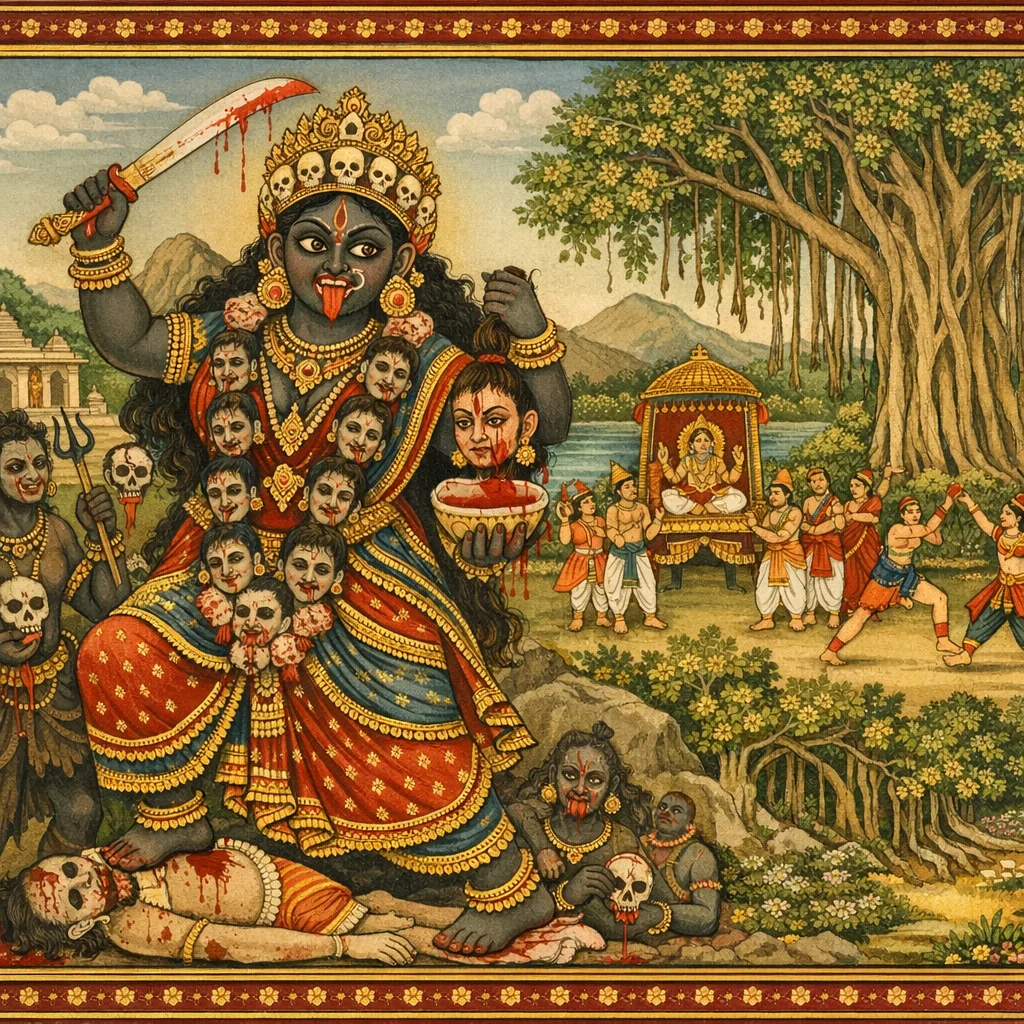
Adhyāya 167 presents a theological dialogue between Īśvara and Devī. Seeing disruptive, trance-like public behavior arising from acclaim of “Bhūtamātā,” Devī asks whether such conduct is scripturally warranted, how Prabhāsa’s residents should worship this deity, why she came there, and when her chief festival should be observed. Īśvara replies with an origin account: in a mythic interval, from Devī’s bodily effusion arises a fearsome female form adorned with skull-garlands and martial emblems, accompanied by brahma-rākṣasī-like allies and vast retinues. Īśvara assigns her functions and restraints—especially nocturnal predominance—and appoints Prabhāsa in Saurāṣṭra as her long-term abode, marked by astral and local signs. The chapter then turns to applied ethics, listing household and social conditions that invite bhūta/pīśāca presence—neglect of liṅgārcana, japa, homa, purity, daily duties, and persistent domestic discord—while noting protected homes where divine names and ritual order are maintained. A calendrical rule follows: worship from Vaiśākha pratipadā through caturdaśī, with a major observance tied to amāvasyā/caturdaśī timing (as stated), including offerings of flowers, incense, sindūra, and neck-threads, watering the deity beneath a tree (the siddha-vata motif), feeding rites, and public street performances (preraṇī–prekṣaṇī) that are humorous yet edifying. The phalaśruti promises protection of children, household well-being, freedom from afflictive entities, and general auspiciousness for those who honor Bhūtamātā with disciplined devotion.
Shlokas
Verse 2
ईश्वर उवाच । ततो गच्छेन्महादेवि तत्रस्थां भूतमातृकाम् । सावित्र्या वारूणे भागे शतधन्वंतरे स्थिताम् । नवकोटि गणैर्युक्तां प्रेतभूतसमाकुलाम् । पूजितां सिद्धगंधर्वैर्देवादिभिरनेकशः
Īśvara said: Then, O great Goddess, one should go to Bhūtamātṛkā who abides there—situated in Sāvitrī’s Varuṇa-quarter, at an interval of a hundred bow-lengths—attended by nine koṭis of gaṇas, thronged with pretas and bhūtas, and worshipped many times over by Siddhas, Gandharvas, and the gods and others.
Verse 3
देव्युवाच । भूतमातेति संहृष्टा ग्रामेग्रामे पुरेपुरे । गायन्नृत्यन्हसंल्लोकः सर्वतः परिधावति
The Goddess said: Delighted, people in every village and every town run about in all directions, singing, dancing, and laughing, crying out, “Bhūtamātā!”
Verse 4
उन्मत्तवत्प्रलपते क्षितौ पतति मत्तवत् । क्रुद्धवद्धावति परान्मृतवत्कृष्यते हि सः
He babbles like a madman, falls to the ground like one intoxicated, rushes at others as if enraged, and is dragged about as though lifeless.
Verse 5
सुखभंगांश्च कुरुते लोको वातगृहीतवत् । भूतवद्भस्ममूत्रांबुकर्दमानवगाहते
The people cause disruptions to ordinary well-being, as if seized by a wind-spirit; like those possessed, they plunge into ashes, urine, water, and mud.
Verse 6
किमेष शास्त्रनिर्दिष्टो मार्गः किमुत लौकिकः । मुह्यते मे मनो देव तेन त्वं वक्तुमर्हसि
Is this a path enjoined by the Śāstras, or merely a worldly way? My mind is bewildered, O Lord; therefore, you ought to explain it.
Verse 7
कथं सा पुरुषैः पूज्या प्रभासक्षेत्रवासिभिः । कस्मात्तत्र गता देवी कस्मिन्काले समागता । कस्मिन्दिने तु मासे तु तस्याः कार्यो महोत्सवः
How is that Goddess to be worshipped by the people dwelling in Prabhāsakṣetra? For what reason did the Goddess go there, and at what time did she arrive? And on which day and in which month should her great festival be performed?
Verse 8
ईश्वर उवाच । शृणु देवि प्रवक्ष्यामि यत्ते किंचिन्मनोगतम् । आस्तिकाः श्रद्दधानाश्च भवन्तीति मतिर्मम
Īśvara said: “Listen, O Devī; I shall explain what has arisen in your mind. My conviction is this: that people become faithful and full of trust in Dharma and the sacred.”
Verse 9
चाक्षुषस्यान्तरेऽतीते प्राप्ते वैवस्वतेऽन्तरे । दक्षापमानात्संजाता तदा पर्वतपुत्रिका
When the Cākṣuṣa Manvantara had passed and the Vaivasvata Manvantara arrived, then—arising from Dakṣa’s insult—the Daughter of the Mountain came into being again.
Verse 10
द्वापरे तु द्वितीये वै दत्ता त्वं पर्वतेन मे । विवाहे चैव संजाते सर्वदेवमनोरमे
In the second Dvāpara age, the Mountain (Himālaya) indeed gave you to me; and when the marriage took place, it delighted all the gods.
Verse 11
त्वया च सहितः पूर्वं मन्दरे चारुकंदरे । अक्रीडं च मुदा युक्तो दिव्यक्रीडनकैः प्रिये । पीनोन्नतनितंबेन भ्राजमाना कुचोन्नताम्
Formerly, O beloved, together with you I sported in joy within the lovely caves of Mandara, with divine playthings; and you shone with full, uplifted hips and prominent breasts.
Verse 12
सिताब्जवदनां हृष्टां दृष्ट्वाऽहं त्वां महाप्रभाम् । दग्धकामतरोः कन्दकंदलीमिव निःसृताम् । महार्हशयनस्थां त्वां तदा कामितवानहम्
Seeing you—joyful, lotus-faced, and greatly radiant—like a tender shoot emerging from the scorched wish-fulfilling tree, and resting upon a splendid couch, I then desired you.
Verse 13
सुरते तव संजातं दिव्यं वर्षशतं यदा । तदा देवि समुत्थाय निरोधान्निर्गता बहिः
When, in your lovemaking, a divine hundred years had passed, then, O Devī, you rose up and—released from restraint—went out.
Verse 14
तवोदकात्समुत्तस्थौ नार्येका गह्वरोदरा । कृष्णा करालवदना पिंगाक्षी मुक्तमूर्धजा
From your bodily fluid there arose a single woman, deep-bellied; black in hue, with a terrifying face, tawny-eyed, and with loosened hair.
Verse 15
कपालमालाभरणा बद्धमुण्डार्धपिंडका । खट्वांगकंकालधरा रुण्डमुंडकरा शिवा
She wore a garland of skulls as adornment, bore clusters of bound half-heads, carried a khaṭvāṅga and a skeleton, and held severed heads and skulls—this was the fierce Śivā, the female attendant of Śiva.
Verse 16
द्वीपिचर्माम्बरधरा रणत्किंकिणिमेखला । डमड्डमरुकारा च फेत्कारपूरिताम्बरा
Clad in leopard-skin raiment, with a girdle of jingling bells, sounding the ḍamaru drum, she filled the sky with her fierce cries.
Verse 17
तस्याश्च पार्श्वगा अन्यास्तासां नामानि मे शृणु । सख्यो ब्राह्मणराक्षस्यस्तासां चैव सुदर्शनाः
At her sides were other women as well—hear from me their names. They were her companions, brāhmaṇa-rākṣasīs, and they too were striking in appearance.
Verse 18
दशकोटिप्रभेदेन धरां व्याप्य सुसंस्थिताः । मुख्यास्तत्र चतस्रो वै महाबलपराक्रमाः
Spread across the earth in countless divisions—ten crores in their variety—they remain firmly established. Among them, four are reckoned as the principal ones, possessed of great strength and heroic power.
Verse 19
रक्तवर्णा महाजिह्वाऽक्षया वै पापकारिणी । एतासामन्वये जाताः पृथिव्यां ब्रह्मराक्षसाः
Red-hued, long-tongued, inexhaustible, and indeed doers of sin—from the lineage of these, upon the earth, were born the Brahma-rākṣasas.
Verse 20
श्लेष्मातकतरौ ह्येते प्रायशः सुकृतालयाः । उत्तालतालचपला नृत्यंति च हसंति च
These are seen upon the śleṣmātaka trees, for the most part abiding where merit is stored. Restless with loud rhythm and beat, they dance—and they laugh as well.
Verse 21
विज्ञेया इह लोकेऽस्मिन्भूतानां मूलनायकाः । अतिकृष्णा भवन्त्येते व्यंतरान्तरचारिणः
Know that, in this very world, these are the primordial leaders of the bhūtas. Exceedingly dark in form, they move through the inner spaces as vyantaras.
Verse 22
वृक्षाग्रमात्रमाकाशं ते चरंति न संशयः
They roam through the sky only to the height of a treetop—of this there is no doubt.
Verse 23
तथैव मम वीर्यात्तु मद्रूपाभरणः पुमान् । कपालखट्वांगधरो जातश्चर्मविगुण्ठितः
So too, from my own potency, there arose a man adorned in my very likeness—bearing a skull and a khaṭvāṅga-staff, and wrapped about with a hide.
Verse 24
अनुगम्यमानो बहुभिर्भूतैरपि भयंकरः । सिंहशार्दूलवदनैर्वदनोल्लिखितांबरैः
Followed by many bhūtas, he was terrifying indeed—surrounded by those with faces like lions and tigers, whose upraised faces seemed to scrape the very sky.
Verse 25
एवं देवि तदा जातः क्षुधाक्रान्तो बभाष माम् । अतोऽहं क्षुधितं दृष्ट्वा वरं हीमं च दत्तवान्
Thus, O Devī, when he had arisen, overcome by hunger he spoke to me. Therefore, seeing him famished, I granted him a boon—fitting and formidable.
Verse 26
युवयोर्हस्तसंस्पर्शान्नक्तमेवास्तु सर्वशः । नक्तं चैव बलीयांसौ दिवा नातिबलावुभौ । पुत्रवद्रक्षतं लोकान्धर्मश्चैवानुपाल्यताम्
From the touch of your hands, let it be night everywhere. And indeed, at night you two shall be stronger; by day you both shall not be excessively strong. Protect the worlds as though they were your own sons, and let dharma be duly upheld.
Verse 27
इत्युक्तौ तौ मया तत्र भूतमातृगणौ प्रिये । एकीभूतौ क्षणेनैव तौ भवानीभवोद्भवौ
Thus were those two—those hosts of the Mothers of the bhūtas—addressed by me there, O beloved. In a single moment, the two became one—born of Bhavānī and Bhava.
Verse 28
दृष्ट्वा हृष्टमनाश्चाहमवोचं त्वां शुचिस्मिते
Seeing them, my heart filled with joy, I spoke to you, O fair-smiling one.
Verse 29
कल्याणि पश्यपश्यैतौ ममांशाच्च समुद्भवौ । बीभत्साद्भुतशृंगारधारिणौ हास्यकारिणौ
O auspicious one, look—look at these two, born from a portion of my own being; they bear the moods of the terrible, the wondrous, and the erotic, and they provoke laughter.
Verse 30
भ्रातृभांडा भूतमाता तथैवोदकसेविता । संज्ञात्रयं स्मृतं देवि लोके विख्यातपौरुषम्
‘Bhrātṛbhāṃḍā’, ‘Bhūtamātā’, and likewise ‘Udakasevitā’—these three names are remembered, O Devī, as famed for their prowess in the world.
Verse 31
पुनः कृतांजलिपुटौ दृष्ट्वा मामूचतुस्तदा । आवयोर्भगवन्कुत्र स्थाने वासो भविष्यति
Then, once more folding their hands in reverence, they looked upon me and said: “O Lord, in what place shall our dwelling be?”
Verse 32
इत्युक्तवन्तौ तौ तत्र वरेण च्छन्दितौ मया । अस्ति सौराष्ट्रविषये भारते क्षेत्रमुत्तमम्
When those two had spoken thus, I granted them a boon and said: “In Bhārata, within the region of Saurāṣṭra, there is an unsurpassed sacred field.”
Verse 33
प्रभासेति समाख्यातं तत्र क्षेमं मम प्रियम् । कूर्मस्य नैरृते भागे स्थितं वै दक्षिणे परे
It is renowned as “Prabhāsa”; there lies my beloved seat of welfare and auspiciousness. It is situated in the south, in the south-western quarter of the sacred layout called “Kūrma”.
Verse 34
स्वाती विशाखा मैत्रं च यत्र ऋक्षत्रयं स्मृतम् । तस्मिन्स्थाने सदा स्थेयं यावन्मन्वन्तरावधि
Where the triad of lunar mansions—Svātī, Viśākhā, and Maitra—is remembered, in that very place you shall ever remain, until the end of the Manvantara.
Verse 35
अन्यदा जीविकं वच्मि तव भूतप्रिये सदा
At another time I shall tell you of your livelihood, O ever-beloved of beings.
Verse 36
यत्र कण्टकिनो वृक्षा यत्र निष्पाववल्लरी । भार्या पुनर्भूर्वल्मीकस्तास्ते वसतयश्चिरम्
Where thorny trees stand, where the niṣpāva creeper spreads—there too let your wife be “Punarbhū”, and the anthill your dwelling; these shall be your abodes for a long time.
Verse 37
यस्मिन्गृहे नराः पञ्च स्त्रीत्रयं तावतीश्च गाः । अन्धकारेंधनाग्निश्च तद्गृहे वसतिस्तव
In whatever house there are five men, three women, and as many cows, and where there are darkness, fuel, and fire—within that house is your dwelling.
Verse 38
भूतैः प्रेतैः पिशाचैश्च यत्स्थानं समधिष्ठितम् । एकावि चाष्टबालेयं त्रिगवं पञ्चमाहिषम् । षडश्वं सप्तमातंगं तद्गृहे वसतिस्तव
That dwelling-place which is occupied by bhūtas, pretas, and piśācas—there, O goddess, is your abode: where there are one sheep, eight young bulls, three cows, five buffaloes, six horses, and seven elephants—within that house is your residence.
Verse 39
उद्दालकान्नपिटकं तद्वत्स्थाल्यादिभाजनम् । यत्र तत्रैव क्षिप्तं च तव तच्च प्रतिश्रयम्
Where a basket of grain/food, and likewise pots and utensils such as cooking-vessels, are tossed about anywhere and everywhere—there too, O goddess, is your lodging.
Verse 40
मुशलोलूखले स्त्रीणामास्या तद्वदुदुंबरे । भाषणं कटुकं चैव तत्र देवि स्थितिस्तव
In the mortar and pestle, in women’s mouths, and likewise in the udumbara (fig tree); and where speech is harsh—there, O goddess, is your abiding presence.
Verse 41
खाद्यन्ते यत्र धान्यानि पक्वापक्वानि वेश्मनि । तद्वच्छाखाश्च तत्र त्वं भूतैः सह चरिष्यसि
In a house where grains—cooked and uncooked—are eaten without care or discernment, and where branches and twigs are likewise left in disorder, there you shall roam together with the bhūtas.
Verse 42
स्थालीपिधाने यत्राग्निं ददते विकला नराः । गृहे तत्र दुरिष्टानामशेषाणां समाश्रयः
In a house where careless or negligent people set fire upon the lid of a cooking-pot, that home becomes a resort for every evil omen and every kind of wrongdoing.
Verse 43
मानुष्यास्थि गृहे यत्र अहोरात्रे व्यवस्थितम् । तत्रायं भूतनिवहो यथेष्टं विचरिष्यति
Where human bones are kept within a house by day and by night, there that troop of bhūtas will roam about as they please.
Verse 44
सर्वस्मादधिकं ये न प्रवदन्ति पिनाकिनम् । साधारणं वदंत्येनं तत्र भूतैः समाविश
Those who do not proclaim Pinākin (Śiva) as higher than all, but speak of him as merely “ordinary”—enter there, together with the bhūtas.
Verse 45
कन्या च यत्र वै वल्ली रोहीनाम जटी गृहे । अगस्त्य पादपो वापि बंधुजीवो गृहेषु वै
And where, in a house, there is the creeper called Kanyā, or the matted plant known as Rohī; or the plant called Agastya; or the Bandhujīva in homes—such a house too is counted among those fit for such influences.
Verse 46
करवीरो विशेषेण नंद्यावर्तस्तथैव च । मल्लिका वा गृहे येषां भूतयोग्यं गृहं हि तत्
Especially where a house has karavīra (oleander), and likewise the nandyāvarta plant, or mallikā (jasmine)—indeed that house is fit to be a dwelling of the bhūtas (spirits).
Verse 47
तालं तमालं भल्लातं तिंतिणीखंडमेव वा । बकुलं कदलीखंडं कदंबः खदिरोऽपि वा
A tāla (palm), a tamāla tree, a bhallāta, or even a stand of tiṁtiṇī; a bakula, a clump of banana, a kadamba, or even a khadira—when such growths are found within the domestic space, they too are counted among those signs.
Verse 48
न्यग्रोधो हि गृहे येषामश्वत्थं चूत एव वा । उदुंबरश्च पनसः सर्वभूत प्रियं हि तत्
In whose home there is a nyagrodha (banyan), or an aśvattha (sacred fig), or a cūta (mango); likewise an udumbara (cluster fig) or a panasa (jackfruit)—such a dwelling is dear and pleasing to all beings.
Verse 49
यत्र काकगृहं वै स्यादारामे वा गृहेऽपि वा । भिक्षुबिंबं च वै यत्र गृहे दक्षिणके तथा
Wherever there is a “crow-house” (kāka-gṛha), whether in a garden or even within a residence, and where a bhikṣu-bimba (an effigy or sign of a mendicant) is present in the house, especially on the southern side—
Verse 50
बिंबमूर्ध्वं च यत्रस्थं तत्र भूतनिवेशनम्
Where such an image (bimba) is set above, raised up, there indeed is a habitation of the bhūtas (spirits).
Verse 51
लिंगार्चनं न यत्रैव यत्र नास्ति जपादिकम् । यत्र भक्तिविहीना वै भूतानां तान्गृहान्वदेत्
Where there is no worship of the Liṅga, where japa and allied rites are absent, and where devotion is lacking—such houses should be called the houses of bhūtas (spirit-haunted).
Verse 52
मलिनास्यास्तु ये मर्त्या मलिनांबर धारिणः । मलदंता गृहस्था ये गृहं तेषां समाविश
Those mortals whose faces are unclean, who wear soiled garments, and householders whose teeth are foul—enter the houses of such people.
Verse 53
अगम्यनिरता ये तु मैथुने व्यभिचारतः । संध्यायां मैथुनं यांति गृहं तेषां समाविश
Those who are devoted to forbidden relations and act in sexual misconduct, and those who engage in intercourse at twilight (saṃdhyā)—enter the houses of such people.
Verse 54
बहुना किं प्रलापेन नित्यकर्मबहिष्कृताः । रुद्रभक्तिविहीना ये गृहं तेषां समाविश
What is the use of much talk? Those who cast aside their daily duties, and those who are devoid of devotion to Rudra—enter the houses of such people.
Verse 55
अदत्त्वा भुंजते योऽन्नं बंधुभ्योऽन्नं तथोदकम् । सपिण्डान्सोदकांश्चैव तत्कालात्तान्नरान्भज
Whoever eats food without first giving (a share), and does not provide food and water to relatives—especially to those who share the same piṇḍa and water-oblation (kinsmen)—from that very time, attach yourself to such men.
Verse 56
यत्र भार्या च भर्ता च परस्परविरोधिनौ । सह भूतैर्गृहं तस्य विश त्वं भयवर्ज्जिता
Where wife and husband are mutually hostile—enter that house together with the bhūtas; go in, free of fear.
Verse 57
वासुदेवे रतिर्नास्ति यत्र नास्ति सदा हरिः । जपहोमादिकं नास्ति भस्म नास्ति गृहे नृणाम्
In the homes of men where there is no love for Vāsudeva, where Hari is not ever remembered, where japa, homa, and such practices are absent, and where sacred ash (bhasma) is not present—
Verse 58
पर्वस्वप्यर्चनं नास्ति चतुर्दश्यां विशेषतः
Even on festival-days there is no worship performed—especially on the fourteenth lunar day (caturdaśī).
Verse 59
कृष्णाष्टम्यां च ये मर्त्याः संध्यायां भस्मवर्जिताः । पंचदश्यां महादेवं न यजंति च यत्र वै
Those mortals who, on Kṛṣṇāṣṭamī, perform the twilight rite without sacred ash, and that place where, on the fifteenth day, Mahādeva is not worshipped—such a place is marked by the waning of dharma.
Verse 60
पौरजानपदैर्यत्र प्राक्प्रसिद्धा महोत्सवाः । क्रियते पूर्ववन्नैव तद्गृहं वसतिस्तव
Where the great festivals once renowned among townsmen and villagers are no longer celebrated as before—there, that house becomes your dwelling-place.
Verse 61
वेदघोषो न यत्रास्ति गुरुपूजादिकं न च । पितृकर्मविहीनं च तद्भूतस्य गृहं स्मृतम्
Where there is no recitation of the Veda, no honoring of the guru and the like, and the rites for the ancestors are neglected—that house is said to be the dwelling of a bhūta, a restless spirit.
Verse 62
रात्रौरात्रौ गृहे यस्मिन्कलहो जायते मिथः । बालानां प्रेक्षमाणानां यत्र वृद्धश्च पूर्वतः । भक्षयेत्तत्र वै हृष्टा भूतैः सह समाविश
In the house where, night after night, quarrels arise among themselves—where children look on and even the elder leads the way—there the bhūtas enter in delight and consume its peace and well-being.
Verse 63
कस्मिन्मासे दिने चापि भवित्री लोकपूजिता । इत्युक्तोऽहं तया देवि तामवोचं पुनः प्रिये
“In which month and on which day shall I be worshipped by the people?”—thus questioned by her, O Goddess, I spoke to her again, O beloved.
Verse 64
अमा या माधवे मासि तस्मिन्या च चतुर्दशी । तस्यां महोत्सवस्तत्र भविता ते चिरंतनः
On the amāvāsyā, the new-moon day, that falls in the month of Mādhava, and on the caturdaśī, the fourteenth day connected with it—on that occasion a great festival will be held there, enduring for you for a long time.
Verse 65
याः स्त्रियस्तां च यक्ष्यंति तस्मिन्काले महोत्सवे । बलिभिः पुष्पधूपैश्च मा तासां त्वं गृहे विश
The women who will worship her at that time, during the great festival—offering bali, flowers, and incense—do not enter their homes.
Verse 66
नारायण हृषीकेश पुण्डरीकाक्ष माधव । अच्युतानंत गोविंद वासुदेव जनार्दन
Nārāyaṇa, Hṛṣīkeśa, Puṇḍarīkākṣa, Mādhava; Acyuta, Ananta, Govinda, Vāsudeva, Janārdana—these sacred Names are invoked in praise.
Verse 67
नृसिंह वामनाचिंत्य केशवेति च ये जनाः । रुद्र रुद्रेति रुद्रेति शिवाय च नमोनमः
Those who utter, “Nṛsiṃha, Vāmana, Acintya, Keśava,” and who repeat, “Rudra, Rudra, Rudra,” offering obeisance again and again to Śiva—are protected by such devotion.
Verse 68
वक्ष्यंति सततं हृष्टास्तेषां धनगृहादिषु । आरामे चैव गोष्ठे च मा विशेथाः कथंचन
They will always speak with delight of their treasuries, houses, and the like. Under no circumstance should you ever enter their pleasure-gardens or their cattle-sheds.
Verse 69
देशाचाराञ्ज्ञा तिधर्माञ्जपं होमं च मंगलम् । दैवतेज्यां विधानेन शौचं कुर्वंति ये जनाः । लोकापवादभीता ये पुमांसस्तेषु मा विश
Do not enter among those men who—knowing the customs of the land and the ordinances of dharma—perform japa, homa, auspicious rites, and worship of the deities according to rule, keeping themselves pure out of fear of public reproach.
Verse 70
देव्युवाच । कदा पूजा प्रकर्तव्या भूतमातुः सुखार्थिभिः । पुरुषैर्देवदेवेश एतन्मे वक्तुमर्हसि
The Goddess said: “O Lord of the gods, when should men who seek well-being perform the worship of Bhūtamātṛ? Please tell me this.”
Verse 71
ईश्वर उवाच । सर्वत्रैषा भगवती बालानां हितकारिणी । नामभेदैः कालभेदैः क्रियाभेदैश्च पूज्यते
Īśvara said: “Everywhere this Blessed Goddess, the benefactress of children, is worshipped—under different names, at different times, and with differing rites.”
Verse 72
प्रतिपत्प्रभृति वैशाखे यावच्चतुर्दशीतिथिः । तावत्पूजा प्रकर्तव्या प्रेरणीप्रेक्षणीयकैः
Beginning with the first lunar day in Vaiśākha and continuing up to the fourteenth tithi, worship should be performed for that entire period, with the proper attendant observances and ritual arrangements.
Verse 73
भग्नामपि गतां चैनां जरत्तरुतले स्थिताम् । सेचयिष्यंति ये भक्त्या जलसंपूर्णगंडुकैः
Even if her image is broken, displaced, and set beneath an aged tree, those who, with devotion, will sprinkle and bathe her using water-filled vessels—
Verse 74
ग्रीवासूत्रकसिन्दूरैः पुष्पैर्धूपैस्तथार्चयेत् । तत्र सिद्धवटः पूज्यः शाखां चास्य विनिक्षिपेत्
One should worship her there with neck-threads (amulets), vermilion, flowers, and incense. There the Siddhavaṭa (the ‘Banyan of the Siddhas’) is also to be worshipped, and one should place a branch of it as a ritual token.
Verse 75
पूजितां तां नरैर्यत्नादवलोक्य शुभेप्सुभिः । भोजयेत्क्षिप्रासंयावकृशरापूपपायसैः
After carefully beholding her worshipped form, men who desire auspicious results should then provide a feeding offering, with foods such as kṣiprā, saṃyāva, kṛśarā, pūpa-cakes, and pāyasa (sweet rice).
Verse 76
एवं विधिं यः कुरुते पुरुषो भक्तिभावतः । स पुत्रपशुवृद्धिं च शरीरारोग्यमाप्नुयात्
A man who performs this rite in this very manner, with a heart of devotion, attains increase of sons and livestock, and also health of body.
Verse 77
न शाकिन्यो गृहे तस्य न पिशाचा न राक्षसाः । पीडां कुर्वन्ति शिशवो यान्ति वृद्धिमनामयाम्
In his house there will be no Śākinīs, no Piśācas, and no Rākṣasas; they will not afflict the children, and the children will grow up free from illness, in wholesome strength.
Verse 78
अथ देवि प्रवक्ष्यामि प्रतिपत्प्रभृति क्रमात् । यथोत्सवो नरैः कार्यः प्रेरणीप्रेक्षणीयकैः
Now, O Goddess, I shall explain in proper sequence—beginning from the first lunar day—how the festival is to be conducted by the people, with organizers and appointed overseers watching over it.
Verse 79
विकर्मफलनिर्द्देशैः पाखंडानां विटंबनैः । प्रदर्श्यते हास्यपरैर्नरैरद्भुतचेष्टितैः
It is enacted by men devoted to humorous display, through astonishing performances—pointing out the fruits of wrongful deeds and satirizing hypocritical heretics.
Verse 80
पञ्चम्यां तु विशेषेण रात्रौ कोलाहलः शुभे । जागरं तत्र कुर्वीत देवीं पूज्य प्रयत्नतः
But especially on the fifth lunar day, on that auspicious night, there should be joyful commotion; one should keep vigil there, worshipping the Goddess with earnest effort.
Verse 81
विश्वस्य धनलोभेन स्वाध्यायो निहतः पतिः । आरोप्यमाणं शूलाग्रमेनं पश्यत भो जनाः
‘Because of greed for wealth, the husband—Master of sacred study—has been slain!’—Look, O people, as this one is being hoisted upon the tip of a stake!
Verse 82
दृष्टो भवद्भिर्दुष्टः स परदारावमर्शकः । छित्त्वा हस्तौ च खड्गेन खरारूढस्तु गच्छति
‘You have seen this wicked man—a violator of another’s wife. With his hands cut off by a sword, he goes away mounted on a donkey.’
Verse 83
शीर्णश्चैवासिपत्रेण अस्याभरणभूषितः । सुखासन समारूढः सुकृती यात्यसौ सुखम्
‘Though cut down by the sword’s blade, he is adorned with ornaments; seated upon a comfortable seat, that meritorious man goes on to happiness.’
Verse 84
हे जनाः किं न पश्यध्वं स्वामिद्रोहकरं परम् । करपत्रैर्विदार्यंतमुच्छलच्छोणितान्तरम्
O people, do you not see this worst of traitors to his lord? He is being torn apart with hand-blades, his insides gushing with spurting blood.
Verse 85
चौरः किलायं संप्राप्तः सर्वोद्वेगकरः परः । दंडप्रहाराभिहतो नीयते दंडपाशकैः
‘Indeed, this thief has been caught—the very cause of terror to all. Struck with staff-blows, he is being led away by the officers bearing staffs and nooses.’
Verse 86
प्रेक्षकैश्चेष्टितः शश्वदारटन्विविधैः स्वरैः । संयम्य नीयते हन्तुं लज्जितोऽधोमुखो जनाः
Urged on by the spectators, with continual shouting in many kinds of voices, he is restrained and led away to be executed—ashamed, his face cast downward, O people.
Verse 87
सितकेशं सितश्मश्रुं सितांबरधरध्वजम् । विटंकाद्यैश्च चेटीभिर्हन्यमानं न पश्यथि
Do you not see him—white-haired, white-bearded, bearing a banner and clad in white—being beaten by maidservants and attendants with clubs and the like?
Verse 88
गृहान्निष्क्राम्य मां रंडां गृहं नीत्वाऽकरोद्रतिम् । कस्मादसौ न कुरुते मूढो भरणपोषणम्
Having taken me, a widow, out of my home and brought me to his house, he sought pleasure. Why does that fool not perform the duty of supporting and maintaining (me)?
Verse 89
भैरवाभरणो नेता सदा घूर्णितलोचनः । प्रवृत्ततंद्रवन्मूढो वध्यश्चासावितस्ततः
A leader adorned like Bhairava, with eyes ever rolling about—deluded, as if overcome by stupor—he was, therefore, liable to punishment and execution.
Verse 90
निर्वेदेकोऽस्य हृदये धनक्षेत्रादिसंभवः । गृहीतं यदनेनाद्य बालेनापि महाव्रतम् । रक्ताक्षं काककृष्णांगं सत्वरं किं न पश्यथि
Only a worldly disgust, born of wealth, lands, and the like, is in his heart. Yet today he has taken up a ‘great vow’—even like a mere child. Why do you not quickly see (his true form): red-eyed, with limbs black as a crow?
Verse 91
तरुकोटरगान्बद्ध्वा अन्याञ्छृंखलया तथा । शरौघैः काष्ठकैश्चैव बहुभिः शकलीकृतान्
Some he bound within the hollows of trees; others he bound with chains. With volleys of arrows and with many wooden clubs, he smashed them into pieces.
Verse 92
विमुक्तहक्काहुंकारा न्सुप्रहारान्निरीक्षत
Behold the fierce blows, unleashed with harsh shouts and roaring cries!
Verse 93
इमां कृष्णार्धवदनां ग्रहीष्यसि दुरात्मिकाम् । विमुक्तकेशां नृत्यन्तीं पश्यध्वं योगिनीमिव
You will seize this wicked woman, whose face is half-black. Look—her hair is loose, and she dances like a yoginī!
Verse 94
गम्भीर नूपुरध्वानप्रवृद्धोद्धततांडवा । उन्मत्तनेत्रचरणा यात्येषा डिम्भमण्डली
With a wild tāṇḍava, made ever more frenzied by the deep sound of her anklets—her eyes and steps maddened—this band of wretches presses on.
Verse 95
कटीतटस्थपिटिकोल्लसत्कंबलधारिणी । अटते नटती ह्युर्वी परितश्च गृहाद्गृहम्
Wearing a blanket, made conspicuous by a pouch hanging at her waist, she wanders about—dancing over the earth—going all around from house to house.
Verse 96
इत्येवमादिभिर्नित्यं प्रेरणीप्रेक्षणीयकैः । प्रेरयेत्तान्महानित्थं पुत्रभ्रातृसुहृद्वृतः
Thus, continually—by such incitements and showy displays—that great scoundrel would spur them on, surrounded by his sons, brothers, and friends.
Verse 97
एकादश्यां नवम्यां वा दीपं प्रज्वाल्य कुण्डकम् । मुखबिंबानि तत्रैव लेपदारुकृतानि वै
On the eleventh day or on the ninth, having kindled a lamp in a small bowl, they would place there itself face-like masks—indeed, fashioned from wood and plaster.
Verse 98
विचित्राणि महार्हाणि रौद्रशान्तानि कारयेत् । मातृणां चण्डिकादीनां राक्षसानां तथैव च
One should have wondrous and precious images made, both fierce and pacifying in aspect—of the Mothers such as Caṇḍikā, and likewise of the Rākṣasas.
Verse 99
भूतप्रेतपिशाचानां शाकिनीनां तथैव च । मुखानि कारयेत्तत्र हावभावकृतानि च
There, one should also have fashioned faces of bhūtas, pretas, piśācas, and likewise of śākinīs—made with expressive gestures and moods.
Verse 100
रक्षिभिर्बहुभिर्गुप्तं तिर्य ग्ध्वनिपुरःसरम् । अमावास्यां महादेवि क्षिपेत्पूजाक्रमैर्नरः
O Mahādevī, on the new-moon night a man should, following the proper sequence of worship, cast forth (the rite/offerings), with many guards stationed, amid sideward sounds and with clamorous uproar going before.
Verse 101
ततः प्रदोषसमये यत्र देवी जनैर्वृता । तत्र गच्छेन्महारावैः फेत्कारा कुलकीर्तनैः
Then, at twilight (pradoṣa), one should go to the place where the Goddess is surrounded by the people, with mighty cries, with sharp shouts, and with proclamations of one’s clan.
Verse 102
वीरचर्याविधानेन नगरे भ्रामयेन्निशि । वीरचर्या स कथितो दीपः सर्वार्थसाधकः
By the prescribed observance called vīracaryā, one should roam through the city at night. This vīracaryā is declared to be a “lamp” that accomplishes all aims.
Verse 103
नित्यं निष्क्रामयेद्दीपं याव त्पञ्चदशी तिथिः । पञ्चदश्यां प्रकुर्वीत भूतमातुर्महोत्सवम् । तस्य गृहेश्वरं यावद्गृहे विघ्नं न जायते
One should take out the lamp daily until the fifteenth lunar day. On the fifteenth, one should perform the great festival of Bhūtamātṛ. For that householder, so long as he remains there, no obstacle arises in his home.
Verse 104
अथ कालान्तरेऽतीते भूतमातुः शरीरतः । जाताः प्रस्वेदबिन्दुभ्यः पिशाचाः पञ्चकोटयः
Then, after some time had passed, from the body of Bhūtamātṛ were born—out of drops of sweat—five koṭis of piśācas.
Verse 105
सर्वे ते क्रूरवदना जिह्वाज्वालाकृशोदराः । पाणिपात्राः पिशाचास्ते निसृष्टबलिभोजनाः
All of them were fierce-faced, with tongues like flames and gaunt bellies. Those piśācas used their hands as bowls, living on the offerings (bali) that were set out.
Verse 106
धमनीसंतताः शुष्काः श्मश्रुलाश्चर्मवाससः । उलूखलैराभरणैः शूर्पच्छत्रासनांबराः
Their veins stood out; they were withered and dry, bearded, and clad in skins. Mortars they wore as ornaments, and winnowing-baskets, umbrellas, seats, and coverings were their gear—
Verse 107
नक्तं ज्वलितकेशाढ्या अंगारानुद्गिरंति वै । अंगारकाः पिशाचास्ते मातृमार्गानुसारिणः
At night, their hair blazed, and they truly spewed forth embers. Those piśācas were called “Aṅgārakas,” and they followed the path of the Mother (Bhūtamātṛ)—
Verse 108
आकर्णदारितास्याश्च लंबभ्रूस्थूलनासिकाः । बलाढ्यास्ते पिशाचा वै सूतिकागृहवासिनः
Their mouths were split wide up to the ears; they had drooping brows and thick noses. Those piśācas were powerfully built indeed, dwelling in the lying-in chambers, the houses of childbirth—
Verse 109
पृष्ठतः पाणिपादाश्च पृष्ठगा वातरंहसा । विषादनाः पिशाचास्ते संग्रामे पिशिताशनाः
Their hands and feet were set backward; they moved with the speed of the wind. Those piśācas brought despair, and in battle they fed on flesh—
Verse 110
एवंविधान्पिशाचांस्तु दृष्ट्वा दीनानुकम्पया । तेभ्योऽहमवदं किञ्चित्कारुण्यादल्पचेतसाम्
Seeing piśācas of such a kind, compassion arose in me for the wretched. Out of mercy for those of little understanding, I spoke to them a few words—
Verse 111
अन्तर्धानं प्रजादेहे कामरूपित्वमेव च । उभयोः संध्ययोश्चारं स्थानान्याजीवितं तथा
“Invisibility among living beings, the power to assume forms at will, movement at both twilights, and also the places you may inhabit and your means of livelihood—these I grant and declare.”
Verse 112
गृहाणि यानि नग्नानि शून्यान्यायतनानि च । विध्वस्तानि च यानि स्यू रचनारोषितानि च
“Houses that are bare and exposed, shrines and dwellings that are empty; those that are ruined, and those that have been disturbed and made desolate—”
Verse 113
राजमार्गोपरथ्याश्च चत्वराणि त्रिकाणि च । द्वाराण्यट्टालकांश्चैव निर्गमान्संक्रमांस्तथा
“Royal highways and bylanes, squares and three-way junctions; gateways and watchtowers, exits and crossings as well—”
Verse 114
पथो नदीश्च तीर्थानि चैत्यवृक्षान्महापथान् । स्थानानि तु पिशाचानां निवासायाददां प्रिये
“Roads, rivers, sacred tīrthas, holy trees, and great highways—these places I assign as dwelling-grounds for the Piśācas, O beloved.”
Verse 115
अधार्मिका जनास्तेषामा जीवो विहितः पुरा । वर्णाश्रमाचारहीनाः कारुशिल्पिजनास्तथा
“Long ago it was ordained that their livelihood would come from unrighteous people—those bereft of the disciplines of varṇa and āśrama, and likewise from artisans and craftsmen of fallen conduct.”
Verse 116
अनुतापाश्च साधूनां चौरा विश्वासघातिनः । एतैरन्यैश्च बहुभिरन्यायोपार्जितैर्धनैः
“Those who feel no remorse toward the virtuous sādhus—thieves and betrayers of trust—by these and by many others, through wealth amassed unjustly—”
Verse 117
आरभ्यते क्रिया यास्तु पिशाचास्तत्र देवताः । मधुमासदिने दध्ना तिलचूर्णसुरासवैः
“Whatever rite is undertaken there, the Piśācas are regarded as the presiding deities. On a day in the Madhu month, with curds, sesame-powder, surā (liquor), and fermented drink—”
Verse 118
पूपैर्हारिद्रकृशरैस्तिलैरिक्षुगुडौदनैः । कृष्णानि चैव वासांसि धूम्राः सुमनसस्तथा
With cakes, with kṛśara seasoned with turmeric, with sesame, with rice cooked with sugarcane-jaggery; and also with black garments, together with grey-hued fragrant flowers—(with such offerings she is to be honored).
Verse 119
सर्वभूतपिशाचानां कृता देवी मया शुभा । एवंविधा भूतमाता सर्वभूतगणैर्वृता
“For all beings and for the Piśācas I have fashioned this auspicious Goddess. Such is Bhūta-mātā, surrounded by the hosts of all beings.”
Verse 120
प्रभासे संस्थिता देवी समुद्रादुत्तरेण तु । य एतां वेद वै देव्या उत्पत्तिं पापनाशिनीम्
The Goddess abides at Prabhāsa, to the north of the ocean. Whoever truly knows this sin-destroying account of the Goddess’s origin—
Verse 121
कुत्सिता संतति स्तस्य न भवेच्च कदाचन । भूतप्रेतपिशाचानां न दोषैः परिभूयते
For him, disgraceful offspring will never arise; and he is not afflicted by the taints and harms caused by bhūtas, pretas, and piśācas.
Verse 122
सर्वपापविनिर्मुक्तः सर्वसौभाग्यसंयुतः । सर्वान्कामानवाप्नोति नारीहृदयनंदनः
Freed from all sins and endowed with every good fortune, he attains all desired aims, becoming pleasing to the hearts of women.
Verse 123
ये मानयंति निजहासकलैर्विलासैः संसेवया अभयदा भवभूतमाताम् । ते भ्रातृभृत्यसुतबंधुजनैर्युताश्च सर्वोपसर्ग रहिताः सुखिनो भवन्ति
Those who honor Bhava’s Bhūta-mātā—the giver of fearlessness—with their own joyful festivities and devoted service, live happily, accompanied by brothers, servants, sons, and kinsmen, and remain free from all calamities.
Verse 167
इति श्रीस्कांदे महापुराण एकाशीतिसाहस्र्यां संहितायां सप्तमे प्रभासखण्डे प्रथमे प्रभासक्षेत्रमाहात्म्ये भूत मातृकामाहात्म्यवर्णनंनाम सप्तषष्ट्युत्तरशततमोऽध्यायः
Thus ends, in the revered Skanda Mahāpurāṇa—within the eighty-one-thousand (verse) compilation—in the seventh, the Prabhāsa Khaṇḍa, in the first subdivision, Prabhāsakṣetra Māhātmya, the chapter entitled “Description of the Glory of Bhūta-mātṛkā,” being Chapter 167.