Adhyaya 129
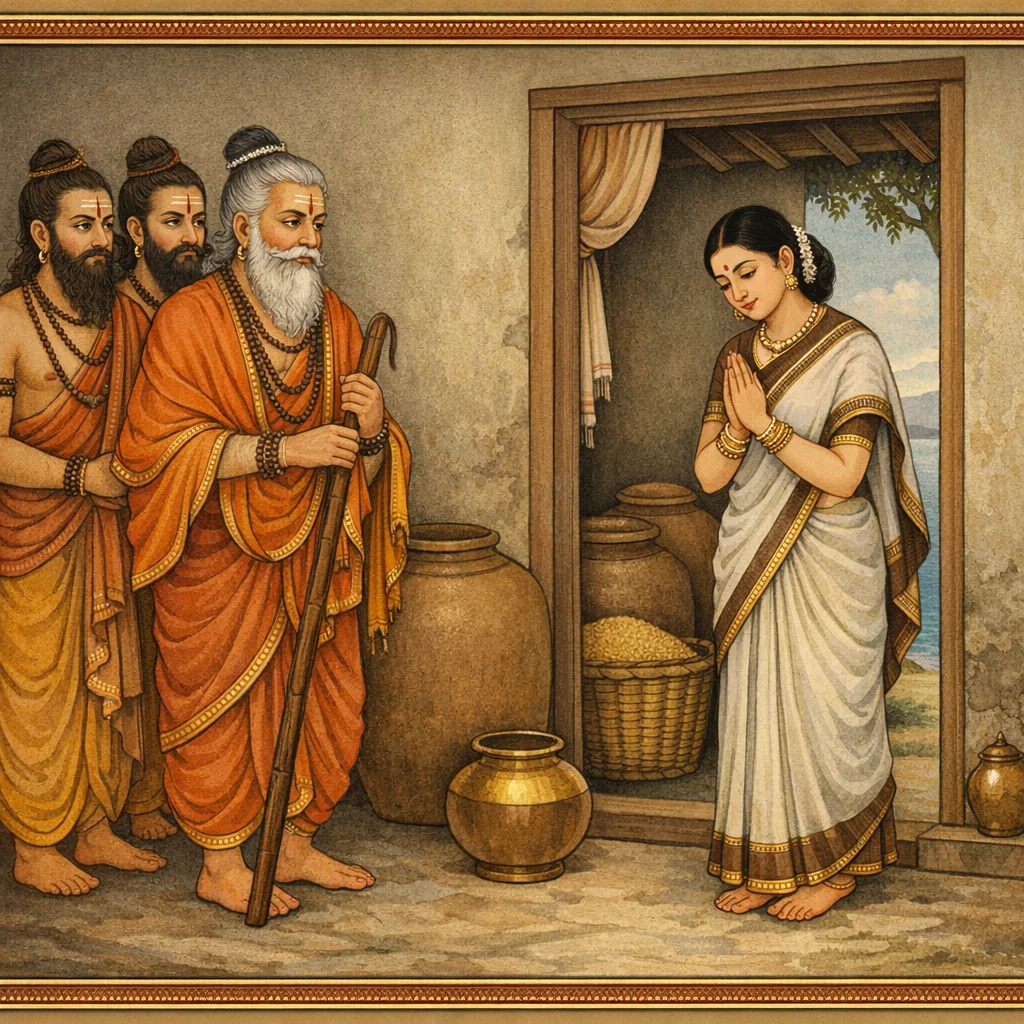
Chapter 129 offers a shrine-centered theological account of a Prabhāsa liṅga, explaining its origin, renaming, and saving fame. Īśvara points out its location—at a directional corner near the sea and the sun, with a stated distance—and declares it a sin-quelling “yugaliṅga,” once called Akṣamāleśvara and later renowned as Ugraseneśvara. When Devī asks why it bore the earlier name, Īśvara begins a narrative on dharma in times of distress. In a famine, hungry ṛṣis approach an antyaja (Caṇḍāla) household that has stored grain, despite purity rules against accepting and eating lower-status food. The antyaja cites the prohibitions and their dire consequences, but the ṛṣis answer with crisis-ethics precedents—Ajīgarta, Bharadvāja, Viśvāmitra, Vāmadeva—arguing that survival may be upheld in emergency. A conditional settlement follows: Vasiṣṭha agrees to marry the antyaja’s daughter Akṣamālā, who through her conduct and association with the sages comes to be recognized as Arundhatī. In Prabhāsa she discovers a liṅga in a grove and, through remembrance and sustained worship, helps manifest its renown as a remover of wrongdoing. At the Dvāpara–Kali transition, Ugrasena (son of Andhāsura) worships the same liṅga for fourteen years and gains a son, Kaṃsa; thereafter the shrine is popularly called Ugraseneśvara. The chapter ends with phala: mere darśana or touch is said to lessen grave transgressions; worship on Bhādrapada Ṛṣi-pañcamī frees one from fear of infernal states; and gifts of cows, food, and water are praised for purification and post-mortem well-being.
Shlokas
Verse 1
ईश्वर उवाच । ततो गच्छेन्महादेवि अक्षमालेश्वरं परम् । सागरार्कादीशकोणे पंचाशद्धनुषान्तरे
Īśvara said: “Then, O Great Goddess, one should go to the supreme Akṣamāleśvara, situated at the corner between Sāgarārka and Ādīśa, at a distance of fifty bow-lengths.”
Verse 2
संस्थितं पापशमनं युगलिंगं महाप्रभम् । अक्षमालेश्वरंनाम पुरा तस्य प्रकीर्तितम् । उग्रसेनेश्वरं नाम ख्यातं तस्यैव साम्प्रतम्
There stands a radiant ‘twin-liṅga’ of great splendor, a remover of sin. Formerly it was celebrated by the name Akṣamāleśvara; now that very same liṅga is renowned as Ugraseneśvara.
Verse 3
देव्युवाच । अक्षमालेश्वरं नाम यत्पूर्वं समुदाहृतम् । कथं तदभवद्देव कथयस्व प्रसादतः
The Goddess said: “O Deva, in former times it was spoken of as bearing the name Akṣamāleśvara—how did that name arise? Tell me, out of grace.”
Verse 4
ईश्वर उवाच । आसीत्पुरा महादेवि सती चाध मयोनिजा । अक्षमालेति वै नाम्ना सतीधर्मपरायणा
Īśvara said: “Formerly, O Great Goddess, there was a virtuous woman, born of Māyā—of wondrous origin—named Akṣamālā, steadfastly devoted to dharma.”
Verse 5
कदाचित्समनुप्राप्ते दुर्भिक्षे कालपर्ययात् । ऋषयश्च महादेवि क्षुधाक्रान्ता विचेतसः
At one time, due to a turn of time, a famine set in; and the sages, O Great Goddess, were overcome by hunger, their minds distressed and bewildered.
Verse 6
सर्वे चान्नं परीप्संतो गताश्चण्डालवेश्मनि । ज्ञात्वान्नसंग्रहं तस्य प्रार्थयाञ्चक्रुरन्त्यजम्
All of them, seeking food, went to the house of a caṇḍāla. Learning that he had stored provisions, they entreated that outcaste for food.
Verse 7
भोभोऽन्त्यज महाबुद्धे रक्षास्मानन्नदानतः । प्राणसंदेहमापन्नान्कृशांगान्क्षुत्प्रपीडितान्
“O outcaste, O great-minded one—save us by the gift of food. We are emaciated, tormented by hunger, and our very lives have fallen into doubt.”
Verse 8
अहो धन्योऽसि पूज्योऽसि न त्वमन्त्यज उच्यसे । यदस्मिन्प्रलये याते स्थितं धान्यं गृहे तव
Ah! You are blessed and worthy of honor—one should not call you an Antyaja, for when this great devastation came, grain still remained stored within your house.
Verse 9
अनावृष्टिहते देशे सस्ये च प्रलयं गते । एकं यो भोजयेद्विप्रं कोटिर्भवति भोजिता
In a land struck by drought, when the crops have perished, whoever feeds even a single brāhmaṇa gains merit equal to feeding a koṭi—a crore, ten million.
Verse 10
अन्त्यज उवाच । अहो आश्चर्यमतुलं यदेतद्दृश्यतेऽधुना । यदेतन्मद्गृहं प्राप्ता ऋषयश्चान्नकांक्षिणः
The Antyaja said: “Ah, what matchless wonder is seen now—that sages, free from any desire for food, have come to my house!”
Verse 11
शूद्रान्नमपि नादेयं ब्राह्मणैः किमुतान्त्यजात्
“Even food from a Śūdra is not to be accepted by Brāhmaṇas—how much more, then, from an Antyaja.”
Verse 12
आमं वा यदि वा पक्वं शूद्रान्नं यस्तु भक्षति । स भवेच्छूकरो ग्राम्यस्तस्य वा जायते कुले
“Whether raw or cooked, whoever eats food from a Śūdra becomes a village pig—or else such a being is born within his lineage.”
Verse 13
अमृतं बाह्मणस्यान्नं क्षत्रियान्नं पयः स्मृतम् । वैश्यान्नमन्नमित्याहुः शूद्रान्नं रुधिरं स्मृतम्
A Brāhmaṇa’s food is regarded as nectar; a Kṣatriya’s food is remembered as milk. Vaiśya-food is called simply “food”; Śūdra-food is remembered as blood.
Verse 14
शूद्रान्नं शूद्रसंपर्कं शूद्रेण च सहासनम् । शूद्रादन्नागमश्चैव ज्वलंतमपि पातयेत्
Food from a Śūdra, contact with a Śūdra, and sitting on the same seat with a Śūdra—and likewise receiving food from a Śūdra—these should be cast away, even if they are “burning” (even in pressing need).
Verse 15
अग्निहोत्री तु यो विप्रः शूद्रान्नान्न निवर्तते । एते तस्य प्रणश्यंति आत्मा ब्रह्म त्रयोऽग्नयः
But that Brāhmaṇa who maintains the Agnihotra and yet does not refrain from Śūdra-food—for him these perish: his self, his Brahman-splendour (sacred potency), and the three sacred fires.
Verse 16
शूद्रान्नेनोदरस्थेन ब्राह्मणो म्रियते यदि । षण्मासाभ्यन्तरे विप्रः पिशाचः सोऽभिजायते
If a Brāhmaṇa dies while Śūdra-food remains in his belly, then within six months that Brāhmaṇa is born as a Piśāca (a malignant spirit).
Verse 17
शूद्रान्नेन द्विजो यस्तु अग्निहोत्रं जुहोति च । चण्डालो जायते प्रेत्य शूद्राच्चैवेह दैवतः
And the twice-born who offers the Agnihotra using Śūdra-food—after death he is born as a Caṇḍāla; and here (in this world) his “deity” becomes a Śūdra (i.e., his ritual divinity is degraded).
Verse 18
यस्तु भुञ्जति शूद्रान्नं मासमेकं निरन्तरम् । इह जन्मनि शूद्रत्वं मृतः शूद्रोऽभिजायते
Whoever eats Śūdra-food unceasingly for a full month attains Śūdra-status in this very life; and after death he is born again as a Śūdra.
Verse 19
राजान्नं तेज आदत्ते शूद्रान्नं ब्रह्मवर्चसम् । आयुः सुवर्णकारान्नं यशश्चर्मावकर्तिनः
Royal food takes away one’s radiance; Śūdra-food takes away one’s brahmanic lustre (brahmavarcasa). The food of a goldsmith takes away lifespan; and the food of a leather-worker takes away fame.
Verse 20
कारुकान्नं प्रजा हन्ति बलं निर्णेजकस्य च । गणान्नं गणिकान्नं च लोकेभ्यः परिकृन्तति
Food obtained from a craftsman destroys one’s progeny; and the food of a washerman destroys one’s strength. The food of temple-attendants and the food of a courtesan cut a person off from the higher worlds.
Verse 21
पूयं चिकित्सकस्यान्नं पुंश्चल्याश्चान्नमिन्द्रियम् । विष्ठा वार्धुषिकस्यान्नं शस्त्रविक्रयिणो मलम्
A physician’s food is like pus; a prostitute’s food is like the downfall of the senses. A usurer’s food is like excrement; and a seller of weapons’ food is like filth.
Verse 22
सहस्रकृत्वस्त्वेतेषामन्ने यद्भक्षिते भवेत् । तदेकवारं भुक्तेन कन्याविक्रयिणो भवेत्
Even if one were to eat these foods a thousand times, the consequence would be the same as that incurred by eating just once the food of one who sells his daughter in marriage.
Verse 23
सहस्रकृत्वस्तस्यैव भुक्तेऽन्ने यत्फलं भवेत् । तदन्त्यजानामन्नेन सकृद्भुक्तेन वै भवेत्
The consequence that would arise from eating that food a thousand times—truly, that same arises from eating just once the food of the antyajas (those deemed outside the social order).
Verse 24
तत्कथं मम विप्रेन्द्राश्चंडालस्याधमात्मनः । धर्ममेवं विजानन्तो नूनमन्नं जिहीर्षथ
How then, O best of Brahmins, do you—knowing dharma in this way—now intend to take food from me, a caṇḍāla of base nature?
Verse 25
ऋषय ऊचुः । जीवितात्ययमापन्नो योऽन्नमाद्रियते ततः । आकाश इव पंकेन न स पापेन लिप्यते
The sages said: When a person has reached the brink of death, if he accepts food from there (even from such a source), he is not stained by sin—just as the sky is not smeared by mud.
Verse 26
अजीगर्तः सुतं हंतुमुपसर्पन्बुभुक्षितः । न चालिप्यत पापेन क्षुत्प्रतीघातमाचरन्
Ajīgarta, tormented by hunger, approached even to kill his son; yet, acting only to ward off starvation, he was not tainted by sin.
Verse 27
भारद्वाजः क्षुधार्तस्तु सपुत्रो विजने वने । बह्वीर्गा उपजग्राह बृहज्ज्योतिर्महामनाः
Bhāradvāja, afflicted by hunger, together with his son in a lonely forest, seized many cows—though he was a great-souled sage of vast spiritual splendor.
Verse 28
क्षुधार्तो गीतमभ्यागाद्विश्वामित्रः श्वजाघनीम् । चण्डालहस्तादादाय धर्माधर्मविचक्षणः
Viśvāmitra, distressed by hunger, went to take dog’s flesh; discerning dharma and adharma, he accepted it from the hand of a caṇḍāla.
Verse 29
श्वमांसमिच्छन्नर्तौ तु धर्मान्न च्ययते स्म सः । प्राणानां परिरक्षार्थं वामदेवो न लिप्तवान्
Even in a time of famine, though he desired dog’s flesh, he did not fall away from dharma. To protect the life-breath, Vāmadeva was not stained by sin.
Verse 30
एवं ज्ञात्वा धर्मबुद्धे सांप्रतं मा विचारय । ददस्वान्नं ददस्वान्नमस्माकमिह याचताम्
Knowing this, O righteous-minded one, do not hesitate now. Give food—give food to us who are begging here.
Verse 31
चंडाल उवाच । यद्येवं भवतां कार्यमिदमंगीकृतं धुवम् । तदियं मत्सुता कन्या भवद्भिः परिगृह्यताम्
The Caṇḍāla said: “If indeed this is your settled purpose and it has been firmly accepted, then let this maiden—my own daughter—be taken by you in marriage.”
Verse 32
भवतां योग्रणीर्ज्येष्ठः स चेमामुद्वहेद्ध्रुवम् । दास्ये वर्षाशनं पश्चादीप्सितं भवतां द्विजाः
“Let the eldest among your leaders surely marry her. After that, O twice-born ones, I will provide you with food for a whole year—whatever you desire.”
Verse 33
ईश्वर उवाच । इत्युक्ता ऋषयो देवि लज्जयाऽनतकन्धराः । प्रत्यालोच्य यथान्यायं वसिष्ठं समनूद्वहन्
Īśvara said: “Thus addressed, O Goddess, the sages bowed their heads in shame. After deliberating as was proper, they urged Vasiṣṭha to accept that course.”
Verse 34
वसिष्ठोऽपि समाख्याय आपद्धर्मं महामनाः । कालस्यानन्तरप्रेक्षी प्रोद्ववाहाऽन्त्यजाङ्गनाम् । अक्षमालेति वै नाम्नीं प्रसिद्धा भुवनत्रये
Vasiṣṭha too, the great-souled one, explained āpaddharma—the dharma for times of distress—and, considering what the time required, duly married a woman of the Antyaja community named Akṣamālā, who became renowned in all the three worlds.
Verse 35
यदा स्वकीयतेजोभिरर्कबिंबमरुन्धत । अरुंधती तदा जाता देवदानव वंदिता
When, by her own radiance, she outshone the disk of the sun, she then became known as Arundhatī—revered by gods and demons alike.
Verse 36
यादृशेन तु भर्त्रा स्त्री संयुज्येत यथाविधि । सा तादृगेव भवति समुद्रेणेव निम्नगा
A woman who is joined, as prescribed, to a husband of a certain character becomes of that very character—just as a river becomes one with the ocean.
Verse 37
अक्षमाला वसिष्ठेन संयुक्ताऽधम योनिजा । शार्ङ्गीव मन्दपालेन जगाम ह्यर्हणीयताम्
Akṣamālā, though born of a low origin, when united with Vasiṣṭha attained worthiness of honor—like Śārṅgī when united with Mandapāla.
Verse 38
एवं कालक्रमेणैव प्रभासं क्षेत्रमागताः । सप्तर्षयो महात्मानो ह्यरुंधत्या समन्विताः
Thus, in the course of time, the great-souled Seven Sages came to the sacred kṣetra of Prabhāsa, accompanied by Arundhatī.
Verse 39
तीर्थानि प्रेषयामासुः सर्वसिद्धिप्रदानि ताम्
They sent her to the sacred tīrthas—those that bestow every accomplishment (siddhi).
Verse 40
एषामन्वेषमाणानां तव देवी ह्यरुंधती । अपश्यल्लिंगमेकं तु वृक्षजालांतरे स्थितम्
While they were searching, your lady Arundhatī saw a single Śiva-liṅga, hidden within a thicket of trees.
Verse 41
तं दृष्ट्वा देवदेवेशमेवं जातिस्मराऽभवत् । पूर्वस्मिञ्जन्मनि मया रजोभावांतरस्थया
On seeing that Lord of the gods, she became one who remembers former births, and reflected: “In a previous life, I—being in another state conditioned by rajas, passion—…”
Verse 42
अज्ञानभावाद्देवेशो नूनं चात्रार्चितः ।शिवः । तस्मात्कर्मफलं प्राप्तमन्त्यजत्वं द्विजन्मना
Surely, out of ignorance, Śiva—the Lord—was worshipped here improperly. Therefore, as the fruit of that karma, a twice-born (dvija) attained the condition of an outcaste (antyaja).
Verse 43
कस्तेन सदृशो देवः शंभुना भुवनत्रये । राज्यं नियमिनामेवं यो रुष्टोऽपि प्रयच्छति
In the three worlds, what god is comparable to Śambhu? Even when displeased, he grants sovereignty to the self-controlled.
Verse 44
इति संचिंत्य मनसा तत्रैव निरताऽभवत् । पूजयामास तल्लिंगं दिव्याब्दानां शतं प्रिये
Thus pondering in her heart, she remained devoted there itself and worshipped that liṅga for a hundred divine years, O beloved.
Verse 45
एवं तस्य प्रभावेन दृश्यते गगनांतरे । अरुंधती सती ह्येषा दृष्टा दुष्कृतनाशिनी
By the power of that, Arundhatī—the chaste and virtuous one—appears visible in the sky; and her sight destroys evil deeds.
Verse 46
अक्षमालेश्वरस्त्वेवं यथावत्कथितस्तव । ततस्तु द्वापरस्यान्ते कलौ संध्यांशके गते
Thus, Akṣamāleśvara has been properly described to you. Then, at the close of the Dvāpara age, when the twilight portion of Kali had arrived, …
Verse 47
अंधासुरसुतश्चासीदुग्रसेन इति श्रुतः । स प्रभासं समासाद्य पुत्रार्थं लिंगमेयिवान्
There was the son of Andhāsura, known by the name Ugrasena. Reaching Prabhāsa, he approached the liṅga seeking a son.
Verse 48
अक्षमालेश्वरं नाम ज्ञात्वा माहात्म्यमद्भुतम् । समाराध्य महादेवं नव वर्षाणि पंच च । संप्राप्तवांस्तदा पुत्रं कंसासुरमिति श्रुतम्
Having learned the wondrous greatness of the deity named Akṣamāleśvara, he propitiated Mahādeva for fourteen years; then he obtained a son, famed as the asura Kaṃsa.
Verse 49
तत्कालान्तरमारभ्य उग्रसेनेश्वरोऽभवत् । पापघ्नं सर्वजंतूनां दर्शनात्स्पर्शनादपि
From that time onward, it became known as Ugraseneśvara—destroying the sins of all beings, even through mere sight and even through touch.
Verse 50
ब्रह्महत्या सुरापानं स्तेयं गुर्वंगनागमः । महान्ति पातकान्याहुर्नश्यंति तस्य दर्शनात्
Brahmin-slaying, drinking intoxicants, theft, and violating the guru’s wife—these are declared to be the great sins; yet they are destroyed merely by the darśana, the sight of that sacred Lord at Prabhāsa.
Verse 51
तत्रैव ऋषिपञ्चम्यां प्राप्ते भाद्रपदे शुभे । अक्षमालेश्वरं पूज्य मुच्यते नारकाद्भयात्
Right there, when the auspicious month of Bhādrapada brings the Ṛṣi-pañcamī day, one who worships Akṣamāleśvara is freed from the fear of hellish realms.
Verse 52
गोप्रदानं प्रशंसंति तत्रान्नमुदकं तथा । सर्वपापविनाशाय प्रेत्यानंतसुखाय च
There they praise the gift of a cow, and likewise the giving of food and water—meant for the destruction of all sins and, after death, for unending happiness.
Verse 53
इति ते कथितं देवि ह्यक्षमालेश्वरोद्भवम् । माहात्म्यं पापशमनं श्रुतं दुःखनिबर्हणम्
Thus, O Goddess, the origin and greatness of Akṣamāleśvara have been told to you—this Māhātmya that pacifies sin; once heard, it becomes a remover of sorrow.
Verse 129
इति श्रीस्कांदे महापुराण एकाशीतिसाहस्र्यां संहितायां सप्तमे प्रभासखण्डे प्रथमे प्रभासक्षेत्रमाहात्म्य उग्रसेनेश्वरमाहात्म्यवर्णनंनामैकोनत्रिंशदुत्तरशततमोऽध्यायः
Thus ends, in the revered Skanda Mahāpurāṇa—within the eighty-one-thousand-verse compilation—the one-hundred-and-twenty-ninth chapter, in the seventh (Prabhāsa) Khaṇḍa, the first division called Prabhāsa-kṣetra Māhātmya, entitled “The Description of the Greatness of Ugraseneśvara.”