Adhyaya 119
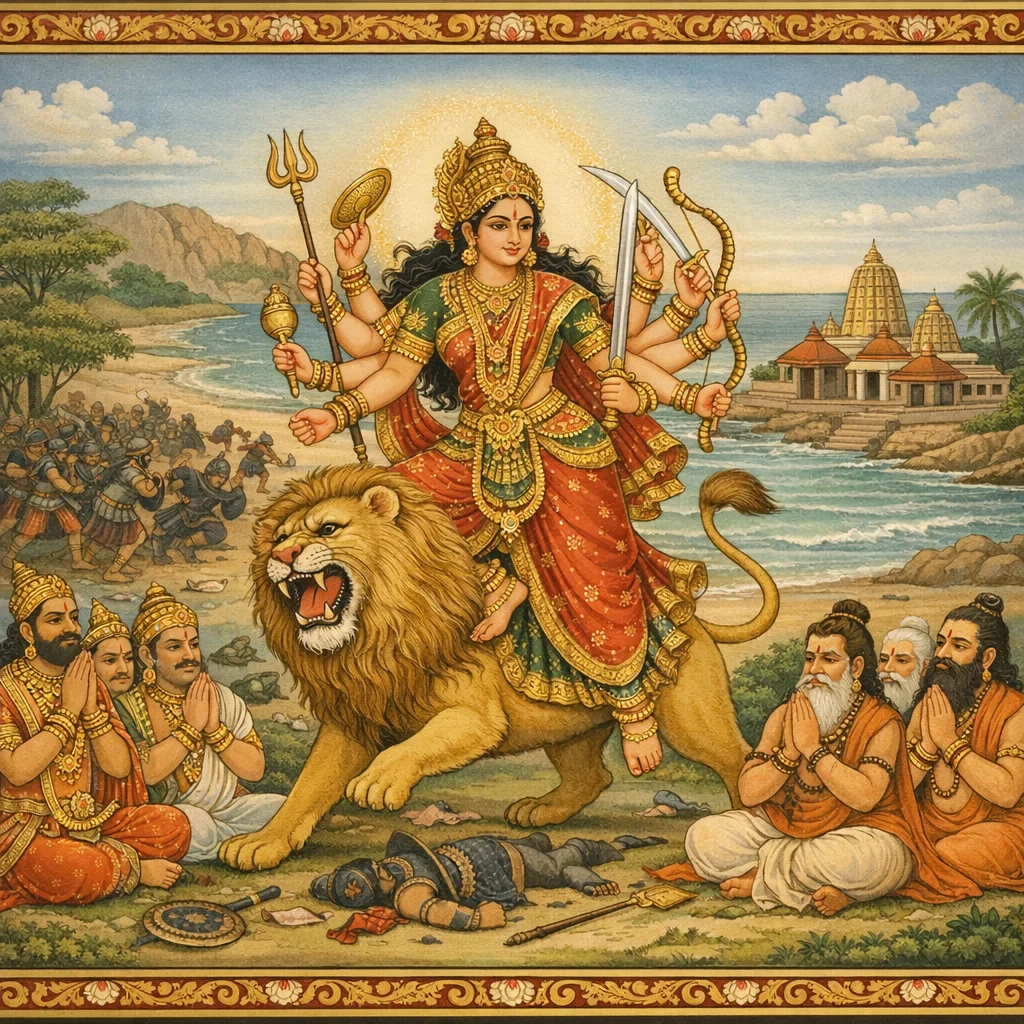
The chapter unfolds as a structured theological dialogue. Devī asks why a local Goddess is renowned as “Bālātibala-daityaghnī,” and requests the full account. Īśvara narrates a purificatory legend: Bala and Atibala, sons of Raktāsura, defeat the devas and impose an oppressive rule, upheld by named commanders and vast armies. The devas, joined by devarṣis, seek refuge in the Goddess and offer an extended stotra that proclaims her epithets across Śākta–Śaiva–Vaiṣṇava traditions, praising her as cosmic power and shelter. She manifests in a fearsome martial form—lion-mounted, many-armed, weapon-bearing—wages a cataclysmic battle, and destroys the asura hosts “with ease,” restoring order. The victory is then linked to Prabhāsa-kṣetra: Ambikā abides there, becomes famed as the slayer of Bala and Atibala, and is associated with a retinue of sixty-four yoginīs. At Devī’s request, Īśvara lists the yoginī names and concludes with practice-guidance: devoted praise of Caṇḍikā, fasting and regulated worship on specific lunar days (notably caturdaśī, aṣṭamī, navamī), and festivals for prosperity and protection, framed as ethical discipline. The chapter ends by declaring this māhātmya to be pāpa-praṇaśana and sarvārtha-sādhaka for devotees of the Prabhāsa-based Goddess.
Shlokas
Verse 1
ईश्वर उवाच । ततो गच्छेन्महादेवि महादेवीं महाप्रभाम् । बलातिबलदैत्यघ्नीं नाम्नेति प्रथितां क्षितौ
Īśvara said: Then, O great Goddess, one should go to the supremely radiant Mahādevī, renowned on earth by the name “Slayer of the demons Balā and Atibalā.”
Verse 2
अनादिनिधनां देवीं तत्र क्षेत्रे व्यवस्थिताम् । कोटिभूतपरीवारां सर्वदैत्यनिबर्हिणीम्
That Goddess—beginningless and endless—abides in that sacred region, attended by crores of bhūtas, and she is the destroyer of all demons.
Verse 3
देव्युवाच । बलातिबलदैत्यघ्नी कथमुक्ता त्वया प्रभो । बलातिबलनामानौ कथं दैत्यौ निपातितौ
The Goddess said: O Lord, why is she called “Slayer of Balā and Atibalā”? And how were those two demons, named Balā and Atibalā, struck down?
Verse 4
कुत्र तिष्ठति सा देवी किंप्रभावा महेश्वर । माहात्म्यमखिलं तस्याः सर्वं विस्तरतो वद
Where does that Goddess dwell, O Maheśvara, and what is her power? Tell, fully and in detail, her entire greatness.
Verse 5
ईश्वर उवाच । शृणु देवि प्रवक्ष्यामि कथां पापप्रणाशनीम् । यां श्रुत्वा मानवो भक्त्या मुच्यते सर्वपातकैः
Īśvara said: Listen, O Goddess; I shall tell a sin-destroying account—hearing which with devotion, a human being is freed from all sins.
Verse 6
आसीद्रक्तासुरोनाम महिषस्य सुतो बली । महाकायो महाबाहुर्हिरण्याक्ष इवापरः
There was an asura named Raktāsura, a mighty son of Mahiṣa—huge-bodied and great-armed, like another Hiraṇyākṣa.
Verse 7
बलातिबल नामानौ तस्य पुत्रौ बभूवतुः । तौ विजित्य सुरान्सर्वान्देवेन्द्राग्निपुरोगमान्
He had two sons named Balāti-bala. Having conquered all the gods—led by Indra and Agni—they brought them under their power.
Verse 8
त्रैलोक्येऽस्मिन्निरातंकौ चक्रतू राज्यमञ्जसा । तयोः सेना मुखे वीरास्त्रयस्त्रिंशत्प्रकीर्तिताः
In this threefold world they ruled with ease, free from fear. At the head of their army, thirty-three heroes are celebrated.
Verse 9
रौद्रात्मानो महायोधाः सहस्राक्षौहिणीमुखाः । सिंहस्कन्धा महाकाया दुरात्मानो महाबलाः
Fierce in nature, they were great warriors, leaders of vast armies. With lion-like shoulders and enormous bodies, wicked-souled yet mighty in strength, they were formidable.
Verse 10
धूम्राक्षो भीमदंष्ट्रश्च कालवश्यो महाहनुः । ब्रह्मघ्नो यज्ञकोपश्च स्त्रीघ्नः पापनिकेतनः
Dhūmrākṣa, Bhīmadaṃṣṭra, Kālavaśya, and Mahāhanu; Brahmaghna and Yajñakopa; Strīghna and Pāpaniketana—these were among them by name.
Verse 11
विद्युन्माली च बन्धूकः शंकुकर्णो विभावसुः । देवांतको विकर्मा च दुर्भिक्ष क्रूर एव च
And Vidyunmālī, Bandhūka, Śaṃkukarṇa, and Vibhāvasu; Devāntaka, Vikarmā, Durbhikṣa, and Krūra as well—these too were among their chiefs.
Verse 12
हयग्रीवोऽश्वकर्णश्च केतुमान्वृषभो द्विजः । शरभः शलभो व्याघ्रो निकुंभो मणिको बकः
Hayagrīva and Aśvakarṇa; Ketumān, Vṛṣabha, and Dvija; Śarabha, Śalabha, Vyāghra, Nikuṃbha, Maṇika, and Baka—these too were named among them.
Verse 13
शूर्पको विक्षरो माली कालो दण्डककेरलः । एते दैत्या महाकायास्तयोः सेनाधिकारिणः
Śūrpaka, Vikṣara, Mālī, Kāla, and Daṇḍaka-kerala—these great-bodied Daitiyas were the commanders of the two brothers’ armies.
Verse 14
एवं तैः पृथिवी व्याप्ता पञ्चाशत्कोटि विस्तरा । एवं ज्ञात्वा तदा देवा भयेनोद्विग्नमानसाः
Thus the earth—spreading to fifty koṭis in extent—was overrun by them. Knowing this, the gods then became distressed at heart out of fear.
Verse 15
सर्वैर्देवर्षिभिः सार्धं जग्मुस्ते हिमवद्वनम् । स्तोत्रेणानेन तां देवीं तुष्टुवुः प्रयतास्तदा
Together with all the divine seers, they went to the forest of Himavat. Then, with disciplined and collected minds, they praised that Goddess with this hymn.
Verse 16
देवा ऊचुः । जयाक्षरे जयाऽनंते जयाऽव्यक्ते निरामये । जय देवि महामाये जय देवर्षिवंदिते
The gods said: Victory to You, O Imperishable; victory to You, O Infinite; victory to You, O Unmanifest, O Stainless One. Victory, O Goddess of great Māyā; victory to You who are worshipped by the divine seers.
Verse 17
जय विश्वेश्वरे गंगे जय सर्वार्थसिद्धिदे । जय ब्रह्माणि कौमारि जय नारायणीश्वरि
Victory to You, O Gaṅgā, Lady of the Lord of the Universe; victory to You who grant the fulfillment of all aims. Victory to You, O Brahmāṇī, O Kaumārī; victory to You, O Nārāyaṇī, sovereign Goddess.
Verse 18
जय ब्रह्माणि चामुंडे जयेन्द्राणि महेश्वरि । जय मातर्महालक्ष्मि जय पार्वति सर्वगे
Victory to You, O Brahmāṇī; victory to You, O Cāmuṇḍā. Victory to You, O Indrāṇī; victory to You, O Great Sovereign, Mahēśvarī. Victory to You, O Mother Mahālakṣmī; victory to You, O Pārvatī, who pervade all.
Verse 19
जय देवि जगत्सृष्टे जयैरावति भारति । जयानंते जय जये जय देवि जलाविले
Victory to You, O Goddess, source of the world’s creation; victory to You, O Airāvatī; victory to You, O Bhāratī. Victory to the Endless One—victory, victory! Victory to You, O Goddess, whose form is the surging waters.
Verse 20
जयेशानि शिवे शर्वे जय नित्यं जयार्चिते । मोक्षदे जय सर्वज्ञे जय धर्मार्थकामदे
Victory to you, O Īśānī; victory to you, O Śivā, O Śarvā. Victory always to you who are worshiped with the cry “jaya”. Victory to you, giver of mokṣa; victory to you, the all-knowing; victory to you who bestow dharma, artha, and kāma.
Verse 21
जय गायत्रि कल्याणि जय सह्ये विभावरि । जय दुर्गे महाकालि शिव दूति जयाऽजये
Victory to you, O Gāyatrī, the Auspicious One; victory to you, O Sahyā, the Radiant Night. Victory to you, O Durgā, O Mahākālī; O messenger of Śiva—victory to you, O Ajayā, the Unconquered.
Verse 22
जय चण्डे महामुण्डे जय नन्दे शिवप्रिये । जय क्षेमंकरि शिवे जय कल्याणि रेवति
Victory to you, O Caṇḍā; victory to you, O Mahāmuṇḍā. Victory to you, O Nandā, beloved of Śiva. Victory to you, O Śivā who brings welfare; victory to you, O Kalyāṇī; victory to you, O Revatī.
Verse 23
जयोमे सिद्धिमांगल्ये हरसिद्धे नमोस्तु ते । जयापर्णे जयानन्दे महिषाऽसुरघातिनि
Victory to you, bestower of siddhi and auspiciousness; salutations to you, O Harasiddhā. Victory to you, O Jayāparṇā; victory to you, O Jayānandā; O slayer of the Mahiṣa-asura, victory to you.
Verse 24
जय मेधे विशालाक्षि जयानंगे सरस्वति । जयाशेषगुणावासे जयावर्ते सुरान्तके
Victory to you, O Medhā (Intelligence); victory to you, O Wide-Eyed One. Victory to you, O Sarasvatī of stainless limbs. Victory to you, abode of endless virtues; victory to you, O Jayāvartā; victory to you, destroyer of hostile powers.
Verse 25
जय संकल्पसंसिद्धे जय त्रैलोक्यसुंदरि । जय शुंभनिशुंभघ्ने जय पद्मेऽद्रिसंभवे
Victory to you, O fulfiller of sacred resolve; victory to you, O beauty of the three worlds. Victory to you, slayer of Śumbha and Niśumbha; victory to you, O Padmā, born upon the mountain.
Verse 26
जय कौशिकि कौमारि जय वारुणि कामदे । नमोनमस्ते शर्वाणि भूयोभूयो जयाम्बिके
Victory to you, O Kauśikī; victory to you, O Kaumārī. Victory to you, O Vāruṇī; victory to you, bestower of desired boons. Repeated salutations to you, O Śarvāṇī; again and again, victory to you, O Ambikā.
Verse 27
त्राहि नस्त्राहि नो देवि शरण्ये शरणागतान्
Protect us, protect us, O Goddess—O refuge of all! Save us who have come seeking your shelter.
Verse 28
सैवं स्तुता भगवती देवैः सर्वैर्वरानने । आत्मानं दर्शयामास भाभासितदिगन्तरम्
Thus praised by all the gods, the Blessed Goddess—fair-faced—revealed her own form, illuminating the horizons in every direction.
Verse 29
नमस्कृत्य तु तामूचुः सुरास्ते भयनाशनीम् । बलातिबलनामानौ हत्वा दैत्यौ महाबलौ । तेषां चैव महत्सैन्यं पाह्यतो महतो भयात्
Having bowed to her, those gods spoke to the fear-dispelling Goddess: “Having slain the mighty demons named Balātibala, protect us now from their vast army—save us from this great terror.”
Verse 30
तेषां तद्वचनं श्रुत्वा दत्त्वा तेभ्योऽभयं ततः । बभूवाद्भुतरूपा सा त्रिनेत्रा चेन्दुशेखरा
Hearing their words and granting them fearlessness, she then assumed a wondrous form—three-eyed, with the moon as her crest-jewel.
Verse 31
सिंहारूढा महादेवि नानाशस्त्रास्त्रधारिणी । सुवक्त्रा विंशतिभुजा स्फूर्जद्विद्युल्लतोपमा
Mounted upon a lion, O Great Goddess, bearing many weapons and missiles—beautiful-faced, twenty-armed—she flashed like a streak of lightning.
Verse 32
ततों ऽबिका निनादोच्चैः साट्टहासं मुहुर्मुहुः
Then Ambikā roared aloud, again and again, with peals of ringing laughter.
Verse 33
तस्या नादेन घोरेण कृत्स्नमापूरितं नभः । प्रकंपिताखिला चोर्वी सरिद्वारिधिमेखला
By her dreadful roar the entire sky was filled; and the whole earth—girdled by rivers and oceans—trembled violently.
Verse 34
शैलतुंगस्तनी रम्या प्रमदेव भयातुरा । तेऽपि तत्रासुराः प्राप्ताश्चतुरंगबलान्विताः
The lovely Pramadā-devī, whose breasts were high like mountain-peaks, became stricken with fear. There too the asuras arrived, equipped with the fourfold army.
Verse 35
सम्यग्विदितविक्रान्ताः कालान्तकयमोपमाः । रक्षो दानवदैत्याश्च पाताले येऽपि संस्थिताः
Renowned for their might, like Yama the ender of time—rākṣasas, dānavas, and daityas—even those abiding in Pātāla, the netherworld, came forth.
Verse 36
ते सर्व एव दैत्येन्द्राः कोटिशः समुपागताः । ततोऽभवन्महायुद्धं देव्यास्तत्रासुरैः सह
All those lords of the daityas assembled in their millions. Then, there arose a great battle between the Goddess and the asuras.
Verse 37
बभूव सर्वब्रह्माण्डे ह्यकाण्डक्षयकारणम् । अक्षौहिणीसहस्राणि त्रयस्त्रिंशत्सुरेश्वरि
O Queen of the gods, throughout the whole universe it became the cause of sudden destruction—thirty-three thousand akṣauhiṇīs, complete battle-divisions, were involved/laid low.
Verse 38
एकविंशत्सहस्राणि शतान्यष्टौ च सप्ततिः । सानुगानां सयोधानां रथानां वातरंहसाम्
Twenty-one thousand, and eight hundred, and seventy—chariots swift as the wind, together with their attendants and warriors.
Verse 39
हत्वा सा लीलया देवी निन्ये क्षयमनाकुला
Having slain them as if in play, that Goddess—untroubled—brought them to destruction.
Verse 40
ततो देव्या हतानां च दानवानां महौजसाम् । गजवाजिरथानां च शरीरैरावृता मही
Then the earth was covered with the bodies of the mighty Dānavas slain by the Goddess, and with those of elephants, horses, and chariots as well.
Verse 41
कबंधनृत्यसंकुले स्रवद्वसास्थिकर्द्दमे । रणाजिरे निशाचरास्ततो विचेरुरूर्जिताः
On that battlefield—crowded with the ‘dance’ of headless trunks, and muddy with flowing fat and bones—the powerful night-roamers then moved about.
Verse 42
शृगाल गृधवायसाः परं प्रपातमादधुः । क्वचित्परे निशाचराः प्रपीतशोणितोत्कटाः । प्रतर्प्य चात्मनः पितॄन्समर्चयंस्तथा ऋषीन्
Jackals, vultures, and crows fell upon it in great numbers. In some places other night-roamers—fierce from drinking blood—satisfied their own ancestors and likewise worshipped the Ṛṣis.
Verse 43
गजान्नरांस्तुरंगमान्बभक्षिरे सुनिर्घृणाः । रथोडुपैस्तथा परे तरंति शोणितार्णवम्
Pitilessly they devoured elephants, men, and horses. Others, using chariots as boats, crossed the ocean of blood.
Verse 44
इति प्रगाढसंगरे सुरारिसंघसंकुले । विराजतेऽम्बिका धनुः शराऽसिशूलधारिणी
Thus, in that intense battle crowded with the hosts of the enemies of the gods, Ambikā shone forth—bearing bow, arrows, sword, and spear.
Verse 45
गजेन्द्रदर्पमर्द्दनी तुरंगयूथपोथिनी । सुरारिसैन्यनाशिनी इतस्ततः प्रपश्यती
She who crushes the pride of lordly elephants, who shatters the herds of horses, the destroyer of the armies of the gods’ foes—she looked about here and there.
Verse 46
सिंहाष्टकयुक्ते महा प्रेतके भूधरहंसशुभ्रोज्जलद्भास्वराभे वृषभसमाने मानिनीमथो ते दैत्येन्द्रवीराः पश्यंतः समुद्भूतरोषास्ततोऽपि जग्मुर्नदन्तो रवन्तो रवं मेघनादाः
Seeing her—mounted on a great bier-like conveyance yoked with eight lions, radiant and brilliant like the white, shining haṃsa upon a mountain, and proud like a bull—the heroic chiefs among the Daityas, their wrath rising up, advanced further, roaring and bellowing thunderously like storm-clouds.
Verse 47
हाहाकारं विकुर्वाणा हन्यमानास्ततोऽसुराः । केचित्समुद्रं विविशुरद्रीन्केचिच्च दानवाः
As they were being struck down, the Asuras raised cries of terror. Some plunged into the sea, and some of the Dānavas fled into the mountains.
Verse 48
केचिल्लुञ्चितमूर्धानो जाल्मा भूत्वा वनेऽवसन् । दयाधर्मं ब्रुवाणाश्च निर्ग्रंथव्रतमास्थिताः
Some, with their heads shorn and made wretched, dwelt in forests—speaking of “compassion” and “dharma” while adopting the vow of the Nirgranthas.
Verse 49
केचित्प्राणपरा भीताः पाखण्डाश्रममास्थिताः । हेतुवादपरा मूढा निःशौचा निरपेक्षकाः
Some, terrified and clinging to life, took refuge in heretical orders. Deluded and devoted to mere disputation, they became impure and indifferent to rightful discipline.
Verse 50
ते चाद्यापीह दृश्यन्ते लोके क्षपणकाः किल । तथैव भिन्दकाश्चान्ये शिवशास्त्रबहिष्कृताः
Even today, it is said, they are seen in this world as Kṣapaṇakas; and likewise there are others called Bhindakas—those cast out from the teaching of Śiva’s śāstra.
Verse 51
केचित्कौलव्रता ह्यस्मिन्दृश्यन्ते सकलैर्जनैः । सुरास्त्रीमांसभूयिष्ठा विकर्मस्थाश्च लिङ्गिनः
Here some are seen by all people as observing Kaula-vows (Kaula-vrata), steeped in liquor, women, and meat—bearing religious marks while abiding in forbidden deeds.
Verse 52
प्रायो नैष्कृतिकाः पापा जिह्वोपस्थपरायणा । एवं देव्या हताः सर्वे बलातिबलसंयुताः
For the most part they were wicked and treacherous, devoted to the cravings of the tongue and to lust. Thus were they all slain by the Goddess, though endowed with the mighty strength of Balātibala.
Verse 53
प्रभासं क्षेत्रमासाद्य संस्थिता सा तदाम्बिका । योगिनीनां चतुःषष्ट्या संयुता पापनाशिनी । बलातिबलनाशीति प्रभासे प्रथिता क्षितौ
Reaching the sacred field of Prabhāsa, Ambikā then took her seat there, accompanied by the sixty-four Yoginīs, the destroyer of sin. In Prabhāsa she became famed on earth as “Balātibala-nāśinī”, the slayer of Balātibala.
Verse 54
देव्युवाच । चतुःषष्टिस्त्वया प्रोक्ता योगिन्यो याः सुरेश्वर । तासां नामानि मे ब्रूहि सर्वपापहराणि च
The Goddess said: “O Lord of the gods, you have spoken of the sixty-four Yoginīs. Tell me their names as well—names that remove all sins.”
Verse 55
ईश्वर उवाच । शृणु देवि प्रवक्ष्यामि योगिनीनां महोदयम् । सर्वरक्षाकरं दिव्यं महाभयविनाशनम्
Īśvara said: “Listen, O Goddess; I shall proclaim the great manifestation of the Yoginīs—divine, granting every protection, and destroying great fear.”
Verse 56
आदौ तत्र महालक्ष्मीर्नंदा क्षेमंकरी तथा । शिवदूती महाभद्रा भ्रामरी चन्द्रमण्डला
First among them are Mahālakṣmī, Nandā, and Kṣemaṃkarī; also Śivadūtī, Mahābhadrā, Bhrāmarī, and Candramaṇḍalā.
Verse 57
रेवती हरसिद्धिश्च दुर्गा विषमलोचना । सहजा कुलजा कुब्जा मायावी शांभवी क्रिया
She is Revatī and Harasiddhi; she is Durgā, the One of wondrous, unequalled gaze. She is Sahajā (innate), Kulajā (born of noble lineage), and Kubjā (the mysterious, bent-formed Power); she is Māyāvī (the wielder of divine illusion) and Śāṃbhavī Kriyā—the sacred, Śiva-born force of spiritual action.
Verse 58
आद्या सर्वगता शुद्धा भावगम्या मनोतिगा । विद्याविद्या महामाया सुषुम्ना सर्वमंगला
She is the Primal One, all-pervading and pure—known through inner devotion and surpassing the mind. She is both knowledge and nescience, the Great Māyā; she is Suṣumnā, and she is the source of every auspicious blessing.
Verse 59
ओंकारात्मा महादेवि वेदार्थजननी शिवा । पुराणान्वीक्षिकी दीक्षा चामुण्डा शंकरप्रिया
O Great Goddess, your very essence is Oṃ; you are Śivā, the Mother who gives birth to the meaning of the Vedas. You are Purāṇa and sacred inquiry, you are initiation itself; you are Cāmuṇḍā, beloved of Śaṅkara.
Verse 60
ब्राह्मी शांतिकरी गौरी ब्रह्मण्या ब्राह्मणप्रिया । भद्रा भगवती कृष्णा ग्रहनक्षत्रमालिनी
She is Brāhmī, the bringer of peace; she is Gaurī, guardian of dharma and beloved of the brāhmaṇas. She is Bhadrā, the Blessed Lady; she is Kṛṣṇā, wearing as a garland the planets and the constellations.
Verse 61
त्रिपुरा त्वरिता नित्या सांख्या कुंडलिनी ध्रुवा । कल्याणी शोभना निरया निष्कला परमा कला
She is Tripurā and Tvaritā; she is Nityā, Sāṃkhyā, Kuṇḍalinī, and the Steadfast One. She is Kalyāṇī and the Beautiful; beyond all descent, partless and stainless—truly the Supreme Art and Power.
Verse 62
योगिनी योगसद्भावा योगगम्या गुहाशया । कात्यायनी उमा शर्वा ह्यपर्णेति प्रकीर्तिता
She is Yoginī, whose true nature is Yoga; through Yoga she is attained, and she dwells in the heart’s secret cave. She is Kātyāyanī, Umā, Śarvā; and she is also praised by the name Aparṇā.
Verse 63
चतुःषष्टिर्महादेवि एवं ते परिकीर्तिताः । स्तोत्रेणानेन दिव्येन भक्त्या यः स्तौति चंडिकाम्
Thus, O Great Goddess, your sixty-four (names) have been proclaimed. Whoever, with devotion, praises Caṇḍikā by means of this divine hymn—
Verse 64
तं पुत्रमिव शर्वाणी सर्वापत्स्वभिरक्षति । चतुर्दश्यामथाष्टम्यां नवम्यां च विशेषतः
Śarvāṇī protects that devotee in every danger, as though he were her own son—especially on the fourteenth lunar day, on the eighth, and on the ninth.
Verse 65
उपवासैकभक्तेन तथैवायाचितेन च । गृहीतनियमा देवि ये जपंति च चंडिकाम्
O Goddess, those who keep sacred disciplines—fasting, taking but a single meal, and living on what comes unasked—who chant in japa the holy name of Caṇḍikā—
Verse 66
वर्षार्धं वर्षमेकं वा सिद्धास्ते तत्त्वचारिणः । आश्वयुक्छुक्लपक्षे च मन्वादिष्वष्टकासु च
After half a year, or after a full year, they become siddhas—true practitioners established in Reality; and this is especially so in the bright fortnight of Āśvayuja, and on the Aṣṭakā days beginning with Manvādi.
Verse 67
कृत्वा महोत्सवं देवीं यजेच्छ्रेयोऽभिवृद्धये । पादुके धारयेद्देव्या दुर्गाभक्तो हिरण्मये
Having celebrated a great festival for the Goddess, one should worship Her for the increase of welfare and prosperity. A devotee of Durgā should wear the Goddess’s golden pādukās (sandals) as a sacred emblem.
Verse 68
प्रमादविघ्नशांत्यर्थं क्षुरिकां च सदा पुमान् । पशुमांसासवैश्चैवमासुरं भावमाश्रिताः
To pacify heedlessness and obstructing impediments, a man should always keep a small knife. But those who resort to animal flesh and intoxicating liquors thereby take up an asuric, demonic disposition.
Verse 69
ये यजन्त्यम्बिकां ते स्युर्दैत्या ऐश्वर्यभोगिनः । देवत्वं सात्त्विका यांति सात्त्विकीं भक्तिमास्थिताः
Those who worship Ambikā may become Daityas who enjoy worldly power and pleasures; but the sāttvika, established in sāttvika devotion, attain divine status.
Verse 70
एतत्ते कथितं देवि माहात्म्यं पापनाशनम् । बलातिबलनाशिन्या देव्या सर्वार्थसाधकम् । प्रभासक्षेत्रसंस्थायाः संक्षेपात्कीर्तिवर्धनम्
O Goddess, thus has been told to you this greatness that destroys sin—of the Goddess who destroys Balātibala—fulfilling every aim. It is a concise account of the deity established in Prabhāsakṣetra, and it increases fame and holy renown.
Verse 119
इति श्रीस्कांदे महापुराण एकाशीतिसाहस्र्यां संहितायां सप्तमे प्रभासखण्डे प्रथमे प्रभासक्षेत्रमाहात्म्ये बलातिबलदैत्यघ्नीमाहात्म्यवर्णनंनामैकोनविंशत्युत्तरशततमोऽध्यायः
Thus ends, in the holy Skanda Mahāpurāṇa—within the eighty-one-thousand-verse compilation—within the seventh, the Prabhāsa Khaṇḍa, and within the first, the Prabhāsakṣetra Māhātmya, the chapter entitled “The Description of the Greatness of the Goddess who slays the Daitya Balātibala,” being Chapter 119.