Adhyaya 111
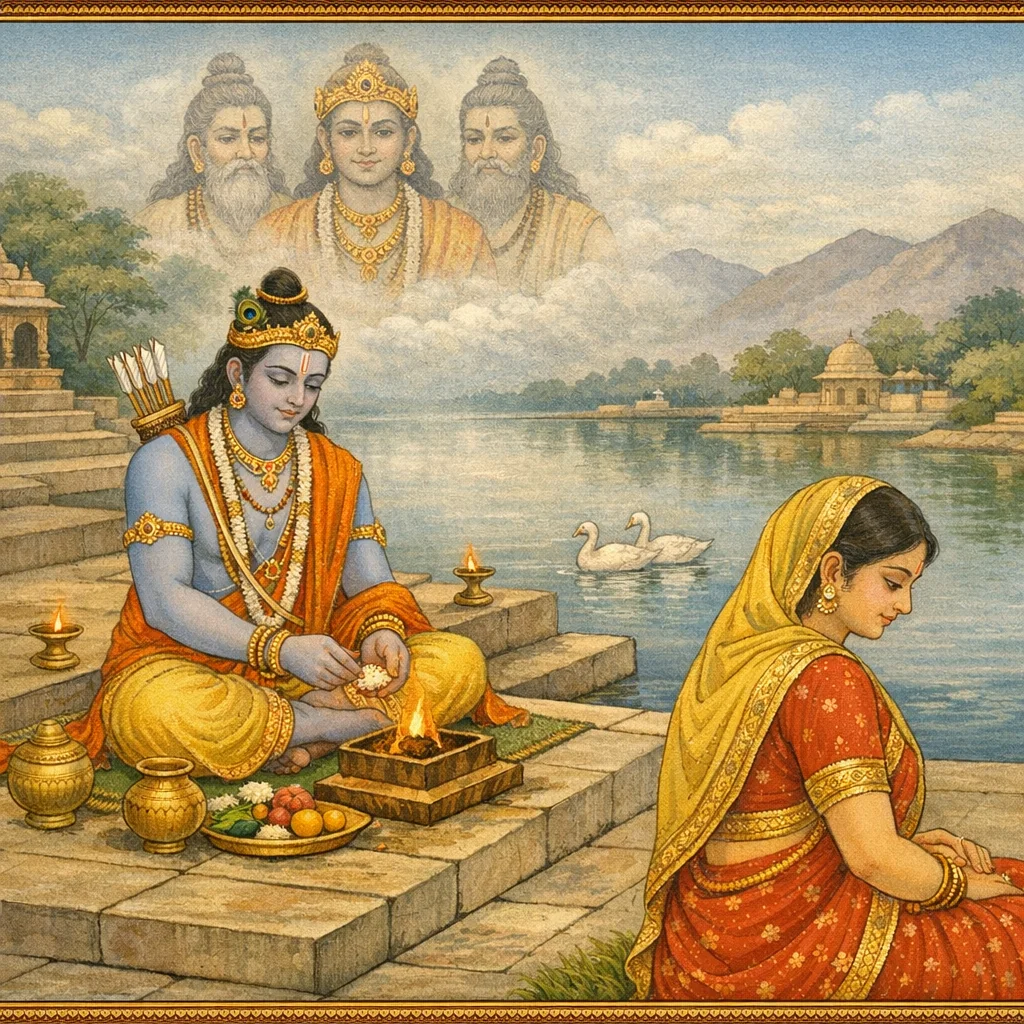
Īśvara tells Devī a local māhātmya focused on a kuṇḍa near Puṣkara called “Aṣṭapuṣkara,” hard to reach for the undisciplined yet praised as a remover of sins. There stands a liṅga named Rāmeśvara, said to have been established by Rāma; mere worship is taught as expiatory, freeing one even from the grave sin of brahmahatyā. At Devī’s request for detail, Īśvara recounts how Rāma, with Sītā and Lakṣmaṇa, came there and installed the liṅga, setting it within Rāma’s life-story: born to destroy Rāvaṇa and later driven into forest exile through a sage’s curse. While traveling they reach Prabhāsa; after resting, Rāma dreams of Daśaratha and consults brāhmaṇas, who read the dream as ancestral communication and prescribe śrāddha at the Puṣkara tīrtha. Rāma invites worthy brāhmaṇas, sends Lakṣmaṇa to gather fruits, and Sītā prepares the offerings. During the rite Sītā, after a vision of her paternal ancestors “present” among the brāhmaṇas, withdraws modestly; Rāma is briefly angered by her absence, but she explains, and the episode is linked to the founding of the Rāmeśvara liṅga near Puṣkara. The phalaśruti concludes that devotional worship grants the supreme goal; śrāddha on dvādaśī and on certain special conjunctions involving caturthī/ṣaṣṭhī yields immeasurable fruit; ancestral satisfaction endures for twelve years; and gifting a horse is equated with the merit of an Aśvamedha.
Shlokas
Verse 1
ईश्वर उवाच । ततो गच्छेन्महादेवि पुष्करारण्यमुत्तमम् । तस्मादीशानकोणस्थं धनुषां षष्टिभिः स्थितम्
Īśvara said: “Then, O great Goddess, one should go to the excellent Puṣkara forest. From there, in the northeast direction, at a distance of sixty bow-lengths, it is situated.”
Verse 2
तत्र कुण्डं महादेवि ह्यष्टपुष्करसंज्ञितम् । सर्व पापहरं देवि दुष्प्राप्यमकृतात्मभिः
There, O great Goddess, is a sacred pond called ‘Aṣṭapuṣkara’. O Goddess, it removes all sins, yet it is difficult to attain for those of undisciplined character.
Verse 3
तत्र कुण्डसमीपे तु पुरा रामेशधीमता । स्थापितं तन्महालिङ्गं रामेश्वर इति स्मृतम्
There, near the sacred pond, in ancient times, the wise Rāmeśa established that great Liṅga; it is remembered by the name “Rāmeśvara.”
Verse 4
तस्य पूजनमात्रेण मुच्यते ब्रह्महत्यया
By the mere worship of that (Rāmeśvara Liṅga), one is freed from the sin of brahmahatyā (the gravest offense of slaying a brāhmaṇa).
Verse 5
श्रीदेव्युवाच । भगवन्विस्तराद्ब्रूहि रामेश्वरसमुद्भवम् । कथं तत्रागमद्रामः ससीतश्च सलक्ष्मणः
The Goddess said: “O Lord, tell in detail the origin of Rāmeśvara. How did Rāma come there, accompanied by Sītā and Lakṣmaṇa?”
Verse 6
कथं प्रतिष्ठितं लिङ्गं पुष्करे पापतस्करे । एतद्विस्तरतो ब्रूहि फलं माहात्म्यसंयुतम्
How was the Liṅga installed at Puṣkara, the “thief of sins”? Tell it in full detail, together with the fruits and merits, endowed with its sacred greatness.
Verse 7
ईश्वर उवाच । चतुर्विंशयुगे रामो वसिष्ठेन पुरोधसा । पुरा रावणनाशार्थं जज्ञे दशरथात्मजः
Īśvara said: “In the twenty-fourth age, Rāma—son of Daśaratha—was born, with Vasiṣṭha as his royal priest, for the purpose of destroying Rāvaṇa.”
Verse 8
ततः कालान्तरे देवि ऋषिशापान्महातपाः । ययौ दाशरथी रामः ससीतः सहलक्ष्मणः
Then, after some time, O Goddess, because of a sage’s curse, the great ascetic Rāma, son of Daśaratha, went forth with Sītā and with Lakṣmaṇa.
Verse 9
वनवासाय निष्क्रांतो दिव्यैर्ब्रह्मर्षिभिर्वृतः । ततो यात्राप्रसंगेन प्रभासं क्षेत्रमागतः
Setting out for forest-dwelling, surrounded by radiant brahmarṣis, he then—by the occasion of pilgrimage—arrived at the sacred field of Prabhāsa.
Verse 10
तं देशं तु समासाद्य सुश्रांतो निषसाद ह । अस्तं गते ततः सूर्ये पर्णान्यास्तीर्य भूतले
Having reached that region, he sat down, greatly weary; and when the sun had set, he spread leaves upon the ground to rest.
Verse 11
सुष्वापाथ निशाशेषे ददृशे पितरं स्वकम् । स्वप्ने दशरथं देवि सौम्यरूपं महाप्रभम्
Then, when the night was nearly spent, he fell asleep and beheld his own father—King Daśaratha—in a dream, O Goddess, gentle in form and radiant with great splendor.
Verse 12
प्रातरुत्थाय तत्सर्वं ब्राह्मणेभ्यो न्यवेदयत् । यथा दशरथः स्वप्ने दृष्टस्तेन महात्मना
Rising in the morning, that great-souled one reported everything to the brāhmaṇas—how Daśaratha had been seen by him in a dream.
Verse 13
ब्राह्मणा ऊचुः । वृद्धिकामाश्च पितरो वरदास्तव राघव । दर्शनं हि प्रयच्छंति स्वप्नान्ते हि स्ववंशजे
The Brāhmaṇas said: “O Rāghava, your Pitṛs, desiring the welfare and increase of your line and being bestowers of boons, indeed grant their vision—appearing at the end of a dream—to one born in their own lineage.”
Verse 14
एतत्तीर्थं महापुण्यं सुगुप्तं शार्ङ्गधन्वनः । पुष्करेति समाख्यातं श्राद्धमत्र प्रदीयताम्
“This tīrtha is supremely meritorious, well-guarded by the Bearer of the Śārṅga bow (Viṣṇu). It is renowned as ‘Puṣkara’; therefore let the Śrāddha offering be performed here.”
Verse 15
नूनं दशरथो राजा तीर्थे चास्मिन्समीहते । त्वया दत्तं शुभं पिण्डं ततः स दर्शनं गतः
“Surely King Daśaratha seeks benefit at this very tīrtha. Because you have offered an auspicious piṇḍa, he has therefore attained manifestation and appeared to you.”
Verse 16
ईश्वर उवाच । तेषां तद्वचनं श्रुत्वा रामो राजीवलोचनः । निमंत्रयामास तदा श्राद्धार्हान्ब्राह्मणाञ्छुभान्
Īśvara said: Hearing their words, lotus-eyed Rāma then invited the auspicious Brāhmaṇas, worthy to be honored in the Śrāddha rite.
Verse 17
अब्रवील्लक्ष्मणं पार्श्वे स्थितं विनतकंधरम् । फलार्थं व्रज सौमित्रे श्राद्धार्थं त्वरयाऽन्वितः
He spoke to Lakṣmaṇa, standing nearby with bowed neck: “O Saumitre, go and procure fruits for the Śrāddha—go swiftly.”
Verse 18
स तथेति प्रतिज्ञाय जगाम रघुनंदनः । आनयामास शीघ्रं स फलानि विविधानि च
Agreeing, “So be it,” he went; and that Raghunandana quickly brought back various kinds of fruits.
Verse 19
बिल्वानि च कपित्थानि तिन्दुकानि च भूरिशः । बदराणि करीराणि करमर्दानि च प्रिये
In abundance there were bilva fruits, kapittha, and tinduka; also badara (jujube), karīra, and karamarda, O beloved.
Verse 20
चिर्भटानि परूषाणि मातुलिंगानि वै तथा । नालिकेराणि शुभ्राणि इंगुदीसंभवानि च
There were also cirbhaṭa and parūṣa fruits, and likewise mātuliṅga; white coconuts too, and fruits born of the iṅgudī.
Verse 21
अथैतानि पपाचाशु सीता जनकनंदिनी । ततस्तु कुतपे काले स्नात्वा वल्कलभृच्छुचिः
Then Sītā, Janaka’s daughter, swiftly cooked these offerings. Thereafter, at the auspicious kutapa-kāla, having bathed and become pure, clad in bark-garments, she made ready for the rite.
Verse 22
ब्राह्मणानानयामास श्राद्धार्हान्द्विजसत्तमान् । गालवो देवलो रैभ्यो यवक्रीतोऽथ पर्वतः
He brought the foremost of the twice-born—Brāhmaṇas worthy of Śrāddha honors: Gālava, Devala, Raibhya, Yavakrīta, and also Parvata.
Verse 23
भरद्वाजो वसिष्ठश्च जावालिर्गौतमो भृगुः । एते चान्ये च बहवो ब्राह्मणा वेदपारगाः
Bharadvāja, Vasiṣṭha, Jāvāli, Gautama, Bhṛgu—and many other brāhmaṇas, masters of the Vedas—were present there.
Verse 24
श्राद्धार्थं तस्य संप्राप्ता रामस्याक्लिष्टकर्मणः । एतस्मिन्नेव काले तु रामः सीतामभाषत
They arrived there for the purpose of Rāma’s Śrāddha, whose deeds were unwearied and blameless. At that very time, Rāma spoke to Sītā.
Verse 25
एहि वैदेहि विप्राणां देहि पादावनेजनम् । एतच्छ्रुत्वाऽथ सा सीता प्रविष्टा वृक्षमध्यतः
“Come, O Vaidehī; offer water for washing the feet of the brāhmaṇas.” Hearing this, Sītā then went in among the trees.
Verse 26
गुल्मैराच्छाद्य चात्मानं रामस्यादर्शने स्थिता । मुहुर्मुहुर्यदा रामः सीतासीतामभाषत
Hiding herself among the bushes, she stayed out of Rāma’s sight. Again and again Rāma called, “Sītā! Sītā!”
Verse 27
ज्ञात्वा तां लक्ष्मणो नष्टां कोपाविष्टं च राघवम् । स्वयमेव तदा चक्रे ब्राह्मणार्ह प्रतिक्रियाम्
Knowing she was missing and seeing Rāghava overcome with anger, Lakṣmaṇa himself then performed the proper observances due to the brāhmaṇas.
Verse 28
अथ भुक्तेषु विप्रेषु कृत पिंडप्रदानके । आगता जानकी सीता यत्र रामो व्यवस्थितः
Then, after the brāhmaṇas had eaten and the offering of piṇḍas was completed, Jānakī Sītā came to the place where Rāma was seated.
Verse 29
तां दृष्ट्वा परुषैर्वाक्यैर्भर्त्सयामास राघवः । धिग्धिक्पापे द्विजांस्त्यक्त्वा पितृकृत्यमहोदयम् । क्व गताऽसि च मां हित्वा श्राद्धकाले ह्युपस्थिते
Seeing her, Rāghava rebuked her with harsh words: “Fie, O sinful one! Abandoning the brāhmaṇas and this great, auspicious duty to the ancestors—where did you go, leaving me behind, when the time of śrāddha had arrived?”
Verse 30
ईश्वर उवाच । तस्य तद्वचनं श्रुत्वा भयभीता च जानकी
Īśvara said: Hearing those words of his, Jānakī became frightened.
Verse 31
कृताञ्जलिपुटा भूत्वा वेपमाना ह्यभाषत । मा कोपं कुरु कल्याण मा मां निर्भर्त्सय प्रभो
With palms joined in reverence, trembling, she spoke: “Do not be angry, O noble one; do not scold me, O Lord.”
Verse 32
शृणु यस्माद्विभोऽन्यत्र गता त्यक्त्वा तवान्तिकम् । दृष्टस्तत्र पिता मेऽद्य तथा चैव पितामहः
“Listen, O mighty one: I went elsewhere, leaving your side, because there I saw my father today—and also my grandfather.”
Verse 33
तस्य पूर्वतरश्चापि तथा मातामहादयः । अंगेषु ब्राह्मणेन्द्राणामाक्रान्तास्ते पृथक्पृथक्
His earlier ancestors as well—grandfathers and the rest—had each, separately, taken possession of the limbs of those foremost Brāhmaṇas who were officiating.
Verse 34
ततो लज्जा समभवत्तत्र मे रघुनन्दन । पित्रा तत्र महाबाहो मनोज्ञानि शुभानि च
Then, O delight of the Raghu line, shame arose in me there. And there, O mighty-armed one, my father arranged things that were pleasing and auspicious.
Verse 35
तत्र पुष्करसान्निध्ये दक्षिणे धनुषां त्रये । लिंगं प्रतिष्ठयामास रामेश्वरमिति श्रुतम्
There, near Puṣkara, at a spot three bow-lengths to the south, he established a Liṅga, renowned by the name “Rāmeśvara”.
Verse 36
भक्ष्याणि भक्षितान्येव यानि वै गुणवन्ति च । स कथं सुकषायाणि क्षाराणि कटुकानि च । भक्षयिष्यति राजेन्द्र ततो मे दुःखमाविशत्
“He has indeed eaten foods that are wholesome and of good quality. How then will he eat fare that is astringent, alkaline, and pungent?” O king, thus sorrow entered me.
Verse 37
तस्यास्तद्वचनं श्रुत्वा विस्मितो राघवोऽभवत् । विशेषेण ददौ तस्मिञ्छ्राद्धं तीर्थे तु पुष्करे
Hearing her words, Rāghava was astonished. There, at the Puṣkara tīrtha, he performed the śrāddha with special care and distinction.
Verse 39
यस्तं पूजयते भक्त्या गन्धपुष्पादिभिः क्रमात् । स प्राप्नोति परं स्थानं य्रत्र देवो जनार्दनः
Whoever worships Him with devotion—offering fragrance, flowers, and the like in due order—attains the supreme abode where the Lord Janārdana dwells.
Verse 40
किमत्र बहुनोक्तेन द्वादश्यां यत्प्रदापयेत् । न तत्र परिसंख्यानं त्रिषु लोकेषु विद्यते
What need is there to say much? Whatever one causes to be given on Dvādaśī—its merit cannot be measured, even across the three worlds.
Verse 41
शुक्रांगारकसंयुक्ता चतुर्थी या भवेत्क्वचित् । षष्ठी वात्र वरारोहे तत्र श्राद्धे महत्फलम्
If a Caturthī happens to coincide with Friday and Tuesday, or if it is Ṣaṣṭhī here, O fair one—then śrāddha performed on that occasion yields great fruit.
Verse 42
यावद्द्वादशवर्षाणि पितरश्च पितामहाः । तर्पिता नान्यमिच्छन्ति पुष्करे स्वकुलोद्भवे
For twelve years, the fathers and grandfathers—once satisfied by tarpaṇa (the libation offering)—desire nothing else, when it is performed at Puṣkara by one born in their own lineage.
Verse 43
तत्र यो वाजिनं दद्यात्सम्यग्भक्तिसमन्वितः । अश्वमेधस्य यज्ञस्य फलं प्राप्नोति मानवः
Whoever there donates a horse with proper devotion attains the merit that comes from the Aśvamedha sacrifice.
Verse 44
इति ते कथितं सम्यङ्माहात्म्यं पापनाशनम् । रामेश्वरस्य देवस्य पुष्करस्य च भामिनि
Thus, O fair lady, I have rightly told you the sin-destroying greatness (māhātmya) of the divine Lord Rāmeśvara, and also of Puṣkara.
Verse 111
इति श्रीस्कांदे महापुराण एकाशीतिसाहस्र्यां संहितायां सप्तमे प्रभासखण्डे प्रथमे प्रभासक्षेत्रमाहात्म्ये पुष्करमाहात्म्ये रामेश्वरक्षेत्रमाहात्म्यवर्णनंनामैकादशोत्तरशततमोऽध्यायः
Thus ends, in the Śrī Skanda Mahāpurāṇa—within the eighty-one-thousand-verse compendium—the one-hundred-and-eleventh chapter, called “The Description of the Greatness of the Rāmeśvara Sacred Region,” in the Puṣkara-māhātmya, in the first Prabhāsa-kṣetra-māhātmya, in the seventh (book) Prabhāsa-khaṇḍa.