Adhyaya 100
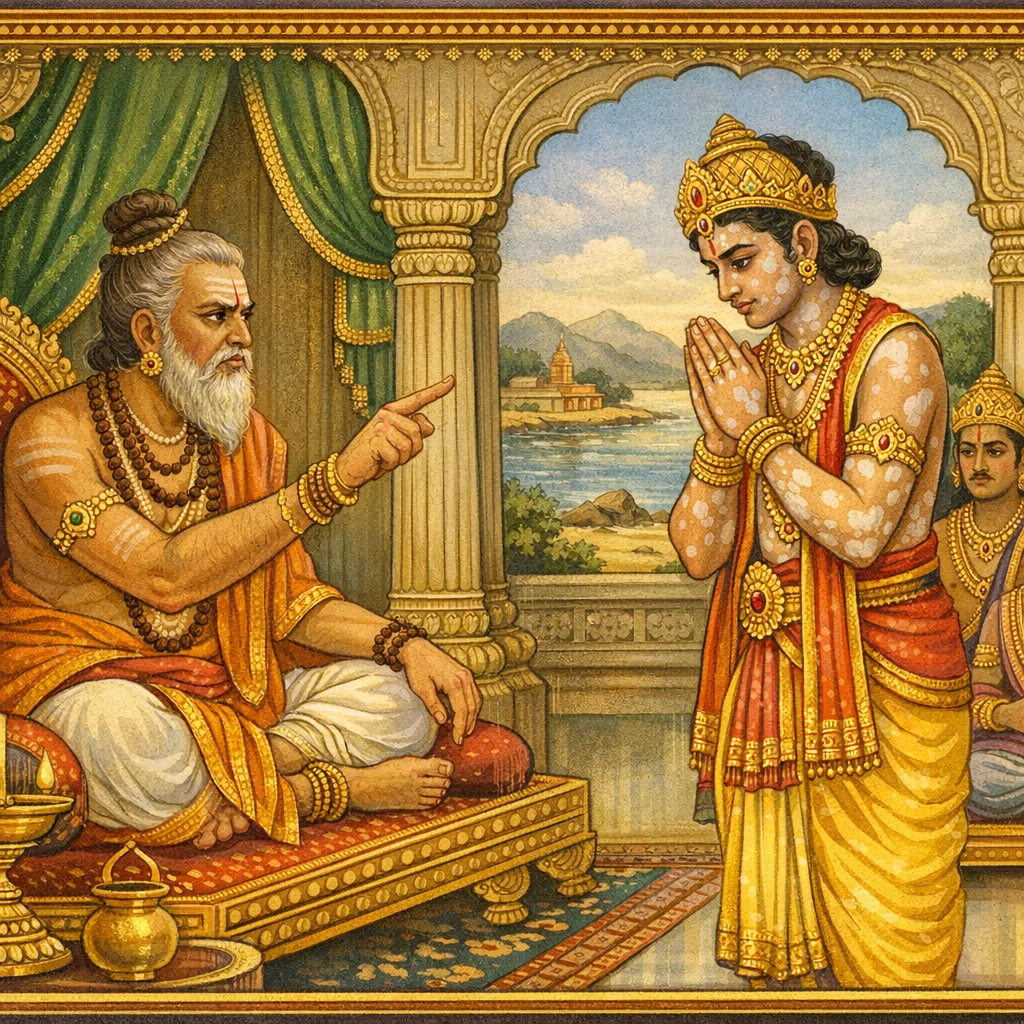
Chapter 100 is a sacred Śiva–Devī dialogue that opens the Sāmbāditya-māhātmya within the Prabhāsa pilgrimage setting. Īśvara points Devī to the northern and vāyavya (northwest) quarters and introduces Sāmbāditya as a solar manifestation established by Sāmba. He notes three chief Sūrya sites in the region, including Mitravana and Muṇḍīra, with Prabhāsakṣetra presented as the third locus. The narrative then turns from place to moral causality. Devī asks who Sāmba is and why a city bears his name. Īśvara explains that Sāmba is the mighty son of Vāsudeva (here linked to the Āditya line), born of Jāmbavatī, who fell under a paternal curse and was afflicted with kuṣṭha (leprosy). The cause is specified: the sage Durvāsas arrives in Dvāravatī, and Sāmba—proud of youth and beauty—mocks the ascetic through disrespectful gestures and demeanor. Enraged, Durvāsas pronounces that Sāmba will soon be seized by leprosy. Thus the chapter teaches humility before holy ascetics and prepares for Sāmba’s later refuge in solar worship and the establishment of Sūrya’s presence at his city for the benefit of all.
Shlokas
Verse 1
ईश्वर उवाच । ततो गच्छेन्महादेवि तयोरुत्तरसंस्थितम् । तथा वायव्यदिग्भागे ब्रह्मणो बालरूपिणः
Īśvara said: “Then, O great goddess, one should go to the place situated to the north of those (shrines). Likewise, in the north-western quarter is a manifestation of Brahmā in the form of a child.”
Verse 2
सांबादित्यं सुरश्रेष्ठे यः सांबेन प्रतिष्ठितः । स्थानानि त्रीणि देवस्य द्वीपेऽस्मिन्भास्करस्य तु
O best of the gods, there is Sāmbāditya, established by Sāmba. In this land there are three sacred stations of that deity Bhāskara, the Sun.
Verse 3
पूर्वं मित्रवनं नाम तथा मुण्डीरमुच्यते । प्रभासक्षेत्रमास्थाय सांबादित्यस्तृतीयकः
First is the place called Mitravana; likewise another is known as Muṇḍīra. And dwelling in Prabhāsakṣetra, Sāmbāditya is the third.
Verse 4
तस्मिन्क्षेत्रे महादेवि पुरं यत्सांबसंज्ञकम् । द्वितीयं शाश्वतं स्थानं तत्र सूर्यस्य नित्यशः
In that sacred region, O great Goddess, is the city known as Sāṃba. There, continually, stands the Sun’s second eternal station.
Verse 5
प्रीत्या सांब स्य तत्रार्को जनस्यानुग्रहाय च । तत्र द्वादशभागेन मित्रो मैत्रेण चक्षुषा
Out of affection for Sāmba—and for the welfare of all people—Arka, the Sun, abides there. In that place he shines as Mitra, a twelfth portion of the Sun, beholding the world with a benevolent gaze.
Verse 6
अवलोकयञ्जगत्सर्वं श्रेयोर्थं तिष्ठते सदा । प्रयुक्तां विधिवत्पूजां गृह्णाति भगवान्स्वयम्
Ever watching over the entire world for its highest good, the Lord remains there always; and he himself accepts the worship offered according to proper rite.
Verse 7
देव्युवाच । कोऽयं सांबः सुतः कस्य यस्य नाम्ना रवेः पुरम् । यस्य वाऽयं सहस्रांशुर्वरदः पुण्यकर्मणः
The Goddess said: “Who is this Sāmba—whose son is he—by whose name the Sun’s city is known? And for whom does this thousand-rayed Sun become a boon-giver, in response to meritorious deeds?”
Verse 8
ईश्वर उवाच । य एते द्वादशादित्या विराजन्ते महाबलाः । तेषां यो विष्णुसंज्ञस्तु सर्वलोकेषु विश्रुतः
Īśvara said: “Among these twelve mighty Ādityas who shine forth, the one famed in all worlds by the name ‘Viṣṇu’ is praised above all.”
Verse 9
इहासौ वासुदेवत्वमवाप भगवान्विभुः
Here, the all-pervading Blessed Lord attained the state and renown of Vāsudeva.
Verse 10
तस्य सांबः सुतो जज्ञे जांबवत्यां महाबलः । स तु पित्रा भृशं शप्तः कुष्ठरोगमवाप्तवान् । तेन संस्थापितः सूर्यो निजनाम्ना पुरं कृतम्
Of him, the mighty Sāmba was born from Jāmbavatī. But he was fiercely cursed by his father and thus fell into the affliction of leprosy. Then he installed the Sun-god, and a city was founded bearing his own name.
Verse 11
देव्युवाच । शप्तः कस्मिन्निमित्तेऽसौ पित्रा पुत्रः स्वयं पुनः । नाल्पं स्यात्कारणं देव येनासौ शप्तवान्सुतम्
The Goddess said: “For what reason was that son cursed by his father? Surely, O God, the cause cannot be small, since he cursed his own child.”
Verse 12
ईश्वर उवाच । शृणुष्वावहिता भूत्वा तस्य यच्छापकारणम् । दुर्वासानाम भगवान्ममैवांशसमुद्भवः
Īśvara said: “Listen with full attention as I tell you the cause of that curse. There is a venerable sage named Durvāsā, born from a portion of my own essence.”
Verse 13
अटमानः स भगवांस्त्रींल्लोकान्प्रचचार ह । अथ प्राप्तो द्वारवतीं लोकाः संजज्ञिरे पुरः
That revered one wandered, traversing the three worlds. Then, upon reaching Dvāravatī, wondrous signs and portents manifested before the people.
Verse 14
तमागतमृषिं दृष्ट्वा सांबो रूपेण गर्वितः । पिंगाक्षं जटिलं रूक्षं विस्वरूपं कृशं तथा
Seeing that sage who had arrived, Sāmba—proud of his own beauty—looked upon him as tawny-eyed, matted-haired, rough, ill-formed, and thin.
Verse 15
अवमानं चकारासौ दर्शनात्स्पर्शनात्तथा । दृष्ट्वा तस्य मुखं मंदो वक्त्रं चक्रे तथात्मनः । चक्रे यदुकुलश्रेष्ठो गर्वितो यौवनेन तु
He showed contempt—by his very look and even by his manner of approach and touch. Seeing the sage’s face, the foolish one made his own face in the same way, mimicking him. Thus did that foremost of the Yadu line, intoxicated with youth, behave in arrogance.
Verse 16
अथ क्रुद्धो महातेजा दुर्वासा ऋषिसत्तमः । सांबं प्रोवाच भगवान्विधुन्वन्मुखमात्म नः
Then the great-splendored Durvāsā, best of sages, became enraged. The venerable one addressed Sāmba, shaking his own face in displeasure.
Verse 17
यस्माद्विरूपं मां दृष्ट्वा आत्मरूपेण गर्वितः । गमने दर्शने मह्यमहंकारः कृतो यतः । तस्मात्त्वं कुष्ठरोगेण न चिरेण ग्रसिष्यसे
“Because, seeing me in an uncomely state, you became proud of your own appearance; and because, in your coming and in your very gaze toward me, you displayed arrogance—therefore you will soon be seized by the disease of leprosy.”
Verse 100
इति श्रीस्कांदे महापुराण एकाशीतिसाहस्र्यां संहितायां सप्तमे प्रभासखण्डे प्रथमे प्रभासक्षेत्रमाहात्म्ये मध्ययात्रायां सांबादित्यमाहात्म्योपक्रमे सांबाय दुर्वाससा शापप्रदानवर्णनंनाम शततमोऽध्यायः
Thus ends the hundredth chapter, titled “The Description of Durvāsā’s Bestowal of a Curse upon Sāmba,” in the seventh division, the Prabhāsa Khaṇḍa, within the Prabhāsa-kṣetra Māhātmya—set in the account of the ‘Middle Pilgrimage’ and opening the Sāmbāditya Māhātmya—of the revered Skanda Mahāpurāṇa, in the Saṃhitā of eighty-one thousand verses.