Adhyaya 10
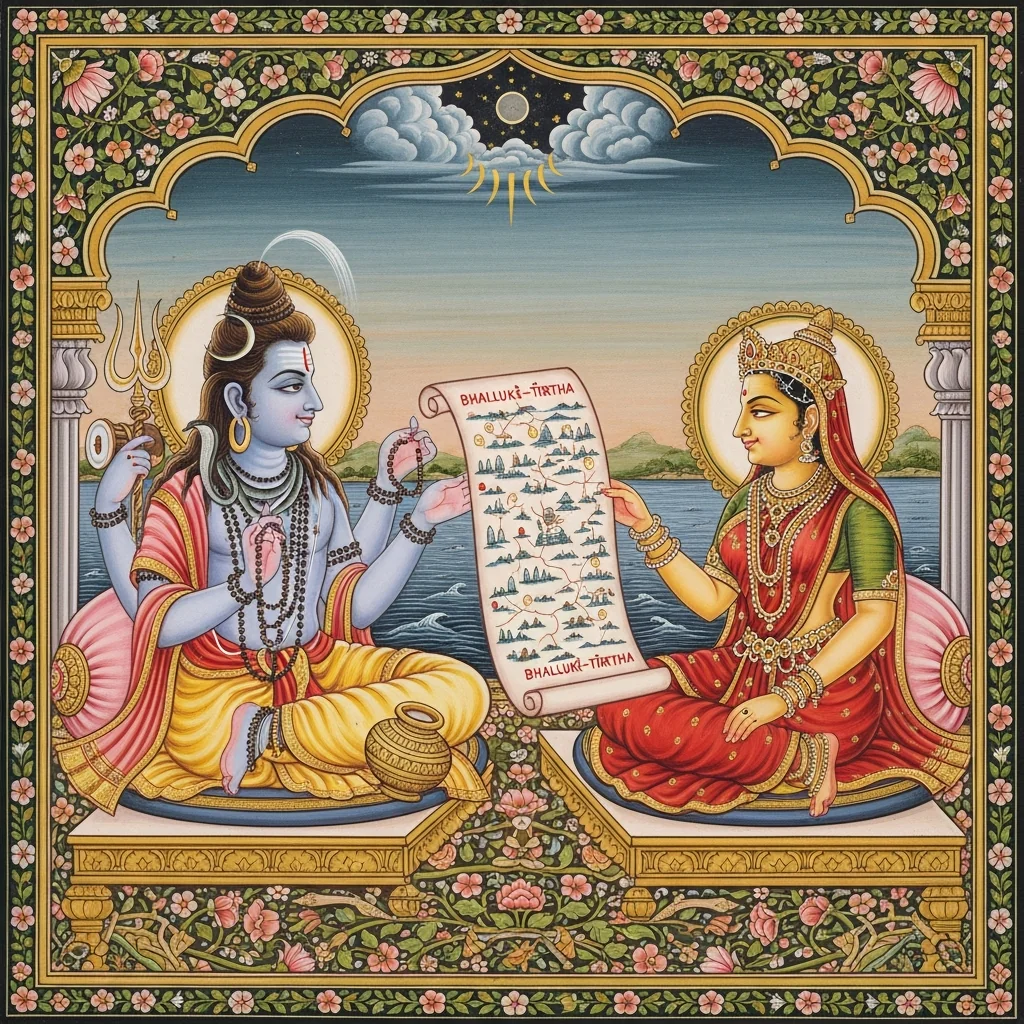
Chapter 10 is framed as Īśvara’s instruction to Devī, turning metaphysical doctrine into a pilgrimage map of Prabhāsa. It first correlates the cosmic elemental domains—earth, water, tejas (fire/radiance), wind, and space—with their presiding deities (Brahmā, Janārdana, Rudra, Īśvara, Sadāśiva), declaring that tīrthas within each domain partake of that deity’s presence. It then lists grouped tīrtha-sets (notably octads) aligned to water, tejas, wind, and space, and clarifies that the water-principle is especially dear to Nārāyaṇa, praised as “Jalaśāyī,” the One who reclines upon the waters. A pivotal site is introduced: Bhallukā-tīrtha—subtle and hard to recognize without śāstra—yet granting fruits equal to extensive liṅga-worship through mere darśana. The chapter expands into calendrical and astronomical contexts—monthly observances, the 8th and 14th lunar days, eclipses, and the Kārttikī season—when Prabhāsa liṅgas are worshipped with special intensity, and it describes the gathering of many tīrthas at the Sarasvatī–ocean confluence. It proceeds with a long sequence of the kṣetra’s alternate names across kalpas and details the abundance of sub-kṣetras of varied shapes and measures. The closing reaffirms Prabhāsa as a sacred field abiding even after dissolution (pralaya), extols listening and recitation as ethically purifying, and ends with a phalaśruti promising an elevated post-mortem destiny to those who hear this “rauddra” divine narrative.
Shlokas
Verse 1
ईश्वर उवाच । अन्यच्च कथयिष्यामि रहस्यं तव भामिनि । यत्र कस्य चिदाख्यातं तत्ते वच्मि वरानने
Īśvara said: I shall tell you yet another secret, O radiant lady—something that has been disclosed only to someone somewhere; that I now speak to you, O fair-faced one.
Verse 2
पृथ्वीभागे स्थितो ब्रह्मा अपां भागे जनार्द्दनः । तेजोभागस्थितो रुद्रो वायुभागे तथेश्वरः
In the portion of earth abides Brahmā; in the portion of waters, Janārdana. In the portion of fire abides Rudra; and in the portion of wind, likewise, Īśvara.
Verse 3
आकाशभागसंस्थाने स्थितः साक्षात्सदाशिवः
In the domain of ether (ākāśa) abides Sadaśiva Himself, directly manifest.
Verse 4
यस्ययस्यैव यो भागस्तस्मिंस्तीर्थानि यानि वै । तस्यतस्य न संदेहः स स एवेश्वरः स्मृतः
Whichever portion of reality a deity presides over—whatever sacred tīrthas are established in that very domain—of that there is no doubt: that presiding power is remembered as Īśvara Himself.
Verse 5
छागलंडं दुगण्डं च माकोटं मण्डलेश्वरम् । कालिंजरं वनं चैव शंकुकर्णं स्थलेश्वरम्
Chāgalaṇḍa and Dugaṇḍa; Mākoṭa—known as Maṇḍaleśvara; Kāliṃjara and the sacred forest; and Śaṅkukarṇa—known as Sthaleśvara: these are proclaimed among the holy powers of the kṣetra.
Verse 7
महाकालं मध्यमं च केदारं भैरवं तथा । पवित्राष्टकमेतद्धि जलसंस्थं वरानने
Mahākāla, Madhyama, Kedāra, and likewise Bhairava—this indeed is the ‘Pavitrāṣṭaka’ established in the waters, O fair-faced one.
Verse 8
अमरेशं प्रभासं च नैमिषं पुष्करं तथा । आषाढिं चैव दण्डिं च भारभूतिं च लांगलम्
Amareśa and Prabhāsa; Naimiṣa and Puṣkara; likewise Āṣāḍhi, Daṇḍi, Bhārabhūti, and Lāṅgala—these too are counted among the sacred tīrtha-presences of the kṣetra.
Verse 9
आदि गुह्याष्टकं ह्येतत्तेजस्तत्त्वे प्रतिष्ठितम् । गया चैव कुरुक्षेत्रं तीर्थं कनखलं तथा
This “Primordial Secret Octad” is indeed established in the principle of Tejas (radiant power). Gaya, Kurukṣetra, and likewise the tīrtha of Kanakhala are included within it.
Verse 10
विमलं चाट्टहासं च माहेन्द्रं भीमसंज्ञकम् । गुह्याद्गुह्यतरं ह्येतत्प्रोक्तं वाय्वष्टकं तव
Vimala and Āṭṭahāsa; Māhendra and that which is called Bhīma—this has been declared to you as the Vāyvaṣṭaka, more secret than the secret.
Verse 11
वस्त्रापथं रुद्रकोटिर्ज्येष्ठेश्वरं महालयम् । गोकर्णं रुद्रकर्णं च वर्णाख्यं स्थापसंज्ञकम्
Vastrāpatha; Rudrakoṭi; Jyeṣṭheśvara; Mahālaya; Gokarṇa and Rudrakarṇa; and Varṇākhya, known as Sthāpa—these too are declared among the tīrtha-manifestations.
Verse 12
पवित्राष्टकमेतद्धि आकाशस्थं वरानने । एतानि तत्त्वतीर्थानि सर्वाणि कथितानि वै
This “Pavitrāṣṭaka” indeed abides in the sky (ākāśa), O fair-faced one. Thus all these tattva-tīrthas have truly been described.
Verse 13
यो यस्मिन्देवता तत्त्वे सा तन्माहात्म्यसूचिका । औदकं च महातत्त्वं विष्णोश्चातिप्रियं प्रिये
Whatever deity is said to abide in whatever tattva, that very placement proclaims the greatness of that principle. And the great watery principle (audaka) is exceedingly dear to Viṣṇu, O beloved.
Verse 14
जलशायी स्मृतस्तेन नारायण इति श्रुतिः । आप्यतत्त्वं तु तीर्थानि यानि प्रोक्तानि ते मया
Therefore he is remembered as “the One who lies upon the waters”; hence, in the Śruti, the sacred name “Nārāyaṇa.” The tīrthas I have declared to you are indeed grounded in Āpya-tattva, the principle of water.
Verse 15
तानि प्रियाणि देवेशि ध्रुवं नारायणस्य वै । औदकं चैव यत्तत्त्वं तस्मिन्प्राभासिकं स्मृतम्
O Goddess, those sacred realities are surely dear to Nārāyaṇa. And whatever tattva is “of the waters” (audaka), in that very Prabhāsa region it is remembered as the Prābhāsika essence.
Verse 16
तत्र देवो लयं याति हरिर्जन्मनिजन्मनि । स वासुदेवः सूक्ष्मात्मा परात्परतरे स्थितः
There, Hari—the Lord—enters into dissolution (laya) again and again, birth after birth. That Vāsudeva, subtle in essence, abides in the state beyond even the beyond.
Verse 17
स शिवः परमं व्योम अनादिनिधनो विभुः । तस्मात्परतरं नास्ति सर्वशास्त्रागमेषु च
That Śiva is the supreme vyoma—the highest expanse of consciousness—beginningless and endless, the all-pervading Lord. Beyond Him there is nothing higher, as declared in all śāstras and āgamas.
Verse 18
सिद्धांतागमवेदांतदर्शनेषु विशेषतः । तेषु चैव न भिन्नस्तु मया सार्द्धं यशस्विनि
Especially in the viewpoints of Siddhānta, Āgama, and Vedānta, this truth is taught. And even within them, O illustrious one, he is not different from me at all.
Verse 19
तस्मिन्स्थाने हरिः साक्षात्प्रत्यक्षेण तु संस्थितः । लिंगैश्चतुर्भिः संयुक्तो ज्ञायते न च केनचित्
In that very place, Hari is directly present—manifest to perception. Yet, united with four liṅgas (emblematic marks), he is not truly recognized by anyone.
Verse 20
मोक्षार्थं नैष्ठिकैर्वर्णैर्व्रतैश्चैव तु यत्फलम् । तत्फलं समवाप्नोति भल्लुकातीर्थदर्शनात्
Whatever fruit is gained, for the sake of liberation, by steadfast disciplines—by one’s ordained duties and by vows—that very fruit is obtained simply by the darśana of Bhallukā Tīrtha.
Verse 21
गोचर्ममात्रं तत्स्थानं समंतात्परिमण्डलम् । न हि कश्चिद्विजानाति विना शास्त्रेण भामिनि
That place is only the measure of a cowhide, circular all around. Indeed, O lovely one, no one can recognize it without the guidance of scripture.
Verse 22
विषुवं वहते तत्र नृणामद्यापि पार्वति । पंचलिंगानि तत्रैव पंचवक्त्राणि कानि चित्
Even today, O Pārvatī, people observe the equinox there. And right there are five liṅgas as well—some bearing five faces.
Verse 23
कुक्कुटांडकमानानि महास्थूलानि कानिचित् । सर्पेण वेष्टितान्येव चिह्नितानि त्रिशूलिभिः
Some are exceedingly massive, measured like a hen’s egg. They are encircled by a serpent and marked with Śiva’s tridents (triśūla).
Verse 24
तेषां दर्शनमात्रेण कोटिलिंगार्चनफलम् । तस्मादिदं महाक्षेत्रं ब्रह्माद्यैः सेव्यते सदा
By merely beholding them, one gains the merit of worshipping a crore of liṅgas. Therefore this great sacred region is ever revered and served even by Brahmā and the other gods.
Verse 25
श्रुतिमद्भिश्च विप्रेंद्रैः संसिद्धैश्च तपस्विभिः । प्रतिमासं तथाष्टम्यां प्रतिमासं चतुर्दशीम्
Learned Brahmin leaders, versed in the Śruti, and accomplished ascetics observe the rites month after month, especially on Aṣṭamī, the eighth lunar day, and on Caturdaśī, the fourteenth.
Verse 26
शशिभानूपरागे वा कार्त्तिक्यां तु विशेषतः । प्रभासस्थानि लिंगानि प्रपूज्यन्ते वरानने
At lunar or solar eclipses—and most especially in the month of Kārttika—the Śiva-liṅgas established at Prabhāsa are worshipped with great devotion, O fair-faced one.
Verse 27
संनिहत्यां कुरुक्षेत्रे सर्वस्तीर्थायुतैः सह । पुष्करं नैमिषं चैवं प्रयागं संपृथूदकम्
Sannihatyā at Kurukṣetra—together with myriad sacred tīrthas; Puṣkara; Naimiṣa; and Prayāga with its vast waters—these renowned holy places are recalled in this hymn of praise.
Verse 28
षष्टि तीर्थसहस्राणि षष्टिकोटिशतानि च । माघ्यांमाघ्यां समेष्यंति सरस्वत्यब्धिसंगमे
Year after year, in the month of Māgha, at the confluence of the Sarasvatī and the ocean, sixty thousand tīrthas—and even sixty crores besides—assemble together.
Verse 29
स्मरणात्तस्य तीर्थस्य नामसंकीर्तनादपि । मृत्युकालभवाद्वापि पापं त्यक्ष्यति सुव्रते
O woman of noble vows, by merely remembering that tīrtha, or by chanting its name—even at the time of death—one casts off sin.
Verse 30
आनर्त्तसारं सौम्यं च तथा भुवनभूषणम् । दिव्यं पांचनदं पुण्यमादिगुह्यं महोदयम्
It is called Ānarttasāra, and also Saumya; likewise Bhuvanabhūṣaṇa; the divine and holy Pāñcanada; Ādiguhya; and Mahodaya.
Verse 31
सिद्ध रत्नाकरं नाम समुद्रावरणं तथा । धर्माकारं कलाधारं शिवगर्भगृहं तथा
It is also known as Siddha-ratnākara, and as Samudrāvaraṇa; as Dharmākāra and Kalādhāra; and likewise as Śiva-garbha-gṛha.
Verse 32
सर्वदेवनिवेशं च सर्वपातकनाशनम् । अस्य क्षेत्रस्य नामानि कल्पे कल्पे पृथक्प्रिये
It is the abode of all the gods and the destroyer of all sins. O beloved, the names of this sacred region differ in each and every kalpa.
Verse 33
आयामादीनि जानीहि गुह्यानि सुरसुन्दरि । आद्ये कल्पे पुरा देवि प्रमोदनमिति स्मृतम्
Know its dimensions and other particulars—these are secret, O celestial beauty. In the earliest kalpa, long ago, O Devī, it was remembered as “Pramodana”.
Verse 34
नन्दनं परितस्तस्य तस्यापि परतः शिवम् । शिवात्परतरं चोग्रं भद्रिकं परतः पुनः
Around it was called “Nandana”; beyond that, “Śiva”; beyond Śiva again, “Ugra”; and beyond that once more, “Bhadrika”.
Verse 35
समिंधनं परं तस्मात्कामदं च ततः परम् । सिद्धिदं चापि धर्मज्ञं वैश्वरूपं च मुक्तिदम्
Beyond that is “Samiṃdhana”; beyond it, “Kāmada”, the fulfiller of desires. Also there are “Siddhida”, bestower of siddhis; “Dharma-jña”, knower of dharma; “Vaiśvarūpa”, the universal form; and “Muktida”, giver of liberation.
Verse 36
तथा श्रीपद्मनाभं तु श्रीवत्सं तु महाप्रभम् । तथा च पापसंहारं सर्वकामप्रदं तथा
Likewise there are “Śrīpadmanābha”; “Śrīvatsa”, the greatly radiant; also “Pāpasaṃhāra”, destroyer of sins; and “Sarvakāmaprada”, granter of every desire.
Verse 37
मोक्षमार्गं वरा रोहे तथा देवि सुदर्शनम् । धर्मगर्भं तु धर्माणां प्रभासं पापनाशनम् । अतः परं भवन्तीह उत्पलावर्त्तिकानि च
Also there are “Mokṣamārga”, the path to liberation; “Varārohā”, O Devī; and “Sudarśana”, the auspicious vision. There is “Dharmagarbha”, the womb of dharmas; and “Prabhāsa”, the destroyer of sins. Beyond these, here too arise the sacred spots called “Utpalāvarttikā”.
Verse 38
क्षेत्रस्य मध्ये यद्देवि मम गर्भगृहं स्मृतम् । तस्य नामानि ते देवि कथितान्यनुपूर्वशः
O Devī, in the midst of this sacred field is what is remembered as My garbhagṛha, My innermost sanctum. O Devī, its names have been told to you in due order.
Verse 39
श्रुत्वा नामान्यशेषाणि क्षेत्रमाहात्म्यमेव च । तेषां तु वांछिता सिद्धि र्भविष्यति न संशयः
Having heard all the names, and indeed the māhātmya—the greatness of this holy region as well—their desired siddhi will surely come to pass; of this there is no doubt.
Verse 40
एतत्कीर्त्तयमानस्य त्रिकालं तु महोदयम् । संध्याकालांतरं पापमहोरात्रं विनश्यति
For one who chants this at the three times of day, a great spiritual rise arises; and the sins accumulated over a day and a night are destroyed in the intervals between the sandhyā twilights.
Verse 41
अपि वै दांभिकाश्चैव ये वसंत्यल्पबुद्धयः । मूढा जीवनिका विप्रास्तेऽपि यांति मृता दिवम्
Even those who are hypocritical and of little understanding—deluded Brahmins who live merely for livelihood—those too, when they die, go to heaven.
Verse 42
अस्य क्षेत्रस्य मध्ये तु रवियोजनमध्यतः । उपक्षेत्राणि देवेशि संत्यन्यानि सहस्रशः
Within the middle of this sacred region—within the central measure of a ravi-yojana, O Deveśī—there exist thousands of other upakṣetras, subsidiary holy precincts.
Verse 43
कानिचित्पद्मरूपाणि यवाकाराणि कानिचित् । षट्कोणानि त्रिकोणानि दण्डाकाराणि कानिचित्
Some are lotus-shaped; some resemble barley grains. Some are hexagonal, some triangular, and some are rod-like in form.
Verse 44
चंद्रबिंबार्द्धभेदानि चतुरस्रप्रभेदतः । ब्रह्मादिदैवतानीशे क्षेत्रमध्ये स्थितानि तु
Some are distinguished as half-moon-disc forms, and others by varieties of quadrangular forms. O Īśe, the deities beginning with Brahmā are indeed situated within the midst of the holy region.
Verse 45
कानिचिद्योजनार्द्धानि तदर्धार्धानि कानिचित् । निवर्त्तनप्रमाणेन दण्डमानेन कानिचित्
Some (sacred tracts) measure half a yojana; some are half of that again. Some are reckoned by the measure of a nivartana, and some by the measure of a daṇḍa.
Verse 46
गोचर्ममानमध्यानि कानिचिद्धनुषांतरम् । यज्ञोपवीतमात्राणि प्रभासे संति कोटिशः
Some tīrthas are of middling extent measured by a “cowhide” measure; some span the length of a bowshot; and in Prabhāsa there are crores of holy spots, even as small as the measure of a sacred thread (yajñopavīta).
Verse 47
अंगुल्यष्टम भागोऽपि नभोस्ति कमलेक्षणे । न संति यस्मिंस्तीर्थानि दिव्यानि च नभस्तले
O lotus-eyed one, there is not even an eighth part of a finger’s breadth of “sky” where divine tīrthas are not present—indeed, upon the very vault of heaven.
Verse 48
प्रभासक्षेत्रमासाद्य तिष्ठंति प्रलयादनु । केदारे चैव यल्लिंगं यच्च देवि महालये
Having reached the sacred kṣetra of Prabhāsa, they abide there even after the pralaya (dissolution of the world). And the liṅga in Kedāra, and that which is in the great abode, O Devī—
Verse 49
मध्यमेश्वरसंस्थं च तथा पाशुपतेश्वरम् । शंकुकर्णेश्वरं चैव भद्रेश्वरमथापि च
Also there are the seat of Madhyameśvara, and likewise Pāśupateśvara; and Śaṅkukarṇeśvara, and also Bhadreśvara.
Verse 50
सोमे श्वरमथैकाग्रं कालेश्वरमजेश्वरम् । भैरवेश्वरमीशानं तथा कायावरोहणम्
Then there are Someśvara and Ekāgra; Kāleśvara and Ajeśvara; Bhairaveśvara and Īśāna; and also Kāyāvarohaṇa.
Verse 51
चापटेश्वरकं पुण्यं तथा बदरिकाश्रमम् । रुद्रकोटिर्महाकोटि स्तथा श्रीपर्वतं शुभम्
There is the holy Cāpaṭeśvaraka, and likewise Badarikāśrama; Rudrakoṭi and Mahākoṭi; and also the auspicious Śrīparvata.
Verse 52
कपाली चैव देवेशः करवीरं तथा पुनः । ओंकारं परमं पुण्यं वशिष्ठाश्रममेव च । यत्र कोटिः स्मृता देवि रुद्राणां कामरूपिणाम्
There are Kapālī and also Deveśa; likewise Karavīra once again; Oṃkāra, supremely holy; and Vaśiṣṭha’s āśrama as well—where, O Devī, a koṭi (a crore) of Rudras, able to assume forms at will, is remembered to abide.
Verse 53
यानि चान्यानि स्थानानि पुण्यानि मम भूतले । प्रयागं पुरतः कृत्वा प्रभासे निवसंति च
Whatever other holy places exist upon my earth—placing Prayāga at their head—they too abide in Prabhāsa.
Verse 54
उत्तरे रविपुत्री तु दक्षिणे सागरं स्मृतम् । दक्षिणोत्तरमानोऽयं क्षेत्रस्यास्य प्रकीर्त्तितः
To the north is Raviputrī, and to the south is said to be the ocean. Thus is proclaimed the north–south extent of this sacred field.
Verse 55
रुक्मिण्याः पूर्वतश्चैव तप्ततोयाच्च पश्चिमे । पूर्वपश्चिममानोऽयं प्रभासस्य प्रकीर्त्तितः
To the east lies the tīrtha of Rukmiṇī, and to the west lies the tīrtha called Taptatoya. Thus is proclaimed the east–west measure of Prabhāsa.
Verse 56
एतदन्तरमासाद्य तीर्थानि सुरसुन्दरि । पातालादिकटाहांतं तानि तत्र वसंति वै
O fair one among the gods, having reached this intervening region, the tīrthas truly dwell there—extending even to the cauldron-like depths that begin with Pātāla.
Verse 57
एवं ज्ञात्वा महादेवि सर्वदेवमयो हरिः । प्रभासक्षेत्रमासाद्य तत्याज स्वं कलेवरम्
Knowing thus, O Great Goddess, Hari—who embodies all the gods—came to Prabhāsa-kṣetra and there relinquished his bodily form.
Verse 58
दिव्यं ममेदं चरितं हि रौद्रं श्रोष्यंति ये पर्वसु वा सदा वा । ते चापि यास्यंति मम प्रसादात्त्रिविष्टपं पुण्यजनाधिवासम्
This divine and awe-inspiring sacred account of mine—those who listen to it on festival days or even always—by my grace, they too shall attain Triviṣṭapa (heaven), the abode of the blessed hosts.
Verse 59
इति कथितमशेषमेव चित्रं चरितमिदं तव देवि पुण्ययुक्तम् । इतरमपि तवातिवल्लभं यद्वद कथयामि महोदयं मुनीनाम्
Thus, O Goddess, this wondrous and wholly complete sacred narrative—rich in merit—has been told to you. Now I shall also relate another account, greatly beloved to you, which brings great uplift to sages.