Adhyaya 9
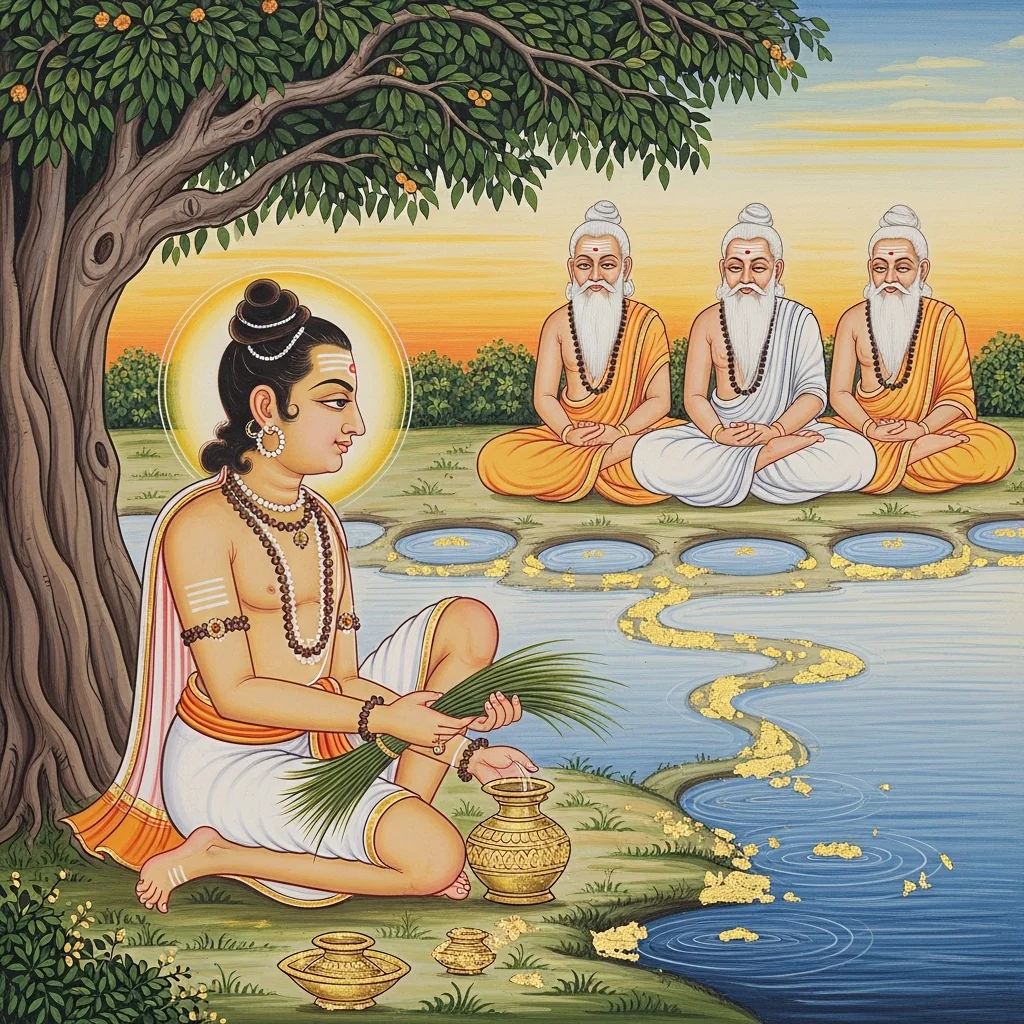
Chapter 9, framed as instruction in Prahlāda’s voice, directs pilgrims to famed sacred waters, including the “seven kuṇḍas,” said to cleanse moral impurity and increase prosperity and discerning wisdom. It recalls a divine epiphany: Hari (Viṣṇu) appears, praised by sages together with Lakṣmī, and is then honored with ritual offerings using “suragaṅgā” water. The Brahmā-born sages (Sanaka and others) are said to have formed distinct pools and performed ablutions for the Goddess; these waters are known as Lakṣmī-hradas and, in later ages, become renowned in Kali-yuga as Rukmiṇī-hrada (with an additional tīrtha-name remembrance connected to Bhṛgu). The chapter then lays out the rite in order: approach in purity, wash the feet, perform ācamana, take kuśa grass, face east, prepare a complete arghya with fruits, flowers, and akṣata, place silver upon the head, recite the offering formula to Rukmiṇī-hrada for the destruction of sin and the pleasure of Rukmiṇī, and then bathe (snāna). After bathing, it prescribes tarpaṇa to deities, humans, and especially ancestors, followed by śrāddha with invited Brahmins, dakṣiṇā including silver and gold, gifts of juicy fruits, feeding the couple with sweet food, and honoring Brahmin women and other women according to one’s means with garments (including red cloth). The phalaśruti promises fulfilled desires, attainment of Viṣṇu’s realm, Lakṣmī’s constant presence in the home, health and mental contentment, freedom from agitation, lasting ancestral satisfaction, stable progeny, long life, wealth, absence of enmity and grief, and release from repeated wandering in saṃsāra.
Shlokas
Verse 1
प्रह्लाद उवाच । ततो गच्छेद्द्विजश्रेष्ठाः सप्तकुण्डान्सुविश्रुतान् । सर्वपापप्रशमनानृद्धिबुद्धिविवर्द्धनान्
Prahlāda said: Thereafter, O best of brāhmaṇas, one should go to the seven well-renowned sacred ponds, which pacify all sins and increase prosperity and right understanding.
Verse 2
आराधितः स च यदा हरिराविर्बभूव ह । संस्तूयमानो मुनिभिर्लक्ष्म्या सह जगत्पतिः
And when Hari had been duly worshipped, he indeed manifested—praised by sages, the Lord of the world, accompanied by Lakṣmī.
Verse 3
अर्हणं च तदा चक्रुर्हरये सुरगङ्गया । वामपार्श्वे स्थितां पद्मामभिषेक्तुं समुद्यताम्
Then they performed due worship to Hari with the celestial Gaṅgā-water, and (they beheld) Padmā (Lakṣmī), standing at His left side, rising to anoint Him.
Verse 4
सनकाद्या ब्रह्मसुताः सप्तैते मनसा द्विजाः । पृथक्पृथग्घ्रदान्कृत्वा सिषिचुः सागरोद्भवाम्
Sanaka and the other seven mind-born Brahmā-sons—those twice-born sages—each fashioned separate sacred pools, and they sprinkled (consecrated them) with the Ocean-born Goddess (Lakṣmī).
Verse 5
ततो लक्ष्मीह्रदाः प्रोक्ता देव्या नात्रैव संज्ञिताः । प्राप्ते तु द्वापरस्यांते रुक्मिणीसंश्रयेण तु
Therefore they were spoken of as the ‘Lakṣmī-ponds’; the Goddess was not named here in any other way. But when the end of the Dvāpara age arrived, through association with Rukmiṇī (they took on her identity).
Verse 6
रुक्मिणीह्रदमित्येवं कलौ ख्यातिं गताः पुनः । भृगुणा सेवितं यस्माद्भृगुतीर्थमिति स्मृतम्
Thus, in the Kali age, they again became renowned as “Rukmiṇī-hrada.” And since it was frequented in reverence by the sage Bhṛgu, it is remembered as “Bhṛgu-tīrtha.”
Verse 7
तस्मिन्गत्वा महाभागाः प्रक्षाल्य चरणौ मृदा । आचम्य च कुशान्गृह्य प्राङ्मुखो नियतः शुचिः
Having gone there, the fortunate ones should wash their feet with earth (and water), then perform ācamana; taking kuśa-grass, facing east, disciplined and pure, they should proceed with the rite.
Verse 8
संपूर्णं चार्घ्यमादाय फलपुष्पाक्षतादिभिः । रजतं च शिरे कृत्वा मन्त्रमेतमुदीरयेत्
Taking a complete arghya-offering together with fruits, flowers, akṣata (unbroken rice) and the like, and placing silver upon the head, one should recite this mantra.
Verse 9
भक्त्या चार्घ्यं प्रदास्यामि ह्रदे रुक्मिणिसंज्ञिते । सर्वपापविनाशाय रुक्मिण्याः प्रीणनाय च
“With devotion I shall offer this arghya at the pond known as Rukmiṇī’s—so that all sins may be destroyed, and so that Rukmiṇī may be pleased.”
Verse 10
स्नानं कुर्य्यात्ततो विप्राः कृत्वा शिरसि तारकम् । देवान्मनुप्यान्सन्तर्प्य पितॄनथ विशेषतः
Then, O brāhmaṇas, one should bathe; placing the “tāraka” upon the head, one should offer tarpaṇa to satisfy the gods and human beings, and then—especially—to the ancestors.
Verse 11
श्राद्धं ततः प्रकुर्वीत विप्रानाहूय भक्तितः । दक्षिणां च ततो दद्याद्रजतं रुक्ममेव च
Thereafter one should perform śrāddha, devoutly and respectfully inviting the brāhmaṇas; then one should give dakṣiṇā—silver, and also gold.
Verse 12
विशेषतः प्रदेयानि फलानि रसवन्ति च । दम्पत्योर्भोजनं दद्यान्मिष्टान्नेन द्विजोत्तमाः
In particular, one should give fruits rich with juice and sweetness; and the best of the twice-born should provide a meal for a couple, with sweet and choice foods.
Verse 13
विप्रपत्न्यस्तु संपूज्याः स्त्रियश्चान्याः स्वशक्तितः । कञ्चुकै रक्तवस्त्रैश्च रुक्मिणी प्रीयतामिति
One should duly honor the wives of brāhmaṇas and other women as well, according to one’s capacity, offering bodices and red garments, with the prayer: “May Rukmiṇī be pleased.”
Verse 14
एवं कृते द्विजश्रेष्ठाः कृतकृत्यो भवेन्नरः । सर्वान्कामानवाप्नोति विष्णुलोकं स गच्छति
O best of brāhmaṇas, when this is done, a man becomes one whose duties are fulfilled; he attains all desired aims and goes to Viṣṇu’s world.
Verse 15
वसते च सदा गेहे लक्ष्मीस्तस्य न संशयः । आरोग्यं मनसस्तुष्टिर्न चोद्वेगः कदाचन
And in his home Lakṣmī ever dwells—of this there is no doubt; there is health, contentment of mind, and never any agitation.
Verse 16
पितॄणामक्षया तृप्तिः प्रजा भवति निश्चला । हीनसत्त्वो नैव भवेद्दीर्घायुश्च भवेन्नरः
His ancestors gain inexhaustible satisfaction; his offspring remain steady and secure. He does not become weak in spirit, and that man becomes long-lived.
Verse 17
आढ्यो भवति सर्वत्र यः स्नातो रुक्मिणी ह्रदे । न लक्ष्म्या मुच्यते विप्रा नालक्ष्म्या व्रियते नरः
He who bathes in Rukmiṇī Lake becomes prosperous everywhere. O Brāhmaṇas, he is never separated from Lakṣmī, and no misfortune ever overcomes that man.
Verse 18
न वैरं कलहस्तस्य यः स्नातो रुक्मिणीह्रदे । गमनागमनं न स्यात्संसारभ्रमणं तथा
For one who has bathed in Rukmiṇī Lake, there is no enmity and no quarrel. For him there is no ‘going and returning’—no further wandering in saṃsāra.
Verse 19
दुःखशोकौ कुतस्तस्य यः स्नातो रुक्मिणीह्रदे । सर्वपापविनिर्मुक्तो महाभयविवर्जितः
Whence could sorrow and grief arise for one who has bathed in Rukmiṇī Lake? He is freed from all sins and is devoid of great fear.
Verse 20
सर्वान्कामानिह प्राप्य याति विष्णुपदं नरः
Having obtained all desires here, a man goes to Viṣṇupada, Viṣṇu’s supreme abode.