Adhyaya 41
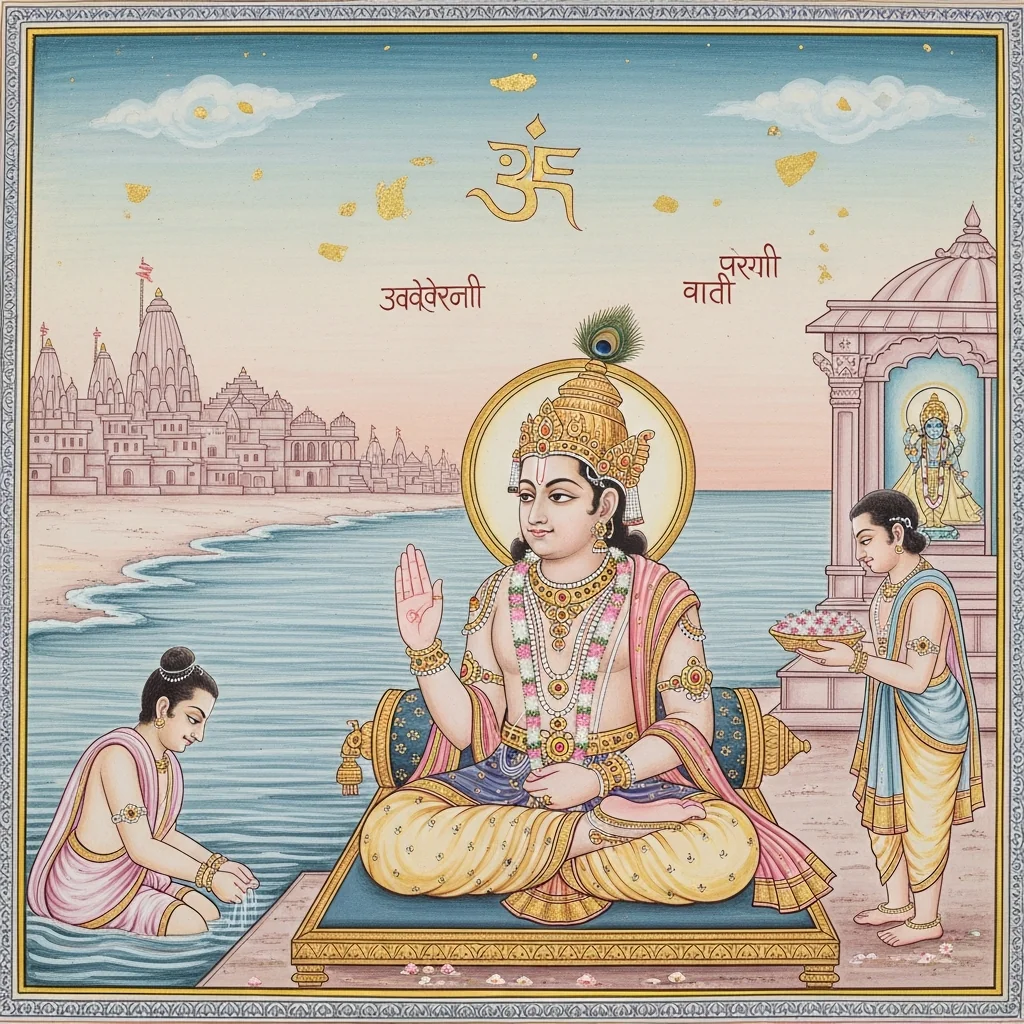
This chapter, in a ritual-theological discourse attributed to Prahlāda, proclaims the heightened power of devotion and ancestral rites when performed in Dvārakā, especially in connection with the Gomatī. It declares that one who bathes in the Gomatī and worships Kṛṣṇa with offerings such as ketakī flowers and tulasī attains extraordinary auspiciousness and is safeguarded from the harsh rounds of saṃsāra; in phala-śruti style, the merit is spoken of as nearing “immortality.” It further states that feeding even a single person in Dvārakā yields fruit surpassing the feeding of vast numbers elsewhere, and that mere mental remembrance of Dvārakā burns away wrongdoing of past, present, and future. In the Kali-yuga setting, steadfast orientation toward Dvārakā is portrayed as a sign that human purpose has been fulfilled. Dvārakā is also linked to ancestral welfare: the pitṛ-gaṇas are said to dwell there, and offerings of tila-water and śrāddha with piṇḍa-dāna—after first bathing in the Gomatī—become inexhaustible, granting lasting satisfaction to the ancestors. Eclipses, vyatīpāta, saṅkrānti, vaidhr̥ti, and other calendrical observances are invoked to frame proper ritual timing, while a wider tīrtha list situates Dvārakā’s supremacy within pan-Indic sacred geography.
Shlokas
Verse 1
श्रीप्रह्लाद उवाच । धन्यास्तु नरलोकास्ते गोमत्यां तु कृतोदकाः । पूजयिष्यंति ये कृष्णं केतकीतुलसीदलैः
Śrī Prahlāda said: Blessed indeed are those people in the human world who perform their ablutions in the Gomati (river), and who will worship Kṛṣṇa with ketakī blossoms and tulasī leaves.
Verse 2
न तेषां संभवोऽस्तीह घोरसंसा रगह्वरे । तेषां मृत्युः पुनर्नास्ति ह्यमरत्वं हि ते गताः
For them there is no further return here into the dreadful cavern of saṃsāra. For them death does not come again; indeed, they have attained immortality.
Verse 3
अन्यत्र वै यतीनां तु कोटीनां यत्फलं भवेत् । द्वारकायां तु चैकेन भोजितेन ततोऽधिकम्
Whatever fruit might arise elsewhere from feeding millions of ascetics—at Dvārakā, that fruit is surpassed by feeding even a single one.
Verse 4
अतीतं वर्त्तमानं च भविष्यद्यच्च पातकम् । निर्द्दहेन्नास्ति संदेहो द्वारका मनसा स्मृता
Sins of the past, present, and even those yet to come are burned away—there is no doubt—by Dvārakā when remembered in the mind.
Verse 5
ज्ञात्वा कलियुगे घोरे हाहाभूतमचेतनम् । द्वारकां ये न मुञ्चन्ति कृतार्थास्ते नरोत्तमाः
Knowing that in the dreadful Kali-yuga people become bewildered, crying “hā hā” in distress and bereft of right discernment, those best of men who do not abandon Dvārakā are truly fulfilled in life.
Verse 6
मृतानां यत्र जंतूनां श्वेतद्वीपे स्थितिः सदा
There, for beings who have died, there is ever an assured abode in Śvetadvīpa.
Verse 7
अग्निष्वात्ता बर्हिषद आज्यपाः सोमपाश्च ये । एकविंशतिः पितृगणा द्वारकायां वसंति ते
The Pitṛ hosts—Agniṣvāttas, Barhiṣads, Ājyapas, and Somapās—indeed, all the twenty-one groups of ancestors dwell in Dvārakā.
Verse 8
पुष्करादीनि तीर्थानि गंगाद्याः सरितस्तथा । कुरुक्षेत्रादि क्षेत्राणि काश्यादीन्यूषराणि च
Puṣkara and the other tīrthas; the Gaṅgā and the other holy rivers; Kurukṣetra and the other sacred regions; and Kāśī and other famed holy grounds—all are gathered and represented here.
Verse 9
गयादिपितृतीर्थानि प्रभासाद्यानि यानि च । स्थानानि यानि पुण्यानि ग्रामाश्च निवसंति वै
The Pitṛ‑tīrthas beginning with Gayā, and the holy places beginning with Prabhāsa—whatever sacred stations and sanctified villages there are—truly, all abide here.
Verse 10
काश्यादिपुर्यो या नित्यं निवसंति कलौ युगे । नित्यं कृष्णस्य सदने पापिनां मुक्तिदे सदा
The sacred cities beginning with Kāśī endure even in the Kali‑yuga; so too, in Kṛṣṇa’s own abode—Dvārakā—liberation is ever bestowed, even upon the sinful.
Verse 11
वैशाखशुक्लद्वादश्यां प्रबोधिन्यां शेषतः । वैशाख्यां दैत्यशार्दूल कल्पादिषु युगादिषु
On the bright Dvādaśī of Vaiśākha—on the sacred Prabodhinī, the Day of Awakening—and in the month of Vaiśākha as well, O tiger among Daityas; so it is also at the beginnings of kalpas and yugas.
Verse 12
चंद्रसूर्योपरागेषु मन्वादिषु न संशयः । व्यतीपातेषु संक्रांतौ वैधृतौ दैत्यनायक
At lunar and solar eclipses; at the junctions of Manvantaras—without doubt—and at Vyatīpāta, at Saṅkrānti, and at Vaidhṛti as well, O leader of the Daityas.
Verse 13
तिलोदकं च यद्दत्त तत्स्थले पितृभक्तितः । तत्सर्वमक्षयं प्रोक्तं गोमत्यां स्नानपूर्वकम्
And whatever offering of sesame-water (tilodaka) is given in that place with devotion to the Pitṛs—when preceded by bathing in the Gomatī—of all that the fruit is declared imperishable and inexhaustible.
Verse 14
येऽत्र श्राद्धं प्रकुर्वंति पिंडदानपुरःसरम् । तेषामत्राक्षया तृप्तिः पितॄणामुपजायते
Those who perform śrāddha here, with the offering of piṇḍa as the foremost rite—here, for them, an imperishable and inexhaustible satisfaction arises for their Pitṛs.
Verse 41
इति श्रीस्कांदे महापुराण एकाशीतिसाहस्र्यां संहितायां सप्तमे प्रभासखण्डे चतुर्थ द्वारकामाहात्म्ये गोमतीस्नान कृष्णपूजन यतिभोजन दान श्राद्धादिसत्फलवर्णनंनामैकचत्वारिंशोऽध्यायः
Thus, in the holy Skanda Mahāpurāṇa—within the saṃhitā of eighty-one thousand verses—here ends the Forty-First Chapter of the seventh, the Prabhāsa-khaṇḍa, in the fourth section, the Dvārakā Māhātmya, entitled “The description of the auspicious fruits of bathing in the Gomatī, worship of Kṛṣṇa, feeding yatis, charity, śrāddha, and related rites.”