Adhyaya 40
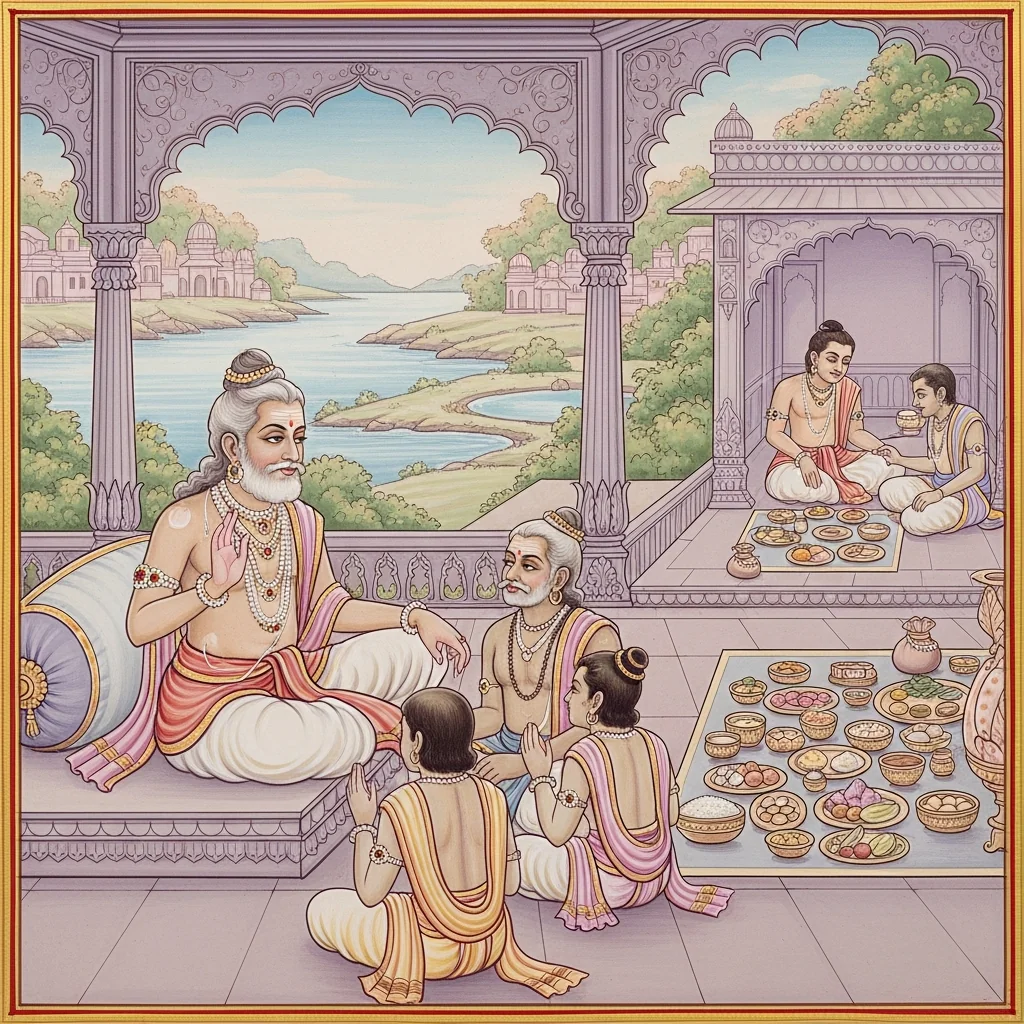
This adhyāya sets forth Prahlāda’s theological teaching on high-merit devotional observances centered on Kṛṣṇa worship and the ethics of pilgrimage at Dvārakā. It begins with leaf-offering worship of Śrīpati, using leaves inscribed with the devotee’s name, and especially śrīvṛkṣa leaves associated with Lakṣmī—praised here as even superior to tulasī and said to yield expansive merit. It then notes calendrical potency, highlighting Dvādaśī when it coincides with Sunday, and portrays Hari’s day as a meeting-point where merits gather. The chapter turns to Dvārakā’s social-ritual economy: feeding yatis/renunciants, gifting clothing and necessities, and extolling the exceptional merit of providing even a single meal to a mendicant there, surpassing large-scale feeding elsewhere. It affirms the salvific power of Kṛṣṇa-kīrtana, extends Dvārakā’s protective grace to residents and even dependent beings, and describes Kartika disciplines—bathing in the Gomati and Rukmiṇī-hrada, Ekādaśī fasting, Dvādaśī śrāddha at Cakratīrtha, Brahmin-feeding with specified foods and dakṣiṇā—culminating in ancestral satisfaction and divine approval. The phalāśruti concludes by promising imperishable merit to Kartika vow-keepers purified at the tīrtha.
Shlokas
Verse 1
श्रीप्रह्लाद उवाच । स्वनामांकित पत्रैस्तु श्रीपतिं योऽर्चयेत वै । सप्तलोकाननुप्राप्य सप्तद्वीपाधिपो भवेत्
Śrī Prahlāda said: Whoever worships Śrīpati with leaves inscribed with his own name attains the seven worlds and becomes a sovereign over the seven continents.
Verse 2
माकान्तवृक्षपत्रैस्तु योऽर्चयेत सदा हरिम् । पुण्यं भवति तस्येह वाजिमेधायुतं कलौ
Whoever continually worships Hari with the leaves of the Mākānta tree gains, in this Kali age, merit equal to ten thousand Aśvamedha sacrifices.
Verse 3
लक्ष्मीं सरस्वतीं देवीं सावित्रीं चंडिकां तथा । पूजयित्वा दिवं याति पत्रैः श्रीवृक्षसंभवैः
Worshipping Lakṣmī, Sarasvatī, Sāvitrī, and also Caṇḍikā with leaves born of the Śrī-tree, one goes to heaven.
Verse 4
तुलस्या अधिकं प्रोक्तं दलं श्रीवृक्षसंभवम् । तस्मान्नित्यं प्रयत्नेन पूजनीयः सदाऽच्युतः
The leaf born of the sacred Śrī-tree (Tulāsī) is declared supremely excellent; therefore, with constant effort, Acyuta—the Imperishable Lord—should always be worshipped with it.
Verse 5
द्वादश्यां रविवारेण श्रीवृक्षमर्चयन्ति ये । ब्रह्महत्यादिकैः पापैर्न लिप्यंते कृतैरपि
Those who worship the sacred Śrī-tree (Tulāsī) on Dvādaśī when it falls on a Sunday are not tainted even by sins such as brahma-hatyā, even if those sins have been committed.
Verse 6
यथा करिपदेऽन्यानि प्रविशंति पदानि च । तथा सर्वाणि पुण्यानि प्रविष्टानि हरेर्दिने
Just as other footprints enter into the footprint of an elephant, so all merits are gathered into the day of Hari.
Verse 7
अध्रुवेणैव देहेन प्रतिक्ष णविनाशिना । कथं नोपासते जंतुर्द्वादशीं जागरान्विताम्
With this uncertain body, perishing moment by moment, how does a person not worship Dvādaśī, accompanied by wakeful vigil?
Verse 8
अतीतान्पुरुषान्सप्त भविष्यांश्च चतुर्द्दश । नरकात्तारयेत्सर्वांल्लोकान्कृष्णेति कीर्तनात् । न ते जीवंति लोकेऽस्मिन्यत्रतत्र स्थिता नराः
By chanting the name “Kṛṣṇa,” one can deliver seven generations of ancestors and fourteen generations to come, rescuing them from hell; those who lack such devotion, wherever they may be, do not truly live meaningfully in this world.
Verse 9
द्वारकायां च संप्राप्तास्त्रिषु लोकेषु वंदिताः । द्वारकायां प्रकुर्वंति यतीनां भोजनं स्थितिम् । ग्रासेग्रासे मखशतं ते लभंते फलं नराः
Those who come to Dvārakā are honored in the three worlds. In Dvārakā they arrange the feeding and lodging of ascetics; with each morsel given, they gain the fruit of a hundred sacrifices.
Verse 10
यतीनां ये प्रयच्छंति कौपीनाच्छादनादिकम् । वसतां द्वारकामध्ये यथाशक्त्या तु भोजनम् । शृणु पुण्यं प्रवक्ष्यामि समासेन हि दैत्यज
Those who give ascetics loincloths, coverings, and the like, and who, for those dwelling in the midst of Dvārakā, provide food according to their ability—listen, O son of a Daitya, I shall explain their merit in brief.
Verse 11
कोटिभिर्वेदविद्वद्भिर्गयायां पितृवत्सलैः । भोजितैर्यत्समाप्नोति तत्फलं दैत्यनायक
O leader of the Daityas: the fruit obtained by feeding (here) is the same as that gained by feeding millions of Veda-knowing, ancestor-loving Brahmins at Gayā.
Verse 12
एकस्मिन्भोजिते पौत्र भिक्षुके फलमीदृशम् । दातव्यं भिक्षुके चान्नं कुर्य्याद्वै चात्मविक्रयम्
O grandson, such is the fruit of merit when even a single mendicant is fed. Therefore one should indeed give food to a mendicant, even if one must endure extreme hardship, as though selling oneself, to do so.
Verse 13
धन्यास्ते यतयः सर्वे ये वसंति कलौ युगे । कृष्णमाश्रित्य दैत्येन्द्र द्वारकायां दिनेदिने
Blessed indeed are all those ascetics who dwell in the Kali age—O lord of the Daityas—taking refuge in Kṛṣṇa, day after day, in Dvārakā.
Verse 14
प्राणिनो ये मृताः केचिद्द्वारकां कृष्णसन्निधौ । पापिनस्तत्पदं यांति भित्त्वा सूर्यस्य मंडलम्
Whatever beings die in Dvārakā, in the very presence of Kṛṣṇa—even those burdened with sin—attain His supreme abode, passing beyond as if piercing the sphere of the sun.
Verse 15
द्वारकाचक्रतीर्थे ये निवसंति नरोत्तमाः । तेषां निवारिताः सर्वे यमेन यमकिंकराः
For those best of men who dwell at Dvārakā’s Cakratīrtha, all the servants of Yama are restrained by Yama himself and do not trouble them.
Verse 16
स्नात्वा पश्यंति गोमत्यां कृष्णं कलिमलापहम् । न तेषां विषये यूयं न चास्मद्विषये तु ते
Having bathed in the Gomātī, they behold Kṛṣṇa, the remover of the impurity of Kali. As for them, you have no jurisdiction; and as for us, they have no cause for enmity or fear.
Verse 17
अपि कीटः पतंगो वा वृक्षा वा ये तदाश्रिताः । यांति ते कृष्णसदनं संसारे न पुनर्हिं ते
Even a worm, an insect, or even the trees that take refuge there—these too attain the dwelling of Śrī Kṛṣṇa; for them there is no return again to wandering in saṃsāra.
Verse 18
किं पुनर्द्विजवर्य्याश्च क्षत्रियाश्च विशेषतः । त्रिवर्णपूजासंयुक्ताः शूद्रास्तत्र निवासिनः
How much more, then, do the excellent twice-born—and especially the kṣatriyas—gain; and even the śūdras who dwell there, devoted to honoring and worshiping the three higher varṇas.
Verse 19
गीतां पठंति कृष्णाग्रे कार्तिकं सकलं द्विजाः । एकभक्तेन नक्तेन तथैवायाचितेन च
Throughout the entire month of Kārtika, the twice-born recite the Gītā before Śrī Kṛṣṇa, sustaining themselves with a single daily meal, with night-eating, and likewise with food received without begging.
Verse 20
त्रिरात्रेणापि कृच्छ्रेण तथा चान्द्रायणेन च । यावकैस्तप्तकृच्छ्राद्यैः पक्षमासमुपोषणैः
By austerities such as the three-night kṛcchra, the cāndrāyaṇa vow, living on barley-gruel, the heated kṛcchra and other penances, and by fasting for a fortnight or a month—
Verse 21
क्षपयंति च ये मासं कार्तिकं व्रतचारिणः । स्नात्वा वै गोमतीनीरे तथा वै रुक्मिणीह्रदे
Those vow-keepers who spend the month of Kārtika in observance, bathing in the waters of the Gomātī and also in the lake of Rukmiṇī—
Verse 22
शंखचक्रगदा हस्ताः कृष्णरूपा भवंति ते । उपोष्यैकादशीं शुद्धां दशमीसंगवर्जिताम्
They become Kṛṣṇa-like in form, bearing conch, discus, and mace in their hands—having fasted on the pure Ekādaśī, free from any taint of association with the Daśamī (the preceding day).
Verse 23
श्राद्धं कुर्वंति द्वादश्यां चक्रतीर्थे च निर्मले । ब्राह्मणान्भोजयित्वा च मधुपायससर्पिषा
On Dvādaśī they perform śrāddha at the spotless Cakratīrtha, and after feeding brāhmaṇas with honey, sweet rice (pāyasa), and ghee—
Verse 24
संतर्प्य विधिवद्भक्त्या शक्त्या दत्त्वा तु दक्षिणाम् । गोभूहिरण्यवासांसि तांबूलं च फलानि च
Having duly satisfied (the guests/brāhmaṇas) with devotion according to rule, one should then give honoraria (dakṣiṇā) according to one’s capacity—cows, land, gold, garments, as well as betel (tāmbūla) and fruits.
Verse 25
उपानहौ च्छत्रसुमं जलपूर्णा घटास्तथा । पक्वान्नसंयुताः शुभ्राः सफला दक्षिणान्विताः
Likewise, one should give footwear, an umbrella, and well-formed pots filled with water—along with pure cooked food, accompanied by fruits, and endowed with suitable honoraria (dakṣiṇā).
Verse 26
एवं यः कुरुते सम्यक्कृष्णमुद्दिश्य कार्तिके । मार्कंडेय समा प्रीतिः पितॄणां जायते ध्रुवम्
O Mārkaṇḍeya, for the one who performs thus properly in the month of Kārtika, dedicating it to Kṛṣṇa, the forefathers (pitṛs) surely attain a satisfaction equal to that gained by the greatest rites.
Verse 27
कृष्णस्य त्रिदशैः सार्द्धं तुष्टिर्भवति चाक्षया
Kṛṣṇa, together with the gods, becomes pleased—and that satisfaction becomes imperishable.
Verse 28
ये कार्तिके पुण्यतमा मनुष्यास्तिष्ठंति मासं व्रतदानयुक्ताः । रथांगतीर्थे कृतपूतगात्रास्ते यांति पुण्यं पदमव्ययं च
Those supremely meritorious people who remain for the whole month of Kārtika, engaged in vows and charity, and whose bodies are purified at Rathāṅga-tīrtha—go to a holy, imperishable state.
Verse 40
इति श्रीस्कान्दे महापुराण एकाशीतिसाहस्र्यां संहितायां सप्तमे प्रभासखण्डे चतुर्थे द्वारकामाहात्म्ये कार्तिके चक्रतीर्थस्नानदानश्राद्धादिमाहात्म्यवर्णनंनाम चत्वारिंशत्तमोऽध्यायः
Thus ends the fortieth chapter, called “The Description of the Greatness of bathing at Cakratīrtha in Kārtika, and of charity, śrāddha, and related rites,” in the Dvārakā Māhātmya (fourth subdivision) of the Prabhāsa Khaṇḍa (seventh book) of the Śrī Skanda Mahāpurāṇa, in the eighty-one-thousand-verse compilation.