Adhyaya 34
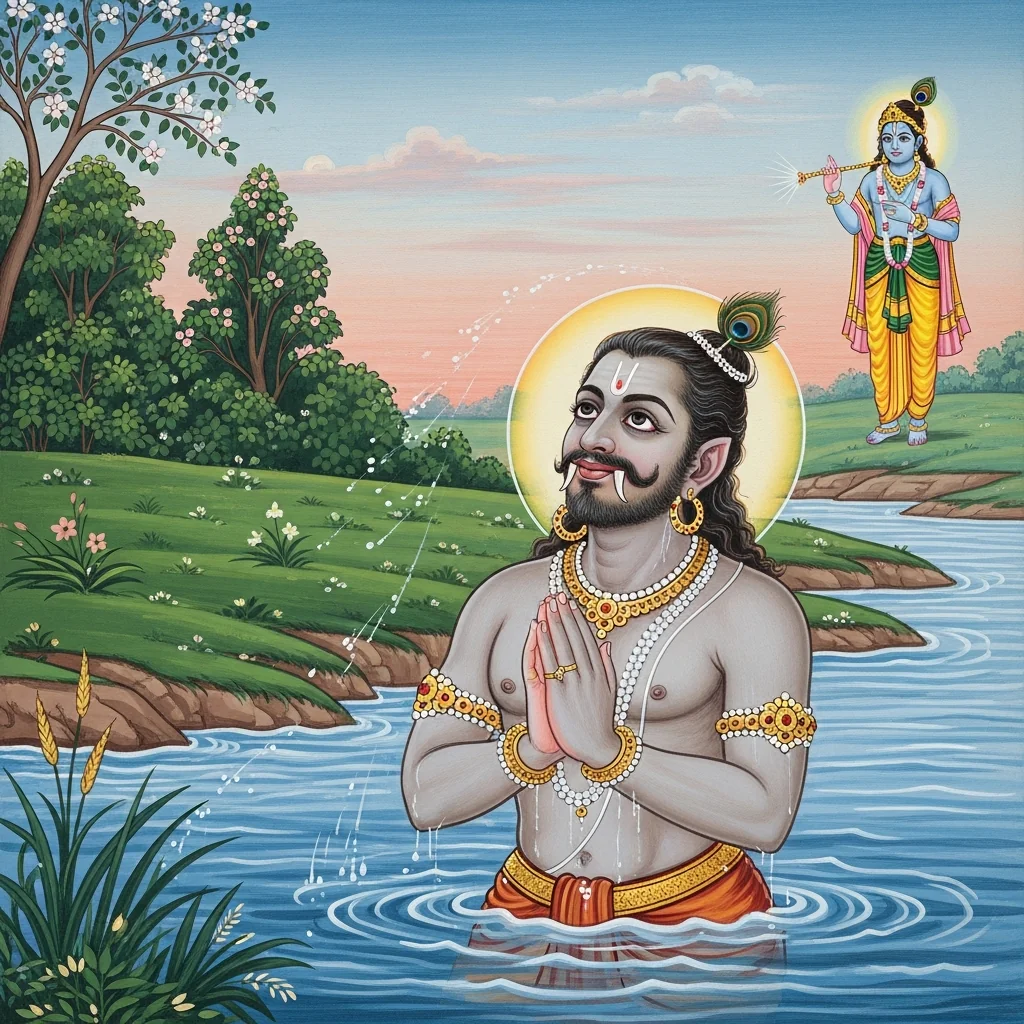
The chapter unfolds in layered teaching: Prahlāda extols to the sages Dvārakā’s unparalleled power to purify, and then introduces an itihāsa—an earlier dialogue between King Dilīpa and Sage Vasiṣṭha. Dilīpa asks for a kṣetra where sin does not “sprout again,” having heard that Kāśī can neutralize a severe moral residue called vajra-lepa. Vasiṣṭha recounts a cautionary tale of a renunciant in Kāśī who falls into dharma-transgressing conduct, declines further, and undergoes painful rebirths due to grave wrongdoing. Though Kāśī prevents immediate hellish retribution, the persistent vajra-lepa remains and drives long suffering across many forms of life. The turning point comes when a traveler connected with Dvārakā—purified by the Gomati and blessed with Kṛṣṇa-darśana—meets a rākṣasa: by the mere sight of this Dvārakā pathika, the rākṣasa’s vajra-lepa is instantly reduced to ashes. The rākṣasa then goes to Dvārakā, relinquishes the body at Gomati, and attains a Vaiṣṇava state, praised by celestial beings. The chapter closes by reaffirming Dvārakā as kṣetra-rāja, the sovereign of sacred places, where pāpa is said not to arise again, and culminates in Dilīpa’s pilgrimage and attainment through the living presence of Śrī Kṛṣṇa.
Shlokas
Verse 1
श्रीप्रह्लाद उवाच । एवमद्भुतमाहात्म्यं द्वारकायां मुनीश्वराः । सर्वेषां क्षेत्रतीर्थानां महापापविदारक्म्
Śrī Prahlāda said: O lords among sages, such is the wondrous greatness of Dvārakā—a power that shatters great sins, and the very essence of all sacred kṣetras and tīrthas.
Verse 2
वर्णानामश्रमाणां च पतितानां विशेषतः । महापापहरं प्रोक्तं महापुण्यविवर्द्धनं
Its greatness is declared to remove great sins and to increase great merit—for people of all varṇas and all āśramas, and especially for those who have fallen from right conduct.
Verse 3
अत्युग्रपापराशीनां दाहस्थानं यथा स्मृतम् । द्वारकागमनं विप्राः किं पुनर्द्वारकास्थितिः
O brāhmaṇas, even the journey to Dvārakā is remembered as a “burning-place” for heaps of exceedingly fierce sins—how much more, then, is dwelling in Dvārakā!
Verse 4
विशेषेण तु विप्रेन्द्राः कन्याराशिस्थिते गुरौ । ब्रह्मादयोपि दृश्यंते यत्र तीर्थैश्च संयुताः
But especially, O best of brāhmaṇas, when Guru (Jupiter) is in Virgo—there in Dvārakā, together with the tīrthas, even Brahmā and the other gods are seen.
Verse 5
प्रतिवर्षं प्रकुर्वंति द्वारकागमनं नराः । तेषां पादरजः स्पृष्ट्वा दिवं यांति च पापिनः
Year after year men undertake the journey to Dvārakā. Even sinners, touched by the dust of their feet, attain heaven.
Verse 6
गोमती नीरपूतानां कृष्णवक्त्रावलोकिनाम् । दर्शनात्पातकं तेषां याति जन्मशतार्जितम्
For those purified by the waters of the Gomati, and for those who behold the face of Kṛṣṇa, sin accumulated over a hundred births departs merely by that sight.
Verse 7
इतिहासेन पूर्वोक्तं श्रूयतां मुनिपुङ्गवाः । दिलीपवसिष्ठ संवादे परमाश्चर्य्यवर्द्धनम्
O best of sages, hear what was told earlier as an ancient account—an episode in the dialogue of Dilīpa and Vasiṣṭha, wondrous and ever more astonishing.
Verse 8
काश्यां तु वज्रलेपो हि क्षेत्र एकत्र नश्यति । यातुर्दर्शनतः श्रुत्वा दिलीपो वाक्यमब्रवीत्
In Kāśī, indeed, the dreadful “vajralepa” is destroyed in that one sacred kṣetra. Hearing this from a traveler’s report, King Dilīpa spoke these words.
Verse 9
दिलीप उवाच । वज्रलेपश्च काश्यां तु घोरो यत्र विनश्यति । कृत्स्नशोऽथ महापुण्यं प्राप्यं यत्र तदस्ति किम्
Dilīpa said: “If in Kāśī that dreadful vajralepa is destroyed, then what is that place where the great merit is obtained in full measure?”
Verse 10
न प्ररोहंति पापानि यस्मिन्क्षेत्रे द्विजोत्तम । तत्क्षेत्रं कथ्यतां पुण्यं यत्र पापं प्रणश्यति
O best of the twice-born, tell me of that holy kṣetra in which sins do not sprout again—of that sacred place where sin is utterly destroyed.
Verse 11
वसिष्ठ उवाच । आसीत्काश्यां पुरा कश्चित्त्रिदण्डी मोक्षधर्मवित् । जपन्दशाश्वेमेधे तु गायत्रीं च समाहितः
Vasiṣṭha said: “Formerly in Kāśī there lived a certain tridaṇḍin, a knower of the dharma of liberation. With concentrated mind he would chant the Gāyatrī, equal in merit to ten Aśvamedha sacrifices.”
Verse 12
तत्र काचित्समायाता युवती गजगामिनी । तीरे संस्थाप्य वासांसि गंगायाः श्रमशान्तये । प्रविष्टा च जले नग्ना जलक्रीडां चकार ह
There a certain young woman, moving with the gait of an elephant, arrived. Placing her garments on the bank of the Gaṅgā to relieve her fatigue, she entered the water unclothed and began to play in the river.
Verse 13
नग्नां तां क्रीडतीं वीक्ष्य यतिर्मदनपूरितः । दैवाग्निभ्रंशितो मार्गात्सहसा च विमोहितः
Seeing her unclothed and at play, the ascetic was filled with desire. Suddenly, as though cast from the path by fate’s fire, he fell into delusion.
Verse 14
मनसा कामयामास साऽपि तं तरुणं यतिम् । तयोश्च संगतिस्तत्र संजाता पापकर्मणोः
He desired her in his mind, and she too desired that young ascetic. Thus their union arose there—born of sinful action on both sides.
Verse 15
तया विमोहितः सद्यस्तामेवानुससार सः । तत्प्रीत्यै चार्जयामास धनमन्यायतस्तदा
Deluded by her, he immediately began to follow her alone; and to win her pleasure, he then amassed wealth by unrighteous means.
Verse 16
वाराणस्यां हि न त्यक्तश्चंडालस्य प्रतिग्रहः । स्नानहीनः सदा पापी रात्रौ चौर्य्येण वर्त्तते
Indeed, in Vārāṇasī he did not give up accepting gifts from a Caṇḍāla; without holy bathing, ever sinful, he lived by theft at night.
Verse 17
कस्मिंश्चित्समये पापी मांसार्थी तु वनं गतः । ददर्श प्रमदां तत्र मातंगीं मदिरेक्षणाम्
At a certain time, that sinful man—seeking meat—went into the forest, and there he saw a young woman, a Mātaṅgī, with intoxicating eyes.
Verse 18
तस्याः प्रथमतारुण्यं दृष्ट्वा गर्वेण पाप्मना । वनेऽथ निर्जने तत्र मातंगीसंगमेयिवान्
Seeing the first blossoming of her youth, driven by sinful pride, he went into that lonely forest and sought union with the Mātaṅgī woman.
Verse 19
तया सहान्नपानादि कृतवान्पापमोहितः । अश्नाति सुरया पंकं गोमांसं पापलंपटः
Deluded by sin, he ate and drank with her; lusting after wrongdoing, he consumed foul food with liquor—and even cow’s flesh.
Verse 20
तद्गृहे निधनं प्राप्तः पापात्मा सर्वभक्षकः । वाराणसीप्रभावेन न प्राप्तो नरकं तदा
In her house he met his death—sinful and eating everything; yet by the spiritual potency of Vārāṇasī, he did not then fall into hell.
Verse 21
किं तु तत्र कृतं पापं वज्रलेपं सुदारुणम् । शूद्रीसंपर्क पापेन जातोऽसौ क्रूरयोनिषु
Yet the sin committed there was like a coating of thunderbolt—most dreadful; through the sin of improper association with a Śūdrī woman, he was born into cruel wombs.
Verse 22
वृको व्याघ्रोरगः श्वानः शृगालः सूकरोऽभवत् । दुरंतां यातनां प्राप्तः शमलेशं न विन्दति
He became a wolf, a tiger, a serpent, a dog, a jackal, and a boar; undergoing unending torment, he found not even the slightest peace.
Verse 23
एवं जन्मसहस्रैस्तु न तस्य पापकर्मणः । मातंग्या संगजं पापं व्यनश्यत युगायुतैः
Thus, even through thousands of births, the sin born of his evil deeds—arising from association with the Mātaṅgī—did not perish even over tens of thousands of ages.
Verse 24
ततोऽसौ सप्तमे जातः शशकश्चैव जन्मनि । ततोऽसौ राक्षसो जातः पापात्मा सर्वभक्षकः
Then, in the seventh birth, he was born as a hare; thereafter he was born as a Rākṣasa—sinful in nature and a devourer of all.
Verse 25
प्राणिनो भक्षयन्सर्वान्संप्राप्तो विंध्यपर्वते । अस्मादनन्तरं भाव्यं कृकलासत्वमद्भुतम्
Devouring every living being, he reached the Vindhya mountain. Immediately after this, a wondrous change was destined—he would become a lizard.
Verse 26
शूद्रीसंगजपापेन भाव्यं च कृमियोनिना । मातंगीसंगमे प्रोक्तं फलं ह्यतिजुगुप्सितम्
By the sin born of consorting with a Śūdrī, he was destined to be born in the womb of a worm. The result declared for union with a Mātaṅgī is said to be exceedingly repulsive.
Verse 27
युगायुतं सहस्रैस्तु भोक्ष्यमाणं सुदारुणम् । अत्याश्चर्य्यमभूत्तत्र दिलीप श्रूयतां महत्
For thousands of yugas he was to endure (that torment), most dreadful indeed. Yet there occurred there a great wonder—O Dilīpa, listen to it.
Verse 28
आलोकितं च विंध्याद्रौ सर्वेषां विस्मयास्पदम् । दृष्ट्वा द्वारावतीं कश्चित्कृष्णवक्त्रं सुशोभनम्
Upon the Vindhya mountain there appeared a vision, a marvel to all: someone beheld Dvārāvatī, and the exceedingly beautiful face of Lord Kṛṣṇa.
Verse 29
गोमतीनीरपूतस्तु विंध्यं प्राप्तः स पांथिकः । मात्रां कृष्णप्रसादस्य स्कन्धे कृत्वा प्रहर्षितः
Purified by the waters of the Gomati, that traveler reached the Vindhya. Bearing upon his shoulder a portion of Kṛṣṇa’s prasāda, he was filled with joy.
Verse 30
प्रयास्यन्स्वगृहं तत्र ददर्श पथि राक्षसम् । द्रुतं च क्रूरकर्माणं दृष्ट्वा भक्षितुमागतम्
Setting out for his home, he saw upon the road a Rākṣasa—swift and savage in deed—coming toward him to devour him.
Verse 31
तस्य दर्शनमात्रेण वज्रलेपः सुदारुणः । वाराणसीसमुद्भूतो भस्मसादभवत्क्षणात्
By the mere sight of him, that terribly hard one, ‘vajra-coated’—who had arisen from Vārāṇasī—was reduced to ashes in an instant.
Verse 32
जन्मकोटिशतेनापि यो न शक्यो व्यपोहितुम् । तत्पापपर्वतान्मुक्तः कृष्णपांथिकदर्शनात्
That sin which could not be removed even in a hundred crores of births—by beholding the traveler devoted to Kṛṣṇa, he was freed from that mountain of sins.
Verse 33
दग्धेऽथ क्रूरभावे तु घनमुक्तो यथा शशी । रेजे पुण्यप्रकाशेन कृष्णपांथिकदर्शनात्
When his cruel disposition was burned away, he shone—like the moon freed from clouds—by the radiance of merit, through seeing the traveler devoted to Kṛṣṇa.
Verse 34
ततोऽभिमुखमभ्येत्य द्वारकापथिकं मुदा । ननाम श्रद्धया भूमौ तद्दर्शनमहोत्सवः
Then, approaching him face to face with joy, he bowed with faith upon the ground to the Dvārakā-bound traveler, celebrating that darśana as a great festival.
Verse 35
नत्वाऽथ विस्मितः प्राह अहोऽद्य तव दर्शनात् । गतो घोरतमो भावः प्राप्ता संसिद्धिरुत्तमा
Having bowed down, he spoke in amazement: “Ah! Today, by the mere sight of you, my most dreadful disposition has departed, and the highest spiritual fulfillment has been attained.”
Verse 36
कस्मात्त्वमागतो भद्र प्रभावः कीदृशस्तव । वज्रलेपस्तु काश्यां वै दग्धस्ते दर्शनादनु
“From where have you come, O good one, and what kind of power is this of yours? For in Kāśī, the ‘vajra-lepa’ was indeed burnt away after your very sight.”
Verse 37
वसिष्ठ उवाच । इत्येवं राक्षसेनोक्तं श्रुत्वा कृष्णस्य पांथिकः । विस्मयं परमापन्नः प्राह तं हर्षमानसः
Vasiṣṭha said: Hearing the rākṣasa speak thus, Kṛṣṇa’s pilgrim—greatly astonished and joyful at heart—replied to him.
Verse 38
पांथिक उवाच । श्रीमद्द्वारवतीं दृष्ट्वा ह्यागतोऽस्म्यत्र राक्षस । वज्रलेपहरोऽस्माकं प्रभावः कृष्णदर्शनात्
The pilgrim said: “O rākṣasa, having beheld glorious Dvāravatī (Dvārakā), I have come here. Our potency—born of the darśana of Kṛṣṇa—removes the affliction called ‘vajra-lepa’.”
Verse 39
गोमत्यां यः सकृत्स्नात्वा पश्येत्कृष्णमुखांबुजम् । सर्वानुद्धरते पापादपि त्रैलाक्यदाहकात्
Whoever bathes even once in the Gomatī and beholds Kṛṣṇa’s lotus-like face delivers all from sin, even from sins that burn through the three worlds.
Verse 40
वसिष्ठ उवाच । इत्युक्तो राक्षसो हृष्टः शुद्धात्मा भक्तिसंयुतः । नत्वा प्रदक्षिणं कृत्वा संप्राप्तो द्वारकां तदा
Vasiṣṭha said: Thus addressed, the rākṣasa became joyful—his soul purified and endowed with devotion. Bowing and making reverent circumambulation, he then reached Dvārakā.
Verse 41
गोमत्यां स तनुं त्यक्त्वा प्राप्तोऽसौ वैष्णवं पदम् । स्तूयमानः सुरेशानैर्गधर्वैः पुष्पवृष्टिभिः
There, at the Gomatī, casting off his body, he attained the Vaiṣṇava state. He was praised by the lords of the gods and by gandharvas, amid showers of flowers.
Verse 42
इत्थं महाप्रभावो हि द्वारकायाः प्रकीर्त्तितः । न प्ररोहंति पापानि यस्याः पांथिकदर्शनात् । द्वारकायां तु किं वाच्यं न प्ररोहंति पातकम्
Thus has the mighty glory of Dvārakā been proclaimed: in that realm, sins do not take root even by merely seeing its pilgrim. What more need be said of Dvārakā itself—there, wrongdoing does not sprout at all.
Verse 43
इत्येतत्कथितं राजन्यत्पृष्टोहं त्वयाऽनघ । सर्वक्षेत्रोत्तमं क्षेत्रं वज्रलेपविनाशनम्
O king, O sinless one, thus have I told you what you asked. This kṣetra is the best of all sacred fields, the destroyer of the affliction called ‘vajra-lepa’.
Verse 44
श्रीप्रह्लाद उवाच । वसिष्ठेनोदितं श्रुत्वा दिलीपो हृष्ट मानसः । द्वारकां क्षेत्रराजं तं ज्ञात्वा च विस्मयं ययौ
Śrī Prahlāda said: Hearing what Vasiṣṭha had taught, Dilīpa became glad at heart; and knowing Dvārakā to be the king of sacred places, he was filled with wonder.
Verse 45
ययौ द्वारवतीं हृष्टो देवदेवस्य सादरम् । कृष्णं दृष्ट्वा परां सिद्धिं संप्राप्तो देवमंदिरे
Rejoicing, he went with reverent devotion to Dvāravatī, the abode of the God of gods. Having beheld Kṛṣṇa in the temple, he attained the supreme perfection and reached the divine sanctuary.