Adhyaya 32
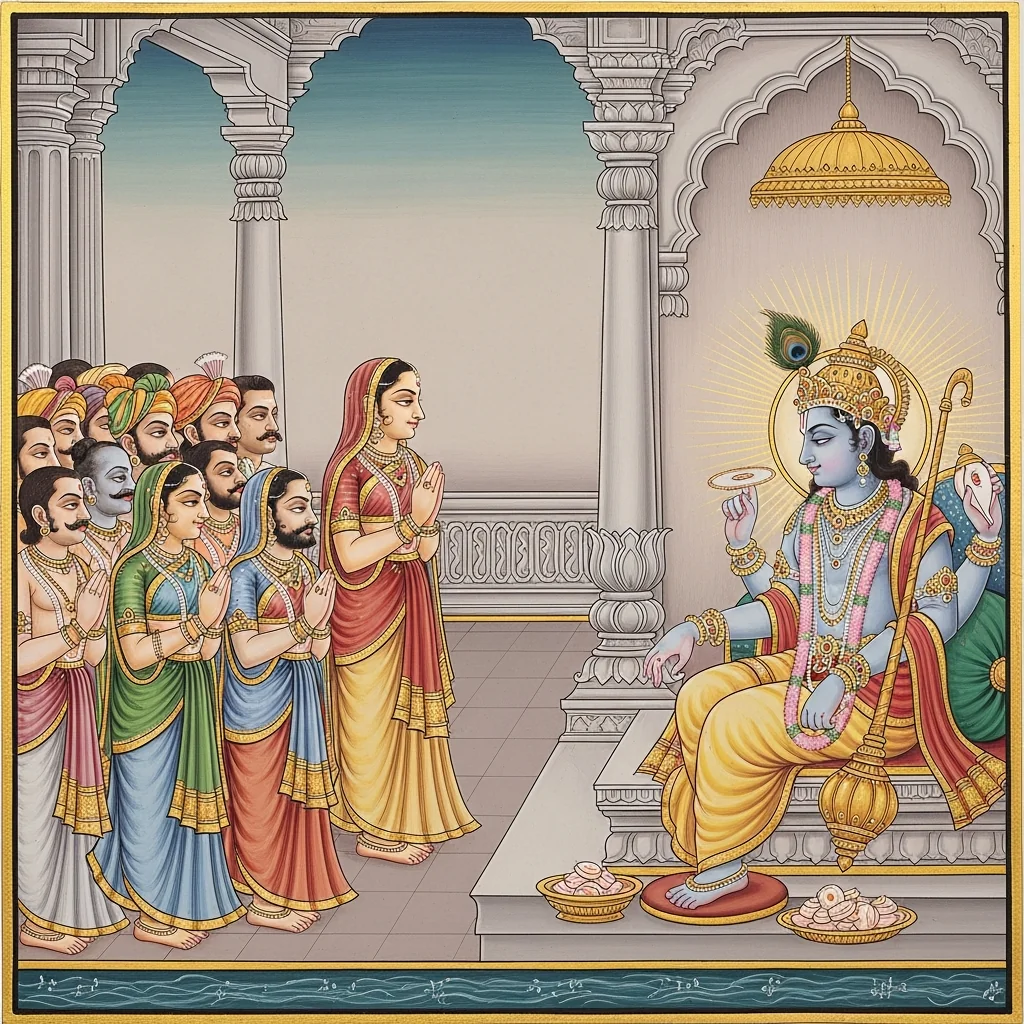
This chapter unfolds, in staged revelation, Dvārakā’s supreme sanctity in the language of pilgrimage-theology. Nārada addresses Hari’s beloved Dvārakā and narratively displays a grand procession in which famed tīrthas, rivers, kṣetras, forests, and mountains arrive and bow at her feet—Prayāga, Puṣkara, Gautamī, Bhāgīrathī/ Gaṅgā, Narmadā, Yamunā, Sarasvatī, Sindhu; Vārāṇasī, Kurukṣetra, Mathurā, Ayodhyā; Meru, Kailāsa, Himālaya, Vindhya. The vision then widens to a cosmic register: divine music and acclamations arise; Brahmā, Maheśa with Bhavānī, Indra, and the assemblies of devas and ṛṣis appear, affirming that Dvārakā surpasses even heaven and praising Cakratīrtha and a stone marked with the cakra. Brahmā and Maheśa seek darśana of Kṛṣṇa, and Dvārakā leads them to Dvārakeśvara. A collective ritual sequence follows—bathing in the Gomati and the sea, pañcāmṛta-like abhiṣeka motifs, offerings of tulasī, incense, lamps, and food, with celebratory music and dance. Kṛṣṇa is pleased and grants a boon: steady, affectionate devotion to his feet. The chapter closes with a royal-style abhiṣeka of Dvārakā herself by Brahmā and Īśāna, the appearance of Viṣṇu’s attendants (such as Viṣvaksena and Sunanda), and a doctrinal seal: those who worship rightly gain the impulse to come to Dvārakā, a sign of divine favor.
Shlokas
Verse 1
प्रह्लाद उवाच । नारदस्त्वग्रतो गत्वा प्रणम्याथ हरिप्रियाम् । उवाच ललितां वाचं हर्षयन्द्वारकां पुरीम्
Prahlāda said: Nārada went forward first; bowing to Hari’s beloved, he spoke gentle and gracious words, gladdening the city of Dvārakā.
Verse 2
श्रीनारद उवाच । पश्यपश्य महाभागे सर्वे प्राप्ताः सुशोभने । तीर्थक्षेत्राणि देवाश्च ऋषयश्चैव कृत्स्नशः
Śrī Nārada said: Behold, behold, O most fortunate and most beautiful one—everyone has arrived: the tīrthas and sacred regions, the gods, and the sages, all gathered in full.
Verse 3
पश्येमं पुरतः प्राप्तं प्रयागं तीर्थकैः सह । द्वारके तव पादाब्जे लुण्ठंते श्रद्धयाद्भुतम्
Behold this Prayāga, come before you together with the other tīrthas. O Dvārakā—wondrous indeed—through faith they roll and bow at your lotus-feet.
Verse 4
इदं तु पुष्करं तीर्थं नमति श्रद्धया शुभे । इयं तु गौतमी पुण्या सर्वतीर्थसमाश्रया
Here is the Puṣkara tīrtha, bowing in faith, O auspicious one. And here is the holy Gautamī, refuge of all tīrthas, renowned as the vessel of the essence of every sacred ford.
Verse 5
सिंहस्थे च गुरौ भद्रे संप्राप्ता सौभगं महत् । किन्तु दुर्जनसंसर्गाद्दग्धा पापाग्निना भृशम्
When the Guru was in Siṃha (Leo), O good lady, she attained great fortune; yet, through association with the wicked, she was grievously burned by the fire of sin.
Verse 6
तत्रोपायमभिज्ञाय ऋषीणां शृण्वतां तदा । श्रुत्वा कर्णे महच्छब्दं संप्राप्तेयं तवांतिकम्
There, having learned the remedy while the sages listened, and hearing a mighty proclamation in her ear, she came and reached your presence.
Verse 7
नमस्करोति देवि त्वां द्वारके गौतमी शुभा । पश्यपश्य महापुण्या इयं भागीरथी शुभा
O Goddess Dvārakā, the auspicious Gautamī (Godāvarī) bows to you. Look—look! Here is the supremely meritorious and auspicious Bhāgīrathī (Gaṅgā) as well.
Verse 8
नमस्करोति ते पादौ संहृष्टा च पुनःपुनः । पश्येमां नर्मदां रम्यां प्रणतां तव पादयोः
Joyfully she bows again and again to your feet. Behold this lovely Narmadā, prostrated at your feet.
Verse 9
यमुना चन्द्रभागेयमियं प्राचीसरस्वती । सरयूर्गंडकी प्राप्ता गोमती पूर्ववाहिनी
Here are Yamunā and Candrabhāgā; this is the eastward-flowing Sarasvatī. Sarayū and Gaṇḍakī have arrived, and so has Gomati, the river that flows eastward.
Verse 10
शोणः सिन्धुनदी चैता अन्याश्च सरितां वराः । कृष्णा भीमरथी पुण्या कावेर्य्याद्याः सरिद्वराः
Here are Śoṇa and the river Sindhu, along with other excellent rivers. Kṛṣṇā, the sacred Bhīmarathī, and the foremost rivers beginning with Kāverī are also present.
Verse 11
सीताचक्षुर्नदी भद्रा नमंत्येताः पदांबुजम् । द्वारके ता महापुण्याः सप्तद्वीपोद्भवाः पराः
Sītā, Cakṣur-nadī, and Bhadrā—these bow to your lotus-feet. In Dvārakā, those supremely sacred ones, arisen from the seven continents (sapta-dvīpas), are present.
Verse 12
मन्दाकिनी महापुण्या भोगवत्यादिसंयुता । पश्याश्चर्यमिदं भद्रे वाराणसी विमुक्तिदा
The greatly sacred Mandākinī, accompanied by Bhogavatī and others, is here. Behold this wonder, O gentle one: Vārāṇasī, the giver of liberation, is (as though) present here.
Verse 13
भक्त्या ते च पदांभोजं शिरस्याधाय वर्तते । कुरुक्षेत्रं महापुण्यं नमति त्वामहर्निशम्
With devotion it bears your lotus-feet upon its head. The supremely sacred Kurukṣetra bows to you day and night.
Verse 14
द्वारके मथुरां पश्य प्रणतां तव पादयोः । अयोध्याऽवंतिकामायास्ता नमंति पदांबुजम्
O Dvārakā, behold Mathurā, bowed at your feet. Ayodhyā and Avantikā (Ujjayinī) as well bow to your lotus-feet.
Verse 15
कांची गया विशाला च विरजा लुठति क्षितौ । शालिग्रामं महाक्षेत्रं पतितं तव पादयोः । विराजते प्रभासं च क्षेत्रं च पुरुषोत्तमम्
Kāñcī, Gayā, and Viśālā—and Virajā as well—roll upon the earth in reverence. Śāligrāma, that great sacred kṣetra, has fallen at your feet. Prabhāsa shines forth, and so too the holy kṣetra of Puruṣottama (Puri).
Verse 16
भार्गवादीनि चान्यानि सर्वक्षेत्राणि सुन्दरि । द्वारके प्रणमंति त्वां भक्त्योत्थाय पुनःपुनः
O fair one, Bhārgava and the other sacred regions—indeed all holy kṣetras—rise again and again in devotion and bow to you, O Dvārakā.
Verse 17
पश्येमान्सागरान्सप्त पतितस्तांब पादयोः । पश्यारण्यानि सर्वाणि नैमिषं प्रणतं पुरः
“Behold the seven oceans—fallen at your lotus-feet in reverence. Behold all the sacred forests as well; and see Naimiṣa, bowed down before you.”
Verse 18
धनुष्कं च दशारण्यं दंडकारण्यमर्बुदम् । नारायणाश्रमं पश्य द्वारके प्रणतं तथा
“Behold Dhanuṣka, and Daśāraṇya; behold Daṇḍakāraṇya and Arbuda; and see Nārāyaṇāśrama as well—each, O Dvārakā, bowed down in reverence.”
Verse 19
अयं मेरुश्च कैलासो मन्दराद्याः सहस्रशः । हिमाद्रिर्विंध्यशैलश्च श्रीशैलाद्याः प्रहर्षिताः । एते ह्यृषिगणाः सर्वे नमंतिस्म पुनःपुनः
“Here are Meru and Kailāsa; and Mandara and thousands of other mountains. Himālaya and the Vindhya range, and Śrīśaila and the rest—rejoicing—are present. Indeed, all these hosts of ṛṣis bow again and again.”
Verse 20
गंगाद्याः सागराः शैला नृत्यंति पुरतस्तव । ऋषिदेवगणाः सर्वे सर्वे गर्जंति नामभिः
Gaṅgā and the other sacred rivers, the oceans, and the mountains dance before You. All the hosts of sages and gods roar aloud, each proclaiming the Holy Names.
Verse 21
श्रीप्रह्लाद उवाच । इत्येवं वदतस्तस्य द्वारका हृष्टमानसा । नृत्यतो मुदितान्वीक्ष्य सर्वान्प्रेम्णाभिनंद्य च । उवाच ललिता वाचं गौतमीं स्पृश्य पाणिना
Śrī Prahlāda said: “As he spoke thus, Dvārakā rejoiced within. Seeing all those blissful ones dancing, she greeted them with love; and, touching the river Gautamī with her hand, she spoke in a gentle voice.”
Verse 22
भागीरथीप्रयागादीन्क्षेत्रादीनथ सर्वशः । द्वारका मधुरालापैः सर्वानानंदयत्तदा
Then Dvārakā, with sweet speech, delighted Bhāgīrathī, Prayāga, and all other sacred fields and holy places in every way.
Verse 23
अथाश्चर्यमभूत्तत्र सर्वानंदविवर्द्धनम् । अथ तावत्तदाऽकाशे गीतवाद्यजयस्वनाः
Then a wonder occurred there, increasing the joy of all. At that very moment, in the sky arose sounds of song, instruments, and cries of victory.
Verse 24
गर्जनानि सुपुण्यानि हरिशब्दैः पृथक्पृथक् । अपश्यन्वै तदा सर्वे ब्रह्माद्या देवनायकाः
There were auspicious roars, each distinct, filled with the cry of “Hari!”. Then all the divine leaders, beginning with Brahmā, truly beheld that marvel.
Verse 25
महेशः स्वगणैः सार्द्धं भवान्या समदृश्यत । इन्द्रस्तु त्रिदशैः सार्द्धं यक्षगन्धर्वकिन्नरैः
Maheśa appeared with his own gaṇas, together with Bhavānī. Indra too appeared with the Thirty Gods, accompanied by Yakṣas, Gandharvas, and Kinnaras.
Verse 26
मरुद्भिर्लोकपालैश्चा नृत्यमानाः प्रहर्षिताः । सिद्धविद्याधराः सर्वे वस्वादित्याश्च सग्रहाः
With the Maruts and the Lokapālas, they danced, exultant with delight. All the Siddhas and Vidyādharas were present, and the Vasus and the Ādityas as well—together with their celestial retinues.
Verse 27
भृग्वाद्याः सनकाद्याश्च नृत्यमानाः प्रहर्षिताः । ब्रह्माणं च नमस्कृत्य सप्तस्वर्गस्थिताः सुराः
Bhr̥gu and the other sages, and Sanaka and the other seers—dancing in great joy—bowed in reverence to Brahmā. The gods who abide in the seven heavens likewise offered homage.
Verse 28
ऊचुस्ते द्वारकां दृष्ट्वा ब्रह्मेशानादयस्तदा । हर्षविह्वलितात्मानो वीक्ष्याऽन्योन्यं च विस्मिताः
Upon seeing Dvārakā, Brahmā, Īśāna (Śiva), and the others spoke at once. Overwhelmed with joy, they looked upon one another in wonder.
Verse 29
देवा ऊचुः । सेयं वै द्वारका देवी वहते यत्र गोमती । यत्राऽस्ते भगवान्कृष्णः सेयं पुण्या विराजते
The gods said: “This indeed is the goddess Dvārakā, where the river Gomatī flows; where the Blessed Lord Kṛṣṇa dwells—this holy city shines with sanctity.”
Verse 30
सर्वक्षेत्रोत्तमा या च सर्वतीर्थोत्तमोत्तमा । स्वर्गादप्यधिका भूमौ द्वारकेयं प्रकाशते
Dvārakā, supreme among all sacred fields and most excellent among all tīrthas, shines upon the earth, surpassing even heaven.
Verse 31
एतद्वै चक्रतीर्थं च यच्छिला चक्र चिह्निता । मुक्तिदा पापिनां लोके म्लेच्छदेशेऽपि पूजिता
This indeed is the Cakra-tīrtha, whose stone bears the mark of the discus. It grants liberation even to sinners in this world, and is worshipped even in foreign lands.
Verse 32
प्रह्लाद उवाच । ब्रह्मादीनागतान्दृष्ट्वा विस्मिता नारदादयः । क्षेत्राणि तीर्थमुख्यानि विस्मितानि सरिद्वराः । प्रणेमुर्युगपत्सर्वे सर्वाः सर्वाणि सर्वशः
Prahlāda said: Seeing Brahmā and the others arrive, Nārada and the rest were amazed. The foremost sacred places and tīrthas, and the best of rivers too, were filled with wonder; all of them bowed at once—each to all, in every way.
Verse 33
ब्रह्मादीनां च तीर्थानां दृष्ट्वा यात्रां मनोहराम् । द्वारकां प्रति विप्रेन्द्रा विस्मिता द्वारकौकसः
O best of Brahmins, seeing the delightful pilgrimage-procession of Brahmā and the tīrthas moving toward Dvārakā, the inhabitants of Dvārakā were astonished.
Verse 34
दृष्ट्वा देवगणाः सर्वे द्वारकां प्रति मंदिरे । गीतवाद्यादि निर्घोषैर्नृत्यमानाः प्रहर्षिताः
Seeing Dvārakā and drawing near her temples, all the hosts of gods—amid the resounding music of song and instruments—danced, filled with joy.
Verse 35
वदन्तो जयशब्दांश्च सेयं कृष्णप्रियेति च । दृष्ट्वा ब्रह्ममहेशानौ द्वारकां प्रीतमानसौ
Uttering cries of victory and proclaiming, “This is the beloved of Kṛṣṇa!”, Brahmā and Maheśa, upon beholding Dvārakā, were filled with gladness of heart.
Verse 36
त्यक्त्वा च वाहने श्रेष्ठे दण्डवत्पतितौ भुवि । ऊचतुश्च तदा देवौ द्वारकां प्रति हर्षितौ
Leaving their excellent mounts, the two gods fell upon the earth like a staff, in full prostration. Then, rejoicing, they spoke toward Dvārakā.
Verse 37
श्रेष्ठा त्वमम्ब सर्वेभ्योऽस्मदादिभ्योऽपि सर्वतः । यतस्त्वां न त्यजेत्साक्षाद्भगवान्विष्णुरव्ययः
O Mother, you are superior to all—indeed, in every way, even beyond beings like us. For the Imperishable Lord Viṣṇu Himself never abandons you, directly and forever.
Verse 38
अतो दर्शय देवेशं कृष्णं कंसविनाशनम् । यद्दर्शनान्महासिद्धिः सर्वेषां च भविष्यति
Therefore, reveal to us the Lord of gods—Kṛṣṇa, the destroyer of Kaṃsa—by whose very sight great spiritual attainment will arise for all.
Verse 39
प्रह्लाद उवाच । इत्युक्त्वा प्रययौ देवी तीर्थक्षेत्रादिसंयुता । ब्रह्मेशानौ पुरस्कृत्य हृष्टौ दृष्ट्वा महोत्सवान्
Prahlāda said: Having spoken thus, the Goddess set forth, accompanied by the sacred tīrthas and holy fields. Placing Brahmā and Īśāna at the fore, they rejoiced on seeing the great festivities.
Verse 40
गीतवाद्यपताकैश्च दिव्योपायनपाणिभिः । प्राप्योवाच ततो देवान्द्वारका हर्षविह्वला
With songs, instruments, and banners, and with hands bearing divine offerings, Dvārakā—overwhelmed with joy—approached and then addressed the gods.
Verse 41
पश्यतां पश्यतां देवाः सोऽयं वै द्वारकेश्वरः । प्राप्य संदर्शनं यस्य मुक्तानां यत्फलं भवेत् । न विद्यते सहस्रेषु ब्रह्मांडेषु च यत्फलम्
Look—look, O gods! This indeed is the Lord of Dvārakā. By attaining His direct sight, the fruit enjoyed by the liberated arises; such a fruit is not found even across thousands of universes.
Verse 42
ततो देवगणाः सर्वे क्षेत्रतीर्थादिसंयुताः । पश्चिमाभिमुखं दृष्ट्वा कृष्णं क्लेशविनाशनम् । प्रणेमुर्युगपत्सर्वे प्रहृष्टाः समुपागताः
Then all the hosts of gods—together with the sacred kṣetras and tīrthas—on seeing Kṛṣṇa facing west, the destroyer of affliction, approached in delight and bowed down all at once.
Verse 43
गीतवाद्यप्रघोषैश्च नृत्यमानाः समंततः । जयशब्दं नमःशब्दं गर्जंतो हरिनामभिः
With the loud acclaim of song and instruments, dancing on all sides, they roared “Victory!” and “Homage!”—calling out the names of Hari.
Verse 44
ब्रह्मा भवो भवानी च सेन्द्रा देवगणा भुवि । दृष्ट्वा कृष्णं प्रणेमुस्ते भक्त्योत्थाय पुनःपुनः
Brahmā, Bhava (Śiva), Bhavānī, and the hosts of gods with Indra upon the earth—having seen Kṛṣṇa—bowed down in devotion, rising and prostrating again and again.
Verse 45
प्रयागादीनि तीर्थानि गंगाद्याः सरितोऽमलाः । ऋषयो देवगंधर्वाः शुकाद्याः सनकादयः । वीक्ष्य वक्त्रं महाविष्णोः प्रणेमुश्च मुहुर्मुहुः
Prayāga and the other tīrthas, the pure rivers beginning with the Gaṅgā, the sages, the divine Gandharvas, Śuka and others, and the Sanakas—beholding the face of Mahāviṣṇu—bowed down again and again.
Verse 46
कृष्णकृष्णेति कृष्णेति जय कृष्णेति वादिनः । स्नात्वा तु गोमतीनीरे तीरे चैव महोदधेः । कमलासनः संहृष्टः श्रीमत्कृष्णमपूजयत्
Crying, “Kṛṣṇa, Kṛṣṇa!” and “Victory to Kṛṣṇa!”, they went on; and Brahmā, the Lotus-seated, after bathing on the bank of the Gomati and also upon the shore of the great ocean, joyfully worshipped the glorious Śrī Kṛṣṇa.
Verse 47
स्वर्धेनुपयसा स्नाप्य दिव्यैश्चा मृतपंचकैः । भवश्चाथ भवानी च पूजयामास भक्तितः
After bathing the Lord with the milk of the celestial wish-fulfilling cow and with the five divine nectars (pañcāmṛta), Bhava (Śiva) and Bhavānī (Pārvatī) then worshipped Him with devotion.
Verse 48
इन्द्रो देवगणाः सर्वे योगिनः सनकादयः । ऋषयो नारदाद्याश्च गंगाद्याश्च सरिद्वराः
Indra, all the hosts of gods, the yogins beginning with Sanaka, the sages beginning with Nārada, and the foremost rivers beginning with the Gaṅgā—all gathered there.
Verse 49
अमूल्याभरणैर्भक्त्या महारत्नविनिर्मितैः । दिव्यैर्माल्यैरनेकैश्च नन्दनादिसमुद्भवैः
With devotion they offered priceless ornaments fashioned of great jewels, and many divine garlands that had arisen from Nandana and other celestial gardens.
Verse 50
प्रियया श्रीतुलस्या वै श्रीमत्कृष्णमपूजयन् । धूपैर्नीराजनैर्दिव्यैः कर्पूरैश्च पृथक्पृथक्
They worshipped glorious Kṛṣṇa with the beloved sacred Tulasī, and separately offered divine incense, ārati lamps, and camphor, each in its own rite.
Verse 51
नैवेद्यैर्विविधैः पुष्पैर्दिव्यैः कर्पूरवासितैः । सकर्पूरैश्च तांबूलैः प्रियैश्चोपायनैस्तथा
With various naivedya food-offerings, with divine flowers fragrant with camphor, with camphor-laced tāmbūla (betel), and with other cherished gifts as well, they honored Him.
Verse 52
महामांगलिकैः सर्वैः सुदिव्यैर्मंगलाऽर्तिकैः । संपूज्यैवं महाविष्णुं कृष्णं क्लेशविनाशनम् । प्रहृष्टा ननृतुः सर्वे गीतवाद्यप्रहर्षिताः
Thus, having fully worshipped Mahāviṣṇu—Kṛṣṇa, the destroyer of afflictions—with every great auspicious rite and with splendid maṅgalārati, all of them, delighted and stirred by song and instruments, rejoiced and danced.
Verse 53
पुरतः कृष्णदेवस्य ह्यप्सरोभिः समन्विताः । ब्रह्मा च ब्रह्मपुत्राश्च ततः सेन्द्रा मरुद्गणाः
In front of Lord Kṛṣṇa—accompanied by apsarases—stood Brahmā and the sons of Brahmā; thereafter came the Marut hosts together with Indra.
Verse 54
ब्रह्मादीन्नृत्यतः प्रेक्ष्य भगवान्कमलेक्षणः । वारयामास हस्तेन प्रीतः प्राह सुरान्विभुः
Seeing Brahmā and the others dancing, the lotus-eyed Lord, pleased, checked them with His hand and then addressed the gods—the all-powerful One spoke.
Verse 55
श्रीभगवानुवाच । भोभो ब्रह्मन्महेशान हे भवानि महेश्वरि । क्षेत्राणि सर्वतीर्थानि नारदः सनकादयः । प्रीतोऽहं भवता सम्यक्सर्वान्कामानवाप्स्यथ
The Blessed Lord said: “O Brahmā, O Maheśāna; O Bhavānī, great Goddess! O sacred kṣetras and all tīrthas; O Nārada and Sanaka and the others—I am truly pleased with you. You shall attain all desired aims.”
Verse 56
प्रह्लाद उवाच । तदाभिलषितांल्लब्ध्वा स र्वान्कामवरानथ । भक्त्या परमया श्रीमत्कृष्णं प्रोचुः प्रहर्षिताः
Prahlāda said: “Then, having obtained their longed-for wishes and all excellent boons, they—filled with supreme devotion—addressed glorious Kṛṣṇa with great joy.”},{
Verse 57
देवा ऊचुः । प्राप्तः कामवरोऽस्माभिः सर्वतः कृपया विभो । सप्रेमा त्वत्पदांभोजे भक्तिर्भव्याऽनपायिनी
The Devas said: “O Lord, by Your compassion in every way, we have obtained the choicest boon. May loving devotion to Your lotus-feet arise in us—auspicious and never departing.”},{
Verse 58
प्रह्लाद उवाच । तथैव पूजयामासू रुक्मिणीं कृष्णवल्लभाम् । अथ ब्रह्ममहेशानौ सर्वेषां शृण्व तामिदम्
Prahlāda said: “In that very manner they worshipped Rukmiṇī, the beloved of Kṛṣṇa. Then Brahmā and Maheśa spoke to Dvārakā—listen to those words in the presence of all.”},{
Verse 59
श्रद्धया परया युक्तौ द्वारकां प्रत्यवोचतुः । त्वं देवि सर्वतीर्थानां क्षेत्राणामुत्तमोत्तमा
Endowed with supreme faith, the two addressed Dvārakā: “O Goddess, among all sacred fords and holy fields, you are the best of the best.”}]}}
Verse 60
पर्वतानां यथा मेरुः सिन्धूनां सागरो यथा । प्राणो यथा शरीराणामिन्द्रियाणां तु वै मनः
As Meru is among mountains, as the ocean is among rivers; as prāṇa is to bodies, and mind indeed to the senses—
Verse 61
तेजस्विनां यथा वह्निस्तत्त्वानां चैत्त्य ईज्यते । यथा ग्रहर्क्षताराणां सोमो वै ज्योतिषां धुवम् । एषां प्रकाशपुंजानां यथा सूर्य्यः प्रकाशते
As fire is foremost among the radiant; as the sacred shrine is worshipped among the principles; as the Moon is central among planets, constellations, and stars; and as the Sun shines among these masses of light—
Verse 62
यथा नः सर्वदेवानां महाविष्णुरयं महान् । तथैव सर्वतीर्थानां पूज्येयं द्वारका शुभा
Just as this great Mahāviṣṇu is supreme for us among all the gods, so too, among all tīrthas, this auspicious Dvārakā is worthy of worship.
Verse 63
प्रह्लाद उवाच । इत्युक्त्वा सर्वदेवानां क्षेत्रादीनां च सत्तमाः । आधिपत्ये सुरेशानौ द्वारकामभिषेचतुः
Prahlāda said: “Having spoken thus, the two lords of the gods—foremost among all deities and sacred realms—consecrated Dvārakā to sovereignty.”
Verse 64
ब्रह्मेशानौ तथा देवाः प्रजेशा ऋषयोऽमलाः । तीर्थानां क्षेत्रराजानां महाराजत्वकारणम्
Brahmā and Īśāna, along with the Devas, the Lords of creatures, and the stainless Ṛṣis, became the cause of Dvārakā’s great kingship over the tīrthas and the royal sacred fields.
Verse 65
चक्रुर्महाभिषेकं तु द्वारकायाः प्रहर्षिताः । वादयन्तो विचित्राणि वादित्राणि महोत्सवे
Rejoicing, they performed the great consecration (mahābhiṣeka) of Dvārakā, and in that grand festival they made diverse musical instruments resound.
Verse 66
दिव्यैः पञ्चामृतैस्तोयैः सर्वतीर्थसमुद्भवैः । पुण्यैश्चाकाशगंगाया दिग्गजानां करोद्धृतैः
With divine waters of pañcāmṛta arising from all tīrthas, and with holy waters of the celestial Gaṅgā drawn up by the hands of the guardian elephants of the directions—
Verse 67
अथ वासांसि दिव्यानि दत्त्वा चाऽचमनं तथा । चर्चितां चन्दनैर्दिव्यैर्दिव्याभरणभूषिताम्
Then they offered divine garments and also gave water for ācamanam; they anointed her with heavenly sandal-pastes and adorned her with celestial ornaments.
Verse 68
पूजां च चक्रिरे पुष्पैश्चंदनादिसमुद्भवैः । तदा जाता महादिव्या पुरुषाः पार्षदा हरेः
They performed pūjā with flowers and with offerings of sandal and the like. Then there appeared exceedingly radiant, divine beings—the attendants of Hari.
Verse 69
विष्वक्सेनसुनंदाद्या द्योतयन्तो दिशो दश । जयशब्दं नमःशब्दं वदंतः पुष्पवर्षिणः
Viṣvaksena, Sunanda, and the others illuminated the ten directions, crying “Jaya!” and “Namaḥ!”, while showering flowers.
Verse 70
गीतवादित्रघोषेण नृत्यमानाः प्रहर्षिताः । किरीटकुण्डलैर्हारैर्वैजयंत्या विभूषिताः
Amid the resounding songs and instruments, they danced in rapture, adorned with crowns, earrings, garlands, and the sacred Vaijayantī garland.
Verse 71
श्यामाश्चतुर्भुजाः पीतवस्त्रमाल्यैर्विभूषिताः । स्वप्रभा दीप्यमानौ ते दृष्ट्वा ब्रह्ममहेश्वरौ
Dark-hued (śyāma) and four-armed, adorned with yellow garments and garlands, they blazed with their own radiance; beholding them, even Brahmā and Maheśvara were struck with wonder.
Verse 72
नारदं सनकादींश्च महाभागवतानृषीन् । तेऽपि तानपि संहृष्टाः प्रहर्षागतसंभ्रमाः
There were Nārada, the Sanakas, and other great Bhāgavata sages; they too rejoiced, stirred by the exhilaration born of joy.
Verse 73
ववंदिरे ततो ऽन्योऽन्यं हृष्टा आलिंगनादिभिः । ऋषयोऽन्ये च देवाश्च प्रणेमुर्विष्णुपार्षदान्
Then, delighted, they greeted one another with embraces and the like; other sages and gods bowed down to the attendants of Viṣṇu.
Verse 74
अथ ते समुपागम्य द्वारकां विष्णुपार्षदाः । नत्वाऽथ द्वारकानाथं द्वारकां वै तथैव च
Then those attendants of Viṣṇu approached Dvārakā; and bowing down, they paid homage to the Lord of Dvārakā—and likewise to Dvārakā herself.
Verse 75
संपूज्य श्रद्धया भक्त्या निःश्रेयसवनोद्भवैः । कुसुमैर्विविधैर्दिव्यैस्तुलस्या तद्वनोत्थया
Having worshipped with faith and devotion, they offered many kinds of heavenly flowers born in the Niḥśreyasa-vana, the “Forest of Liberation,” along with tulasī that had sprung from that very grove.
Verse 76
तदुत्पन्नैः फलैर्दिव्यैर्धूपैर्नीराजनैः प्रभुम् । विविधैश्चान्नतांबूलैर्दत्त्वा कृष्णमतोषयन्
With divine fruits produced there, with incense and with the nīrājana rite of waving lights, and by offering various foods and betel, they pleased Kṛṣṇa, the Lord.
Verse 77
क्षेत्रतीर्थादिराजानां महाराजस्त्वमीश्वरि । इति सर्वे वदन्तस्तु द्वारकां च ववंदिरे
“O Sovereign Goddess, among all sacred regions and foremost tīrthas, you are the supreme emperor.” Saying thus, they all bowed down to Dvārakā.
Verse 78
एतस्मिन्नंतरे विप्रा देवदुन्दुभिनिस्वनाः । अश्रूयंत महाशब्दा अभवन्पुष्पवृष्टयः
Just then, O brāhmaṇas, the resounding beat of divine drums was heard; mighty sounds arose, and showers of flowers descended.
Verse 79
अथाऽसीन्महदाश्चर्य्यं शृण्वन्तु ऋषिसत्तमाः । कुरुक्षेत्रं प्रयागं च सव्यदक्षिणपार्श्वयोः
Then a great wonder occurred—listen, O best of sages: Kurukṣetra and Prayāga appeared at the left and right sides.
Verse 80
स्थित्वा जगृहतुर्द्दिव्ये श्वेतच्छत्रे मनोहरे । द्वारकायस्तथा शुभ्रे चामरव्यजने शुभे
Standing there, they took up the divine, delightful white parasols; and for Dvārakā as well, the pure and auspicious yak-tail chāmara fans.
Verse 81
अयोध्या मथुरा माया वाराणसी जयस्वनैः । स्तुवंत्यन्यास्तथान्यानि सर्वक्षेत्राणि सर्वशः
Ayodhyā, Mathurā, Māyā, and Vārāṇasī—raising cries of victory—praised her; and likewise all other sacred regions everywhere offered praise.
Verse 82
तीर्थानि सरितः सर्वा द्वारकाया मुखांबुजम् । पश्यतः परमानंदं लेभिरे देवमानवाः
All the tīrthas and all the rivers, beholding Dvārakā’s lotus-like face, attained supreme bliss—both gods and humans.
Verse 83
आहुश्च पार्षदा विष्णोर्धन्यान्येतानि सर्वशः । दृष्ट्वा तु द्वारकां पुण्यां सर्वलोकैकमण्डनाम्
And Viṣṇu’s attendants said: “Blessed indeed are all these,” for they have beheld holy Dvārakā—the unique ornament of all the worlds.
Verse 84
वेदयज्ञतपोजाप्यैः सम्यगाराधितो हरिः । प्रसीदेद्यस्य तस्य स्याद्द्वारकागमने मतिः
He for whom Hari has been properly worshiped through Veda, sacrifice, austerity, and japa—upon him Hari becomes gracious; and in him arises the resolve to journey to Dvārakā.