Adhyaya 31
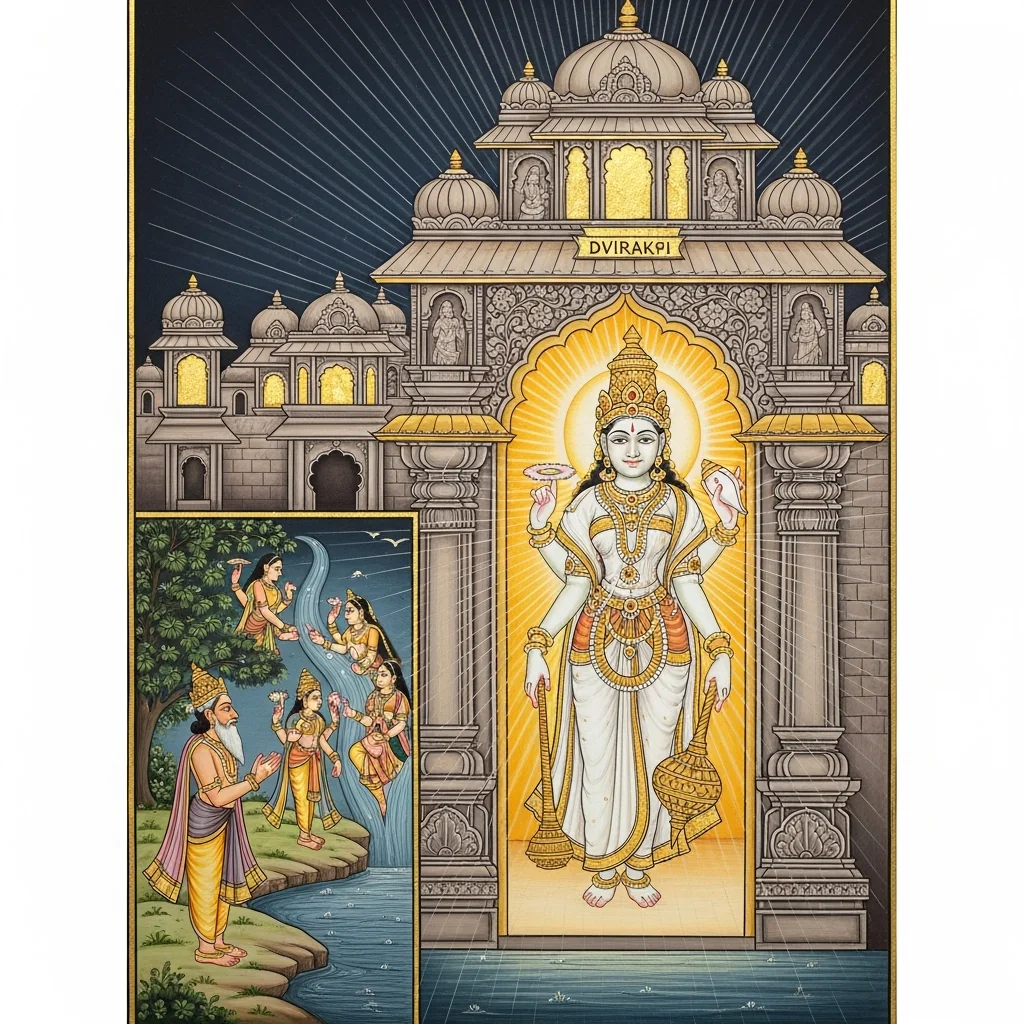
Adhyāya 31 portrays a convergence of devotion and sacred geography centered on Dvārakā. Prahlāda describes the city’s divine radiance that dispels darkness and fear, and its victory-signs in banners and flags. When the assembly beholds the abode of Viṣṇu/Kṛṣṇa, adorned with heavenly emblems, all bow down in prostration, overwhelmed by ecstatic bhakti. A sweeping enumeration follows of renowned tīrthas, rivers, kṣetras, and cities across India, declaring that the sacred landscape of the three worlds is, as it were, gathered in relation to Dvārakā. Nārada explains that such darśana is the fruit of accumulated merit, and that steadfast devotion and the resolve to reach Dvārakā are not won by minor austerities; Dvārakā shines among the “kings” of kṣetra-tīrthas like the sun among the heavenly lights. With music, dance, flags, and hymns the procession moves to the Gomatī, where Nārada proclaims her foremost among rivers, saying her snāna grants liberation and benefits even the ancestors. After bathing, the gathered beings approach Dvārakā’s gate and behold the city personified in regal, radiant form—white-hued, richly adorned, bearing conch, discus, and mace—prompting a collective, reverent praṇāma.
Shlokas
Verse 1
प्रह्लाद उवाच दिव्यस्वप्रभया ध्वांतं भूतानां नाशयन्सदा । जनयन्परमानंदं भक्तानां च भयापहः
Prahlāda said: By His own divine radiance He ever destroys the darkness of beings; He brings forth supreme bliss for devotees, and He is the remover of their fear.
Verse 2
पताकाभिर्ध्वजस्थाभिर्द्वारकाजयवर्द्धनः । दिव्यपुण्यप्रकाशेन राजते गिरिराडिव
Adorned with banners and flagpoles, Dvārakā—ever increasing victory—shines with a divine, merit-bearing radiance, like the king of mountains.
Verse 3
दृष्ट्वाऽलयं तदा विष्णोस्तदायुधविभूषितम् । विहाय पादुके च्छत्रं दण्डवत्पतिता भुवि
Seeing then the abode of Viṣṇu, adorned with His divine weapons, they cast aside their sandals and umbrella and fell upon the ground in full prostration.
Verse 4
भूमिसंलुठनं तेषां तीर्थानामद्भुतं महत् । अभवद्विप्र शार्दूलाः क्षेत्रादीनां च सर्वशः
O tiger-like brāhmaṇas, wondrous and great was the rolling upon the earth performed by those tīrthas—and likewise by all the sacred kṣetras and the rest.
Verse 5
वाराणसी कुरुक्षेत्रं प्रयागो जाह्नवी तथा । यमुना नर्मदा पुण्या पुण्या प्राची सरस्वती
Vārāṇasī, Kurukṣetra, and Prayāga; the Jāhnavī (Gaṅgā) as well; the Yamunā and the holy Narmadā; the sacred Prācī and Sarasvatī—(all were present).
Verse 6
गोदावरी महापुण्या गया तिस्रस्तु मंगलाः । शालिग्रामं महाक्षेत्रं पुण्या चक्रनदी शुभा
The greatly holy Godāvarī; Gayā; the three auspicious (streams/places); Śāligrāma, that great sacred region; and the blessed, holy Cakra-nadī—(all were present).
Verse 7
पयोष्णी तपती कृष्णा कावेर्य्याद्याः सुपुण्यदाः । पुष्करादीनि तीर्थानि सागराः पर्वतोत्तमाः
The Payoṣṇī, the Tapatī, the Kṛṣṇā, and the Kāverī and others—bestowers of supremely holy merit; the tīrthas beginning with Puṣkara; the oceans; and the loftiest mountains—(all) were present.
Verse 8
अयोध्या मथुरा माया अवंत्याद्याश्च मुक्तिदाः । श्रीरंगाख्यमनंतं च प्रभासं च विशेषतः
Ayodhyā, Mathurā, Māyā (Haridvāra), and Avanti and the rest—givers of liberation (mokṣa); and Śrīraṅga called Ananta; and, above all, Prabhāsa—(all) were celebrated and present.
Verse 9
पुरुषोत्तमं महाक्षेत्रमरण्यान्यादयः शुभाः । त्रैलोक्ये वर्त्तमानानि सर्वतीर्थानि सर्वशः
Puruṣottama’s supreme sacred realm—and the auspicious forests and other holy tracts—are such that all tīrthas existing throughout the three worlds are present here, in every way.
Verse 10
दृष्ट्वा कृष्णालयं पुण्यं मुहुर्मुहुः प्रहर्षिताः । जय शब्दैर्नमःशब्दैर्गर्जंतो हरिनामभिः
On beholding Kṛṣṇa’s holy abode, they again and again were filled with joy—thundering cries of “Victory!” and “Homage!”, and loudly chanting the names of Hari.
Verse 11
आनंदाश्रूणि मुंचंतः प्रेम्णा गद्गदया गिरा । स्तुवंति मुनयः सर्वे तीर्थादीनि च सर्वशः
Shedding tears of bliss, and with voices choked by love, all the sages praised the tīrthas and the sacred places—completely and in every way.
Verse 12
अथ संस्तुवतां तेषामन्योन्यं मुदितात्मनाम् । वीक्ष्य वक्त्राणि सर्वेषां महर्षिर्नारदोऽब्रवीत्
Then, as they joyfully praised the holy places among themselves, the great sage Nārada, gazing upon the faces of them all, spoke.
Verse 13
श्रीनारद उवाच । राशयः पुण्य पुंजानां कृता युष्माभिरुत्तमाः । तज्जन्मना सहस्रैस्तु यद्दृष्टं कृष्णमंदिरम्
Śrī Nārada said: “O excellent ones, you have amassed heaps of holy merit; for only after thousands of births does one gain the vision of Kṛṣṇa’s temple.”
Verse 14
दर्शनं कृष्णदेवस्य द्वारकागमने मतिः । दृढभक्तिर्महाविष्णोर्नाल्पस्य तपसः फलम्
The vision of Lord Kṛṣṇa, the resolve to journey to Dvārakā, and firm devotion to Mahāviṣṇu—these are not the fruits of small or trivial austerity.
Verse 16
धन्येयं गौतमी गंगा गौतमोऽयं महातपाः । यत्प्रसादेन सर्वेषां कल्याणं समुपस्थितम्
Blessed indeed is this Gautamī Gaṅgā, and blessed is this great ascetic Gautama; by whose grace the welfare of all has now been brought to fulfillment.
Verse 17
यज्ञाध्ययनदानानां तपोव्रतसमाधिनाम् । संप्राप्तफलमस्माभिर्युष्माभिः सर्वतीर्थकाः
The fruits of sacrifice, sacred study, charity, austerity, vows, and samādhi have been attained—by us, and by you as well, O embodiments of all tīrthas.
Verse 18
यूयं सर्वाणि तीर्थानि क्षेत्राणि चैव कृत्स्नशः । कृष्णाज्ञया सर्वकालं तिष्ठध्वं सर्वदैवतैः
You are all the tīrthas and all the sacred kṣetras in their entirety. By Kṛṣṇa’s command, abide here at all times, together with all the deities.
Verse 19
धन्या वै पूर्वजास्तेषां वंशजाः कृष्णदर्शनं । सोत्सवा द्वारकां यांति पश्यंति च हरिप्रियाम्
Blessed indeed are the ancestors of those descendants who obtain the vision of Kṛṣṇa; for, filled with festivity, they go to Dvārakā and behold Hari’s beloved city.
Verse 20
इयं च शोभते पुण्या द्वारका कृष्ण वल्लभा । प्रपश्यंतु महाभागास्तथा वाराणसीं शुभाम्
This holy Dvārakā shines forth, beloved of Kṛṣṇa. Let the greatly fortunate behold it, and likewise behold auspicious Vārāṇasī as well.
Verse 21
क्षेत्राणि कुरुमुख्यानि पश्यंतु द्वारकां प्रभोः । तादृशी मथुरा काशी मायाऽध्योध्या च राजते
Let the foremost sacred kṣetras—beginning with Kurukṣetra—behold the Lord’s Dvārakā. In the same way, Mathurā, Kāśī, and Māyā (Haridvāra) along with Ayodhyā also shine in glory.
Verse 22
अवन्ती न च कांची च क्षेत्रं च पुरुषोत्तमम् । सूर्योपरागकालेऽपि कुरुक्षेत्रं न राजते
Neither Avantī (Ujjayinī), nor Kāñcī, nor even the sacred kṣetra of Puruṣottama (Puri) shines as it does; Kurukṣetra does not shine so, even at the time of a solar eclipse.
Verse 23
ईदृशं न गयातीर्थं यादृगेतत्प्रकाशते
Even the Gayā-tīrtha is not seen to shine as this sacred kṣetra shines.
Verse 24
ग्रहनक्षत्रताराणां यथा सूर्य्यो विराजते । सक्षेत्रतीर्थराजानां द्वारकार्को विराजते
As the sun outshines the planets, constellations, and stars, so the ‘Sun of Dvārakā’ outshines the kings among sacred kṣetras and tīrthas.
Verse 25
प्रह्लाद उवाच । निशम्य नारदेनोक्तं प्रहृष्टाश्च तथा द्विजाः । क्षेत्राणि सर्वतीर्थानि पुरस्कृत्य च गौतमम्
Prahlāda said: Hearing what Nārada had spoken, the brāhmaṇas too rejoiced. Setting all sacred kṣetras and tīrthas in the forefront and honoring Gautama as their leader, they set forth.
Verse 26
विहाय गौतमीं तत्र प्रययुर्ह्यग्रतोग्रतः । प्रहृष्टा गौतमी तत्र प्रणम्य त्वरिता ययौ
Leaving the Gautamī there, they went onward in eager haste. And the Gautamī too, rejoicing, bowed there and swiftly went after them.
Verse 27
गीतवाद्यैश्च नृत्यैश्च पताकाभिः समंततः । प्रययुः स्तोत्रपाठैश्च सर्वे ते द्वारकाश्रये
With songs and instruments, with dances, and with banners all around, they all proceeded—reciting hymns—toward the refuge of Dvārakā.
Verse 28
स तीर्थान्यग्रतः कृत्वा मध्ये कृत्वा तु शोभनम् । प्रयागं तीर्थराजं च प्रहृष्टं क्षेत्रदर्शनात्
He set the tīrthas in the forefront, and in the midst he placed the splendid Prayāga—the king of tīrthas—rejoicing at the sight of the sacred kṣetra.
Verse 29
ततः पश्चात्सरित्स्नानं चकार ऋषिसत्तमः । जाह्नवी गौतमी रेवा यमुनाप्राक्सरस्वती
After that, the best of sages performed ritual bathing in the rivers—Jāhnavī (Gaṅgā), Gautamī, Revā (Narmadā), Yamunā, and the ancient Sarasvatī.
Verse 30
सरयूर्गंडकी तापी पयोष्णी यमुना तथा । कृष्णा भीमरथी गंगा कावेरी चाघनाशिनी
The Sarayū, the Gaṇḍakī, the Tāpī, the Payoṣṇī, and the Yamunā; the Kṛṣṇā, the Bhīmarathī, the Gaṅgā, and the Kāverī—destroyer of sin—are all spoken of as sacred rivers.
Verse 31
मंदाकिनी महापुण्या पुण्या भोगवती नदी । व्रजंति युगपत्सर्वाः पश्यंत्यो द्वारकां पुरीम्
The Mandākinī—supremely meritorious—and the meritorious river Bhogavatī: all of them proceed together, beholding the city of Dvārakā.
Verse 32
ततस्ते सागराः सप्त स्वैःस्वैस्तीर्थैः समन्विताः । ततः पश्चादरण्यान्याश्रमैः पुण्यैयुतानि च
Then came the seven oceans, each accompanied by its own sacred tīrthas; and thereafter came the forests as well, endowed with holy hermitages (āśramas).
Verse 33
ततस्तु पर्वता रम्या मेर्वाद्यास्तु सुशोभनाः । नृत्यंतो गायमानाश्च स्तवाद्यैस्तु महर्षिभिः
Then the delightful mountains—Meru and the rest, splendid indeed—appeared, as the great seers danced and sang with hymns and praises.
Verse 34
ततश्च ऋषयो देवाः समंताद्धृष्टमानसाः । गायंतो नृत्यमानाश्च गर्जंतो हरिनामभिः
Then sages and gods, joyful on every side, sang and danced, loudly exclaiming the names of Hari.
Verse 35
वादित्रनिनदैरुच्चैर्जयशब्दैः प्रहर्षिताः । प्राप्तास्ते गोमतीतीरं सर्वयज्ञसमन्विताः । ववंदिरे महापुण्याः सर्वे ते हृष्टमानसाः
Delighted by the loud sounds of musical instruments and cries of victory, they reached the bank of the Gomati, endowed with the fruits of all sacrifices; and all those supremely meritorious ones, their minds elated, offered reverent salutations.
Verse 36
श्रीनारद उवाच । हे भागीरथि हे रेवे यमुने शृणु गौतमि । श्रेष्ठा श्रीगोमतीदेवी विख्याता भुवनत्रये
Śrī Nārada said: “O Bhāgīrathī, O Revā, O Yamunā—listen, O Gautamī. The blessed goddess Gomati is the foremost, renowned throughout the three worlds.”
Verse 37
यस्याः सकृज्जलस्नानं स्पर्द्धते ब्रह्मविद्यया । तेन वै गोमती सेयं सर्वतीर्थोत्तमोत्तमा । ब्रह्मज्ञानेन मुच्यंते प्रयागमरणेन वा । स्नानमात्रेण गोमत्यां मुच्यते पूर्वजैः सह
In her, a single bath in the water rivals even the saving power of Brahma-knowledge. Therefore this Gomati is indeed the best of the best among all tīrthas. Liberation is attained through realization of Brahman, or by dying at Prayāga; yet by bathing alone in the Gomati one is freed—together with one’s ancestors.
Verse 38
प्रह्लाद उवाच । निशम्य तानि तीर्थानि माहात्म्यं महदद्भुतम् । गोमत्याः श्रद्धया स्नात्वा उत्सवैरग्रतो ययुः
Prahlāda said: “Having heard of those tīrthas and their great, wondrous glory, they bathed in the Gomati with faith, and then went onward, with festivities leading the procession.”
Verse 39
ततः क्षेत्राणि तीर्थानि सरितः सागरादयः । ददृशुर्द्वारकां रम्यामागता द्वारमण्डपे
Then the sacred regions and tīrthas—rivers, oceans, and the rest—arrived at the gateway pavilion and beheld lovely Dvārakā.
Verse 40
स्थितां सिंहासने दिव्ये मणिकांचनभूषिते । सुन्दरां शुक्ल वर्णां च रुद्रादित्यसमप्रभाम्
They beheld her seated upon a celestial throne adorned with gems and gold—beautiful, radiant, white-hued, and shining with a splendor equal to Rudra and the Sun.
Verse 41
दिव्यवस्त्रां सुगंधाढ्यां रत्नाभरणभूषिताम् । किरीटकुण्डलैर्दिव्यैः शोभितां कंकणादिभिः
Clad in heavenly garments and rich with sacred fragrance, she was adorned with jeweled ornaments—resplendent with a divine crown and earrings, and beautified with bangles and other adornments.
Verse 42
वरदाभयहस्तां च शंखचक्रगदायुधाम् । श्वेतातपत्रशोभाढ्यां चामरव्यजनादिभिः
Her hands bestowed boons and fearlessness, and she bore the weapons of conch, discus, and mace. She was further adorned by the splendor of a white royal parasol, with yak-tail fans and other attendants’ emblems.
Verse 43
संस्तवैः स्तूयमानां च गीतवाद्यादिहर्षिताम् । महासिंहासनस्थां तु दृष्ट्वा द्वारवतीं पुरीम् । प्रणेमुर्युगपत्सर्वे सर्वाणि च सुभक्तितः
Praised with hymns and gladdened by song and sacred instruments, she sat upon the great throne. Beholding the city of Dvāravatī thus, all of them together bowed down in profound devotion, each according to their own rite.