Adhyaya 20
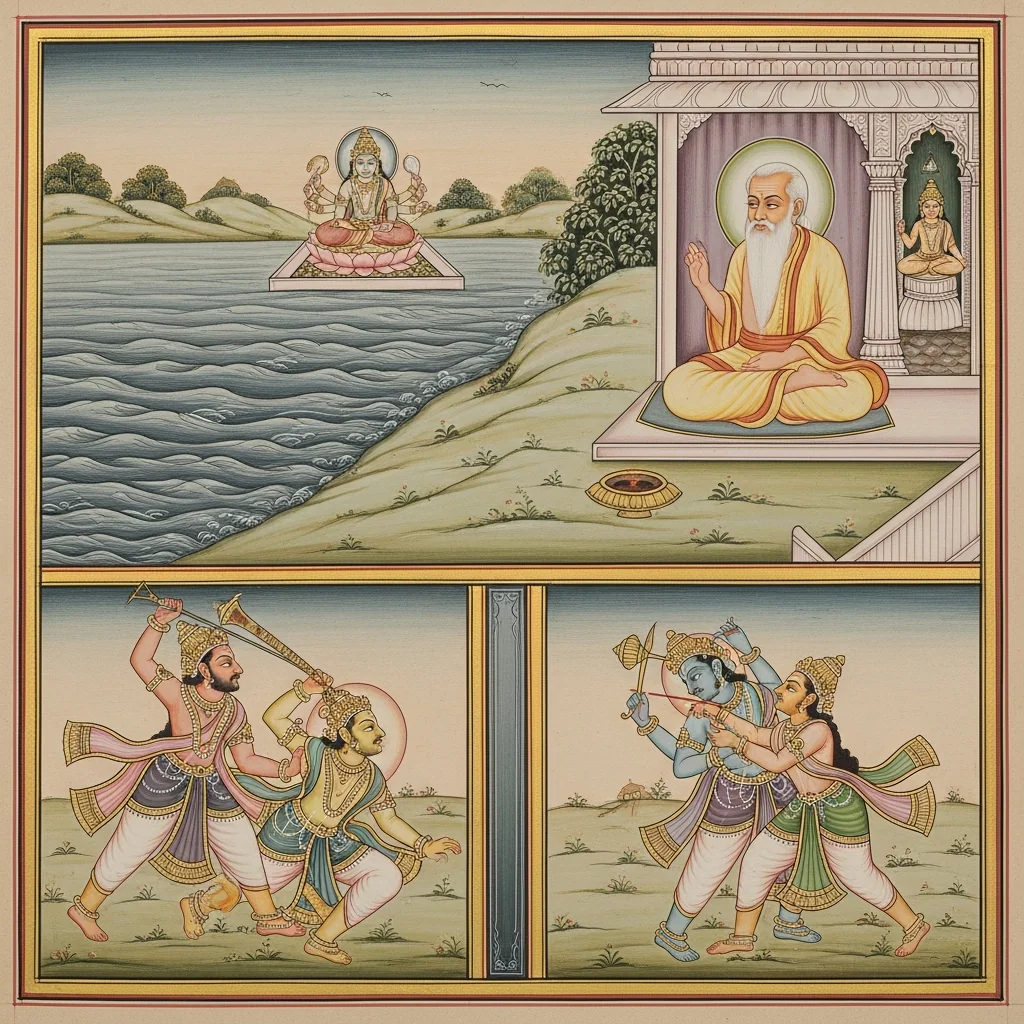
Chapter 20 presents a conflict narrative through Prahlāda’s report. When the sacred brahma-ghoṣa is heard, the demon Durmukha tries to strike the ascetic Durvāsas; Jagannātha (Viṣṇu) intervenes and beheads Durmukha with the cakra. A coalition of daityas—named warriors and armed hosts—then surrounds Viṣṇu and Saṅkarṣaṇa, assailing them with missiles and close combat. The chapter repeatedly teaches a boundary-ethic: an ascetic who has completed the morning rites must not be harmed, and the liberation-bestowing tīrtha at the Gomati–ocean confluence must not be obstructed by sinful acts. Major duels follow: Golaka strikes Durvāsas but is slain by Saṅkarṣaṇa’s muśala; Kūrmapṛṣṭha is pierced and routed. The daitya-king Kuśa raises vast forces and, though advised to avoid a futile war, persists. Viṣṇu decapitates Kuśa, yet Kuśa revives again and again through Śiva’s boon of amaratva (deathlessness), creating a problem of restraint. Durvāsas identifies the cause—Śiva’s satisfaction has made Kuśa invulnerable to death—so Viṣṇu adopts containment: Kuśa’s body is placed into a pit and a liṅga is स्थापित, installed above it. Thus the violent deadlock is transformed into a shrine-centered resolution, integrating Vaiṣṇava protection of the tīrtha with Śaiva boon-theology and the practical restoration of sacred order.
Shlokas
Verse 1
प्रह्लाद उवाच । ब्रह्मघोषध्वनिं श्रुत्वा दानवो दुर्मुखस्तदा । क्रोधसंरक्तनयनो दुर्वाससमथाब्रवीत्
Prahlāda said: Hearing the sound of Vedic chant and sacred acclamation, the Dānava named Durmukha, his eyes reddened with anger, then spoke to the sage Durvāsā.
Verse 2
हन्यमानस्त्वमस्माभिर्यदि मुक्तोसि वै द्विज । कस्मात्पुनः समायातो मरणाय च दुष्टधीः
“If, though being struck by us, you truly escaped, O brāhmaṇa—why have you come back again, with wicked intent, as if to meet death?”
Verse 3
इत्युक्त्वा मुष्टिना हन्तुं प्राद्रवद्दानवाधमः । प्राह प्रधावमानं तं दुर्वासा मुनिसत्तमः
Having spoken thus, that vile Dānava rushed forward to strike with his fist. As he came running, Durvāsā—the foremost of sages—addressed him.
Verse 5
तस्य क्रुद्धो जगन्नाथो दुर्वाससः कृते तदा । चक्रेण क्षुरधारेण शिरश्चिच्छेद लीलया
Then Jagannātha, angered for the sake of Durvāsā, playfully severed his head with the razor-edged discus.
Verse 6
प्रह्लाद उवाच । दुर्मुखं निहतं दृष्ट्वा दानवो दुःसहस्तदा । आक्रोशदुच्चैर्दितिजाञ्छीघ्रमागम्यतामिति
Prahlāda said: Seeing Durmukha slain, the Dānava Duḥsaha cried out loudly to the Diti-born demons, “Come quickly!”
Verse 7
श्रुत्वा दैत्यगणाः सर्वे दुर्मुखं निहतं तदा । दुर्वाससं पुनस्तत्र परित्रातं च विष्णुना
Hearing that Durmukha had been slain, all the hosts of Daityas learned also that Durvāsā there had again been protected by Viṣṇu.
Verse 8
कूर्मपृष्ठो गोलकश्च क्रोधनो वेददूषकः । यज्ञघ्नो यज्ञहंता च धर्मान्तकस्तपस्विहा
Among them were Kūrmapṛṣṭha, Golaka, Krodhana the defiler of the Veda, Yajñaghna and Yajñahantā—slayers of sacrifice—and Dharmāntaka, the killer of ascetics.
Verse 9
एते चान्ये च बहवो विविधायुधपाणयः । क्रोधसंरक्तनयनाः शपन्तो ब्राह्मणं तथा
These and many others, bearing weapons of many kinds, their eyes reddened with rage, likewise hurled curses at the brāhmaṇa.
Verse 10
परिक्षिप्य तदात्रेयं विष्णुं संकर्षणं तथा । तोमरैर्भिन्दिपालैश्च मुशलैश्च भुशुंडिभिः
Then, surrounding the Ātreya sage, and also Viṣṇu and Saṃkarṣaṇa, they assailed them with javelins, bhindipālas, clubs, and bhuśuṇḍis.
Verse 11
अस्त्रैर्नानाविधैश्चापि युयुधुः क्रोधमूर्छिताः । दानवैः संवृतो विष्णुः समन्ताद्घोरदर्शनैः
Maddened by wrath, they fought with weapons of many kinds. Viṣṇu was hemmed in on every side by Dānavas of dreadful appearance.
Verse 12
संकर्षणश्च शुशुभे चंद्रादित्यौ घनैरिव । गृहीत्वा धनुषी दिव्ये शीघ्रं संयोज्य चाशुगान्
Saṃkarṣaṇa shone forth—like the moon and the sun emerging among clouds. Taking up his divine bows, he swiftly set the arrows in readiness.
Verse 13
स्पर्शं मा कुरु पापिष्ठ ब्राह्मणं मां कृताह्निकम् । तं दृष्ट्वा दानवं विष्णुर्ब्राह्मणं हन्तुमुद्यतम्
“Do not touch me, O most sinful one—I am a Brāhmaṇa who has completed his daily rites.” Seeing the Dānava poised to strike the Brāhmaṇa, Viṣṇu took heed, ready to intervene.
Verse 14
दानवान्विद्रुतान्दृष्ट्वा विष्णुना निहतान्परान् । गोलकः कूर्मपृष्ठश्च मानं कृत्वा न्यवर्तताम्
Seeing the Dānavas fleeing and others slain by Viṣṇu, Golaka and Kūrmapṛṣṭha—swallowing their pride and taking measure of the situation—turned back to reengage.
Verse 15
संकर्षणं गोलकश्च ह्याजघान त्रिभिः शरैः । अनन्तं व्यथितं दृष्ट्वा गोलकः क्रोधमूर्छितः
Golaka struck Saṃkarṣaṇa with three arrows. Seeing Ananta pained, Golaka became maddened with wrath.
Verse 16
उत्पत्य तरसा मूर्ध्नि दुर्वाससमताडयत् । स मुष्टिघाताभिहतश्चुक्रोश पतितः क्षितौ
Leaping up with force, he struck Durvāsas on the head. Smitten by a blow of the fist, Durvāsas cried out and fell to the ground.
Verse 17
संकर्षणस्तु पतितं दृष्ट्वा मूर्ध्नि प्रताडितम् । दृष्ट्वा चुकोप भगवांस्तिष्ठतिष्ठेति चाब्रवीत् । संगृह्य मुशलं वीरो जघान समरे रिपुम्
But Saṃkarṣaṇa, seeing him fallen and struck upon the head, blazed with anger. "Stand! Stand!" he cried; and seizing his mace, the hero struck down the enemy in battle.
Verse 18
मुशलेनाहतो मूर्ध्नि गोलको विकलेन्द्रियः । संभिन्नमस्तकश्चैव पपात च ममार च
Struck on the head by the mace, Golaka lost control of his senses; his skull shattered, he fell—and he died.
Verse 19
गोलकं पतितं दृष्ट्वा क्रन्दंतं ब्राह्मणं तथा । कूर्मपृष्ठं च भगवान्विष्णुर्हन्तुं मनो दधे । नाराचेन सुतीक्ष्णेन जघान हृदये रिपुम्
Seeing Golaka fallen, and the Brāhmaṇa still lamenting, the Lord Viṣṇu resolved to slay Kūrmapṛṣṭha as well. With a razor-sharp steel-shafted arrow, he struck the enemy in the heart.
Verse 20
स विष्णुबाणाभिहतस्त्यक्तशस्त्रः पलायितः । तस्मिन्प्रभिन्नेऽतिबले गते वै कूर्मपृष्ठके । अभज्यत बलं सर्वं विद्रुतं च दिशो दश
Wounded by Viṣṇu’s arrow, he cast away his weapons and fled. When the exceedingly mighty Kūrmapṛṣṭha was thus shattered and driven off, the entire host broke apart and scattered, fleeing in all ten directions.
Verse 21
तत्प्रभग्रं बलं सर्वं निहतं गोलकं तथा । द्वारस्थः कथयामास दैत्यराज्ञे कुशाय सः
That entire vanguard force, and Golaka as well, had been destroyed. Then the gatekeeper went and reported it to the Daitya king Kuśa.
Verse 22
गोलकं निहतं श्रुत्वा दैत्यानन्यांश्च दैत्यराट् । योधानाज्ञापयामास सन्नद्धान्स्वबलस्य च
Hearing that Golaka had been slain, the Daitya king commanded the other Dānavas and the warriors of his own army to arm themselves and prepare.
Verse 23
आज्ञां कुशस्य ते लब्ध्वा दैत्याः पंचजनादयः । युद्धायाभिमुखाः सर्वे रथैर्नागैश्च निर्ययुः
Receiving Kuśa’s command, the Daityas—beginning with Pañcajana—set out, all facing toward battle, with chariots and war-elephants.
Verse 24
अनीकं दशसाहस्रं कूर्मपृष्ठस्य निर्ययौ । अयुते द्वे रथानां तु नागानामयुतं तथा
A division of ten thousand marched out from Kūrmapṛṣṭha; and there went forth twenty thousand chariots, and likewise ten thousand elephants.
Verse 25
दशायुतानि चाश्वानामुष्ट्राणां च तथैव च । बकश्च निर्ययौ दैत्यो बहुसैन्यसमन्वितः
There were a hundred thousand horses, and likewise camels. And the Daitya Baka too marched forth, attended by a great host.
Verse 26
तथा दीर्घनखो दैत्यः स्वेनानीकेन संवृतः । मंत्रिपुत्रो महामायो दैत्यराज कुशस्य वै । निर्ययौ विघसो दैत्यः प्रघसश्च महाबलः
So too the Daitya Dīrghanakha marched out, surrounded by his own battalion. The minister’s son Mahāmāya—of Daitya-king Kuśa—also set forth; and the Daitya Vighasa went out, as did the mighty Praghāsa.
Verse 27
ऊर्द्ध्वबाहुर्वक्रशिराः कञ्चुकश्च शिवोलुकैः । ब्रह्मघ्नो यज्ञहा दैत्यो राहुर्बर्बरकस्तथा
Ūrddhvabāhu and Vakraśiras, and Kañcuka along with Śivoluka also marched forth; likewise the Daityas Brahmaghna and Yajñahā, and also Rāhu and Barbaraka.
Verse 28
सुनामा वसुनामा च मंत्रिणौ बुद्धिसत्तमौ । सेनापतिश्चोग्रदंष्टस्तस्य भ्राता महाहनुः
Sunāmā and Vasunāmā—two ministers, foremost in counsel—were there. The commander was Ogradaṃṣṭra, and his brother was Mahāhanu.
Verse 29
एते चान्ये च बहवो दैत्याः क्रोधसमन्विताः । महता रथघोषेण निर्ययुर्युद्धकांक्षिणः
These and many other Daityas, filled with anger, marched out with a great roar of chariots, longing for battle.
Verse 30
स्नात्वा शुक्लांबरधरः शुक्लमालाविभूषितः । कुशः शंभुं महादेवं भवानीपतिमव्ययम् । आर्चयमास भूतेशं परमेण समाधिना
Having bathed, clad in white garments and adorned with a white garland, Kuśa worshipped Śambhu—Mahādeva, the imperishable Lord of Bhavānī—Bhūteśa, with supreme concentration.
Verse 31
पंचामृतेन संस्नाप्य तथा गन्धैर्वि लिप्य च । अर्चयामास दैत्येन्द्रो ह्यनेककुसुमोत्करैः
The lord of the Daityas bathed (the deity) with pañcāmṛta, anointed (the image) with fragrances, and worshipped with heaps of many flowers.
Verse 32
गीतवादित्रशब्दैश्च तथा मंगलवाचकैः । पूजयित्वा महादेवं ब्राह्मणान्स्वस्ति वाच्य च
Amid the sounds of song and instruments, and with auspicious benedictions, he worshipped Mahādeva; and having honoured the brāhmaṇas, he had words of well-being (svasti) pronounced.
Verse 33
भूषयित्वा भूषणैश्च मणिवज्रविभूषणैः । मुकुटेनार्कवर्णेन ज्वलद्भास्कररोचिषा
Having adorned himself with ornaments—decorations of gems and diamonds—he wore a crown of sun-like hue, blazing with the radiance of a shining orb.
Verse 34
भ्राजमानो दैत्यराजो हारेणाऽतीव शोभितः । संनह्य च महाबाहुः सारथिं समुदैक्षत
The daitya-king, shining brilliantly and greatly beautified by a necklace, armed himself; and the mighty-armed one then looked toward his charioteer.
Verse 35
सुनामानं वसुं चैव मंत्रिणौ वाक्यमब्रवीत् । कश्चायमसुरान्हंति किमर्थं ज्ञायतामिति
He spoke to his two ministers, Sunāma and Vasu: “Who is this that is slaying the asuras, and for what reason? Let it be ascertained.”
Verse 36
तस्य तद्वचनं श्रुत्वा रुरुर्वचनमब्रवीत् । गतेह्नि ब्राह्मणः स्नातुं गोमत्याः संगमे किल
Hearing his words, Ruru replied: “On a former day, a brāhmaṇa indeed went to bathe at the confluence of the Gomati.”
Verse 37
आगतः प्रतिषिद्धः सन्दैत्यैस्तत्र मही पते । तेन विष्णुः समानीतः संकर्षणसमन्वितः
He came there, but was forbidden by the daityas, O lord of the earth; therefore Viṣṇu was brought—accompanied by Saṅkarṣaṇa.
Verse 38
सोऽस्मान्हंति महाराज ब्रह्मण्यो जगदीश्वरः । तेन ते बहवो दैत्या हताः केचित्पलायिताः
“He slays us, O great king—Jagadīśvara, the protector of brāhmaṇas. By him many of your daityas have been killed, and some have fled.”
Verse 39
सुनामोवाच । स्नात्वा गच्छतु विप्रोऽसौ वासुदेवसमन्वितः । राजन्वृथा विग्रहेण किं कार्यं कथयस्व नः
Sunāma said: “Let that brāhmaṇa bathe and go, being accompanied by Vāsudeva. O king, what purpose is served by a needless quarrel? Tell us.”
Verse 40
तस्य तद्वचनं श्रुत्वा कुशः क्रोधसमन्वितः । कथं गोलकहंतारं न हनिष्यामि केशवम्
Hearing those words, Kuśa—filled with wrath—said: “How could I not slay Keśava, the slayer of Golaka?”
Verse 41
एतावदुक्त्वा स क्रुद्धो ययौ दैत्यपतिस्तदा । ततो वादित्र शब्दैश्च भेरीशब्दैः समन्वितः
Having said so much, the enraged lord of the Daityas set out. Then the sounds of instruments arose, accompanied by the booming of kettle-drums.
Verse 42
ददर्श तत्र देवेशं सहस्रशिरसं प्रभुम् । तथा विष्णुं चक्रपाणिं दुर्वाससमकल्मषम्
There he beheld the Lord of the gods, the sovereign with a thousand heads; and he also saw Viṣṇu, bearing the discus—stainless and pure, like Durvāsas in the radiance of his ascetic power.
Verse 43
ईश्वरांशं च तं दृष्ट्वा न हन्तव्योऽयमीश्वरः । विष्णुमुद्दिश्य तान्सर्वान्प्रेरयामास दानवान्
Seeing him to be a portion of the Supreme Lord, he thought, “This Lord must not be slain.” Yet, aiming at Viṣṇu, he urged on all those Dānavas.
Verse 44
नागैः पर्वतसंकाशै रथैर्जलदसन्निभैः । अश्वैर्महाजवैश्चैव परिवव्रुः समंततः
With elephants huge as mountains, with chariots like massed rain-clouds, and with swift, powerful horses, they surrounded them on every side.
Verse 45
ततो युद्धं समभवद्देवयोर्दानवैः सह । आच्छादितौ तौ ददृशुर्दैत्यैर्देवगणास्तदा
Then battle arose between the two gods and the Dānavas. At that time the hosts of the gods beheld those two as covered over and concealed, the Daityas surrounding them on every side.
Verse 46
ततो गृहीत्वा मुशलं हलं च बलवान्हली । जघान दैत्यप्रवरान्कालानलयमोपमान्
Then the mighty Hali (Saṃkarṣaṇa), taking up the mace and the plough, struck down the foremost of the Daityas—terrible as the fire of Time at the end of the age.
Verse 47
ते हन्यमाना दैतेया बलेन बलशालिना । सर्वतो विद्रुता भग्नाः कुशमेव ययुस्तदा
Thus struck down by the strength of the mighty one, those Daityas fled in every direction, broken and routed; then they went away to Kuśa.
Verse 48
बकश्च यज्ञकोपश्च ब्रह्मघ्नो वेददूषकः । महामखघ्नो जंभश्च राहुर्वक्रशिरास्तथा
Baka and Yajñakopa, Brahmaghna—the defiler of the Vedas; Mahāmakhaghna and Jambha, Rāhu, as well as Vakraśiras—
Verse 49
एते चान्ये च बहवः प्रवरा दानवोत्तमाः । क्रोधसंरक्तनयना बिभिदुस्ते जनार्द्दनम्
These and many others—foremost among the excellent Dānavas—eyes reddened with wrath, assailed and struck at Janārdana.
Verse 50
ततः क्रोधसमायुक्तौ संकर्षणजनार्दनौ । चक्रलांगलघातेन जघ्नतुर्दानवोत्तमान्
Then, filled with righteous wrath, Saṃkarṣaṇa and Janārdana struck down the foremost Dānavas with blows of the discus and the plough.
Verse 51
चक्रेण च शिरः कायाच्चिच्छेदाशु बकस्य वै । चूर्णयामास मुशली यज्ञहंतारमेव च
With the discus he swiftly severed Baka’s head from his body; and the wielder of the mace crushed the destroyer of sacrifice as well.
Verse 52
राहुं जघान चक्रेण तथान्यान्मुशलेन च । ते हता हन्यमानाश्च भग्ना जग्मुर्दिशो दश
He struck down Rāhu with the discus, and the others with the mace as well. Slain and still being cut down, the shattered foes fled in rout to the ten directions.
Verse 53
कुशः स्वां वाहिनीं दृष्ट्वा विद्रुतां निहतां तथा । क्रोधसंरक्तनयनः प्राह याहीति सारथिम्
Kuśa, seeing his own army scattered and slain, his eyes reddened with rage, ordered his charioteer, “Drive on!”
Verse 54
स तयोरंतिकं गत्वा नाम विश्राव्य चात्मनः । उवाच कस्त्वं दैतेयान्मम हंसि गदाधर
Going near to them and proclaiming his own name, he said: “Who are you, O mace-bearer, that you slay my Daitya warriors?”
Verse 55
श्रीवासुदेव उवाच । यस्माद्विमुक्तिदं पुण्यं गोमत्युदधिसंगमम् । रुद्धं दुरात्मभिः पापैस्तस्मात्ते निहता मया
Śrī Vāsudeva said: “Because this holy confluence of the Gomati and the ocean grants liberation, and because it was being obstructed by sinful, wicked-souled beings, therefore they have been slain by Me.”
Verse 56
कुश उवाच । मां न जानासि चात्रस्थं कथं जीवन्प्रयास्यसि । युध्यस्व त्वं स्थिरो भूत्वा ततस्त्यक्ष्यसि जीवितम्
Kuśa said: “You do not know me, though I stand here—how will you depart alive? Stand firm and fight; then you shall give up your life.”
Verse 57
इत्युक्त्वा पंचविंशत्या ताडयामास केशवम् । अनंतं चाष्टभिर्बाणैर्हत्वाऽत्रेयं निरीक्ष्य तम् । ईश्वरांशं च तं दृष्ट्वा प्राह याहीति मा चिरम्
Having spoken thus, he struck Keśava with twenty-five arrows. And having struck Ananta with eight arrows, he looked upon that Ātreya; then, seeing him to be a portion of the Lord, he said, “Go—do not delay.”
Verse 58
स बाणैर्भिन्नसर्वांगः शार्ङ्गं हि धनुषां वरम् । विकृष्य घातयामास चतुर्भिश्चतुरो हयान्
His limbs pierced by arrows, he drew the Śārṅga—the best of bows—and with four shafts he struck down the four horses.
Verse 59
सारथेस्तु शिरः कायादर्द्धचंद्रेण पत्त्रिणा । चिच्छेद धनुरेकेन ध्वजमेकेन चिच्छिदे
With a half-moon-headed arrow he severed the charioteer’s head from his body; with one arrow he cut the bow, and with another he cut down the banner.
Verse 60
स च्छिन्नधन्वा विरथो हताश्वो हतसारथिः । प्रगृह्य च महाखङ्गमुवाच वचनं तदा
With his bow cut, his chariot disabled, his horses slain, and his charioteer killed, he seized a great sword and then spoke these words.
Verse 61
यदि त्वां पातयिष्यामि कीर्तिर्मे ह्यतुला भवेत् । पातितोऽहं त्वया वीर यास्यामि परमां गतिम्
If I can bring you down, my fame will become incomparable. But if I am brought down by you, O hero, I shall attain the highest state.
Verse 62
तिष्ठतिष्ठ हरे स्थाने शरणं मे सदाशिवः । धावंतमतिसंक्रुद्धं खङ्गहस्तं निरीक्ष्य तम् । चक्रेण शितधारेण शिरश्चिच्छेद लीलया
Stop, stop—O Hari, in your own place! Sadāśiva is my refuge. Seeing him rushing forward in great fury, sword in hand, Hari playfully severed his head with the razor-edged discus.
Verse 63
तं छिन्नशिरसं भूमौ पतितं वीक्ष्य दानवम् । अथोवाह रथेनाजौ दैत्यः खंजनकस्तथा
Seeing that demon fallen upon the ground with his head cut off, the daitya named Khaṃjanaka then carried him away from the battlefield in a chariot.
Verse 64
अपयाते कुशे दैत्ये विष्णुः संकर्षणस्तदा । दुर्वाससा च सहितः संन्यवर्तत हर्षितः
When the daitya Kuśa had departed, Viṣṇu (along with Saṃkarṣaṇa) then turned back, joyful, accompanied by Durvāsas.
Verse 65
शिवालये तु पतितं कुशं निक्षिप्य दानवः । स्नानगन्धार्चनैर्धूपैर्गीतवाद्यैरतोषयत्
Placing Kuśa, fallen and lifeless, within a Śiva-temple, the dānava propitiated Śaṅkara with sacred bathing rites, fragrances, worship, incense, and songs accompanied by instrumental music.
Verse 66
अवाप जीवितं सद्यः प्रसादाच्छंकरस्य च । उत्थितः स तदा दैत्यो ब्रुवञ्छिवशिवेति च
Through the grace of Śaṅkara he regained life at once. Then that daitya rose up, uttering, “Śiva, Śiva!”
Verse 67
तं पुनर्जोवितं दृष्ट्वा दैत्यं दैत्यगणस्तदा । उवाच सुमना वाक्यं वर्द्धस्व सुचिरं विभो
Seeing the daitya alive again, the host of daityas spoke auspicious words: “Prosper for a long time, O mighty one!”
Verse 68
स्नापयित्वा यदि पुनर्ब्राह्मणं विनिवर्त्तते । यथेष्टं गच्छतु तदा किं वृथा विग्रहेण ते
“If, after bathing the brāhmaṇa, he turns back again, then let him go as he wishes—why should you engage in pointless conflict?”
Verse 69
तस्य तद्वचनं श्रुत्वा कुशो वचनमब्रवीत् । गच्छ प्रेषय तौ शीघ्रं विप्रत्राणकरावुभौ
Hearing those words, Kuśa replied: “Go—send those two quickly, the pair who are protectors of the brāhmaṇa.”
Verse 70
स च राज्ञा समादिष्ट सुमना मुनिसत्तमाः । उवाच विष्णुमानम्य नमस्कृत्य हलायुधम्
Then Sumanā, the foremost of sages, commanded by the king, spoke—having bowed to Viṣṇu and having saluted Halāyudha (Balarāma).
Verse 71
कुशेन प्रेषितश्चास्मि समीपे ते जनार्दन । किं तवापकृतं नाथ येन दैत्याञ्जिघांससि
“I have been sent by Kuśa into your presence, O Janārdana. O Lord, what wrong have the Daityas done to you, that you wish to slay them?”
Verse 72
दुर्वाससं स्नापयित्वा गच्छ मुक्तोऽसि मानद । अमरत्वं महादेवात्प्राप्तं विद्धि कुशेन हि
“Having bathed Durvāsas, depart—O giver of honor—you are freed. Know for certain that immortality has been obtained from Mahādeva, indeed through Kuśa.”
Verse 73
श्रीविष्णुरुवाच । मुक्तितीर्थमिदं रुद्धं भवद्भिः पापकर्मभिः । तस्माद्धनिष्ये सर्वांश्च दानवान्नात्र संशयः
Śrī Viṣṇu said: “This Muktitīrtha has been blocked by you, doers of sinful deeds. Therefore I shall slay all the Dānavas—of this there is no doubt.”
Verse 74
दुर्वाससश्च ये दर्भास्तिलाश्चैवाक्षतैः सह । पुनस्तानानयध्वं हि क्षिप्ता ये वरुणालये
“And the darbha-grass, sesame seeds, and unbroken rice that belonged to Durvāsas—bring them back again, for they were thrown into Varuṇa’s abode, the waters.”
Verse 75
सवाहनपरीवाराः सजातिकुलबांधवाः । पुण्यतीर्थमिदं हित्वा प्रविशध्वं धरातले
Together with your mounts and retinues, and with your kinsmen of clan and kind—leave this holy tīrtha and enter into the earth (go down below).
Verse 76
सुमनास्तद्वचः श्रुत्वा क्रोधसंरक्तलोचनः । युध्यध्वमिति तं चोक्त्वा नैतदेवं भविष्यति
Sumanās, hearing those words, his eyes reddened with wrath, said to him, “Fight!”—declaring, “It shall not be so.”
Verse 77
कुशाय कथयामास यदुक्तं शार्ङ्गधन्विना । क्रुद्धस्तद्वचनं श्रुत्वा मंत्रिणा समुदीरितम्
What had been spoken by the wielder of Śārṅga (Viṣṇu) was reported to Kuśa. Hearing those words conveyed by his minister, Kuśa became enraged.
Verse 78
रथमारुह्य वेगेन ययौ योद्धुमरिंदमः । संस्मृत्य मनसा देवं पिनाकिं वृषभध्वजम्
Mounting his chariot, the enemy-subduer sped forth to fight, while inwardly remembering the god who bears the Pināka and whose banner is the bull (Śiva).
Verse 79
ततः प्रववृते युद्धं सुमहल्लोमहर्षणम् । अन्येषां दानवानां च केशवस्य कुशस्य च
Then a very great, hair-raising battle began—between Keśava and Kuśa, and also among the other Dānavas.
Verse 80
यज्ञघ्नो गदया गुर्व्या संकर्षणमताडयत् । संकर्षणहतः शीर्ष्णि मुसलेन पपात ह
Yajñaghna struck Saṃkarṣaṇa with a heavy mace. But when Saṃkarṣaṇa smote him on the head with his plough-weapon, he fell down.
Verse 81
कञ्चुकं च जघानाशु चक्रेण भगवान्हरिः । उल्मुकश्चाथ निहतो ब्रह्मघ्नश्च निपातितः
Bhagavān Hari swiftly slew Kañcuka with his discus. Then Ulmuka was killed, and Brahmaghna too was struck down.
Verse 82
एते चान्ये च बहवो घातिताः केशवेन हि । दानवान्पतितान्दृष्ट्वा कुशः परमकोपितः
Seeing that these and many other Dānavas had indeed been slain by Keśava, Kuśa, beholding the fallen demons, became exceedingly enraged.
Verse 83
जघान युधि संरब्धः परमास्त्रेण केशवम् । भगवान्क्रोधसंयुक्तश्चक्रेण चाहरच्छिरः
In the battle, inflamed with fury, he struck Keśava with a supreme weapon; but the Blessed Lord, joined with wrath, cut off his head with the discus.
Verse 84
तं छिन्नशिरसं भूमौ पातितं वीक्ष्य केशवः । चिच्छेद बाहू पादौ च खङ्गेन तिलशस्तथा
Seeing him fallen on the ground with his head severed, Keśava cut off his arms and legs as well, slicing him with a sword into fragments like sesame-grains.
Verse 85
खंडशो घातितं दृष्ट्वा केशवेन कुशं तदा । संगृह्य ते पुनर्देत्या निन्युः सर्वे शिवालयम्
Then, seeing Kusha slain and hewn into pieces by Keshava, the Danavas gathered up those parts and all of them carried him to Shiva’s abode.
Verse 86
प्रसादाच्छूलिनः सद्यो जीवितं प्राप्य दानवः । उत्थितः सहसा क्रुद्धः क्व विष्णुरिति चाब्रवीत्
By the grace of the Trident-bearer, the Danava at once regained life; rising suddenly in anger, he cried, “Where is Vishnu?”
Verse 87
गदामुद्यम्य संक्रुद्धो योद्धुमागाज्जनार्द्दनम् । तमुद्यतगदं दृष्ट्वा निहतं जीवितं पुनः
Lifting up his mace in fury, he came to fight Janardana. Seeing him with mace raised, the Lord struck him down—yet he regained life again.
Verse 88
दुर्वाससमथोवाच किमिदं न म्रियेत यत् । मयाऽसकृच्छिरश्छिन्नं खंडशस्तिलशः कृतम्
Then Durvasa said: “How is it that he does not die? Again and again I have cut off his head, and made him into pieces, into bits like sesame.”
Verse 89
जीवत्ययं पुनः कस्मात्कारणं कथ यस्व नः । इत्युक्तश्चिंतयामास ध्यानेन ऋषिसत्तमः
“Why does he live again? Tell us the reason.” Thus addressed, the best of sages reflected upon it through meditation.
Verse 90
ज्ञात्वा तत्कारणं सर्वमुवाच मधुसूदनम् । महादेवेन तुष्टेन कुशोऽयममरः कृतः
Having understood the whole cause, he spoke to Madhusūdana: “Mahādeva, being pleased, has made this Kuśa deathless.”
Verse 91
खंडशश्च कृतश्चापि न च प्राणैर्वियुज्यते । ततः स विस्मयाविष्टो हंतव्योऽयं मया कथम्
“Though he has been cut into pieces, he is not severed from the life-breath. Therefore, overcome with wonder, (the Lord thought): ‘How can I slay this one?’”
Verse 92
उपायं च करिष्यामि येनायं न भवे दिति । ततः स जीवितं प्राप्य प्रसादाच्छंकरस्य च । चर्मखङ्गमथादाय तिष्ठतिष्ठेति चाब्रवीत्
“I shall devise a means by which this one will no longer be a terror.” Then, having regained his life by Śaṅkara’s grace, he took up his hide-shield and sword and cried, “Stand! Stand!”
Verse 93
तमायांतं ततो दृष्ट्वा कुशं शिवपरिग्रहम् । जघान गदया गुर्व्या गदाहस्तं तदा कुशम्
Seeing Kuśa advancing—one under Śiva’s protection—he struck Kuśa, who held a mace, with a mighty blow of his mace.
Verse 94
स भिन्नमूर्द्धा न्यपतत्केशवेनाभिताडितः । भूमौ निपतितं वेगात्परिगृह्य कुशं हरिः
With his head split, he fell down, struck hard by Keśava. Then Hari swiftly seized Kuśa as he lay fallen upon the ground.
Verse 95
गर्ते निक्षिप्य तद्देहं पूरयामास वै पुनः । लिंगं संस्थापयामास तस्योपरि जनार्द्दनः
Casting that body into a pit, he filled it in again. Then Janārdana established a Śiva-liṅga directly above it.
Verse 96
स लब्धसंज्ञो दनुजः शिवलिंगमपश्यत । आत्मोपरिस्थितं तच्च तदा चिन्तापरोऽभवत्
When the Danuja regained consciousness, he saw the Śiva-liṅga. Seeing it positioned above himself, he became filled with anxious reflection.