Adhyaya 18
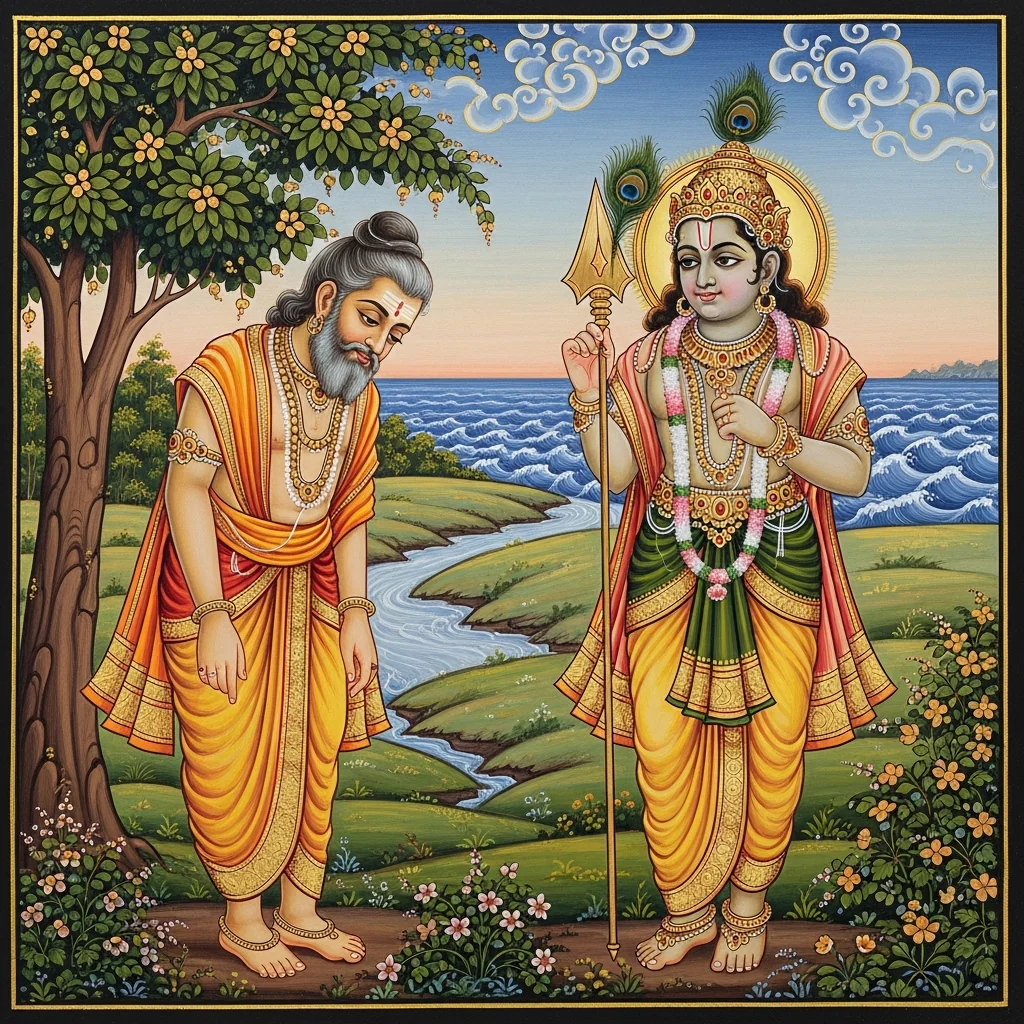
Chapter 18 proceeds as a dialogue. Prahlāda first lists revered objects of devotion—Gaṇanātha, Rukmiṇī and those connected with Rukmī, the sage Durvāsā, Kṛṣṇa, and Balabhadra—and then sets forth a rule of spiritual valuation: many meritorious deeds (great sacrifices with full fees, digging wells and ponds, daily gifts of cows/land/gold, prāṇāyāma with japa and dhyāna, and bathing at major tīrthas such as the Jāhnavī) are repeatedly proclaimed “equal in fruit” to a single act—beholding (darśana) Devīśa Kṛṣṇa. The ṛṣis ask how Trivikrama manifested on earth and how a “Trivikrama form” becomes associated with Kṛṣṇa, and they also request the account of Durvāsā’s connection. Prahlāda narrates the Vāmana–Trivikrama episode: Viṣṇu spans the worlds in three strides, and, pleased by Bali’s devotion, continues to abide as Bali’s gatekeeper. In parallel, Durvāsā, seeking liberation, identifies Cakratīrtha at the Gomati–ocean confluence but is attacked and humiliated by local daityas as he prepares to bathe. Grieving over the fragility of his vow, he takes refuge in Viṣṇu; entering the daitya king’s palace, he beholds Trivikrama stationed at the doorway, laments and petitions for protection, and shows his wounds, stirring divine indignation. He then reports the obstruction of his intended snāna and begs Govinda to enable the bath and complete his observance, vowing to continue righteous wandering thereafter.
Shlokas
Verse 1
श्रीप्रह्लाद उवाच । पूजयेद्गणनाथं तं रुक्मिणं रुक्मभूषितम् । दुर्वाससं च कृष्णं च बलभद्रं च भक्तितः
Śrī Prahlāda said: “With devotion one should worship that Gaṇanātha, and Rukmī adorned with gold; and also Durvāsas, Kṛṣṇa, and Balabhadra.”
Verse 2
यजत्येको महायज्ञैः संपूर्णवरदक्षिणैः । एकः पश्यति देवेशं कृष्णं तुल्यफलौ हि तौ
One man performs great sacrifices with complete and excellent priestly gifts; another beholds Kṛṣṇa, the Lord of the gods—indeed, the fruit of both is equal.
Verse 3
वापीकूपतडागानि करोत्येकः समाहितः । एकः पश्यति देवेशं कृष्णं तुल्यफलौ हि तौ
One person, with focused mind, constructs wells, stepwells, and ponds; another beholds Kṛṣṇa, the Lord of the gods—indeed, the fruit of both is equal.
Verse 4
गोभूतिलहिरण्यादि ददात्येको दिनेदिने । एकः पश्यति देवेशं कृष्णं तुल्यफलौ हि तौ
One person gives cows, land, sesame, gold, and the like day after day; another beholds Kṛṣṇa, the Lord of the gods—indeed, the fruit of both is equal.
Verse 5
प्राणायामादिसंयुक्तो जपध्यानपरायणः । एकः पश्यति देवेशं कृष्णं तुल्यफलौ हि तौ
One person practices disciplines beginning with prāṇāyāma, devoted to japa and meditation; another beholds Kṛṣṇa, Lord of the gods—indeed, the fruit of both is equal.
Verse 6
जाह्नव्यादिषु तीर्थेषु सुस्नात्वैकः समाहितः । एकः पश्यति देवेशं कृष्णं तुल्यफलौ हि तौ
One person, composed in mind, bathes well in sacred fords beginning with the Jāhnavī (Gaṅgā); another beholds Kṛṣṇa, Lord of the gods—indeed, the fruit of both is equal.
Verse 7
त्रिभिर्विक्रमणैर्येन विक्रांतं भुवनत्रयम् । त्रिविक्रमं च तं दृष्ट्वा मुच्यते पातकत्रयात्
He who, by three mighty strides, pervaded the three worlds—by beholding that Lord as Trivikrama, one is released from the threefold burden of sin.
Verse 8
ऋषय ऊचुः । कथं त्रैविक्रमी मृर्त्तिरागतेयं धरातले । कलान्यासाच्च कृष्णत्वं कदेयं प्राप्तवत्यथ
The sages said: “How did this Trivikrama-form manifest upon the surface of the earth? And by what placing or transfer of a divine portion (kalā-nyāsa) did it then attain the state of being Kṛṣṇa?”
Verse 9
दैत्य संशयमस्माकं छेत्तुमर्हस्यशेषतः । दुर्वाससश्च कृष्णस्य संभवः कथ्यतामिति
“Please completely dispel our doubt concerning the Daitya; and let the origin-account of Durvāsā and of Kṛṣṇa be told,” they requested.
Verse 10
प्रह्लाद उवाच । तच्छ्रूयतां द्विजश्रेष्ठा यथा मूर्त्तिस्त्रिविक्रमी । दुर्वाससा समायुक्ता संभूता धरणीतले
Prahlāda said: “O best of brāhmaṇas, hear how the Trivikrama-form, joined with Durvāsā, came to manifest upon the earth.”
Verse 11
पूर्वं कृतयुगस्यांते बलिना च पुरंदरः । निर्जित्य भ्रंशितः स्थानात्तदर्थं मधुसूदनः
Formerly, at the close of the Kṛta Yuga, Indra, the slayer of fortresses, was conquered by Bali and cast down from his station; for that purpose Madhusūdana intervened.
Verse 12
कश्यपाद्वामनो जज्ञे ततोऽभूच्च त्रिविक्रमः । त्रिभिः क्रमैर्मितांल्लोकानाक्रम्य मधुहा हरिः
From Kaśyapa was born Vāmana; and then he became Trivikrama. Hari, the slayer of Madhu, overstepped the measured worlds with three strides.
Verse 13
बलिं चकार भगवान्पातालतलवासि नम् । भक्त्या त्वनन्यया कृष्णो दैत्येन परितोषितः
The Blessed Lord made Bali a dweller in the netherworld, Pātāla. Yet Kṛṣṇa, pleased by the Daitya’s exclusive devotion, was fully satisfied with him.
Verse 14
स्वयं चैवाऽवसत्तत्र भक्त्या क्रीतो हरिस्तदा । अनुग्रहाय भगवान्द्वारपालो बभूव ह
And there indeed Hari himself stayed, as though ‘purchased’ by devotion. For the sake of grace, the Lord became (Bali’s) gatekeeper.
Verse 15
दुर्वासाश्चापि भगवानात्रेयो मुनिसत्तमः । अटंस्तीर्थानि मोक्षार्थं मुक्तिक्षेत्रमचिंतयत्
Durvāsā also—the revered son of Atri, the foremost of sages—wandered among the tīrthas seeking mokṣa, and he contemplated the mukti-kṣetra, the sacred field of deliverance.
Verse 16
एवं चितयमानः स ज्ञानदृष्ट्या महामुनिः । गोमत्या संगमो यत्र चक्रतीर्थेन भो द्विजाः
Thus reflecting, the great sage, with the eye of spiritual knowledge, beheld the place where the Gomati meets in confluence with Cakra-tīrtha—O brāhmaṇas.
Verse 17
तन्मुक्तिक्षेत्रमाज्ञाय गमनाय मतिं दधे । सोतीत्य नगरग्रामानुद्यानानि वनानि च
Knowing that place to be a mukti-kṣetra, a sacred field that grants liberation, he resolved to depart. Passing beyond cities and villages, gardens and forests as well, he journeyed onward.
Verse 18
आनर्त्तविषयं प्राप्य दैत्यभूमिं विवेश ह । निःस्वाध्यायवषट्कारां वेदध्वनिविवर्ज्जिताम्
Reaching the region of Ānarta, he entered a land ruled by daityas—devoid of Vedic study and the vaṣaṭ-utterance, and bereft of the very sound of the Vedas.
Verse 19
कुशेन दैत्यराजेन सेवितां पालितां तथा । बहुम्लेच्छ समाकीर्णामधर्मोपार्जकैर्जनैः
That land was attended and ruled by Kuśa, king of the daityas; it was thronged with many mlecchas and with people who earned their living by unrighteous, adharmic means.
Verse 20
प्रत्यासन्नामिति ज्ञात्वा चक्रतीर्थमगाद्द्विजः । स्नात्वा च संगमे पुण्ये मोक्ष्येऽहं च कृताह्निकः
Knowing it was near, the brāhmaṇa went to Cakratīrtha. He thought, “After bathing at the holy confluence and completing my daily rites, I shall attain mokṣa, release.”
Verse 21
इति कृत्वा स नियमं ययौ शीघ्रं मुनिस्तदा । स्नात्वा शीघ्रं प्रयास्यामि दैत्यभूमिं विहाय च
Thus forming his vow and keeping his observance, the sage hurried on. He resolved, “After bathing, I shall depart at once, leaving this land of the daityas behind.”
Verse 22
इत्येवं चिंतयन्मार्गे शीघ्रमेव जगाम सः । दृष्ट्वा च संगमं पुण्यं गोमत्या सागरस्य च
Thinking thus as he journeyed, he went swiftly. Then he beheld the holy confluence of the Gomatī River and the ocean.
Verse 23
निधाय वाससी तत्र मृदमालभ्य गोमयम् । शिखां च बद्ध्वा करयोः कृत्वा च नियतः कुशान्
There he set aside his garments, took earth and cow-dung for ritual purification, tied up his śikhā, and—disciplined in mind—prepared kuśa-grass in his hands for the rite.
Verse 24
यावत्स्नाति च विप्रोऽसौ दृष्टो दैत्यैर्दुरात्मभिः । ब्रुवंतः कोऽयमित्येवं हन्यतांहन्यतामिति
While that brāhmaṇa was bathing, he was seen by wicked daityas. “Who is this?” they said, crying out, “Kill him—kill him!”
Verse 25
अस्माभिः पालिते देशे कः स्नाति मनुजाधमः । ब्रुवंत इति जघ्नुस्ते जानुभिर्मुष्टिभिस्तथा
“In a land protected by us, what lowest of men dares to bathe?”—so they shouted, and they struck him, battering him with knees and fists.
Verse 26
ब्राह्मणोऽहं न हंतव्यः श्रुत्वा चाऽतीव पीडितः । तं दृष्ट्वा हन्यमानं तु ब्राह्मणं तैर्दुरात्मभिः
“I am a brāhmaṇa; I must not be killed!”—though he cried out so, he was grievously tormented. Seeing that brāhmaṇa being beaten by those wicked ones…
Verse 27
निवारयामास च तान्रुरुर्नाम महासुरः । जगृहुस्तस्य वस्त्राणि कुशांस्ते चिक्षिपुर्जले
Then the great Asura named Ruru restrained them. They seized his garments, and those wicked ones hurled the kuśa-grass into the water.
Verse 28
चकर्षुश्चरणौ गृह्य शपंतो दुष्टचेतसः । पदे गृहीत्वा तमृषिं नीत्वा सीम्नि व्यसर्जयन्
Seizing his feet, those evil-minded men dragged him while hurling curses. Taking that Ṛṣi by the foot, they carried him to the border and cast him away.
Verse 29
तं तदा मूर्छितप्रायं दृष्ट्वोचुः कुपिताश्च ते । अत्रागतो यदि पुनर्हनिष्यामो न संशयः । आनर्त्तविषयांस्तान्वै दृष्ट्वा तत्र जलाशयम्
Seeing him then almost fainting, they spoke in anger: “If he comes here again, we shall kill him—there is no doubt.” Then, having looked upon the region of Ānarta and the reservoir of water there, he moved on.
Verse 30
प्राणसंशयमापन्नस्ततश्चिंतापरोऽभवत् । शप्येहं यदि दैतेयांस्तपसः किं व्ययेन मे
Fallen into peril of life, he became wholly absorbed in anxious thought: “If I were to curse these Daityas, what use would there be in my austerities (tapas) being spent in anger?”
Verse 31
अथवा नियमभ्रष्टस्त्यक्ष्ये चेदं कलेवरम् । मम पक्षं च कः कुर्य्यात्को मे दास्यति जीवितम्
“Or, if I fall away from my vows (vrata), I might abandon this very body. Who would then take my side, and who would grant me life?”
Verse 32
चक्रतीर्थे च कः स्नानं कारयिष्यति मामिह । को वा दैत्यगणानेताञ्छक्तो जेतुं महामृधे । तं विना पुण्डरीकाक्षं भक्तानामभयप्रदम्
“And at Cakratīrtha, who will enable me to bathe here? Or who is capable of conquering these hosts of Daityas in a great battle—without Puṇḍarīkākṣa, the lotus-eyed Lord who grants fearlessness to His devotees?”
Verse 33
ब्रह्मादीनां च नेतारं शरणागतवत्सलम् । चक्रहस्तं विना मेद्य कोन्यः शर्म्मप्रदो भवेत्
“Without the leader even of Brahmā and the other gods—He who is tender to those who seek refuge—without the discus-bearing Lord, who else could grant me peace and well-being?”
Verse 34
इति ध्यात्वा च सुचिरं ज्ञात्वा पातालवासि नम् । आत्रेयो विष्णुशरणं जगाम धरणीतलम्
Having reflected thus for a long time, and recognizing the one dwelling in Pātāla, Ātreya went upon the earth’s surface, taking refuge in Viṣṇu.
Verse 35
उपवासैः कृशो दीनो भूतलं प्रविवेश ह । स दैत्त्यराजभवनं गन्धर्वाप्सरसावृतम्
Emaciated and wretched from fasting, he entered the earthly realm. Then he approached the palace of the Daitya-king, encircled by Gandharvas and Apsarases.
Verse 36
शोभितं सुरमुख्येन विष्णुना प्रभविष्णुना । दुर्वासाः प्रविवेशाथ प्रहृष्टेनांतरात्मना
Adorned by Viṣṇu—the foremost among the gods, radiant in splendor—Durvāsā then entered, his inner self filled with joy.
Verse 37
दुर्वाससमथायांतं दृष्ट्वा दैत्यपतिस्तदा । प्रत्युत्थायार्हयांचक्रे स्वासने संन्यवेशयत्
Seeing Durvāsā approaching, the lord of the Dānavas at once rose to greet him, duly honored him, and seated him upon his own throne.
Verse 38
मधुपर्कं च गां चैव दत्त्वार्घ्यं पार्श्वतः स्थितः । प्रोवाच प्रणतो ब्रह्मन्कथमत्रागतो भवान्
Having offered madhuparka, a cow, and arghya, and standing respectfully at his side, he bowed and said: “O Brahman, how have you come here?”
Verse 39
सुखोपविष्टः स ऋषिस्तत्रापश्यत्त्रिविक्रमम् । दैत्येन्द्रद्वारदेशे तु तिष्ठन्तमकुतोभयम्
Seated at ease, the sage beheld Trivikrama there—standing at the Daitya-king’s gateway, utterly fearless.
Verse 40
तं दृष्ट्वा देवदेवेशं श्रीवत्सांकं चतुर्भुजम् । रुरोद स ऋषिश्रेष्ठस्त्राहित्राहीत्युवाच च
Seeing Him—the Lord of the gods, bearing the Śrīvatsa mark and four-armed—the foremost of sages wept and cried, “Save me, save me!”
Verse 41
संसारभयभीतानां दुःखितानां जनार्दन । शत्रुभिः परिभूतानां शरणं भव केशव
O Janārdana, for those terrified by the fear of saṃsāra, for the afflicted, for those oppressed by enemies—be a refuge, O Keśava.
Verse 42
मम दुःखाभितप्तस्य शत्रुभिः कर्षितस्य च । पराभूतस्य दीनस्य क्षुधया पीडितस्य च
As for me—burned by sorrow, dragged about by enemies, defeated and wretched, and tormented by hunger—
Verse 43
अपूर्णनियमस्याऽथ क्लेशितत्य च दानवैः । ब्रह्मण्यदेव विप्रस्य शरणं भव केशव
And for me—whose observances have been left incomplete, and who has been afflicted by the Dānavas—O Brahmaṇyadeva, be a refuge to this Brahmin, O Keśava.
Verse 44
इत्युक्त्वा दर्शयामास शरीरं दैत्यताडितम् । तद्ब्राह्मणावमानं च दृष्ट्वा चुक्रोध वामनः
Having spoken thus, he showed his body, beaten by the Daityas. Seeing that insult done to a Brahmin, Vāmana grew wrathful.
Verse 45
केनापमानितो ब्रह्मन्नियमः केन खण्डितः । कथयस्व महाभाग धर्मपाले मयि स्थिते
By whom, O Brahmin, has your religious observance been dishonored—by whom has it been broken? Tell me, O fortunate one, while I, the guardian of dharma, stand here.
Verse 46
दुर्वासा उवाच । मुक्तितीर्थमहं ज्ञात्वा ज्ञानेन मधुसूदन । चक्रतीर्थं गतः स्नातुं यात्रायां हर्षसंयुतः
Durvāsā said: “Knowing, by true discernment, the Tīrtha called Muktitīrtha, O Madhusūdana, I went on pilgrimage—joyful in that journey—to bathe at Cakratīrtha.”
Verse 47
अकृतस्नान एवाऽहं दृष्टो दैत्यैर्दुरासदैः । गले गृहीतः कृष्णाहं मुष्टिभिस्ताडितस्तथा
While I had not yet performed my ritual bath, I was seen by those hard-to-conquer Daityas. They seized me by the throat and struck me with their fists as well.
Verse 48
बलाद्गृहीत्वा वासांसि कुशांश्चैवाक्षतैः सह । जले क्षिप्त्वा चरणयोर्गृहीत्वा मां समाकृषन्
Forcibly taking my garments, and also my kuśa grass together with the unbroken grains, they threw them into the water; then, seizing me by the feet, they dragged me away.
Verse 49
सीमांते मां तु प्रक्षिप्य प्रोचुस्ते दानवाधमाः । हनिष्यामो यदि पुनरागंतासि न संशयः
Casting me out at the boundary, those worst of Dānavas said: “We will kill you if you return again—of this there is no doubt.”
Verse 50
स्नातोऽहं चक्रतीर्थे तु करिष्ये भोजनं विभो । तस्मात्स्नापय गोविंद नियमं सफलं कुरु
After bathing at Cakra-tīrtha, O Lord, I shall take my meal. Therefore, O Govinda, grant me this bath and make my vowed observance bear fruit.
Verse 51
तव प्रसादात्स्नात्वाऽहं भुक्त्वा च प्रीतमानसः । प्रतिज्ञां सफलां कृत्वा विचरिष्ये महीमिमाम्
By your grace I shall bathe and then eat with a gladdened heart; having fulfilled my vow, I shall again wander upon this earth.