Adhyaya 12
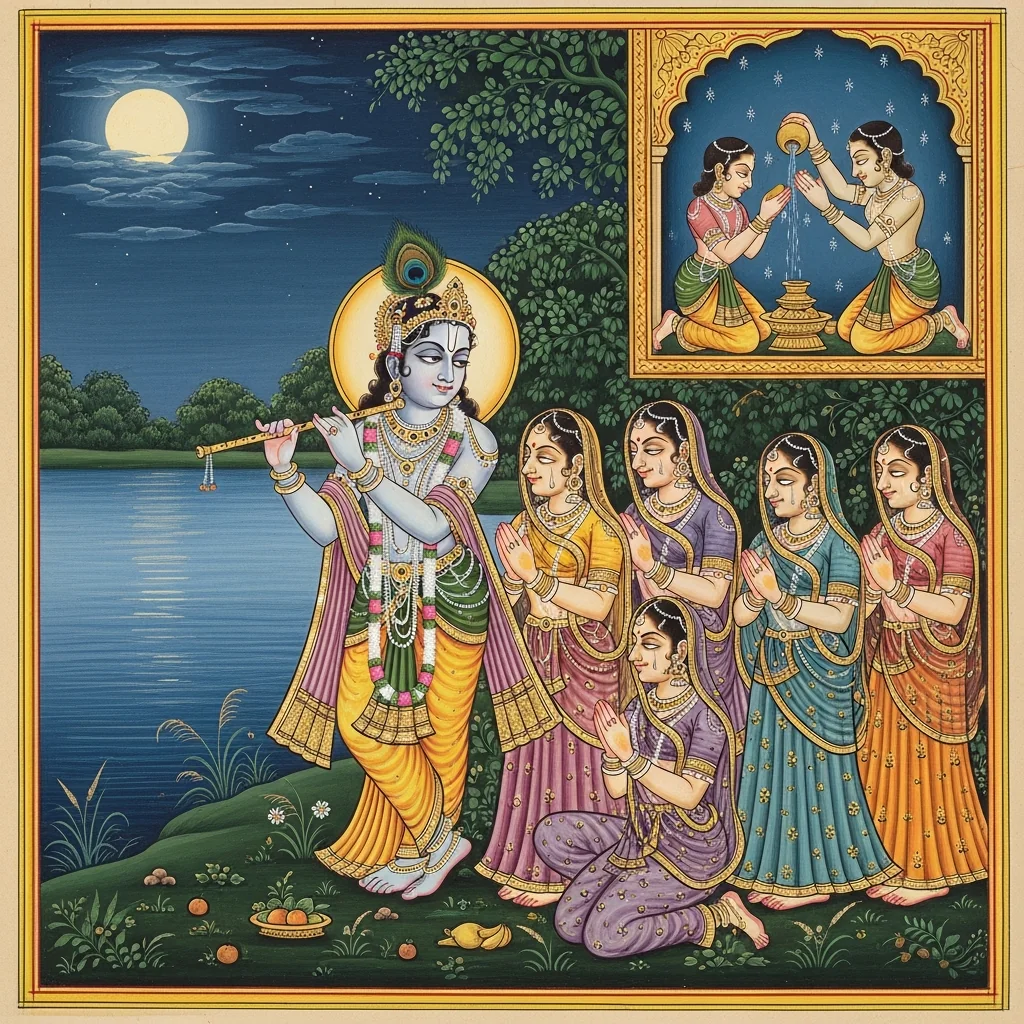
Chapter 12 unfolds as a layered theological discourse: it begins with inquiry into a tīrtha and moves into an emotionally charged narrative, culminating in explicit ritual instruction. Prahlāda introduces the sacred ground of Go-prachāra, where devotional bathing yields merit equal to the fruit of gifting cows (go-dāna). The ṛṣis ask for the origin-story and the exact tīrtha where Jagannātha bathed. Prahlāda recounts events after Kaṁsa’s fall: Kṛṣṇa’s rule is established, Uddhava is sent to Gokula, and he meets Yaśodā and Nanda. The women of Vraja lament intensely and question the messenger; Uddhava consoles them and proclaims the unsurpassed excellence of their bhakti. The scene then shifts to Dvārakā’s environs, especially Maya-sarovara, said to have been created by the daitya Maya. When Kṛṣṇa arrives, the gopīs swoon and accuse him of abandonment; Kṛṣṇa replies with metaphysical teaching on divine immanence and cosmic causality, reframing separation as not absolute. Finally, Kṛṣṇa prescribes the Śrāvaṇa Śukla Dvādaśī snāna and śrāddha: bathe with devotion, offer arghya with kuśa and fruit with a specified arghya-mantra, and perform śrāddha with dakṣiṇā and gifts such as sweetened pāyasa, butter, ghee, an umbrella, a blanket, and deer-skin. The phalāśruti promises merit equal to Gaṅgā-snāna, attainment of Viṣṇuloka, liberation of ancestors across three lines, prosperity, and eventual arrival at Hari’s abode.
Shlokas
Verse 1
प्रह्लाद उवाच । ततो गच्छेद्द्विजश्रेष्ठा गोप्रचारमतः परम् । यत्र स्नात्वा नरो भक्त्या लभेद्गोदानजं फलम्
Prahlāda said: Then, O best of Brahmins, one should go onward to the sacred place called Gopracāra. Bathing there with devotion, a man attains the same merit that arises from gifting cows.
Verse 2
यत्र स्नातो जगन्नाथो नभस्ये दैवतैर्वृतः । कटदानं च तत्प्रोक्तं द्वादश्यां द्विजसत्तमाः
It is the place where Jagannātha bathed in the month of Nabhas, surrounded by the gods. And there, O best of Brahmins, the giving of a waist-cloth (kaṭa-dāna) is prescribed on the twelfth lunar day.
Verse 3
ऋषय ऊचुः । कथं तु तत्र दैत्येन्द्राऽभवद्वै गोप्रचारकम् । तीर्थं कथय तत्त्वेन यत्र स्नातो जनार्द्दनः
The sages said: “But how did that place come to be known as Gopracāraka, O lord of the Daityas? Tell us truly the nature of that tīrtha where Janārdana bathed.”
Verse 4
प्रह्लाद उवाच । हते कंसे भोजराजे कृष्णेनामिततेजसा । उग्रसेने चाभिषिक्ते मधुपुर्य्यां महात्मना
Prahlāda said: “After Kṛṣṇa of immeasurable splendor had slain Kaṃsa, the Bhoja king, and after that great-souled One had installed Ugrasena as king in Mathurā,”
Verse 5
उद्धवं प्रेषयामास गोकुले गोकुलप्रियः । सुहृदां प्रियकामार्थं गोपगोपीजनस्य च
The beloved of Gokula then sent Uddhava to Gokula, to fulfill the longing of his dear friends—the cowherds and the cowherd women.
Verse 6
नमस्कृत्य च गोविदं प्रययौ नंदगोकुलम् । स तत्सदृशवेषेण वस्त्रालंकारभूषणैः
Having bowed to Govinda, he set out for Nanda’s Gokula, adorned with garments and ornaments befitting that place and its people.
Verse 7
तं दृष्ट्वा दिवसस्यांते गोविंदानुचरं प्रियम् । उद्धवं पूजयामास वस्त्रालंकारभूषणैः
Seeing him at day’s end—Uddhava, the beloved attendant of Govinda—they honored him with garments and ornaments.
Verse 8
तं भुक्तवंतं विश्रांतं यशोदा पुत्रवत्सला । आनंदबाष्पपूर्णाक्षी पप्रच्छानामयं हरेः
When he had eaten and rested, Yaśodā—overflowing with motherly affection, her eyes brimming with tears of joy—asked about the welfare of Hari.
Verse 9
कच्चिद्धि स्तः सुखं पुत्रौ रामकृष्णौ यदूत्तमौ । कच्चित्स्मरति गोविंदो वयस्यान्गोपबालकान्
“Are the two sons, Rāma and Kṛṣṇa—the best of the Yadus—truly well and happy? Does Govinda remember his companions, the cowherd boys, his childhood friends?”
Verse 10
कच्चिदेष्यति गोविंदो गोकुलं मधुरेश्वरः । तारयिष्यति पुत्रोऽसौ गोकुलं वृजिनार्णवात्
“Will Govinda—Lord of Mathurā—ever come to Gokula again? Will that Son of ours deliver Gokula from this ocean of sorrow and distress?”
Verse 11
इत्युक्त्वा बाष्पपूर्णाक्षौ यशोदा नंद एव च । दीर्घं रुरुदतुर्दीनौ पुत्रस्नेहवशंगतौ
Having spoken thus, Yaśodā and Nanda—eyes filled with tears—lamented for a long while, wretched and helpless under the sway of love for their son.
Verse 12
उद्धवस्तौ ततो दृष्ट्वा प्राणसंशयमागतौ । मधुरैः कृष्णसंदेशैः स्नेहयुक्तैरजीवयत्
Then Uddhava, seeing them brought to the brink of life itself, revived them with sweet messages from Kṛṣṇa, spoken with tender affection.
Verse 13
नमस्करोति भवतीं भवंतं च सहाग्रजः । अनामयं पृष्टवांश्च तौ च क्षेमेण तिष्ठतः
He, together with his elder brother, offers reverence to you both. He has inquired after your health and asks whether you remain in safety and well-being.
Verse 14
क्षिप्रमेष्यति दाशार्हो रामेण सहितो विभुः । अत्रागत्य जगन्नाथो विधास्यति च वो हितम्
The mighty Dāśārha will come quickly, accompanied by Rāma. Coming here, the Lord of the world will surely accomplish what is good for you.
Verse 15
इत्येवं कृष्णसंदेशैः समाश्वास्योद्धवस्तदा । सुखं सुष्वाप शयने नन्दाद्यैरभिनंदितः
Thus, comforted by Kṛṣṇa’s messages, Uddhava then slept peacefully upon his bed, honored and warmly welcomed by Nanda and the others.
Verse 16
गोप्यस्तदा रथं दृष्ट्वा द्वारे नंदस्य विस्मिताः । कोऽयं कोऽयमिति प्राहुः कृष्णागमनशंकया
Then the gopīs, seeing a chariot at Nanda’s door, were astonished. “Who is this—who is this?” they asked, suspecting that Kṛṣṇa might have come.
Verse 17
गोपालराजस्य गृहे रथेनादित्यवर्चसा । समागतो महाबाहुः कृष्णवेषानुगस्तथा
To the house of the cowherd-king (Nanda) there arrived, on a chariot radiant like the sun, a mighty-armed one, clad in attire resembling Kṛṣṇa’s.
Verse 18
परस्परं समागम्य सर्वास्ता व्रजयोषितः । विविक्ते कृष्णदूतं तं पप्रच्छुः शोककर्षिताः
Gathering together, all the women of Vraja, weighed down by sorrow, questioned that messenger of Kṛṣṇa in a secluded place.
Verse 19
श्रीगोप्य ऊचुः । कस्मात्त्वमिह संप्राप्तः किं ते कार्य्यमिहाद्य वै । दस्युरूपप्रतिच्छन्नो ह्यस्मान्संहर्तुमिच्छसि
The revered gopīs said: “Why have you come here? What business do you have here today? Disguised in the form of a bandit, do you intend to destroy us?”
Verse 20
पूर्वमेव हतं तेन कृष्णेन हृदयादिकम् । पाययित्वाऽधरविषं योषिद्व्रातं पलायितः
By him—Kṛṣṇa—our very hearts and all within were already slain. Having made the multitude of women drink the poison of his lips, he has fled away.
Verse 21
इत्येवमुक्त्वा ता गोप्यो मुमुहुः शोकविह्वलाः । ईक्षंत्यः कृष्णदासं तं निपेतुर्धरणीतले
Having spoken thus, those gopīs—overwhelmed by grief—fainted. Still gazing at that servant of Kṛṣṇa, they fell upon the ground.
Verse 22
उद्धवस्तं जनं दृष्ट्वा कृष्णस्नेहहृताशयम् । आश्वासयामास तदा वाक्यैः श्रोत्रसुखावहैः
Seeing those people whose hearts were carried away by love for Kṛṣṇa, Uddhava then consoled them with words that were pleasing to hear.
Verse 23
उद्धव उवाच । भगवानपि दाशार्हः कन्दर्पशरपीडितः । न भुंक्ते न स्वपिति च चिन्तयन्वस्त्वहर्निशम्
Uddhava said: Even the Blessed Lord, the Dāśārha, tormented by Kāma’s arrows, neither eats nor sleeps, thinking of that matter day and night.
Verse 24
तच्छ्रुत्वा वचनं तस्य ललिता क्रोधमूर्छिता । उद्धवं ताम्रनयना प्रोवाच रुदती तदा
Hearing his words, Lalitā—faint with anger—then spoke to Uddhava, her eyes reddened, weeping.
Verse 25
ललितोवाच । असत्यो भिन्नमर्य्यादः क्रूरः क्रूरजनप्रियः । त्वं मा कृथा नः पुरतः कथां तस्याऽकृतात्मनः
Lalitā said: He is false, one who has broken all propriety—cruel, fond of the cruel. Do not speak before us the story of that ungoverned one.
Verse 26
धिग्धिक्पापसमाचारो धिग्धिग्वै निष्ठुराशयः । हित्वा यः स्त्रीजनं मूढो गतो द्वारवतीं हरिः
Fie upon him—of sinful conduct; fie indeed upon that hard-hearted one! Having abandoned the company of women, that deluded Hari has gone to Dvāravatī.
Verse 27
श्यामलोवाच । किं तस्य मन्दभाग्यस्य अल्पपुण्यस्य दुर्मतेः । मा कुरुध्वं कथाः साध्व्यः कथां कथयताऽपराम्
Śyāmala said: What is the use of speaking of that ill-fated, little-merited, evil-minded one? O virtuous ladies, do not tell his tale—speak of another theme instead.
Verse 28
धन्योवाच । केनायं हि समानीतो दूतो दुष्टजनस्य च । यातु तेन पथा पापः पुनर्नायाति येन च
Dhanyā said: “By whom has this messenger of that wicked man been brought here? Let that sinner depart by the very path he came, so that he never returns again.”
Verse 29
विशाखोवाच । न शीलं न कुलं यस्य नास्ति पापकृतं भयम् । तस्य स्त्रीहनने साध्व्यो ज्ञायते जन्म कर्म च । हीनस्य पुरुषार्थेन तेन संगो निरर्थकः
Viśākhā said: “He who has neither good conduct nor noble lineage, and who feels no fear for sins he has done—by his ‘slaying’ of women (destroying their very lives through separation), O virtuous ones, his birth and deeds are made known. With such a fallen man, bent only on his own ends, association is fruitless.”
Verse 30
राधोवाच । भूतानां घातने यस्य नास्ति पापकृतं भयम् । तस्य स्त्रीहनने साध्व्यः शंका कापि न विद्यते
Rādhā said: “He who feels no fear of sin even after slaying living beings—of such a man, O virtuous women, there can be no doubt at all that he would also kill women.”
Verse 31
शैब्योवाच । सत्यं ब्रूहि महाभाग किं करोति यदूत्तमः । संगतो नागरस्त्रीभिरस्माकं किं कथां स्मरेत्
Śaibyā said: “Speak the truth, O noble one—what is that best of the Yadus doing? Surrounded by the city-women, why would he remember any talk of us?”
Verse 32
पद्मोवाच । कदोद्धव महाभाग नागरीजनवल्लभः । समेष्यतीह दाशार्हः पद्मपत्रायतेक्षणः
Padmā said: “O Uddhava, noble one—when will the Dāśārha, beloved of the city folk, lotus-petaled-eyed, come here?”
Verse 33
भद्रोवाच । हा कृष्ण हा गोपवर हा गोपीजनवल्लभ । समुद्धर महाबाहो गोपीः संसारसागरात्
Bhadrā said: “O Kṛṣṇa! O best among cowherds! O beloved of the gopīs! O mighty-armed one—lift the gopīs out of the ocean of saṃsāra.”
Verse 34
प्रह्लाद उवाच । इति ता विविधैर्वाक्यैर्विलपंत्यो व्रजस्त्रियः । रुरुदुः सुस्वरं देव्यः स्मरंत्यः कृष्ण चेष्टितम्
Prahlāda said: “Thus, lamenting with many kinds of words, the women of Vraja—those radiant ladies—wept aloud in sweet voices, remembering Kṛṣṇa’s deeds.”
Verse 35
तासां तद्रुदितं श्रुत्वा भक्तिस्नेहसमन्वितः । विस्मयं परमं गत्वा साधुसाध्विति चाब्रवीत्
Hearing their weeping, he—filled with devotion and affection—was overcome with great wonder and exclaimed, “Excellent! Excellent!”
Verse 36
उद्धव उवाच । यं न ब्रह्मा न च हरो न देवा न महर्षयः । स्वभावमनुगच्छंति सर्वा धन्या व्रजस्त्रियः
Uddhava said: “Whose true nature neither Brahmā, nor Hara (Śiva), nor the gods, nor the great seers can fully follow—yet all the women of Vraja are blessed, for they naturally move with him.”
Verse 37
सर्वासां सफलं जन्म जीवितं यौवनं धनम् । यासां भवेद्भगवति भक्तिरव्यभिचारिणी
For all those in whom unwavering devotion to Bhagavān arises, their birth, their life, their youth, and their wealth become truly fruitful.
Verse 39
प्रह्लाद उवाच । तासां तद्भाषितं श्रुत्वा तथा विलपितं बहु । बाढमित्येव ता ऊच उद्धवः स्नेहविह्वलाः
Prahlāda said: “Hearing their words and their many lamentations, Uddhava—overwhelmed with affection—said to them only, ‘So be it, indeed.’”
Verse 40
उद्धवेन समं सर्वास्ततस्ता व्रजयोषितः । अनुजग्मुर्मुदा युक्ताः कृष्णदर्शनलालसाः
Then all those women of Vraja went along with Uddhava, filled with joy, eager for the sight of Kṛṣṇa.
Verse 41
गायन्त्यः प्रियगीतानि तद्बालचरितानि च । जग्मुः सहैव शनकैरुद्धवेन व्रजांगनाः
Singing their beloved songs and also the tales of his childhood, the women of Vraja went along slowly together with Uddhava.
Verse 42
यदुपुर्य्यां ततो दृष्ट्वा उद्यानविपिनावलीः । अद्य देवं प्रपश्यामः कृष्णाख्यं नंदनंदनम्
Then, seeing the rows of gardens and groves in the city of the Yadus, they said: “Today we shall behold the Lord—Kṛṣṇa, the son of Nanda.”
Verse 43
द्वारवत्यां तु गमनाद्ध्यानाल्लक्ष्मीपतेस्तदा । अशेषकल्मषान्मुक्ता विध्वस्ताखिलबन्धनाः
But by going to Dvāravatī and by meditating on Lakṣmī’s Lord, they were then freed from all sin, and all their bonds were utterly destroyed.
Verse 44
संप्राप्तास्तास्ततः सर्वास्तीरे मयसरस्य च । प्रणिपत्योद्धवः प्राह गोपिकाः कृष्णदेवताः
Then all of them arrived at the bank of the Mayasaras lake. Bowing down, Uddhava spoke to the gopīs, whose very deity was Kṛṣṇa.
Verse 45
स्थीयतां मातरश्चात्रात्रैवेष्यति महाभुजः । कृष्णः कमलपत्राक्षो विधास्यति च वो हितम्
“Stay here, mothers; right here the mighty-armed Kṛṣṇa, lotus-petaled-eyed, will come. He will surely bring about your welfare.”
Verse 46
गोप्य ऊचुः । कस्योद्धव इदं चात्र सरः सारसशोभितम् । संपूर्णं पंकजैश्चित्रैः कल्हारकुमुदोत्पलैः
The gopīs said: “O Uddhava, whose lake is this here—adorned with swans, and filled with wondrous lotuses, blue lotuses, white lotuses, and water-lilies?”
Verse 47
उद्धव उवाच । मयो नाम महादैत्यो मायावी लोकविश्रुतः । कृतं तेन सरः शुभ्रं तस्य नाम्ना च विश्रुतम्
Uddhava said: “There was a great Dānava named Maya, a famed master of illusion. This splendid lake was made by him, and it is renowned by his very name.”
Verse 48
श्रीगोप्य ऊचुः । शीघ्रमानय गोविंदं साधु दर्शय चाच्युतम् । नयनानंदजननं तापत्रयविनाशनम्
The revered gopīs said: “Quickly bring Govinda; kindly show us Acyuta—he who gives joy to the eyes and destroys the threefold suffering.”
Verse 49
तच्छ्रुत्वा वचनं तासां गोपिकानां तदोद्धवः । दूतैः समानयामास श्रीकृष्णं शीघ्रयायिभिः
Hearing the words of those gopīs, Uddhava then had Śrī Kṛṣṇa brought at once by swift-going messengers.
Verse 50
आयांतं शीघ्रयानेन दृष्ट्वा देवकिनंदनम् । भ्राजमानं सुवपुषा वनमालाविभूषितम्
Seeing Devakī’s son approaching in a swift conveyance—radiant with a splendid form and adorned with a garland of forest flowers—they beheld him in glory.
Verse 51
ज्वलत्किरीटमुकुटं स्फुरन्मकरकुण्डलम् । श्रीवत्सांकं महाबाहुं पीतकौशेयवाससम्
They beheld the Lord—his crown blazing with splendor, his makara-shaped earrings flashing; marked with the Śrīvatsa sign, broad-armed, and clad in yellow silk garments.
Verse 52
आतपत्रैर्वृतं मूर्ध्नि संवृतं वृष्णिपुंगवैः । संस्तुतं बंदिमुख्यैश्च गीतवादित्रनिस्वनैः
Over his head were held royal parasols; he was surrounded by the foremost of the Vṛṣṇis, and praised by chief bards amid the resonant sounds of song and instruments.
Verse 53
पौरजानपदैर्लोकैर्वैष्णवैः सर्वतो वृतम् । पश्यन्तं हंसमिथुनैः सरः सारसशोभितम्
He was encircled on all sides by townspeople and villagers—devoted Vaiṣṇavas—while he gazed upon a lake adorned with pairs of swans and beautified by cranes.
Verse 54
तं दृष्ट्वाऽच्युतमायांतं लोककांतं मनोहरम् । प्रियं प्रियाश्चिराद्दृष्ट्वा मुमुहुस्ता व्रजांगनाः
Seeing Acyuta approaching—beloved of the world and enchanting—those women of Vraja, after a long time beholding their beloved, fainted away.
Verse 55
चिराय संज्ञां संप्राप्य विलेपुश्च सुदुःखिताः । हा नाथ कांत हा कृष्ण हा व्रजेश मनोहर
After a long while, regaining consciousness, they wept in deep sorrow: “Alas, our Lord, our beloved! Alas, Kṛṣṇa! Alas, O lord of Vraja, O enchanting one!”
Verse 56
संवर्धितोऽसि यैर्बाल्ये क्रीडितो वत्सपालकैः । तेऽपि त्वया परित्यक्ताः कथं दुष्टोऽसि निर्घृणः
“Those by whom you were nurtured in childhood, and with whom you played among the calf-herd boys—have even they been abandoned by you? How can you be so cruel and heartless?”
Verse 57
न ते धर्मो न सौहार्द्दं न सत्यं सख्यमेव च । पितृमातृपरित्यागी कथं यास्यसि सद्गतिम्
“You have neither dharma, nor affection, nor truth, nor even friendship. Abandoning father and mother—how will you ever attain a good destiny?”
Verse 58
स्वामिन्भक्तपरित्यागः सर्वशास्त्रेषु गर्हितः । त्यजताऽस्मान्वने वीर धर्मो नावेक्षितस्त्वया
“O master, abandoning devotees is condemned in all the śāstras. O hero—when you left us in the forest, you did not uphold dharma at all.”
Verse 59
प्रह्लाद उवाच । श्रुत्वा तासां विलपितं गोपीनां नंद नंदन । अनन्यशरणाः सर्वा भावज्ञो भगवान्विभुः । सांत्वयामास वचनैर्व्रजेशस्ता व्रजांगनाः
Prahlāda said: Hearing the lament of those gopīs, O Nanda’s son, the all-powerful Lord—knower of every feeling—seeing that they had no refuge but Him, consoled those women of Vraja with gentle words.
Verse 60
अध्यात्मशिक्षया गोपीः प्रभुस्ता अन्वशिक्षयत्
Then the Lord instructed those gopīs through the teaching of adhyātma, the wisdom of the inner Self.
Verse 61
श्रीभगवानुवाच । भवतीनां वियोगो मे न हि सर्वात्मना क्वचित् । वसामि हृदये शश्वद्भूतानामविशेषतः
The Blessed Lord said: “There is never, at any time, a complete separation between you and Me. I ever dwell in the heart of all beings, without distinction.”
Verse 62
अहं सर्वस्य प्रभवो मत्तो देवाः सवासवाः । आदित्या वसवो रुद्राः साध्या विश्वे मरुद्गणाः
“I am the source of all; from Me arise the gods, including Indra with the Vasus—likewise the Ādityas, the Rudras, the Sādhyas, the Viśvedevas, and the hosts of Maruts.”
Verse 63
ब्रह्मा रुद्रश्च विष्णुश्च सनकाद्या महर्षयः । इंद्रियाणि मनो बुद्धिस्तथा सत्त्वं रजस्तमः
“Brahmā, Rudra, and Viṣṇu; the great sages beginning with Sanaka; the senses, the mind, and the intellect; and also the three guṇas—sattva, rajas, and tamas—(all are rooted in Me).”}]}
Verse 64
कामः क्रोधश्च लोभश्च मोहोऽहंकार एव च । एतत्सर्वमशेषेण मत्तो गोप्यः प्रवर्त्तते
O Gopīs, desire, anger, greed, delusion, and ego as well—all of this, without remainder, proceeds from Me, the cosmic ground of manifestation.
Verse 65
एतज्ज्ञात्वा महाभागा मा स्म कृध्वं मनः शुचि । सर्वभूतेषु मां नित्यं भावयध्वमकल्मषाः
Knowing this, O greatly fortunate ones, do not let your pure minds fall into sorrow. Ever contemplate Me in all beings, remaining free from taint.
Verse 66
प्रह्लाद उवाच । ताः कृष्णवचनं श्रुत्वा गोप्यो विध्वस्तबन्धनाः । विमुक्तसंशयक्लेशा दर्शनानन्दसंप्लुताः । ऊचुश्च गोपवध्वस्ताः कृष्णं निर्मलमानसाः
Prahlāda said: Hearing Kṛṣṇa’s words, the Gopīs—whose bonds were shattered—became free from doubt and distress, flooded with the bliss of His vision. With purified minds, those cowherd women then spoke to Kṛṣṇa.
Verse 67
गोप्य ऊचुः । अद्य नः सफलं जन्म अद्य नः सफला दृशः । यत्त्वां पश्याम गोविन्द नागरीजनवल्लभम्
The Gopīs said: Today our birth has borne fruit; today our eyes have borne fruit—since we behold You, Govinda, beloved of the people of the city (Dvārakā).
Verse 68
पुण्यहीना न पश्यंति कृष्णाख्यं पुरुषं परम् । वाक्यैर्हेत्वर्थसंयुक्तैर्यदि संबोधिता वयम् । तथापि माया हृदयान्नापैति मधुसूदन
Those bereft of merit do not behold the Supreme Person called Kṛṣṇa. Even if we are instructed with words joined with reason and meaning, still—O Madhusūdana—māyā does not depart from the heart.
Verse 69
श्रीकृष्ण उवाच । दर्शनात्स्पर्शनाच्चास्य विमुक्ताऽशेषबन्धनाः । स्नात्वा च सकलान्कामानवाप्स्यथ व्रजांगनाः
Śrī Kṛṣṇa said: “By beholding and by touching this sacred water, you shall be freed from every bond. And having bathed, O women of Vraja, you shall attain the fulfillment of all worthy desires.”
Verse 70
गोप्य ऊचुः । अद्भुतो हि प्रभावस्ते सरसोऽस्य उदाहृतः । विधिं ब्रूहि जगन्नाथ विस्तराद्वृष्णिनन्दन
The Gopīs said: “Truly wondrous is the greatness of this sacred lake, as You have declared. O Lord of the world, O delight of the Vṛṣṇis—tell us in detail the proper procedure to observe.”
Verse 71
श्रीकृष्ण उवाच । भवतीनां मया सार्द्धं सञ्जातमत्र दर्शनम् । तस्मान्मया सदा ह्यत्र स्नातव्यं नियमेन हि
Śrī Kṛṣṇa said: “Here I have been granted an auspicious meeting and darśana together with you. Therefore I must always bathe at this very place, observing the prescribed rule and restraint.”
Verse 72
यः स्नात्वा परया भक्त्या पितॄन्सन्तर्पयिष्यति । श्रावणस्य सिते पक्षे द्वादश्यां नियतः शुचिः
Whoever, after bathing with supreme devotion, satisfies the Pitṛs with offerings—on the bright fortnight of Śrāvaṇa, on the twelfth lunar day—being restrained and pure;
Verse 73
दत्त्वा दानं स्वशक्त्या च मामुद्दिश्य तथा पितॄन् । लभते वैष्णवं लोकं पितृभिः परिवारितः
Having given charity according to one’s capacity—dedicating it to Me and also to the Pitṛs—one attains the Vaiṣṇava world, surrounded and accompanied by one’s ancestors.
Verse 74
मय तीर्थं समासाद्य कृत्वा च करयोः कुशान् । फलमेकं गृहीत्वा तु मन्त्रेणार्घ्यं प्रदापयेत्
Having reached Mayatīrtha, placing kuśa grass in both hands and taking a single fruit, one should offer arghya—a reverential water-offering—with the prescribed mantra.
Verse 75
गृहान्धकूपे पतितं माया पाशशतैर्वृतम् । मामुद्धर महीनाथ गृहाणार्घ्यं नमोऽस्तु ते
“Fallen into the blind well of worldly life, and bound by hundreds of nooses of māyā—lift me up, O Lord of the earth. Accept this arghya; obeisance to You.”
Verse 76
अर्घ्यमन्त्रः । स्नात्वा यः परया भक्त्या पितॄन्संतर्प्य भावतः । कुर्याच्छ्राद्धं च परया पितृभक्त्या समन्वितः
Arghya-mantra: “He who, after bathing with supreme devotion, truly satisfies the Pitṛs (ancestral spirits) with heartfelt offerings, and then performs śrāddha endowed with deep devotion to the ancestors—”
Verse 77
दक्षिणां च ततो दद्याद्रजतं रुक्ममेव च । विशेषतः प्रदातव्यं पायसं च सशर्करम्
Then one should give dakṣiṇā (priestly honorarium)—silver and also gold; and, in particular, one should offer pāyasa, sweet rice-pudding, together with sugar.
Verse 78
नवनीतं घृतं छत्रं कंबलाजिनमेव च । भवतीभिः समं यस्मात्संजातं मम दर्शनम् । आगंतव्यं मया तस्मात्सदा ह्यस्मिञ्जलाशये
Butter (navanīta), ghee (ghṛta), an umbrella, and also blankets and deer-skin—these are to be offered. Since here my auspicious darśana occurred together with you, therefore I must always come to this very lake.
Verse 79
योऽत्र स्नानं प्रकुरुते मयस्य सरसि प्रियाः । गंगास्नानफलं तस्य विष्णुलोकस्तथाऽक्षयः
Beloved ones, whoever bathes here in the lake of Māyā gains the merit of bathing in the Gaṅgā; and he also attains the imperishable realm of Viṣṇu.
Verse 80
मुक्तिं प्रयांति तस्यैव पितरस्त्रिकुलोद्भवाः । पुत्रपौत्रसमायुक्तो धनधान्यसमन्वितः । यावज्जीवं सुखं भुक्त्वा चान्ते हरिपुरं व्रजेत्
For him alone, the Pitṛs arising from three lineages attain liberation. Endowed with sons and grandsons, and furnished with wealth and grain, he enjoys happiness throughout life—and at the end he goes to Hari’s city, the abode of Viṣṇu.