Adhyaya 50
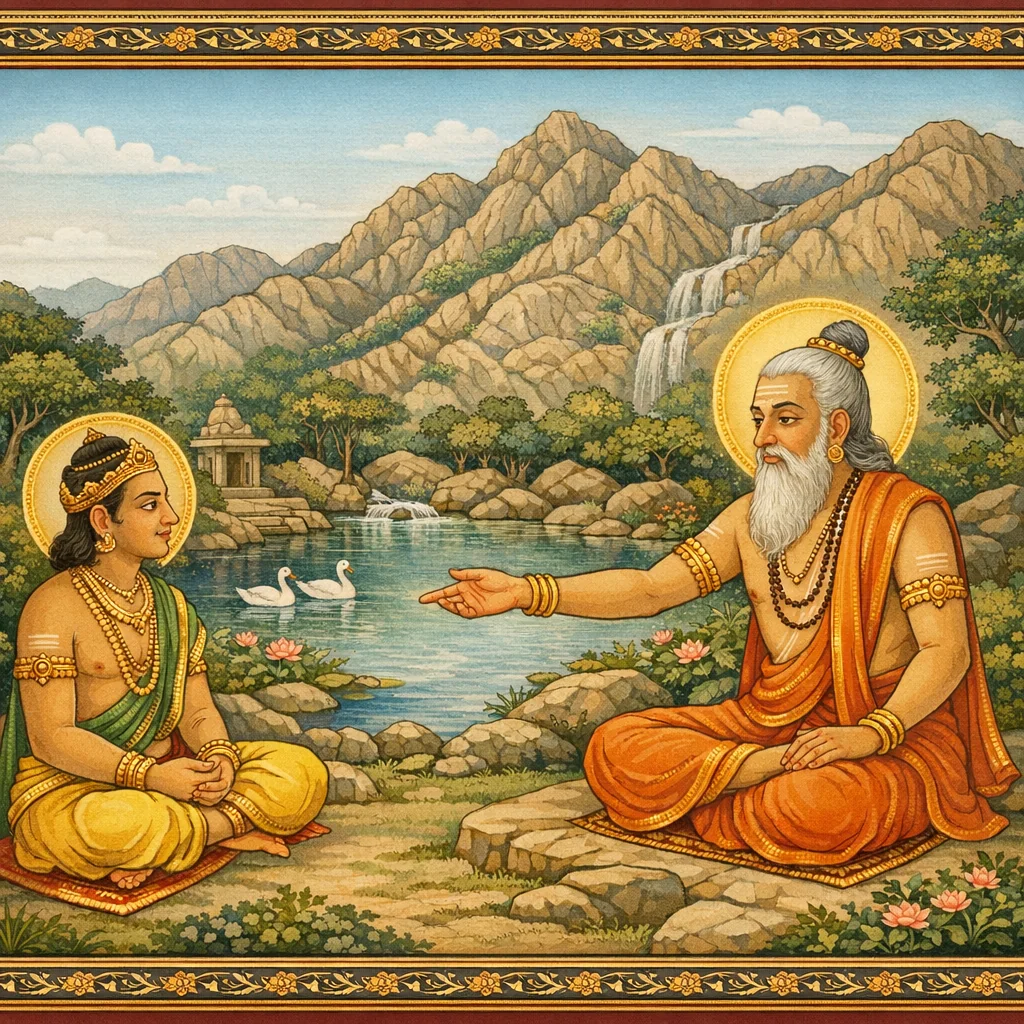
This adhyāya records Pulastya’s theological instruction to a king on Kotitīrtha, praised as a supreme purifier that destroys all sins (sarva-pātaka-nāśana). It explains why tīrtha power on the scale of a “koṭi” (crore) becomes concentrated in select sites: vast numbers of tīrthas are cited, and a “koṭi portion” is said to have taken residence on Mount Arbuda, with related concentrations at Puṣkara, Kurukṣetra, and a “half-koṭi” at Vārāṇasī, all lauded and guarded by the gods. A key theme is ritual vulnerability in Kali-yuga: as people become mleccha-bhūta and contact causes tīrtha disturbance (tīrtha-viplava), the tīrthas are described as swiftly remaining within these protected stations. The chapter then gives practical guidance—bathe with full effort, especially on the kṛṣṇa-pakṣa trayodaśī in the month of Bhādrapada (Nabhāsyā). It concludes with a phala assurance: all bathing, japa, and homa performed there become koṭi-guṇa, their merit multiplied a crore-fold by that grace.
Shlokas
Verse 1
पुलस्त्य उवाच । कोटितीर्थं ततो गच्छेत्सर्वपातकनाशनम् । तीर्थानां यत्र संजाता कोटिः पार्थिव हेलया
Pulastya said: Then one should go to Koṭitīrtha, the destroyer of all sins—O King—where, by a mere casual act of a ruler, a ‘koṭi’ (crore) of tīrthas came to be manifested.
Verse 2
यदा स्यात्कलिकालस्तु रौद्रो राजन्महीतले । म्लेच्छभूता जनाः सर्वे तत्स्पर्शात्तीर्थविप्लवः
When the dreadful Age of Kali rises upon the earth, O King, and all people become mleccha-like, then by their contact the sacred tīrthas are thrown into turmoil and decline.
Verse 3
तिस्रः कोट्योऽर्धकोटिश्च तीर्थानां भूमिवासिनाम् । तेषां कोटिस्ततोऽवात्सीत्पर्वतेऽर्बुदसंज्ञके
Of the earth-dwelling tīrthas there were three crores and a half-crore; from among them, a full crore came to dwell upon the mountain called Arbuda.
Verse 4
पुष्करे च तथा कोटिः कुरुक्षेत्रे च पार्थिव । वाराणस्यामर्धकोटिः स्तुता देवैः सवासवैः । राजन्नेतानि रक्षंति सर्वे देवाः सवासवाः
In Puṣkara too there is a crore (of tīrthas), and in Kurukṣetra as well, O King; and in Vārāṇasī there is a half-crore, praised by the gods together with Indra. O King, all the gods with Indra protect these sacred places.
Verse 5
यदा यदा भयार्त्तानि म्लेच्छस्पर्शात्समंततः । स्थानेष्वेतेषु तिष्ठंति तीर्थान्युक्तेषु सत्वरम्
Whenever the tīrthas are afflicted by fear on every side due to mleccha-contact, they quickly take refuge and remain in those very places that have been mentioned.
Verse 6
कोटितीर्थानि त्रीण्येव तत्र जातानि भूतले । अर्ध कोटिसमेतानि सर्वपापहराणि च
There, upon the earth, three Koṭitīrthas indeed came into being—together with a half-crore of associated tīrthas—and they remove all sins.
Verse 7
तस्मात्सर्वप्रयत्नेन स्नानं तत्र समाचरेत् । कृष्णपक्षे त्रयोदश्यां नभस्ये च विशेषतः
Therefore, with all diligence, one should perform the sacred bath there—especially on the thirteenth lunar day (Trayodaśī) of the dark fortnight (Kṛṣṇa-pakṣa), and most especially in the month of Nabhas (Bhādrapada).
Verse 8
तत्र स्नानादिकं सर्वं जपहोमादिकं च यत् । सर्वं कोटिगुणं राजंस्तत्प्रसादादसंशयम्
There, every rite beginning with the sacred bath—and whatever is performed there, such as japa and homa—yields fruit a crore-fold, O King, by the grace of that tīrtha, without doubt.
Verse 50
इति श्रीस्कांदे महापुराण एकाशीतिसाहस्र्यां संहितायां सप्तमे प्रभासखण्डे तृतीयेऽर्बुदखण्डे कोटितीर्थप्रभाववर्णनंनाम पंचाशत्तमोऽध्यायः
Thus ends the fiftieth chapter, entitled “The Description of the Glory of Koṭitīrtha,” in the third subdivision, Arbuda-khaṇḍa, of the seventh book, Prabhāsa-khaṇḍa, within the Śrī Skanda Mahāpurāṇa, the collection of eighty-one thousand verses.