Adhyaya 5
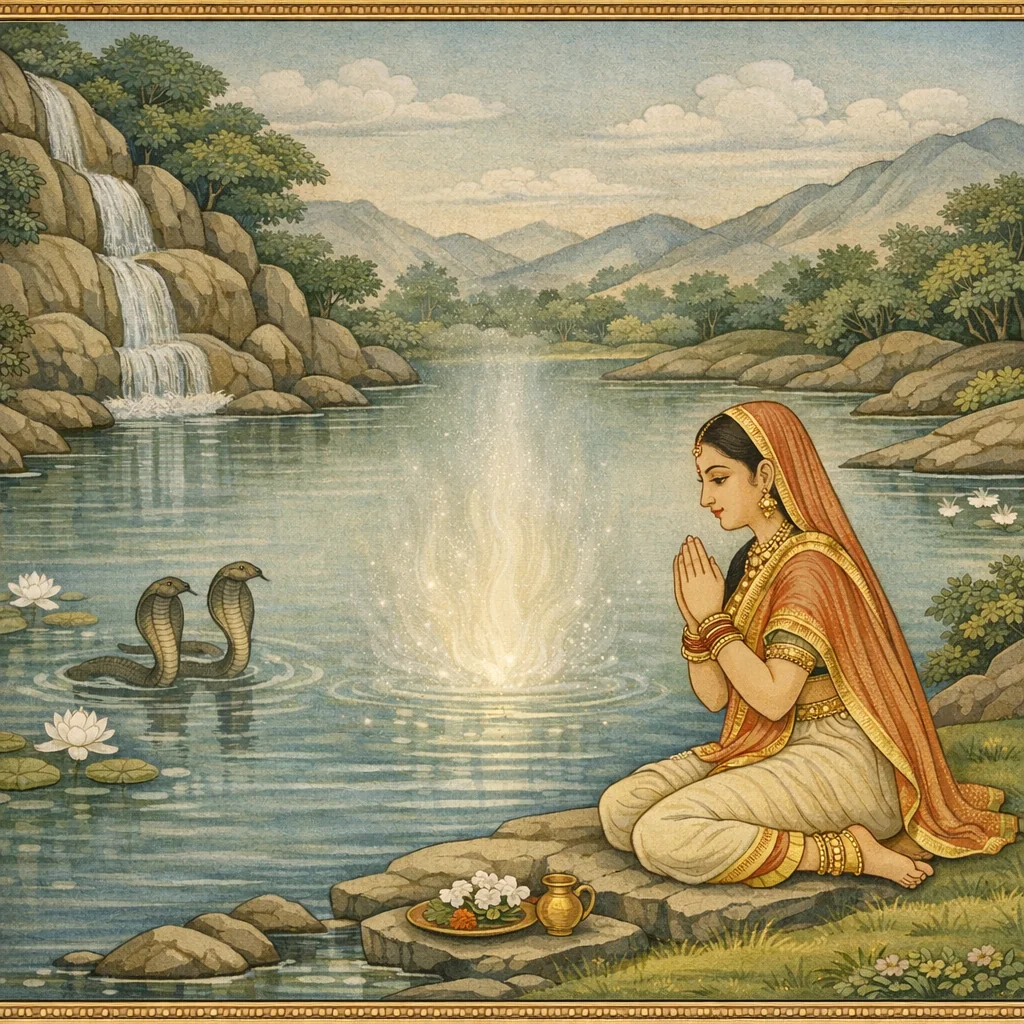
Chapter 5 unfolds as an ordered dialogue. The sages ask to hear more of Arbuda’s greatness, and Sūta recalls an earlier occasion when King Yayāti questioned the sage Pulastya about Arbuda, the proper sequence of pilgrimage, and the resulting merits. Pulastya declares Arbuda’s dharma-filled vastness and, choosing brevity, begins with Nāga-tīrtha, a sacred ford that fulfills aims and, especially for women, bestows offspring and auspicious prosperity. An origin tale follows: Gautamī, a chaste Brahmin widow devoted to pilgrimage, reaches Arbuda and bathes in Nāga-tīrtha. Seeing another woman attended by her son, she is overcome with sorrow and inwardly forms the wish for a child. On leaving the water she becomes pregnant without conjugal contact; ashamed, she intends to end her life, but an incorporeal voice forbids self-harm and explains that this is the tīrtha’s power—desires conceived while in the water are fulfilled. Gautamī remains there and gives birth to a son marked with auspicious signs. The chapter closes with phala statements: śrāddha performed there safeguards the continuity of one’s lineage; desireless bathing and śrāddha grant enduring worlds; women who offer flowers and fruits gain children and good fortune; and disciplined, reverent pilgrimage is commended.
Shlokas
Verse 1
ऋषय ऊचुः । अर्बुदस्य च माहात्म्यं विस्तरेण वदस्व नः । कौतुकं सूत नो जातं कथयस्व यथा शुभम्
The sages said: “Tell us in full the greatness of Arbuda. Curiosity has arisen within us, O Sūta; narrate it in an auspicious and blessed manner.”
Verse 2
सूत उवाच । पुरासीच्च ऋषिश्रेष्ठः पुलस्त्यो भगवान्मुनिः । ययातेश्च गृहे यातस्तं नत्वा चाब्रवीन्नृपः
Sūta said: “In ancient times there was the foremost of sages, the venerable muni Pulastya. He went to the house of Yayāti; and the king, having bowed to him, spoke as follows.”
Verse 3
।ययातिरुवाच । स्वागतं ते मुनिश्रेष्ठ सफलं मेऽद्यजीवितम् । कथयस्व प्रसादेन कथामर्बुदसंभवाम्
Yayāti said: “Welcome, O best of sages. Today my life has become fruitful. Out of compassion, recount to me the sacred account of Arbuda’s origin.”
Verse 4
अर्बुदाख्यो नगो नाम विख्यातो यो धरातले । तस्य यात्राक्रमं ब्रूहि तत्फलं द्विजसत्तम
“A mountain named Arbuda is renowned upon the earth. O best of the twice-born, tell me the proper order of pilgrimage there—and the merit that comes from it.”
Verse 5
सर्वं विस्तरतो ब्रूहि तीर्थयात्रापरायण । तस्माद्वद मुनिश्रेष्ठ येन यात्रां करोम्यहम्
“Explain everything in detail, O you devoted to pilgrimage. Therefore speak, O best of sages, so that I may undertake the journey in the proper way.”
Verse 6
पुलस्त्य उवाच । बहुधर्ममयो राजन्नर्बुदः पर्वतोत्तमः । अशक्तो विस्तराद्वक्तुमपि वर्षशतैरपि
Pulastya said: “O King, Arbuda—the foremost of mountains—is pervaded by many forms of dharma. Even in hundreds of years, I would be unable to describe it fully in detail.”
Verse 7
संक्षेपादेव वक्ष्यामि तीर्थमुख्यानि ते तथा । नागतीर्थं तु तत्राद्यं सर्वकामप्रदं नृणाम्
“I shall speak briefly of the foremost tīrthas there. Among them, first is Nāga-tīrtha, which grants people all desired aims.”
Verse 8
नारीणां च विशेषेण पुत्रसौभाग्यदायकम् । शृणु राजन्पुरावृत्तं यतोऽत्याश्चर्यमुत्तमम्
“And especially for women, it bestows the good fortune of children. Listen, O King, to an ancient event—marvelous and supremely wondrous—by which this is known.”
Verse 9
गौतमी ब्राह्मणी नाम्ना सती साध्वी पतिव्रता । बालवैधव्यसंप्राप्ता तीर्थयात्रापरायणा
“There was a brāhmaṇa woman named Gautamī—virtuous, devoted, and faithful to her husband, a true pativratā. Widowed while still young, she became wholly intent upon pilgrimage to sacred places.”
Verse 10
अर्बुदं सा च संप्राप्ता नागतीर्थं विवेश ह । तस्मिञ्जले निमग्ना सा स्नातुमभ्याययौ पुरा
“She reached Arbuda and entered Nāga-tīrtha. Once, having immersed herself in that water, she approached to perform the sacred bath (snāna).”
Verse 11
नायका पुत्रसंयुक्ता तत्तीर्थं समुपागता । शुश्रूषां सा तस्तस्याश्चक्रे नानाविधां नृप
O King, a woman named Nāyakā came to that very tīrtha, accompanied by her son. Gautamī offered her many kinds of devoted service and help.
Verse 12
सर्वोपकरणैर्दर्भैः सुमनोभिः पृथग्विधैः । अथ सा चिंतयामास गौतमी पुत्रदुःखिता
With all the requisite offerings—kuśa-grass and flowers of many kinds—Gautamī, stricken with sorrow at being without a child, began to ponder deeply.
Verse 13
धन्योऽयं तनयो ह्यस्याः शुश्रूषां कुरुते सदा । पुत्रयुक्ता त्वियं धन्या धिगहं पुत्रवर्जिता
Blessed indeed is her son, for he ever serves his mother with devoted care. Blessed is this woman, endowed with a child—alas for me, bereft of offspring!
Verse 14
अहं भर्त्रा वियुक्ता च पुत्रहीना सुदुःखिता । अथ सा निर्गता तस्मात्सलिलान्नृपसत्तम
“I am parted from my husband, and without a child, sorely afflicted.” Then she came forth from that water, O best of kings.
Verse 15
विनाऽपि भर्तृसंयोगात्सद्यो गर्भवती ह्यभूत् । सा गर्भलक्षणैर्युक्ता सुजनव्रीडयाऽन्विता
Even without union with her husband, she at once became pregnant. Bearing the signs of conception, she was also filled with modest, reverent shame before the virtuous.
Verse 16
चकार मरणे बुद्धिं ज्वालयामास पावकम् एतस्मिन्नेव काले तु वागुवाचाशरीरिणी
She resolved upon death and kindled the fire. At that very moment, a bodiless voice spoke.
Verse 17
वागुवाच । नो त्वं गौतमि चित्याग्नौ प्रवेशं कर्तुमर्हसि । दोषो नास्ति तवात्रार्थे तीर्थस्यास्य प्रभावतः
The voice said: “O Gautamī, you should not enter the funeral fire. In this matter there is no fault in you—it has occurred by the power of this sacred ford (tīrtha).”
Verse 18
यो यद्वांछति चित्ते च जलमध्ये स्थितो नरः । चिन्तितं च तदाप्नोति नारी वा नात्र संशयः
Whatever a person desires in the heart while standing in the midst of this water, that wished-for object is obtained—whether the seeker is a man or a woman; of this there is no doubt.
Verse 19
त्वया तस्याः सुतं दृष्ट्वा पुत्रवांछा कृता हृदि । तव गर्भगतो नूनं पुत्रः पुत्रि भविष्यति
When you saw her son, the longing for a child arose in your heart. Therefore, the child now in your womb will certainly become your son, O daughter.
Verse 20
तस्माद्विरम भद्रं ते निर्दोषासि पतिव्रते । विरराम ततः साध्वी गौतमी मरणान्नृप
“Therefore desist—may good befall you; you are blameless, O faithful wife (pativratā).” Then the virtuous Gautamī desisted from death, O king.
Verse 21
श्रुत्वाऽकाशगतां वाणीं देवदूतेन भाषिताम् । दृष्ट्वा पतिं विना गर्भं वाक्यमेत दुवाच ह
Having heard the voice resounding from the sky, spoken by a divine messenger, and seeing that she was pregnant without union with her husband, she spoke these words.
Verse 22
अहो तीर्थप्रभावोऽयमपूर्वः प्रतिभाति मे । यत्र संजायते गर्भः स्त्रीणां शुक्ररजोविना
“Ah! This power of the sacred ford appears to me truly unprecedented—here, a pregnancy arises in women even without semen and menstrual blood.”
Verse 23
नाहं कुत्रापि यास्यामि मुक्त्वेदं तीर्थमुत्तमम् । एवमुक्त्वा ततः साध्वी तत्रैव न्यवसत्सदा
“I will not go anywhere, abandoning this supreme sacred ford.” Having spoken thus, that virtuous woman thereafter dwelt there alone, constantly.
Verse 24
पुत्रं वै जनयामास सर्वलक्षणलक्षितम् । तत्र पार्थिवशार्दूल कृष्णपक्षे ऽश्विनस्य च
She indeed gave birth to a son, marked with every auspicious sign. There, O tiger among kings, this occurred in the dark fortnight of the month of Aśvina.
Verse 25
यः पुनः कुरुते श्राद्धं तस्य वंशो न नश्यति । न प्रेतो जायते राजन्वंशे तस्य कदाचन
Moreover, whoever performs śrāddha—his lineage does not perish. In his family, O king, a ‘preta’ (one who dies in an afflicted, unpropitiated state) is never produced at any time.
Verse 26
यः पुमान्कामरहितः स्नानं तत्र समाचरेत् । श्राद्धं च पार्थिवश्रेष्ठ तस्य लोकाः सनातनाः
Any man who is free from desire and bathes there—and also performs śrāddha, O best of kings—attains eternal worlds.
Verse 27
या स्त्री पुष्पफलान्येव तीर्थे चास्मिन्विसर्जयेत् । सा स्यात्पुत्रवती धन्या सौभाग्यं च प्रपद्यते
Any woman who reverently offers and releases flowers and fruits at this sacred ford becomes blessed with a son, fortunate, and attains auspiciousness in marriage and in worldly life.
Verse 28
निष्कामा स्वर्गमाप्नोति दुष्प्राप्यं त्रिदशैरपि । तस्मात्सर्वप्रयत्नेन यात्रां तस्य समाचरेत्
One who is desireless attains heaven—hard to obtain even for the gods. Therefore, with every effort, one should undertake the pilgrimage to that holy place.