Adhyaya 15
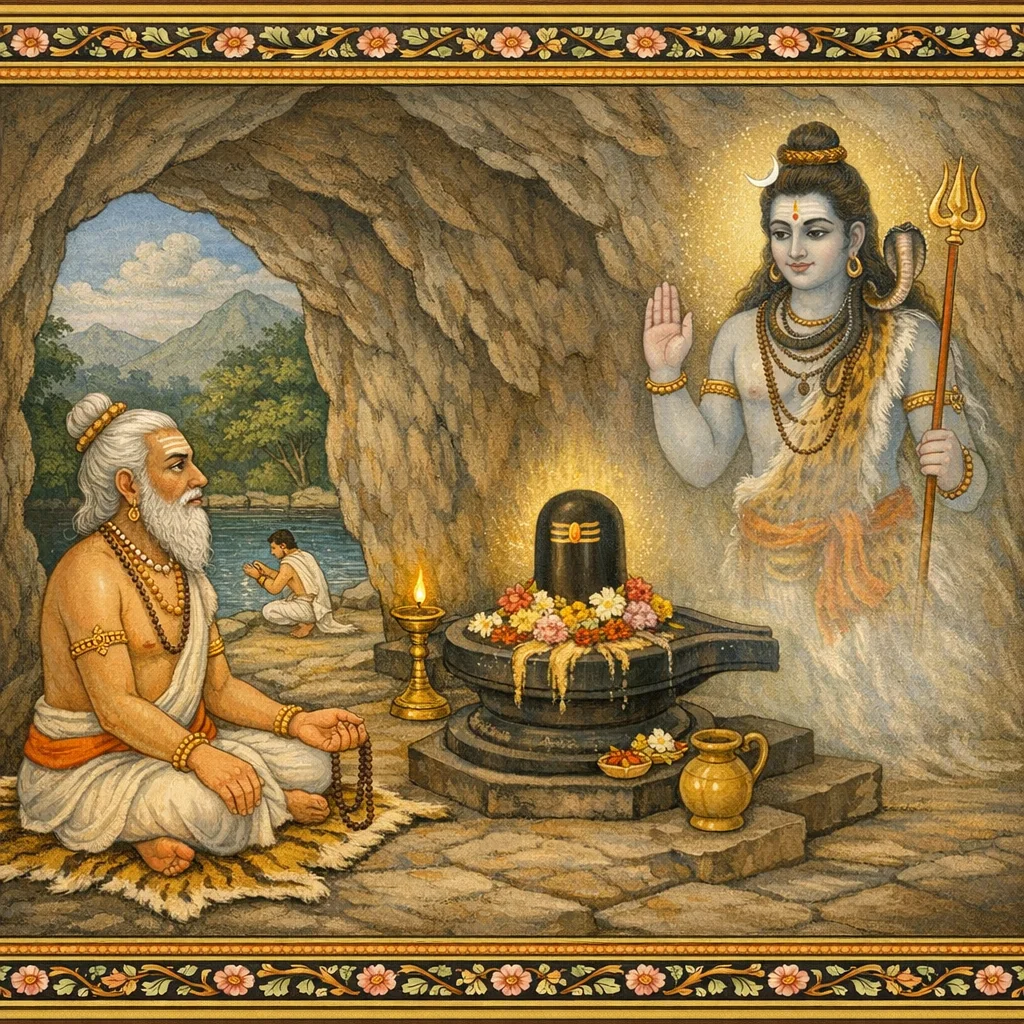
Pulastya tells a royal listener the sacred origin of Śukreśvara, the liṅga established by Śukra (Bhārgava). Seeing the daityas defeated by the devas, Śukra reflects on how they might regain strength and resolves to attain siddhi through worship of Śaṅkara. He goes to Arbuda mountain, finds a cave-like opening, and undertakes fierce austerities, installing a Śiva-liṅga and worshipping it unceasingly with incense, fragrances, and unguents. After a thousand years Śiva appears, praises his devotion, and offers a boon. Śukra asks for the sañjīvanī-vidyā by which those who have met death may be restored to life; Śiva grants it and invites a further request. Śukra then lays down a calendrical rite: whoever, on the bright eighth day (śukla-aṣṭamī) of Kārttika, with faith touches/approaches and worships that liṅga, is freed even from the slightest fear of death and gains desired aims here and hereafter. Śiva assents and vanishes. By the granted vidyā, Śukra revives many daityas slain in battle. The account ends by pointing out a pure, sin-destroying mahākuṇḍa before the shrine: bathing there removes sins, and śrāddha performed there satisfies the ancestors; even simple water-offerings (tarpaṇa) bear fruit—therefore one should earnestly strive to bathe in that place.
Shlokas
Verse 1
पुलस्त्य उवाच । ततः शुक्रेश्वरं गच्छेच्छुक्रेण स्थापितं पुरा । यं दृष्ट्वा मानवः सद्यः सर्वपापैः प्रमुच्यते
Pulastya said: Then one should go to Śukreśvara, established long ago by Śukra; beholding it, a person is immediately released from all sins.
Verse 2
दृष्ट्वा दैत्यान्पुरा देवैर्निर्जितान्नृपसत्तम । चिन्तयामास मेधावी भार्गवस्तान्प्रति द्विजः
O best of kings, seeing in former times the Daityas defeated by the gods, the wise Bhārgava brāhmaṇa began to reflect upon how to respond to them.
Verse 3
कथं दैत्याः सुराञ्जित्वा प्राप्स्यंति च महायशः । आराध्य शंकरं सिद्धिं गच्छामि मनसेप्सितम्
(He thought:) “How may the Daityas, having conquered the gods, attain great fame? By propitiating Śaṅkara, I shall obtain the desired siddhi my mind seeks.”
Verse 4
एवं स निश्चयं कृत्वा गतोऽर्बुदमथाचलम् । भूमे विवरमासाद्य तपस्तेपे सुदारुणम्
Having thus formed his resolve, he went to Mount Arbuda; reaching a cleft in the earth, he performed exceedingly severe austerities (tapas).
Verse 5
शिवलिंगं प्रतिष्ठाप्य धूपगंधानुलेपनैः । अनिशं पूजयामास श्रद्धया परयान्वितः
After installing a Śiva-liṅga, he worshipped it continually with incense, fragrant offerings, and unguents—endowed with supreme faith.
Verse 6
ततो वर्षसहस्रांते तुतोष भगवाञ्छिवः । तस्य संदर्शनं दत्त्वा वाक्यमेतदुवाच ह
Then, at the end of a thousand years, the Blessed Lord Śiva was pleased. Granting him His divine audience (darśana), He spoke these words.
Verse 7
श्रीमहादेव उवाच । परितुष्टोऽस्मि ते विप्र भक्त्या तव द्विजोत्तम । वरं वरय भद्रं ते यद्यपि स्यात्सुदुर्लभम्
Śrī Mahādeva said: “O brāhmaṇa, best among the twice-born, I am fully pleased by your devotion. Choose a boon—may auspiciousness be yours—even if it be exceedingly difficult to obtain.”
Verse 8
शुक्र उवाच । यदि तुष्टो महादेव विद्यां देहि महेश्वर । यया जीवंति संप्राप्ता मृत्युं संख्येपि जंतवः
Śukra said: “If you are pleased, O Mahādeva, O Maheśvara, grant me the sacred vidyā by which beings—even after meeting death—may be restored to life.”
Verse 9
पुलस्त्य उवाच । प्रदाय वै शिवस्तस्मै तां विद्यां नृपसत्तम । अब्रवीच्च पुनः शुक्रं वरमन्यं वृणीष्व मे
Pulastya said: “Having indeed bestowed that vidyā upon him, O best of kings, Śiva again said to Śukra: ‘Choose another boon from me.’”
Verse 10
शुक्र उवाच । एतत्कार्तिकमासस्य शुक्लाष्टम्यां तु यः स्पृशेत् । ततो लिंगं पूजयेच्च यः पुमाञ्छ्रद्धयान्वितः
Śukra said: “Whoever, on the bright eighth lunar day (Śuklāṣṭamī) of the month of Kārtika, touches this sacred place/holy water and then worships the liṅga with faith—”
Verse 11
अल्पमृत्युभयं तस्य मा भूत्तव प्रसादतः । इष्टान्कामानवाप्नोतु इहलोके परत्र च
“By your grace, may he have no fear of untimely death; and may he obtain his cherished desires—here in this world and in the world beyond.”
Verse 12
पुलस्त्य उवाच । एवमस्त्विति स प्रोच्य तत्रैवांतरधीयत । शुक्रोपि दानवान्संख्ये हतान्देवैरनेकशः
Pulastya said: “Saying, ‘So be it,’ he vanished right there. And Śukra too, in battle, found the Dānavas slain in many ways by the gods.”}]}}
Verse 13
विद्यायाश्च प्रभावेन जीवयामास तान्मुनिः । तस्याग्रेऽस्मिन्महाकुण्डं निर्मलं पापनाशनम्
By the power of that vidyā, the sage restored them to life. Before him here lies the great Mahākuṇḍa, stainless and holy, the destroyer of sins.
Verse 14
तत्र स्नातो नरः सम्यक्पातकैश्च प्रमुच्यते । तत्र श्राद्धेन राजेंद्र तुष्टा यांति पितामहाः
Whoever bathes there in the proper manner is freed from sins. And by performing śrāddha there, O king, the forefathers are satisfied and depart in contentment.
Verse 15
तर्पिताः सलिलेनैव किं पुनः पिंडदानतः । तस्मात्सर्वप्रयत्नेन स्नानं तत्र समाचरेत्
If the ancestors are satisfied even by a mere offering of water (tarpaṇa), how much more by the offering of piṇḍas. Therefore, with every effort, one should duly perform the sacred bath at that tīrtha.