Adhyaya 14
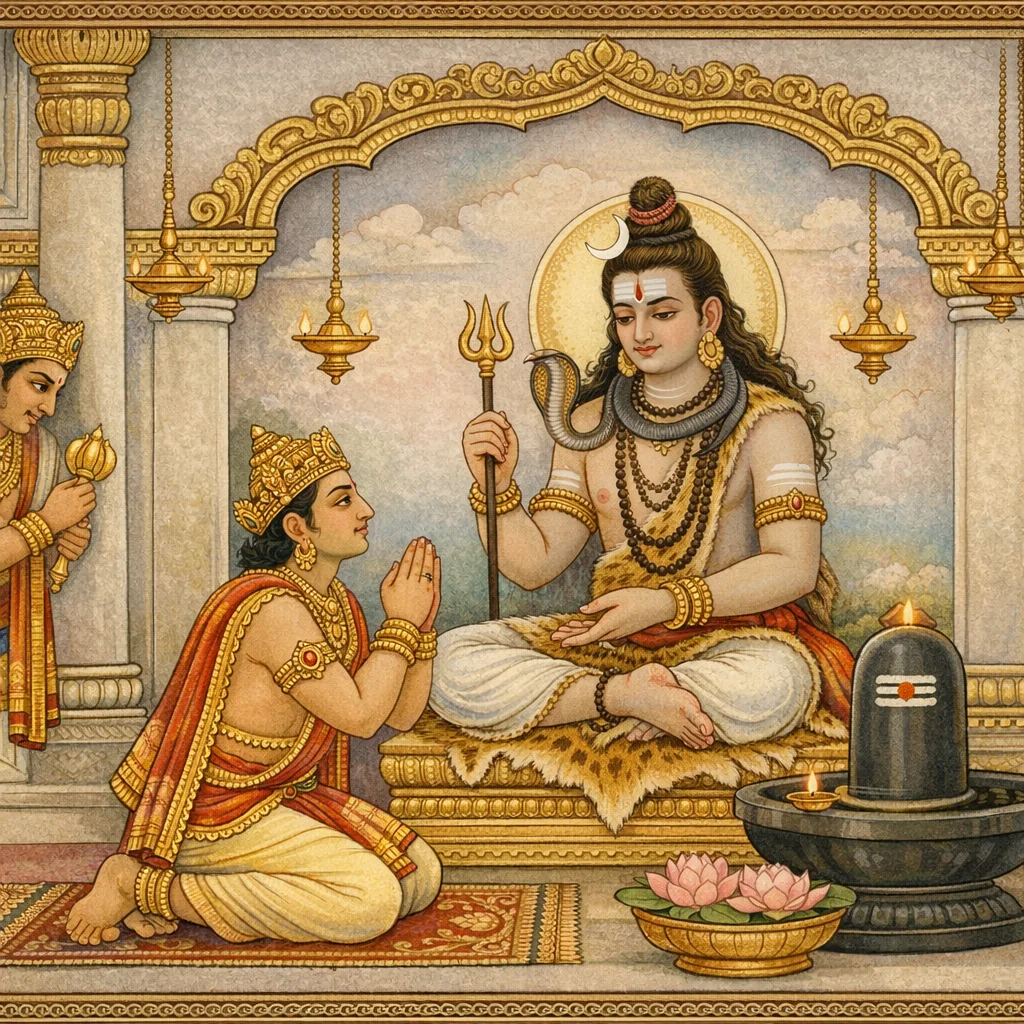
Pulastya tells a royal listener of the greatness of Siddheśvara, a supreme liṅga said to have been established in ancient times by an accomplished siddha. That siddha, Viśvāvasu, performs vast austerities with steadfast bhakti, mastering anger, pride, and the senses; pleased, Śiva (Vṛṣabhadhvaja) grants him a direct vision. When Śiva offers a boon, Viśvāvasu asks that anyone who mentally contemplates this liṅga may, by Śiva’s grace, attain desired aims. Śiva assents and vanishes; many go to Siddheśvara and gain siddhi. Yet because its influence grants ends so readily, customary dharma-acts such as yajña and dāna decline, troubling the gods; Indra tries to obstruct siddhi by covering it with the vajra, but nearness to Siddheśa still brings accomplishment and diminishes sin. A calendrical rule is given: on the 14th lunar day (caturdaśī) that falls on a Monday, whether in the bright or dark fortnight, one who touches it (sparśana) becomes “siddha.” The chapter concludes by reaffirming its enduring efficacy and urging pilgrimage and reverent worship to attain sadgati, a good destination.
Shlokas
Verse 1
पुलस्त्य उवाच । ततो गच्छेन्नृपश्रेष्ठ देवं सिद्धेश्वरं परम् । सिद्धिदं प्राणिनां सम्यक्सिद्धेन स्थापितं पुरा
Pulastya said: Then, O best of kings, go to the supreme Lord Siddheśvara. He bestows siddhis upon living beings, for in ancient times a Siddha duly established him there.
Verse 2
तत्र विश्वावसुर्नाम सिद्धस्तेपे महातपः । बहुवर्षाणि संस्थाप्य शिवं भक्तिपरायणः
There, a Siddha named Viśvāvasu performed great austerities for many years, having installed Śiva and abiding wholly in bhakti-devotion.
Verse 3
जितक्रोधो जितमदो जितसर्वेंद्रियक्रियः । तावद्वर्षसहस्रांते भगवान्वृषभध्वजः । तुतोष नृपतेस्तस्य स्वयं दर्शनमाययौ
Having conquered anger and pride and mastered the workings of all his senses, at the completion of a thousand years the Lord bearing the bull-emblem (Śiva) was pleased with that royal sage and came Himself to grant darśana.
Verse 4
अब्रवीत्तं महादेवो वरदोस्मीति पार्थिव
Mahādeva said to him, “O king, I am the giver of boons.”
Verse 5
श्रीभगवानुवाच । वरं वरय भद्रं ते यत्ते मनसि वर्त्तते । दास्यामि ते प्रसन्नोऽहं यद्यपि स्यात्सुदुर्लभम्
The Blessed Lord said: “Choose a boon—may auspiciousness be yours—whatever abides within your heart. I am pleased; I shall grant it to you, even if it is exceedingly difficult to obtain.”
Verse 6
विश्वावसुरुवाच । एतल्लिंगं सुरश्रेष्ठ ध्यात्वा मनसि निश्चयम् । सर्वान्कामानवाप्नोतु प्रसादात्तव शंकर
Viśvāvasu said: “O best among the gods, O Śaṅkara—having meditated with firm resolve upon this liṅga within the heart—may one obtain all desired aims through your grace.”
Verse 7
पुलस्त्य उवाच । एवमस्त्विति स प्रोच्य तत्रैवांतरधीयत । सिद्धेश्वरं ततो गत्वा सिद्धिं याति सहस्रशः
Pulastya said: Saying, “So be it,” he (Śiva) vanished right there. Thereafter, by going to Siddheśvara, one attains siddhi—spiritual accomplishments—in thousands of ways.
Verse 8
प्रभावात्तस्य लिंगस्य कामानिष्टानवाप्नुयुः । ततो धर्मक्रियाः सर्वा गता नाशं धरातले
By the extraordinary power of that liṅga, people obtained the objects of their desire. Then, upon the earth, all dharmic observances declined and moved toward ruin.
Verse 9
न कश्चिद्यजते यज्ञैर्न दानानि प्रयच्छति । सिद्धेश्वरप्रसादेन सिद्धिं यांति नरा भुवि
Even when no one performs sacrifices and no one gives gifts in charity, by the grace of Siddheśvara people upon the earth still attain siddhi, spiritual accomplishment.
Verse 10
उच्छिन्नेषु च यज्ञेषु दानेषु नृपसत्तम । इन्द्राद्यास्त्रिदशाः सर्वे परं दुःखमुपागताः
O best of kings, when sacrifices and charitable gifts had been cut off, all the gods—Indra and the rest—fell into extreme sorrow.
Verse 11
ज्ञात्वा यज्ञविघातं च तद्विघाताय वासवः । वज्रेणाच्छादयामास यथा सिद्धिर्न जायते
Knowing that the sacrifice was being obstructed, Vāsava (Indra), in order to obstruct it further, covered it with his vajra, the thunderbolt—so that no siddhi might arise.
Verse 12
तथापि संनिधौ तस्य सिद्धेशस्य नृपोत्तम । कर्मणो जायते सिद्धिः पातकस्य परिक्षयः
Yet, O best of kings, in the very presence of that Siddheśa, success in one’s deeds arises, and sin is brought to destruction.
Verse 13
यस्तु माघचतुर्द्दश्यां सोमवारे नृपोत्तम । शुक्लायां वाथ कृष्णायां स्पृष्ट्वा सिद्धो भवेन्नरः
But the man who, O best of kings, on the fourteenth lunar day in Māgha, falling on a Monday—whether in the bright fortnight or the dark—touches the sacred spot, becomes accomplished.
Verse 14
अद्यापि जायते सिद्धिः सत्यमेतन्मयोदितम् । तस्मात्सिद्धेश्वरं गत्वा नत्वा यास्यति सद्गतिम्
Even today siddhi arises—this is truly what I have declared. Therefore, having gone to Siddheśvara and bowed in reverence, one will attain the good path, the blessed destiny.