Adhyaya 1
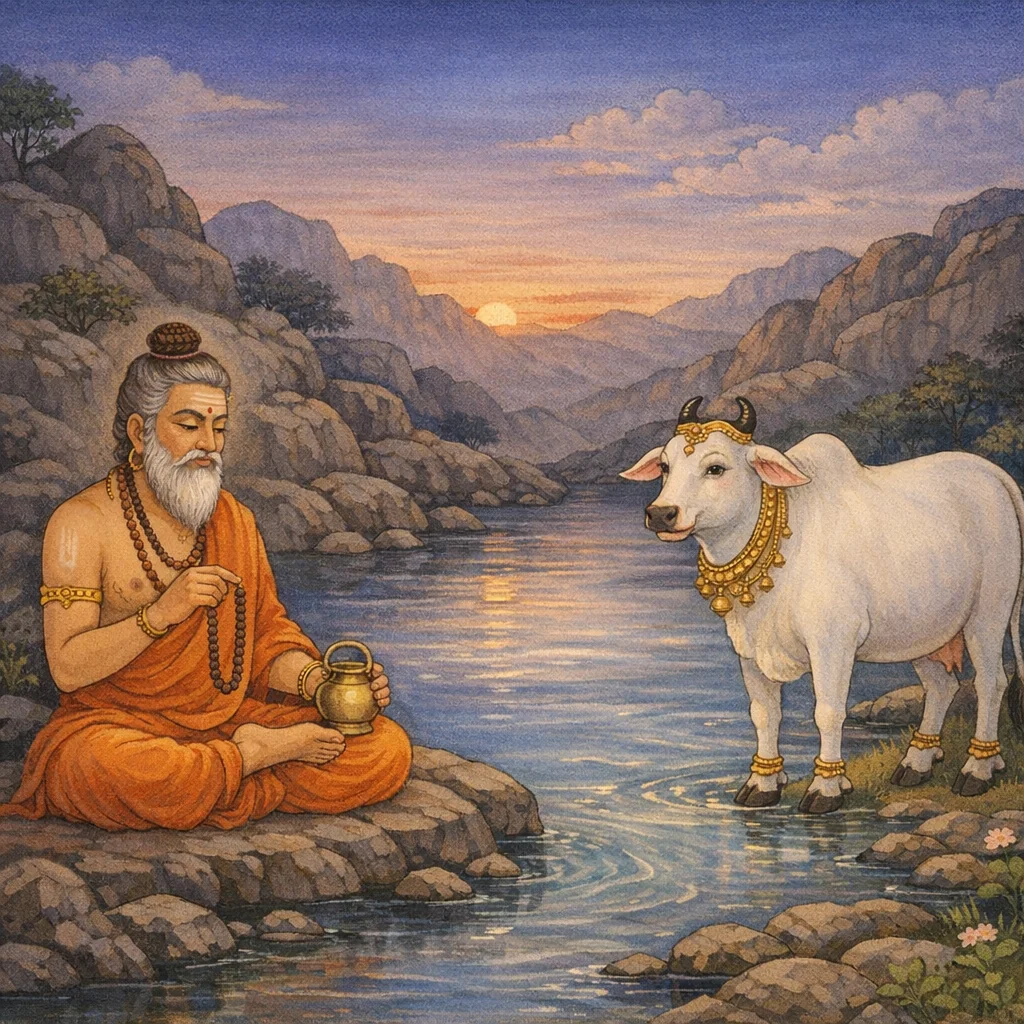
Chapter 1 begins with a maṅgala, an invocatory praise of Śiva as subtle, knowable through true knowledge, pure, and universal in form. The ṛṣis—having heard the genealogies of Soma and Sūrya, the accounts of the manvantaras, and varied creation narratives—request an excellent tīrtha-māhātmya and ask which sacred places are foremost on earth. Sūta replies that tīrthas are innumerable, traditionally counted in vast totals, and that fields, rivers, mountains, and streams attain supreme sanctity through the tapas of ṛṣis. In this sacred geography, Arbuda is singled out as a sin-removing mountain, untouched by Kali-doṣa due to Vasiṣṭha’s power; it purifies even by mere darśana, surpassing ordinary rites such as bathing and giving. The ṛṣis then ask about Arbuda’s measure and location, how its fame arises from Vasiṣṭha’s māhātmya, and which tīrthas are chief there. Sūta begins the purifying account as he heard it: Vasiṣṭha, a devarṣi of Brahmā’s lineage, performs severe austerities with regulated diet and seasonal disciplines. His renowned wish-fulfilling cow Nandinī falls into a deep, dark chasm while grazing. Anxious because she is needed for his daily homa, Vasiṣṭha searches, finds the chasm, and hears her cry; at her plea he meditatively invokes Sarasvatī, purifier of the three worlds, who appears and fills the chasm with clear water so Nandinī can escape. Seeing the chasm’s immense depth, Vasiṣṭha resolves to have it filled by bringing a mountain, and he goes to Himavān to request a suitable mountain mass; Himavān welcomes him, asks for the dimensions, and then wonders how such a vast opening came to be, leading into the next development.
Shlokas
Verse 1
व्यास उवाच । ओंनमोनंताय सूक्ष्माय ज्ञानगम्याय वेधसे । शुद्धाय विश्वरूपाय देवदेवाय शंभवे
Vyāsa said: Oṃ—salutations to the Infinite, the Subtle, the One known through true knowledge; to Vedhas, the Creator; to the Pure One of universal form; to Śambhu, the God of gods.
Verse 2
ऋषय ऊचुः । कथितो वंशविस्तारो भवता सोमसूर्ययोः । मन्वंतराणि सर्वाणि सृष्टिश्चैव पृथग्विधा
The sages said: You have described the detailed lineages of the Moon and the Sun, and also all the Manvantaras and the various modes of creation.
Verse 3
अधुना श्रोतुमिच्छामस्तीर्थमाहात्म्यमुत्तमम् । कानि तीर्थानि पुण्यानि भूतलेऽस्मिन्महामते
Now we long to hear the supreme greatness of the tīrthas. O wise one, which sacred tīrthas upon this earth are especially rich in merit?
Verse 4
सूत उवाच । नाना तीर्थानि लोकेऽस्मिन्येषां संख्या न विद्यते । तिस्रः कोट्योऽर्द्धकोटिश्च तेषां संख्या कृता पुरा
Sūta said: In this world there are many tīrthas whose number cannot truly be known; yet in former times their count was declared as three crores and an additional half-crore.
Verse 5
क्षेत्राणि सरितश्चैव पर्वताश्च नदा स्तथा । ऋषीणां तपसो वीर्यान्माहात्म्यं परमं गताः
Sacred regions, rivers, mountains, and likewise streams attain the highest renown and sanctity through the potent power of the sages’ austerities (tapas).
Verse 6
तेषां मध्येऽर्बुदोनाम सर्वपापहरोऽनघः । अस्पृष्टः कलिदोषेण वसिष्ठस्य प्रभावतः
Among them is the holy mountain named Arbuda—spotless and the remover of all sins—untouched by the taint of Kali, through the spiritual influence of Vasiṣṭha.
Verse 7
पुनंति सर्वतीर्थानि स्नानदानादिकैर्यथा । अर्बुदो दर्शनादेव सर्वपापहरो नृणाम्
Just as all tīrthas purify through bathing, charity, and the like, so Arbuda—by mere darśana alone—removes all sins of human beings.
Verse 8
ऋषय ऊचुः । किं प्रमाणोऽर्बुदो नाम कस्मिन्देशे व्यवस्थितः । कथं वासिष्ठमाहात्म्यात्प्रथितो धरणीतले
The sages said: “What is the measure and extent of the place called Arbuda? In what land is it situated? And how did it become renowned upon the earth through the glory of Vasiṣṭha?”
Verse 9
कानि तीर्थानि मुख्यानि ह्यर्बुदे संति पर्वते । सर्वं विस्तरतो ब्रूहि परं कौतूहलं हि नः
“Which are the principal tīrthas found on Mount Arbuda? Tell us everything in detail, for our curiosity is very great.”
Verse 10
सूत उवाच । अहं च संप्रवक्ष्यामि कथां पापप्रणाशिनीम् । अर्बुदस्य द्विजश्रेष्ठा माहात्म्यं च यथा श्रुतम्
Sūta said: “I shall now relate the sin-destroying account—the sacred greatness of Arbuda—O best of the twice-born, exactly as I have heard it.”
Verse 11
वसिष्ठो नाम देवर्षिः पितामहसमुद्भवः । स पूर्वं भूतलं प्राप्तस्तपस्तेपे सुदारुणम्
There was a divine sage named Vasiṣṭha, born of the Grandsire (Brahmā). In former times he came to the earth and performed exceedingly severe austerities.
Verse 12
नियतो नियताहारः सर्वभूतहिते रतः । वर्षास्वाकाशवासी च हेमंते सलिलाशयः
He was disciplined and measured in food, devoted to the welfare of all beings. In the rainy season he dwelt exposed to the open sky, and in winter he remained in water.
Verse 13
पंचाग्निसाधको ग्रीष्मे जपहोमपरायणः । केनचित्त्वथ कालेन तस्य धेनुः पयस्विनी । नंदिनीति सुविख्याता सा वै कामदुघा शुभा
In the heat of summer he practiced the austerity of the five fires, devoted to japa and homa. In time he obtained a milk-giving cow, famed as Nandinī—truly auspicious, a Kāmadhenu who fulfills desires and bestows abundance.
Verse 14
सा कदाचिद्धरापृष्ठे भ्रममाणा तृणाशया । पतिता दारुणे श्वभ्रे अगाधे तिमिरावृते
Once, as she wandered upon the earth in search of grass, she fell into a dreadful pit—very deep and veiled in darkness.
Verse 15
एतस्मिन्नेव काले तु भगवांस्तीक्ष्णदीधितिः । अस्तं गतो न संप्राप्ता नंदिनी मुनिसत्तमाः
Just then the blessed one of piercing rays—the Sun—had set; yet Nandinī had not returned, O best of sages.
Verse 16
तस्याः क्षीरेण नित्यं स सायं प्रातर्द्विजो मुनिः । करोति होममग्नौ हि सुसमिद्धे जितव्रतः
With her milk each day, that twice-born sage performed the homa in a well-kindled sacred fire, both evening and morning, steadfast in his vows.
Verse 17
अथ चिंतापरो विप्रः प्रायश्चित्तभयाद्ध्रुवम् । वीक्षांचक्रे वने तस्मिन्समेषु विषमेषु च
Then the brāhmaṇa, overwhelmed with worry—surely from fear of prāyaścitta, expiation—searched through that forest, in level places and in rough terrain alike.
Verse 18
स तच्छ्वभ्रमथासाद्य भूंभारावमथाशृणोत् । तां प्रोवाच मुनिश्रेष्ठः कथं त्वं पतिता शुभे
Reaching that pit, he heard a loud bellowing. The best of sages spoke to her: “How have you fallen here, O auspicious one?”
Verse 19
अहं होमस्य चोद्वेगान्निःसृतस्त्वामवेक्षितुम् । साऽब्रवीद्भक्षमाणाहं विप्रर्षे तृणवांछया
He said, “Out of anxiety about the homa I came out to look for you.” She replied, “O brāhmaṇa-sage, while grazing—desiring grass—”
Verse 20
पतितात्र विभो त्राहि कृच्छ्रादस्मात्सुदुःसहात् । तस्यास्तद्वचनं श्रुत्वा स मुनिर्ध्यान मास्थितः
“I have fallen here—O lord, save me from this hardship, so unbearable!” Hearing her words, the sage entered into meditation.
Verse 21
सरस्वतीं समादध्यौ नदीं त्रैलोक्यपावनीम् । सा ध्याता मनसा तेन मुनिना तत्र तत्क्षणात्
He meditated upon Sarasvatī—the river that purifies the three worlds. As that sage contemplated her in his mind, she was present there at that very instant.
Verse 22
श्वभ्रं तत्पूरयामास समंताद्विमलैर्जलैः । परिपूर्णं ततः श्वभ्रे निष्क्रांता नंदिनी तदा
She filled that pit on all sides with pure waters. When the pit became full, Nandinī then emerged from it.
Verse 23
संहृष्टा मुनिना सार्द्धं ययावाश्रमसम्मुखम्
Rejoicing, she went together with the sage toward the hermitage.
Verse 24
स दृष्ट्वा श्वभ्रमध्यं तं गंभीरं च महामुनिः । चिंतयामास मेधावी श्वभ्रस्यैव प्रपूरणे
Seeing that deep pit, the great sage—wise and discerning—reflected upon how that very chasm had been filled.
Verse 25
तस्य चिंतयतो विप्रा बुद्धिरेषोदपद्यत । आनीय पर्वतं मुक्त्वा श्वभ्रमेतत्प्रपूर्यते । तस्माद्गच्छाम्यहं शीघ्रं हिमवन्तं नगोत्तमम्
As he pondered, O brāhmaṇas, this resolve arose in his mind: “By bringing a mountain and setting it down, this dreadful chasm can be filled. Therefore I shall quickly go to Himavān, the foremost of mountains.”
Verse 26
स एव पर्वतं चात्र प्रेषयिष्यति भूधरः । येन स्यात्परिपूर्णं च श्वभ्रमेतन्महात्मना
That very great mountain-bearing one (Himavān) will send a mountain here, by which this chasm will be completely filled—through the power of that noble being.
Verse 27
ततो जगाम स मुनिर्हिमवन्तं नगोत्तमम् । दृष्ट्वा वसिष्ठमायांतं हिम वान्हृष्टमानसः । अर्घ्यपाद्यादिसंस्कारैः संपूज्य इदमब्रवीत्
Then that sage went to Himavān, the best of mountains. Seeing Vasiṣṭha approaching, Himavān became glad at heart; and after honoring him with offerings such as arghya and pādya, he spoke as follows.
Verse 28
स्वागतं ते मुनिश्रेष्ठ सफलं मेऽद्य जीवितम् । यद्भवान्मे गृहे प्राप्तः पूज्यः सर्वदिवौकसाम्
Welcome to you, O best of sages! Today my life has borne fruit, for you—revered even by all the dwellers in heaven—have come to my abode.
Verse 29
ब्रूहि कार्यं मुनिश्रेष्ठ अपि जीवितमात्मनः । नूनं तुभ्यं प्रदास्यामि नियोगो दीयतां मम
Tell me your purpose, O best of sages—even if it concerns my very life. Surely I shall give it to you; lay your command upon me.
Verse 30
वसिष्ठ उवाच । ममाश्रमस्य सांनिध्ये श्वभ्रमस्ति सुदारुणम् । अगाधं नन्दिनी तत्र पतिता धेनुरुत्तमा
Vasiṣṭha said: “Near my hermitage there is a most dreadful chasm. Into that unfathomable pit Nandinī, the excellent cow, has fallen.”
Verse 31
यत्नादाकर्षिता तस्माद्भूयः पतनजाद्भयात् । तवांतिकमनुप्राप्तो नान्यो योग्यो महीपतिः
Though she has been pulled up from there with great effort, out of fear that she may fall again, I have come to you. There is no other ruler of mountains fit for this task.
Verse 32
तस्मात्कञ्चिन्नगश्रेष्ठं तत्र प्रेषय भूधरम् । येन तत्पूर्यते श्वभ्रं भृशं प्रेषय तादृशम्
Therefore, O best of mountains, send there some mountain mass by which that chasm may be filled. Send a mighty one of that kind without delay.
Verse 33
हिमवानुवाच । किंप्रमाणं मुने श्वभ्रं विस्तारायामतो वद । तत्प्रमाणं नगं कंचित्प्रेषयामि विचिंत्य च
Himavān said: “O sage, tell me the measure of the chasm—its width and its length. After due reflection, I shall send a mountain of that very measure.”
Verse 34
वसिष्ठ उवाच । द्विसहस्रं तु दैर्घ्येण विस्तरेण त्रिसहस्रकम् । न संख्या विद्यतेऽधस्तात्तस्य पर्वतसत्तम
Vasiṣṭha said: “Its length is two thousand and its breadth is three thousand; but below, its depth admits of no reckoning, O best of mountains.”
Verse 35
हिमवानुवाच । कथं तेन प्रमाणेन सञ्जातो विवरो महान् । अभूत्कौतूहलं तेन सर्वं विस्तरतो वद
Himavān said: “How did that great chasm come to be with such a measure? Because of it my curiosity has arisen—tell me everything in full detail.”