Adhyaya 86
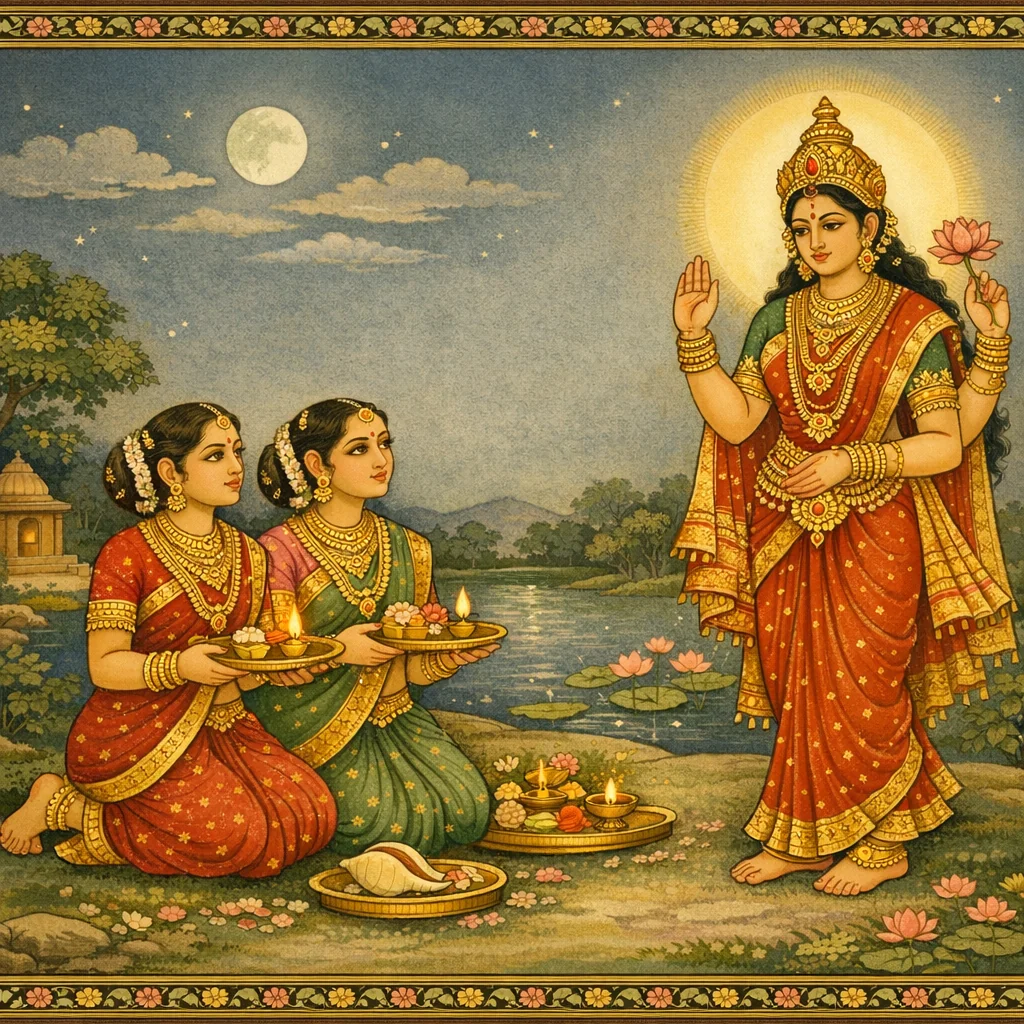
The chapter gives the origin of a tīrtha centered on the Goddess Saptaviṃśatikā, identified with the twenty-seven nakṣatras. Sūta relates that Dakṣa’s daughters—counted as the lunar mansions and married to Soma—fell into distress because Rohiṇī received excessive favor, while the others felt forsaken and ill-fated. They therefore performed austerities in the kṣetra, installed Durgā, and worshiped her with sustained offerings. Pleased, the Goddess granted a boon: the restoration of saubhāgya (marital auspiciousness and a woman’s blessed fortune) and relief from the pain of spousal neglect. The chapter then prescribes vrata observances—worship on the fourteenth day with fasting and devotion, a year-long single-minded discipline, and dietary restraints such as avoiding salty/alkaline foods—along with a calendrical promise: on the ninth day of the bright fortnight of Aśvina, worship at midnight yields intense and enduring auspiciousness. The narrative is woven into lunar mythology as Śūlapāṇi (Śiva) questions Dakṣa about Soma’s affliction (rājayakṣmā); Dakṣa explains his curse; and Śiva restores cosmic balance by declaring that Soma must treat all wives equally, giving rise to the waxing and waning fortnights. The chapter concludes by affirming the Goddess’s abiding presence in the kṣetra as bestower of women’s saubhāgya, and by enjoining pure recitation on the eighth day to obtain that blessing.
Shlokas
Verse 1
सूत उवाच । अथान्यापि च तत्रास्ति सप्तविंशतिका तथा । नक्षत्रैः स्थापिता देवी वांछितस्य प्रदायिनी
Sūta said: “Moreover, there too is another goddess named Saptaviṃśatikā, established by the Nakṣatras, who bestows whatever is desired.”
Verse 2
दक्षस्य तनया पूर्वं सप्तविंशतिसंख्यया । उद्वाहिता हि सोमेन पूर्वं ब्राह्मणसत्तमाः
O best of brāhmaṇas, in former times Dakṣa’s daughters—twenty-seven in number—were given in marriage to Soma, the Moon.
Verse 3
तासां मध्ये ऽभवच्चैका रोहिणी तस्य वल्लभा । प्राणेभ्योऽपि सदासक्तस्तया सार्धं स तिष्ठति
Among them, one—Rohiṇī—became his beloved. More attached to her than even to his own life-breath, he remained ever in her company.
Verse 4
ततो दौर्भाग्यसंतप्ताः सर्वा स्ता दक्षकन्यकाः । वैराग्यं परमं गत्वा क्षेत्रेऽस्मिंस्तपसि स्थिताः
Then all those daughters of Dakṣa, scorched by misfortune, attained supreme dispassion and, in this sacred kṣetra, took their stand in austerity (tapas).
Verse 5
संस्थाप्य देवतां दुर्गां श्रद्धया परया युताः । बलिपूजोपहारैस्तां पूजयंत्यः सुरेश्वरीम्
Having installed the Goddess Durgā with supreme faith, they worshipped that Sovereign Lady of the gods with offerings, rites of adoration, and sacrificial oblations.
Verse 6
ततः कालेन महता तासां सा तुष्टिमभ्यगात् । अब्रवीच्च प्रतुष्टोऽहं वरं दास्यामि पुत्रिकाः
Then, after a long time, the Goddess was pleased with them and said: “I am fully satisfied. Daughters, I shall grant you a boon.”
Verse 7
तस्मात्तत्प्रार्थ्यतां चित्ते यद्युष्माकं व्यवस्थितम् । सर्वं दास्याम्यसंदिग्धं यद्युष्माकं हृदि स्थितम्
Therefore, ask for what is firmly resolved in your mind. Whatever abides in your heart, I shall grant it—without doubt.
Verse 8
ततः प्रोचुश्च ताः सर्वाः प्रसादात्तव वांछितम् । अस्माकं विद्यते देवि यावत्त्रैलोक्यसंस्थितम्
Then all of them said: “O Goddess, by your grace our cherished wish shall endure so long as the three worlds endure.”
Verse 9
एकं पत्युः सुखं मुक्त्वा यत्सौभाग्यसमुद्भवम् । तस्मात्तद्देहि चास्माकं यदि तुष्टासि चंडिके
Save for the single joy that springs from a husband’s auspicious fortune, we have been deprived of all. Therefore grant us that, if you are pleased, O Caṇḍikā.
Verse 10
वयं दौर्भाग्यदोषेण सर्वाः क्लेशं परं गताः । न शक्नुमः प्रियान्प्राणान्देहे धर्तुं कथंचन
Through the fault of misfortune, we have all fallen into extreme suffering; we are unable, in any way, to sustain our dear life-breath within the body.
Verse 11
श्रीदेव्युवाच । अद्यप्रभृति युष्माकं सौभाग्यं पतिसंभवम् । मत्प्रसादादसंदिग्धं भविष्यति सुखोदयम्
The Blessed Goddess said: “From today onward, your auspicious marital fortune—arising through your husband—will, by my grace and without doubt, become the source of happiness.”
Verse 12
अन्यापि या पतित्यक्ता स्त्री मामत्र स्थितां सदा । पूजयिष्यति सद्भक्तया चतुर्दश्यामुपोषिता
Any other woman too, even if abandoned by her husband, who—having fasted on the fourteenth lunar day—worships me here, ever present in this place, with sincere devotion, shall obtain my grace.
Verse 13
सा भविष्यति सौभाग्ययु्क्ता पुत्रवती सती । यावत्संवत्सरं तावदेकभक्तपरायणा
She shall become endowed with good fortune, a virtuous woman blessed with children; and for as long as a year she shall remain devoted to the one-pointed observance (ekabhakta).
Verse 14
अक्षारलवणाशा या नारी मां पूजयिष्यति । न तस्याः पतिजं दुःखं दौर्भाग्यं वा भविष्यति
A woman who, abstaining from alkaline and salty foods, worships me—shall not suffer sorrow arising from her husband, nor shall misfortune come to her.
Verse 15
आश्विनस्य सिते पक्षे संप्राप्ते नवमीदिने । उपवासपरा या मां निशीथे पूजयिष्यति । तस्याः सौभाग्यमत्युग्रं सर्वदा वै भविष्यति
In the bright fortnight of Āśvina, when the ninth lunar day arrives, the woman devoted to fasting who worships me at midnight—her good fortune shall be exceedingly powerful, always.
Verse 16
एवमुक्त्वा तु सा देवी विरराम द्विजोत्तमाः । ताश्च सर्वाः सुसंहृष्टा जग्मुर्दक्षस्य मंदिरम्
Having spoken thus, the Goddess fell silent, O best of the twice-born. And all those women, greatly delighted, went to Dakṣa’s palace.
Verse 17
एतस्मिन्नंतरे दक्ष आहूतः शूलपाणिना । प्रोक्तः कस्मात्त्वया चन्द्रो यक्ष्मणा संनियोजितः । तदयुक्तं कृतं दक्ष जामाताऽयं यतस्तव
Meanwhile, Dakṣa was summoned by Śūlapāṇi (Śiva) and was addressed: “Why did you afflict the Moon with yakṣmā, consumption? This was improper, O Dakṣa, for he is your son-in-law.”
Verse 18
दक्ष उवाच । अनेन तनया मह्यमष्टाविंशतिसंख्यया । ऊढा अखण्डचारित्रास्तास्त्यक्ता दोषवर्जिताः । मुक्त्वैकां रोहिणीं देव निषिद्धेन मयाऽसकृत्
Dakṣa said: “By him my daughters—twenty-eight in number—were married; yet those faultless ones of unbroken conduct were abandoned. Except for one, Rohiṇī, O Deva—though I forbade it again and again.”
Verse 19
ततो मयाऽतिकोपेन नियुक्तो राजयक्ष्मणा । असत्यजल्पको मन्दः कामदेववशं गतः
Therefore, in my excessive anger, he was struck with rājayakṣmā, royal consumption. That dull one, speaking falsely, had fallen under the sway of Kāma, the god of desire.
Verse 20
श्रीभगवानुवाच । अद्यप्रभृति सर्वासां समं स प्रचरिष्यति । मद्वाक्यान्नात्र संदेहः सत्यमेतन्मयोदितम्
The Blessed Lord said: “From this day onward he shall treat them all alike. By my word there is no doubt here—this is the truth spoken by me.”
Verse 21
त्वयापि यद्वचः प्रोक्तमसत्यं स्यान्न तत्क्वचित् । तस्मादेष क्षयं पक्षं वृद्धिं पक्षं प्रयास्यति
And the words spoken by you, too, shall never become untrue. Therefore he shall pass through a fortnight of waning and a fortnight of waxing.
Verse 22
दक्षोऽपि बाढमित्येव तत्प्रोक्त्वा च ययौ गृहम् । चंद्रस्तु दक्षकन्यास्ताः समं पश्यति सर्वदा
Dakṣa too, saying only “So be it,” spoke thus and returned home. And Candra (the Moon) thereafter always regarded Dakṣa’s daughters equally.
Verse 23
गच्छमानः क्षयं पक्षं वृद्धिं पक्षं च सद्द्विजाः । सापि देवी ततः प्रोक्ता सप्तविंशतिका क्षितौ । सर्वसौभाग्यदा स्त्रीणां तस्मिन्क्षेत्रे व्यवस्थिता
O noble twice-born ones, as he passes through the waning fortnight and the waxing fortnight, that Goddess is accordingly spoken of on earth as “Saptaviṃśatikā” (the Twenty-Seven). Established in that sacred field, she bestows every form of auspicious fortune upon women.
Verse 24
यश्चैतत्पुरतस्तस्याः संप्राप्ते चाष्टमीदिने । शुचिर्भूत्वा पठेद्भक्त्या स सौभाग्यमवाप्नुयात्
Whoever, when the Aṣṭamī day arrives, becomes pure and recites this with devotion before that Goddess—such a person attains auspicious fortune (saubhāgya).