Adhyaya 66
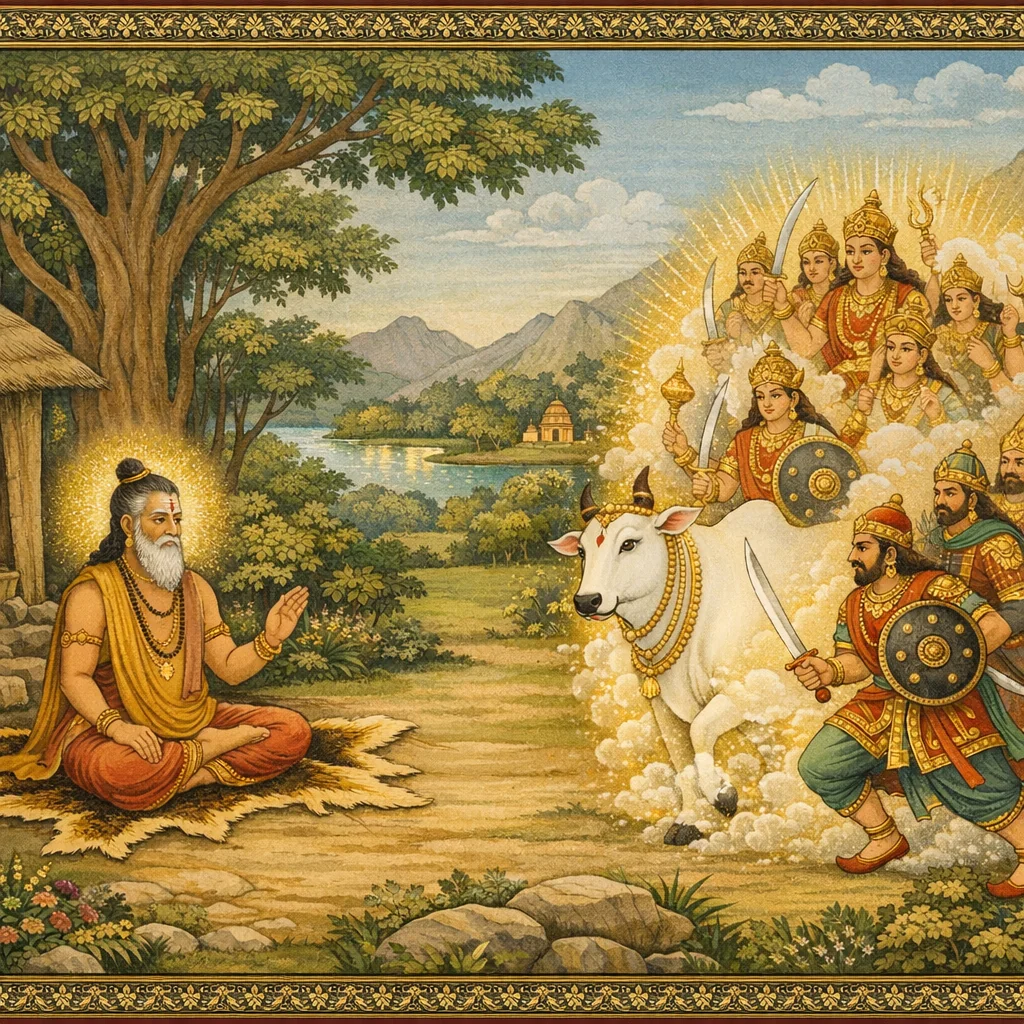
Chapter 66 begins with Sūta pointing out the famed sacred lake Rāmahrada, where the pitaraḥ (ancestral beings) are said to have been satisfied by tarpaṇa offerings connected with blood (rudhira). The ṛṣis object on ritual grounds: pitṛ-tarpaṇa is traditionally performed with pure offerings such as water with sesame, while blood is elsewhere associated with non-normative beings; they also ask why Jāmadagnya (Paraśurāma) would do such a deed. Sūta explains that it arose from a vow and from wrath after the unjust slaying of the sage Jamadagni by the Haihaya ruler Sahasrārjuna (Kārtavīrya Arjuna). The narrative then unfolds: Jamadagni receives the king as an honored guest and, through a wondrous cow (homadhenu, akin to Kāmadhenu), provides lavish hospitality for the king and his army. Coveting the cow for political and military advantage, the king attempts to seize it; Jamadagni refuses, declaring even ordinary cattle inviolable and condemning the commodification of cows as a grave wrong. The king’s men kill Jamadagni, but the cow’s power manifests protectors (Pulindas) who rout the royal forces, forcing the king to retreat and abandon the cow, warned that Rāma, Jamadagni’s son, is about to arrive. Thus the chapter links a tīrtha’s claim of tarpaṇa merit to a wider ethical-theological account of hospitality, violence against ascetics, and the limits of royal entitlement.
Shlokas
Verse 1
। सूत उवाच । तथा तत्रास्ति विख्यातं रामह्रद इति स्मृतम् । यत्र ते पितरस्तेन रुधिरेण प्रतर्पिताः
Sūta said: Moreover, there is there a renowned pool remembered as Rāmahrada—where the Pitṛs were satisfied by that blood-offering.
Verse 2
तत्र भाद्रपदे मासि योऽमावास्यामवाप्य च । पितॄन्संतर्पयेद्भक्त्या सोऽश्वमेधफलं लभेत्
There, in the month of Bhādrapada, whoever comes on the new-moon day and devoutly satisfies the Pitṛs obtains the merit equal to an Aśvamedha sacrifice.
Verse 3
ऋषय ऊचुः । अत्याश्चर्यमिदं सूत यद्ब्रवीषि महामते । यत्तेन पितरस्तत्र रुधिरेण प्रतर्पिताः
The sages said: Most astonishing is this, O Sūta, O great-minded one—what you declare: that there the Pitṛs, the ancestral spirits, were satisfied with blood.
Verse 4
पितृणां तर्पणार्थाय मेध्याः संकीर्तिता बुधैः । पदार्था रुधिरं प्रोक्तं राक्षसानां प्रतर्पणे
For the tarpaṇa of the Pitṛs, the wise have set forth offerings that are pure and fit; but blood is spoken of as an offering suited to gratify the Rākṣasas.
Verse 5
श्रुतिस्मृतिविरुद्धं च कर्म सद्भिर्विगर्हितम् । जामदग्न्येन तच्चीर्णं कस्मात्सूत वदस्व नः
This act is opposed to Śruti and Smṛti and is censured by the righteous. Why, then, did Jāmadagnya perform it? Tell us, O Sūta.
Verse 6
सूत उवाच । तेन कोपवशात्कर्म प्रतिज्ञां परिरक्षता । तत्कृतं तर्पिता येन पितरो रुधिरेण ते
Sūta said: Overcome by wrath, and to safeguard his vow, he performed that act—by which those Pitṛs were satisfied with blood.
Verse 7
पिता तस्य पुरा विप्रा जमदग्निर्निपातितः । क्षत्रियेण स्वधर्मस्थो विना दोषं द्विजोत्तमाः
Formerly, O Brāhmaṇas, his father Jamadagni was slain by a Kṣatriya—though that best of the twice-born stood firm in his own dharma and was without fault.
Verse 8
ततः कोपपरीतेन तेन प्रोक्तं महात्मना । रक्तेन क्षत्रियोत्थेन संतर्प्याः पितरो मया
Then, seized by anger, that great soul declared: “With blood born of the Kṣatriyas shall I satisfy my Pitṛs (ancestral spirits) by the rite of tarpaṇa.”
Verse 9
एतस्मात्कारणात्तेन रुधिरेण महात्मना । पितरस्तर्पिता सम्यक्तिलमिश्रेण भक्तितः
For this reason, that great soul satisfied the Pitṛs with that blood—duly and with devotion—mixing it with sesame seeds (tila).
Verse 10
ऋषय ऊचुः । जमदग्निर्हतः कस्मात्क्षत्रियेण महामुनिः । किंनामा स च भूपालो विस्तराद्वद सूत तत्
The sages said: “For what reason was the great sage Jamadagni slain by a kṣatriya? And what was the name of that king? Tell us that account in detail, O Sūta.”
Verse 11
सूत उवाच । ऋचीकतनयः पूर्वं जमदग्निरिति स्मृतः । हाटकेश्वरजे क्षेत्रे तत्रासीद्दग्धकल्मषः
Sūta said: “Formerly, the son of Ṛcīka was renowned by the name Jamadagni. In the sacred kṣetra of Hāṭakeśvara he dwelt, as though his sins had been burnt away.”
Verse 12
चत्वारस्तस्य पुत्राश्च बभूवुर्गुणसंयुताः । जघन्योऽपि गुणज्येष्ठस्तेषां रामो बभूव ह
He had four sons, all endowed with virtues. Though the youngest, Rāma was the foremost among them in excellence.
Verse 13
कदाचिद्वसतस्तस्य जमदग्नेर्महावने । पुत्रेषु कन्दमूलार्थं निर्गतेषु वनाद्बहिः
Once, while the sage Jamadagni dwelt in a great forest, his sons went out beyond the woodland to gather roots and fruits.
Verse 14
एतस्मिन्नंतरे प्राप्तो हैहयाधिपतिर्बली । सहस्रार्जुन इत्येव विख्यातो यो महीतले
Just then there arrived the mighty lord of the Haihayas, renowned upon the earth by the name Sahasrārjuna.
Verse 15
मृगलिप्सुर्वने तस्मिन्भ्रममाण इतस्ततः । श्रमार्तो वृषराशिस्थे भास्करे दिनमध्यगे
Seeking game, he wandered here and there in that forest; and, wearied by exertion, when the sun stood at midday in Taurus (Vṛṣabha), he grew utterly exhausted.
Verse 18
अथ तं पार्थिवं दृष्ट्वा स मुनिस्तुष्टिसंयुतः । अर्घं दत्त्वा यथान्यायं स्वागतेनाभिनंद्य च
Then, seeing that king, the sage—filled with gracious goodwill—offered arghya according to proper custom and welcomed him with fitting words of greeting.
Verse 19
सोऽपि तं प्रणिपत्योच्चैर्विनयेन समन्वितः । प्रतिसंभाषयामास कुशलं पर्यपृच्छत
He too bowed down before the sage in humility, spoke in reply, and inquired after his welfare.
Verse 20
राजोवाच । कच्चित्ते कुशलं विप्र पुत्रशिष्यान्वितस्य च । साग्निहोत्र कलत्रस्य परिवारयुतस्य च
The king said: “O brāhmaṇa, are you well—together with your sons and disciples; with your Agnihotra sacred fires and your wife; and with your household and attendants as well?”
Verse 21
अद्य मे सफलं जन्म जीवितं सफलं च मे । यत्त्वं तपोनिधिर्दृष्टः सर्वलोकनमस्कृतः
“Today my birth is fulfilled, and my life too is fulfilled, because I have seen you—the treasure-house of austerity, revered by all the worlds.”
Verse 22
एवमुक्त्वा स राजर्षिर्विश्रम्य सुचिरं ततः । पीत्वापस्तमुवाचेदं प्रणिपत्य महामुनिम्
Having spoken thus, the royal seer rested for a long while. Then, after drinking water, he bowed down to the great sage and addressed him as follows.
Verse 23
अनुज्ञां देहि मे ब्रह्मन्प्रयास्यामि निजं गृहम् । मम कृत्यं समादेश्यं येन ते स्यात्प्रयोजनम्
“Grant me leave, O Brahman; I shall depart for my own home. Command me with whatever duty is to be done by me, by which your purpose may be fulfilled.”
Verse 24
जमदग्निरुवाच । देवतार्चनवेलायां त्वं मे गृहमुपागतः । मनोरथ इव ध्यातः सर्वदेवमयोऽतिथिः
Jamadagni said: “You have come to my house at the very time of worship of the gods—like a cherished wish contemplated in the mind. As a guest, you embody all the deities.”
Verse 25
तस्मान्मेऽस्ति परा प्रीतिर्भक्तिश्च नृपसत्तम । तत्कुरुष्व मया दत्तं स्वहस्तेनैव भोजनम्
Therefore, O best of kings, I bear toward you great affection and devoted bhakti. So accept this meal that I myself offer—served by my own hands.
Verse 26
राजा वा ब्राह्मणो वाथ शूद्रो वाप्यंत्यजोऽपि वा । वैश्वदेवान्तसंप्राप्तः सोऽतिथिः स्वर्गसंक्रमः
Whether king, brāhmaṇa, śūdra, or even one most marginalized—whoever arrives at the proper time of the Vaiśvadeva offering is truly an atithi, a gateway to heaven.
Verse 27
राजोवाच । ममैते सैनिका ब्रह्मञ्छतशोऽथ सहस्रशः । तैरभुक्तैः कथं भोक्तुं युज्यते मम कीर्तय
The king said: “O Brahman, my soldiers are in the hundreds and thousands. If they have not eaten, how can it be proper for me to eat? Tell me.”
Verse 28
जमदग्निरुवाच । सर्वेषां सैनिकानां ते संप्रदास्यामि भोजनम् । नात्र चिंता त्वया कार्या मुनिर्निष्किंचनो ह्यहम्
Jamadagni said: “I shall provide food for all your soldiers. Do not worry about this—indeed, I am a sage with no possessions.”
Verse 29
यैषा पश्यति राजेंद्र धेनुर्बद्धा ममांतिके । एषा सूते मनोभीष्टं प्रार्थिता सर्वदैव हि
O lord of kings, the cow you see here, tethered near me—whenever she is asked, she yields whatever the heart desires, at all times.
Verse 30
सूत उवाच । ततश्च कौतुकाविष्टः स नृपो द्विजसत्तमाः । बाढमित्येव संप्रोच्य तस्मिन्नेवाश्रमे स्थितः
Sūta said: Then the king, filled with curiosity, replied, “So be it,” and remained right there in that very hermitage, O best of the twice-born.
Verse 31
ततः संतर्प्य देवांश्च पितॄंश्च तदनंतरम् । पूजयित्वा हविर्वाहं ब्राह्मणांश्च ततः परम्
Thereafter, having duly satisfied the gods and then the ancestors, and having honored Agni, the bearer of offerings, he next paid reverence to the brāhmaṇas.
Verse 32
उपविष्टस्ततः सार्धं सर्वैर्भृत्यैर्बुभुक्षितैः । श्रमार्तैर्विस्मयाविष्टैः कृते तस्य द्विजोत्तमाः
Then he sat down together with all his attendants—hungry, weary from exertion, and struck with amazement—while the foremost of the twice-born set about making the preparations for him.
Verse 33
ततः स प्रार्थयामास तां धेनुं मुनिसत्तमः । यो यत्प्रार्थयते देहि भोज्यार्थं तस्य तच्छुभे
Then the best of sages petitioned that cow: “O auspicious one, whatever anyone asks for—grant that, for the sake of providing food.”
Verse 34
ततः सा सुषुवे धेनुरन्नमुच्चावचं शुभम् । पक्वान्नं च विशेषेण चित्ताह्लादकरं परम्
Then that cow produced abundant, auspicious foods of many kinds—especially cooked dishes, supremely delightful to the mind.
Verse 35
ततः खाद्यं च चव्यं च लेह्यं चोष्यं तथैव च । व्यंजनानि विचित्राणि कषायकटुकानि च । अम्लानि मधुराण्येव तिक्तानि गुणवंति च
Then there appeared foods to bite and chew, to savor and to lick, and to suck as well—together with diverse side-dishes: astringent and pungent, sour and sweet, bitter too, all rich in excellent qualities.
Verse 36
एवं प्राप्य परां तृप्तिं तया धेन्वा स भूपतिः । सेवकैः सबलैः सार्ध मन्नैरमृतसंभवैः
Thus, having attained supreme satisfaction through that cow, the king—together with his servants and troops—was fully contented by foods as though born of nectar.
Verse 37
ततो भुक्त्यवसाने तु प्रार्थयामास भूपतिः । तां धेनुं विस्मयाविष्टो जमदग्निं महामुनिम्
Then, when the meal had ended, the king—astonished—made a request regarding that cow, addressing the great sage Jamadagni.
Verse 38
कामधेनुरियं ब्रह्मन्नार्हारण्यनिवासिनाम् । मुनीनां शान्तचित्तानां तस्माद्यच्छ मम स्वयम्
“O Brāhmaṇa, this is Kāmadhenu—truly fit for forest-dwelling sages of peaceful mind. Therefore, give her to me yourself.”
Verse 39
येनाऽकरान्करोम्यद्य लोकांस्तस्याः प्रभावतः । साधयामि च दुर्गस्थाञ्छत्रून्भूरिबलान्वितान्
“By her power I would, even today, make the worlds pay tribute; and I would subdue enemies entrenched in forts, though backed by great armies.”
Verse 40
एवं कृते तव श्रेयो भविष्यति च सद्यशः । इह लोके परे चैव तस्मात्कुरु मयोदितम्
If this is done, it will bring you welfare and immediate fame—both in this world and in the next. Therefore, do as I say.
Verse 41
जमदग्निरुवाच । होमधेनुरियं राजन्ममैका प्राणसंमता । अदेया सर्वदा पूज्या तस्मान्नार्हसि याचितुम्
Jamadagni said: “O King, this is my sacrificial cow for the homa—my one treasure, dear as life itself. She must never be given away; she is always to be revered. Therefore you ought not ask for her.”
Verse 42
अहं शतसहस्रं ते यच्छाम्यस्याः कृते द्विज । धेनूनामपरं वित्तं यावन्मात्रं प्रवांछसि
O twice-born one, I shall give you a hundred thousand in exchange for her; and also other wealth in the form of cows—whatever amount you desire.
Verse 43
जमदग्निरुवाच । अविक्रेया महाराज सामान्यापि हि गौः स्मृता । किं पुनर्होमधेनुर्या प्रभावैरीदृशैर्युता
Jamadagni said: “O great king, even an ordinary cow is remembered in the tradition as not to be sold. How much more so this homadhenu, endowed with such extraordinary powers!”
Verse 44
विमोहाद्ब्राह्मणो यो गां विक्रीणाति धनेच्छया । विक्रीणाति न सन्देहः स निजां जननीमिह
Out of delusion, the brāhmaṇa who sells a cow for the sake of money—without doubt, here in this very world he is selling his own mother.
Verse 45
सुरां पीत्वा द्विजं हत्वा द्विजानां निष्कृतिः स्मृता । धेनुविक्रयकर्तॄणां प्रायश्चित्तं न विद्यते
For brāhmaṇas, expiation is taught even for drinking liquor and for killing a brāhmaṇa; but for those who engage in selling cows, no atonement is found.
Verse 46
राजोवाच । यदि यच्छसि नो विप्र साम्ना धेनुमिमां मम । बलादपि हरिष्यामि तस्मात्साम्ना प्रदीयताम्
The king said: 'If you will not give me this cow peacefully, O brāhmaṇa, then I shall seize her by force; therefore, let her be handed over amicably.'
Verse 47
सूत उवाच । तच्छ्रुत्वा कोपसंयुक्तो जमदग्निर्द्विजोत्तमाः । अस्त्रमस्त्रमिति प्रोच्य समुत्तस्थौ सभातलात्
Sūta said: Hearing this, Jamadagni—the foremost of brāhmaṇas—filled with wrath, cried, 'Weapon! Weapon!' and rose up from the floor of the assembly.
Verse 48
ततस्ते सेवकास्तस्य नृपतेश्चित्तवेदिनः । अप्राप्तशस्त्रं तं विप्रं निजघ्नुर्निशितायुधैः
Then the king’s attendants, knowing their ruler’s intent, struck down that brāhmaṇa while he was still unarmed, with sharp weapons.
Verse 49
तस्यैवं वध्यमानस्य जमदग्नेर्महात्मनः । रेणुकाख्या प्रिया भार्या पपातोपरि दुःखिता
As the great-souled Jamadagni was being slain in this manner, his beloved wife named Reṇukā, stricken with grief, fell upon him.
Verse 50
साऽपि नानाविधैस्तीक्ष्णैः खण्डिता वरवर्णिनी । आयुःशेषतया प्राणैर्न कथंचिद्वियोजिता
She too—the fair and noble lady—was cut and wounded by many kinds of sharp weapons; yet, because a remainder of her lifespan still remained, she was not in any way separated from her life-breath.
Verse 51
एवं हत्वा स विप्रेन्द्रं जमदग्निं महीपतिः । तां धेनुं कालयामास यत्र माहिष्मती पुरी
Thus, having slain Jamadagni, the foremost of brāhmaṇas, the king drove that cow away to the place where the city of Māhiṣmatī stands.
Verse 52
अथ सा काल्यमाना च धेनुः कोपसमन्विता । जमदग्निं हतं दृष्ट्वा ररम्भ करुणं मुहुः
Then that cow, being driven on and filled with anger, saw Jamadagni slain; again and again she began to bellow piteously.
Verse 53
तस्याः संरम्भमाणाया वक्त्रमार्गेण निर्गताः । पुलिन्दा दारुणा मेदाः शतशोऽथ सहस्रशः
As she flared up in fury, from the passage of her mouth there issued forth Pulindas—terrible, fierce warriors—by the hundreds and then by the thousands.
Verse 54
नानाशस्त्रधराः सर्वे यमदूता इवापराः । प्रोचुस्तां सादरं धेनुमाज्ञां देहि द्रुतं हि नः
All of them bore various weapons, like other messengers of Yama; and with deference they addressed the cow: “Give us your command at once.”
Verse 55
साऽब्रवीद्धन्यतामेतद्धैहयाधिपतेर्बलम् । अथ तैः कोपसंयुक्तैर्दारुणैर्म्लेच्छजातिभिः । विनाशयितुमारब्धं शितैः शस्त्रैर्निरर्गलम्
She said, “So be it—let the might of the Haihaya lord receive what is due.” Then those dreadful mleccha tribesmen, filled with wrath, began to destroy without restraint, wielding sharp weapons.
Verse 56
न कश्चित्पुरुषस्तेषां सम्मुखोऽप्यभवद्रणे । किं पुनः सहसा योद्धुं भयेन महतान्वितः
In battle, not a single man among them could even stand face-to-face; how much less could anyone fight at once, seized by overwhelming fear?
Verse 57
अथ भग्नं बलं दृष्ट्वा वध्यमानं समंततः । पुलिन्दैर्दारुणाकारैः प्रोचुस्तं मन्त्रिणो नृपम्
Then, seeing the army shattered and being slain on every side by the dreadful-looking Pulindas, the ministers addressed the king.
Verse 58
तेजोहानिः परा तेऽद्य जाता ब्रह्मवधाद्विभो । तस्माद्धेनुं परित्यज्य गम्यतां निजमंदिरम्
They said, “O mighty one, today a great loss of your splendor has arisen because of brahmin-slaying. Therefore, abandon the cow and return to your own palace.”
Verse 59
यावन्नागच्छते तस्य रामोनाम सुतो बली । नो चेत्तेन हतोऽत्रैव सबलो वधमेष्यसि
“Leave before his mighty son named Rāma arrives; otherwise, you will be slain by him right here, along with your forces, and meet your end.”
Verse 60
नैषा शक्या बलान्नेतुं कामधेनुर्महोदया । शक्तिरूपा करोत्येवं या सृष्टिं स्वयमेव हि
This greatly wondrous Kāmadhenu cannot be carried off by force. For she is Śakti herself, and thus by her own will she brings forth creation.
Verse 61
ततः स पार्थिवो भीतस्तेषां वाक्याद्विशेषतः । जगाम हित्वा तां धेनुं स्वस्थानं हतसेवकः
Therefore the king, frightened—especially by their words—departed, abandoning the cow, and returned to his own place, his attendants having been slain.