Adhyaya 47
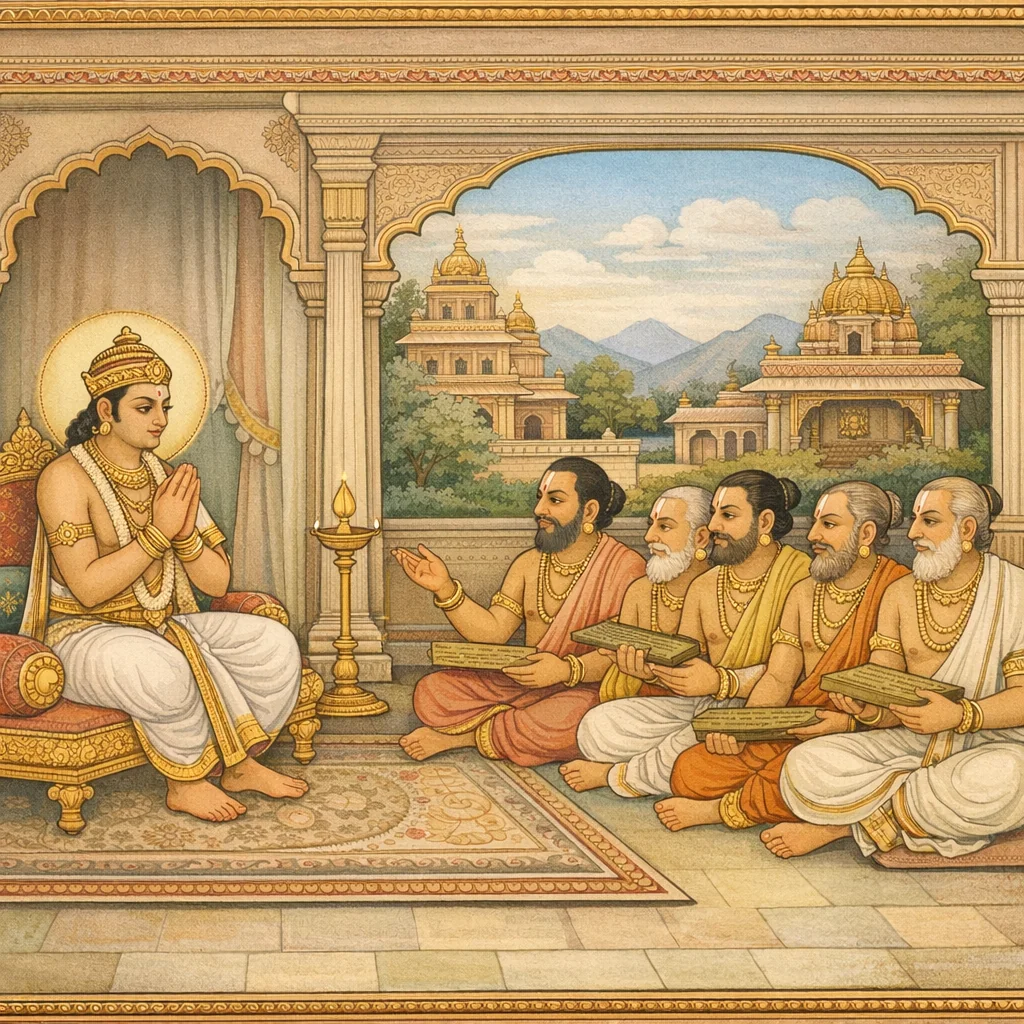
This chapter proclaims the māhātmya of keeping the Vaiśākhī night-vigil (jāgara) before Mahākāla within a tīrtha setting. At the ṛṣis’ request, Sūta expands on Mahākāla’s greatness by describing King Rudrasena of the Ikṣvāku line, who each year goes with a modest retinue to Camatkārapura-kṣetra to keep vigil—observing upavāsa (fasting), devotional song and dance, recitation, and Vedic study. At dawn he bathes, maintains purity observances, and gives abundant dāna to brāhmaṇas, ascetics, and the distressed; the text credits this devotion with prosperity and the dispersal of enemies, presenting bhakti as an ethical-political discipline. Questioned by learned brāhmaṇas about the vigil’s rationale and fruit, the king recounts a former birth: as a poor merchant in Vidiśā during a long drought, he and his wife migrated toward Saurāṣṭra and reached the environs of Camatkārapura, where they found a lotus-filled lake. Unable to sell the lotuses for food, they sheltered in a ruined temple and, hearing worship, discovered the Mahākāla vigil. Choosing to offer the lotuses in pūjā rather than trade, they remained awake through hunger and circumstance; by morning the merchant died, and the wife performed satī (self-immolation). By the power of that devotion he is reborn as king of Kāntī, she as a princess who remembers the past and reunites with him through svayaṃvara. The chapter ends with brāhmaṇas’ communal affirmation, the establishment of the annual vigil, and a phala conclusion declaring the māhātmya sin-destroying and liberation-adjacent.
Shlokas
Verse 1
। ऋषय ऊचुः । महाकालस्य माहात्म्यं विस्तरेण महामते । अस्माकं सूतज ब्रूहि सर्वं वेत्ति यतो भवान्
The sages said: “O great-minded one, tell us in detail the greatness of Mahākāla. O son of Sūta, explain it all to us, for you are one who knows everything.”
Verse 2
सूत उवाच । आसीत्पूर्वं महीपाल इक्ष्वाकुकुलनन्दनः । रुद्रसेन इति ख्यातः सर्वशत्रुनिषूदनः
Sūta said: “Formerly there was a king, ruler of the earth, a delight of the Ikṣvāku lineage, renowned as Rudrasena—one who destroyed all enemies.”
Verse 3
समुद्र इव गांभीर्ये सौम्यत्वे शशिसंनिभः । वीर्ये यथा सहस्राक्षो रूपे कन्दर्पसन्निभः
In gravity he was deep as the ocean; in gentleness, like the moon; in valor, like Indra of a thousand eyes; and in beauty, comparable to Kandarpa.
Verse 4
तस्य कांतीति विख्याता पुरी सर्वगुणान्विता । राजधान्यभवच्छ्रेष्ठा प्रोच्चप्राकारतोरणा
His city, renowned as Kāntī, was endowed with every excellence. It became the foremost of capitals, with lofty ramparts and imposing gateways.
Verse 5
तथैवासीत्प्रिया तस्य भार्या परमसंमता । ख्याता पद्मवतीनाम रूपौदार्य गुणान्विता
Likewise, he had a beloved wife, highly esteemed—renowned as Padmavatī—endowed with beauty, generosity of spirit, and noble qualities.
Verse 6
स तया सहितो राजा वैशाख्या दिवसे सदा । समभ्येति निजस्थानात्सैन्येनाल्पेन संवृतः
Accompanied by her, the king would always set out on a day in the month of Vaiśākha, departing from his own place, surrounded by only a small retinue.
Verse 7
चमत्कारपुरे क्षेत्रे पीठे तत्र द्विजोत्तमाः । महाकालस्य देवस्य पुरतो रात्रिजागरम् । करोति श्रद्धया युक्तः सभार्यः स महीपतिः
O best of the twice-born, there at the sacred seat in the holy field of Camatkārapura, that king, together with his wife, performed a night-long vigil before Lord Mahākāla, filled with faith.
Verse 8
उपवासपरो भूत्वा ध्यायमानो महेश्वरम् । गीतवाद्येन हृद्येन नृत्येन द्विजसत्तमाः । धर्माख्यानेन विप्राणां वेदाध्ययनविस्तरैः
Having undertaken fasting (upavāsa) and meditating on Maheśvara, O best of brāhmaṇas, (the vigil) was observed with pleasing song and instruments, with dance, with brāhmaṇas’ recitations of dharma, and with extensive study and chanting of the Vedas.
Verse 9
ततः प्रातः समुत्थाय स्नात्वा धौतांबरः शुचिः । ददौ दानानि विप्रेभ्यस्तपस्विभ्यो विशेषतः
Then, rising early at dawn, he bathed, donned freshly washed garments, and—purified—bestowed gifts, especially upon brāhmaṇas and ascetics.
Verse 10
दीनांधकृपणेभ्यश्च तथान्येभ्यः सहस्रशः । वर्षेवर्षे सदैवं स समभ्येत्य महीपतिः । वैशाख्यां जागरं तस्य देवस्य पुरतोऽकरोत्
He also gave to the poor, the blind, and the destitute, and to thousands of others besides. Thus, year after year, that king would come and, in the month of Vaiśākha, keep the night vigil before that Lord.
Verse 11
यथायथा स भूपालः कुरुते रात्रिजागरम् । महाकालाग्रतस्तस्य तथा वृद्धिः प्रजायते
In whatever measure that king keeps the night vigil before Mahākāla, in that very measure does his prosperity increase, for it is done in Mahākāla’s presence.
Verse 12
शत्रवो विलयं यांति लक्ष्मीर्वृद्धिं प्रगच्छति । एकदा स समायातस्तत्र यावन्महीपतिः
His enemies fall to ruin, and Lakṣmī—his fortune—ever increases. Once, that king arrived there, at that holy place.
Verse 13
तत्रैव दिवसे तावन्महाकालस्य चाग्रतः । अपश्यद्ब्राह्मणश्रेष्ठान्नानादिग्भ्यः समागतान्
On that very day, before Mahākāla, he beheld foremost brāhmaṇas assembled from many directions.
Verse 14
वेदाध्ययनसंपन्नान्व्रतनिष्ठापरायणान् । एके तत्र कथाश्चक्रुः सुपुण्या ब्राह्मणोत्तमाः
They were accomplished in Vedic study and steadfast in the observance of vows. There, some supremely meritorious brāhmaṇas began sacred discussions.
Verse 15
राजर्षीणां पुराणानां देवर्षीणां तथा परे । तीर्थानां च तथा चान्ये ब्रह्मर्षीणां तथा परे । यज्ञानां सागराणां च द्वीपानां च मनोहराः
Some spoke of royal sages and the Purāṇas; others spoke of divine seers. Some discoursed on tīrthas, others on brahmarṣis—along with captivating accounts of sacrifices, oceans, and islands.
Verse 16
अथ तान्पृथिवीपालः स प्रणम्य यथाक्रमम् । उपविष्टः सभामध्ये तैः सर्वैश्चाभिनंदितः
Then the king bowed to them in due order and sat in the midst of the assembly; and all of them welcomed him with honor.
Verse 17
कस्मिंश्चिदथ संप्राप्ते कथांते ते मुनीश्वराः । पप्रच्छुर्भूमिपालं तु कौतूहलसमन्विताः
Then, when the discussion reached a certain point, those lordly sages—filled with curiosity—questioned the king.
Verse 18
वैशाखीदिवसे राजंस्त्वं सदाभ्येत्य दूरतः । वर्षेवर्षेऽस्य देवस्य पुरतो रात्रिजागरम्
“O King, on the day of Vaiśākhī you always come even from afar; year after year, before this deity, you keep the night-vigil.”
Verse 19
प्रकरोषि प्रयत्नेन त्यक्त्वान्याः सकलाः क्रियाः । स्नानदानादिका याश्च निर्दिष्टाः शास्त्रचिंतकैः
You perform it with great effort, setting aside all other rites—even bathing and charity and the like, as prescribed by the sages who ponder the śāstras.
Verse 20
न ते यदि रहस्यं स्यात्तदाऽशेषं प्रकीर्तय । नूनं त्वं वेत्सि तत्सर्वं यत्फलं रात्रिजागरे
If it is no secret to you, then proclaim it in full. Surely you know completely what fruit is gained by the night-vigil.
Verse 22
अहमासं वणिग्जात्या पुरा वै वैदिशे पुरे । निर्धनो बंधुभिर्मुक्तः परिभूतः पदेपदे
Formerly, in the city of Vidiśā, I was born into a merchant family. Yet I was poor—forsaken by my kin and insulted at every step.
Verse 23
कस्यचित्त्वथ कालस्य भगवान्पाकशासनः । वैदिशे नाकरोद्वृष्टिं सप्त वर्षाणि पंच च
Then, for a certain time, the blessed Pākaśāsana (Indra) caused no rain to fall in Vidiśā—for seven years, and five more.
Verse 24
ततो वृष्टिनिरोधेन सर्वे लोकाः क्षुधार्द्दिताः । अन्नाभावान्मृताः केचित्केचिद्देशांतरे गताः
Because the rains were restrained, all the people were tormented by hunger. Some died for want of food, while others departed to distant lands.
Verse 25
ततोऽहं स्वां समादाय पत्नीं क्षुत्क्षामगात्रिकाम् । अश्रुपूर्णमुखीं दीनां प्रस्खलन्तीं पदेपदे
Then I took my own wife with me—her body wasted by hunger, her face brimming with tears, wretched and stumbling at every step.
Verse 26
सौराष्ट्रं मनसि ध्यात्वा प्रस्थितस्तदनन्तरम् । सुभिक्षं लोकतः श्रुत्वा जीवनाय द्विजोत्तमाः
Fixing Saurāṣṭra in my mind, I set out at once—having heard from people that abundance was found there, so that we might survive, O best of the twice-born.
Verse 27
क्रमेण गच्छमानोऽथ भिक्षान्नकृतभोजनः । आनर्तविषयं प्राप्तश्चमत्कारपुरांतिके
Proceeding gradually, living on food obtained by begging, I reached the land of Ānarta, near the city called Camatkāra.
Verse 28
तत्र रम्यं मया दृष्टं पद्मिनीखण्डमंडितम् । सरः स्वच्छोदकापूर्णं जलपक्षिभिरावृतम्
There I saw a delightful lake, adorned with clusters of lotus-plants—filled with clear water and covered with water-birds.
Verse 29
ततोऽहं तत्समासाद्य स्नातः शीतेन वारिणा । क्षुधार्तश्च तृषार्तश्च श्रमार्तश्च विशेषतः
Reaching that lake, I bathed in its cool water—though I was afflicted by hunger, tormented by thirst, and especially worn down by fatigue.
Verse 30
अथाहं भार्यया प्रोक्तो गृहाणेश जलाशयात् । जलजानि क्रयार्थाय येन स्यादद्य भोजनम्
Then my wife said to me: “O lord, gather the water-born lotuses from this reservoir, so that we may sell them and have food today.”
Verse 32
ततो मया गृहीतानि पद्मानि द्विजसत्तमाः । विक्रयार्थं प्रभूतानि वाच्छमानेन भोजनम्
So I gathered many lotuses for selling, O best of the twice-born, desiring thereby to obtain food.
Verse 33
चमत्कारपुरं प्राप्य ततोऽहं द्विजसत्तमाः । भ्रांतस्त्रिकेषु सर्वेषु चत्वरेषु गृहेषु च
Having reached the city called Camatkārapura, O best of Brāhmaṇas, I wandered everywhere—through the crossroads and squares, and even from house to house.
Verse 34
न कश्चित्प्रतिगृह्णाति तानि पद्मानि मानवः । मम भाग्यवशाल्लोको जातः क्रयपराङ्मुखः
No person would accept those lotuses. By the turn of my ill-fortune, people had become averse to buying.
Verse 35
अथ क्षुत्क्षामकण्ठस्य श्रांतस्य मम भास्करः । अस्ताचलमनुप्राप्तः संध्याकालस्ततोऽभवत्
Then, as I—my throat parched with hunger and weariness—grew exhausted, the sun reached the western mountain, and evening twilight came.
Verse 36
ततो वैराग्यमापन्नः सुप्तोऽहं भग्नमंदिरे । तानि पद्मानि भूपृष्ठे निधाय सह भार्यया
Then, overcome by dispassion, I fell asleep in a ruined temple, placing those lotuses upon the ground together with my wife.
Verse 37
अथार्धरात्रे संप्राप्ते श्रुतो गीतध्वनिर्मया । ततश्च चिंतितं चित्ते जागरोऽयमसंशयम्
When midnight arrived, I heard the sound of singing; then I reflected in my mind: “This is surely a night-vigil (jāgara).”
Verse 38
तस्माद्गच्छामि चेत्कश्चित्पद्मान्येतानि मे नरः । मूल्येन प्रतिगृह्णाति भोजनं जायते ततः
Therefore I shall go—if some man will accept these lotuses from me for a price, then food will be obtained from that.
Verse 39
एवं विनिश्चयं कृत्वा पद्मान्यादाय सत्वरम् । सभार्यः प्रस्थितस्तत्र यत्र गीतस्य निःस्वनः
Having thus resolved, I quickly took up the lotuses and, together with my wife, set out toward that place from which the resonance of singing was coming.
Verse 40
ततश्चायतने तस्मिन्प्राप्तोऽहं मुनिपुंगवाः । अपश्यं देवदेवेशं महाकालं प्रपूजितम् । अग्रस्थितैर्द्विजश्रेष्ठैर्जपगीतपरायणैः
Then, having reached that sanctuary, O foremost of sages, I beheld Mahākāla—the Lord of the lords of gods—being duly worshipped, while eminent Brāhmaṇas stood in front, devoted to japa and sacred singing.
Verse 41
एके नृत्यं प्रकुर्वंति गीतमन्ये जपं परे । अन्ये होमं द्विजश्रेष्ठा धर्माख्यानमथापरे
Some performed dancing; others sang; some engaged in japa, the repetition of sacred mantras. Others, O best of Brāhmaṇas, performed homa, the fire-offering, while still others recited teachings and narratives of dharma.
Verse 42
ततः कश्चिन्मया पृष्टः क्रियते जागरोऽत्र किम् । क एते जागरासक्ता लोकाः कीर्तय मे द्रुतम्
Then I asked someone: “Why is a night-vigil (jāgara) being observed here? Who are these people devoted to the vigil? Tell me quickly.”
Verse 43
तेनोक्तमेष देवस्य महाकालस्य जागरः । क्रियते ब्राह्मणैर्भक्त्या उपवासपरायणैः
He replied: “This is the night-vigil of the Lord Mahākāla. It is performed by brāhmaṇas with devotion, steadfast in fasting.”
Verse 44
अद्य पुण्यतिथिर्नाम वैशाखी पुण्यदा परा । यस्यामस्य पुरो भक्त्या नरः कुर्यात्प्रजागरम् । महाकालस्य देवस्य सौख्यं प्राप्नोत्यसंशयम्
“Today is the sacred lunar day called Vaiśākhī, supremely bestowing merit. On this day, if a person keeps a devotional night-vigil before this Lord Mahākāla, he attains the Lord’s grace and well-being—without doubt.”
Verse 45
संति पद्मानि मे यच्छ मूल्यमादाय भद्रक । भोजनार्थमहं दद्मि कलधौतपलत्रयम्
“I have lotus-flowers—give them to me, good sir, and take their price. For food, I shall give three palas of gold.”
Verse 46
ततोऽवधारितं चित्ते मया ब्राह्मणसत्तमाः । पूजयामि महाकालं पद्मैरेतैः सुरेश्वरम्
Then I resolved in my heart, O best of brāhmaṇas: “With these lotuses I shall worship Mahākāla, the Lord of the gods.”
Verse 47
न मया सुकृतं किंचिदन्यदेहांतरे कृतम् । नियतं तेन संभूत इत्थंभूतोऽस्मि दुर्गतः
“No meritorious deed was performed by me in any former embodiment. Surely because of that, I have come to this condition—I am fallen into misfortune.”
Verse 48
परं क्षुत्क्षामकंठेयं भार्या मे प्रियवादिनी । अन्नाभावान्न संदेहः प्रातर्यास्यति संक्षयम्
“Worse still, my sweet-speaking wife—her throat is parched and weakened by hunger. From lack of food, there is no doubt she will waste away by morning.”
Verse 49
एवं चिंतयमानस्य मम सा दयिता ततः । प्रोवाच मधुरं वाक्यं विनयावनता स्थिता
As I was thinking in this way, my beloved then spoke gentle words, standing with her head bowed in humility.
Verse 50
मा नाथ कुरु पद्मानां विक्रयं धनलोभतः । कुरुष्व च हितं वाक्यं यत्ते वक्ष्यामि सांप्रतम्
“Do not, my lord, sell the lotuses out of greed for money. Do what is truly beneficial—listen to what I shall tell you now.”
Verse 51
उपवासो बलाज्जातः सस्याभावादसंशयम् । अस्माकं जागरं चापि भविष्यति बुभुक्षया
“Fasting has come upon us by force, without doubt, because there is no grain. And our night-vigil too will happen—through hunger itself.”
Verse 52
तत्रोभाभ्यां कृतं स्नानं दिवा सरसि शोभने । घर्मार्त्ताभ्यां श्रमार्त्ताभ्यां कृतदेवार्चनं तथा
There, the two of them bathed by day in a beautiful lake; and though afflicted by heat and weariness, they likewise performed worship of the deity.
Verse 53
तस्माद्देवं महाकालं पूजयामोऽधुना वयम् । पद्मैरेतैः परं श्रेय आवयोर्येन जायते
“Therefore, let us now worship the god Mahākāla. By offering these lotus-flowers, the highest welfare and auspicious good will arise for us both.”
Verse 54
राजोवाच । उभाभ्यामथ हृष्टाभ्यां पूजितोऽयं महेश्वरः । तैः पद्मैः सत्त्वमास्थाय कृत्वा पूजां द्विजोत्तमाः
The King said: “Then, O best of Brahmins, this Maheśvara was worshiped by the two of them, delighted at heart. With those lotuses, taking to purity and steadfastness, they performed the worship.”
Verse 55
क्षुत्पीडया समायाता नैव निद्रा कथंचन । स्वल्पापि मंदिरे चात्र स्थितयोर्हरसन्निधौ
“Oppressed by hunger, sleep did not come to us at all—not even a little—while we stayed here in the temple, in the very presence of Hara (Śiva).”
Verse 56
ततः प्रभातसमये प्रोद्गते रविमंडले । मृतोऽहं क्षुधयाविष्टः स्थानेऽत्रैव द्विजोत्तमाः
Then, at dawn, when the sun’s orb had risen, I died right here in this very place, overcome by hunger—O best of Brahmins.
Verse 57
अथ सा दयिता मह्यं तदादाय कलेवरम् । हर्षेण महताविष्टा प्रविष्टा हव्यवाहनम्
Then my beloved, taking up that body of mine, entered the sacrificial fire, filled with great joy.
Verse 58
तत्प्रभावादहं जातः कांतीनाथो महीपतिः । दशार्णाधिपतेः कन्या सापि जातिस्मरा सती
By that very power, I was born as Kāṃtīnātha, a ruler of the earth; and she too was born as the daughter of the lord of Daśārṇa—virtuous, and endowed with memory of her former birth.
Verse 59
ततः स्वयंवरं प्राप्ता मां विज्ञाय निजं पतिम् । मयापि सैव विज्ञाय पूर्वपत्नी समाहृता
Thereafter, when she came to her svayaṃvara, recognizing me as her own husband, she chose me; and I too, recognizing her as the wife from my former life, accepted and took her as my consort.
Verse 60
एतस्मात्कारणादस्य महाकालस्य जागरम् । वर्षेवर्षे च वैशाख्यां करोमि द्विजसत्तमाः
For this reason, O best of Brahmins, I perform the night-vigil (jāgaraṇa) for Mahākāla every year, in the month of Vaiśākha.
Verse 61
अनया प्रियया सार्धं पुष्पधूपानुलेपनैः । पूजयित्वा महाकालं सत्यमेतन्मयोदितम्
Together with this beloved, having worshiped Mahākāla with flowers, incense, and fragrant unguents, I declare this to be the truth.
Verse 62
कृतो विप्रा मया त्वेष स तदा रात्रिजागरः । यथाप्येतत्फलं जातं देवस्यास्य प्रभावतः
O Brahmins, I truly performed that night-vigil then; and thus this result came to be—through the power of this very deity.
Verse 63
अधुना श्रद्धया युक्तो यथोक्तविधिना ततः । यत्करोमि न जानामि किं मे संयच्छते फलम्
Now, endowed with faith and following the prescribed procedure, I perform this; yet I do not know what fruit it will bestow upon me.
Verse 64
एतद्वः सर्वमाख्यातं मया सत्यं द्विजोत्तमाः । येन सत्येन तेनैष महाकालः प्रसीदतु
All this I have truthfully related to you, O best of the twice-born. By that very truth, may this Mahākāla be pleased.
Verse 65
सूत उवाच । एतच्छ्रुत्वा द्विजश्रेष्ठा विस्मयोत्फुल्ललोचनाः । प्रचक्रुर्जपतेस्तस्य साधुवादाननेकशः
Sūta said: Hearing this, the foremost brāhmaṇas—eyes widened in wonder—repeatedly offered many words of praise to that king, the reciter.
Verse 66
ब्राह्मणा ऊचुः । सत्यमुक्तं महीपाल त्वयैतदखिलं वचः । महाकालप्रसादेन न किंचिद्दुर्लभं भुवि
The brāhmaṇas said: Truly have you spoken, O king, recounting this whole matter in full. By the grace of Mahākāla, nothing on earth is difficult to attain.
Verse 67
तस्माद्विशेषतः सर्वे वर्षेवर्षे वयं नृप । करिष्यामोऽस्य देवस्य श्रद्धया रात्रिजागरम्
Therefore, O king, all of us—most especially—will, year after year, with faith perform the night-long vigil for this deity.
Verse 68
ततः स पार्थिवस्ते च सर्व एव द्विजातयः । प्रचक्रुर्जागरं तस्य महाकालस्य संनिधौ
Then that king and all those twice-born indeed kept the vigil in the very presence of Mahākāla.
Verse 69
विशेषाद्धर्षसंयुक्ता विविधैर्गीतवादनैः । धर्माख्यानैश्च नृत्यैश्च वेदोच्चारैः पृथग्विधैः । तदारभ्य नृपाः सर्वे प्रचक्रुर्विस्मयान्विताः
With special joy—through various songs and instrumental music, through narrations of dharma, through dances, and through diverse recitations of the Vedas—from that time onward all the kings continued to perform it, filled with wonder.
Verse 70
ततः प्रभाते विमले समुत्थाय स भूपतिः । पूजयित्वा महाकालं तांश्च सर्वान्द्विजोत्तमान् । अनुज्ञाप्य ययौ हृष्टः ससैन्यः स्वपुरं प्रति
Then, in the pure morning, the king rose; having worshipped Mahākāla and honored all those foremost brāhmaṇas, and having taken their leave, he departed joyfully with his army toward his own city.
Verse 71
ततः कालेन संप्राप्य देहान्तं स महीपतिः । संप्राप्तः परमं स्थानं जरामरणवर्जितम्
Thereafter, in due course, when his bodily life came to its end, that king attained the supreme abode—free from old age and death.
Verse 72
एतद्वः सर्वमाख्यातं महाकालसमुद्भवम् । माहात्म्यं ब्राह्मण श्रेष्ठाः सर्वपातकनाशनम्
Thus have I narrated to you in full this māhātmya born of Mahākāla, O best of brāhmaṇas—a sacred account whose glory destroys all sins.
Verse 210
राजोवाच । रहस्यं परमं चैव यत्पृष्टोऽहं द्विजोत्तमाः । युष्माभिः कीर्तयिष्यामि तथाप्यखिलमेव हि
The King said: “O best of the twice-born, since you have asked me about this supreme secret, I shall proclaim it to you—indeed, I will relate it in full.”