Adhyaya 37
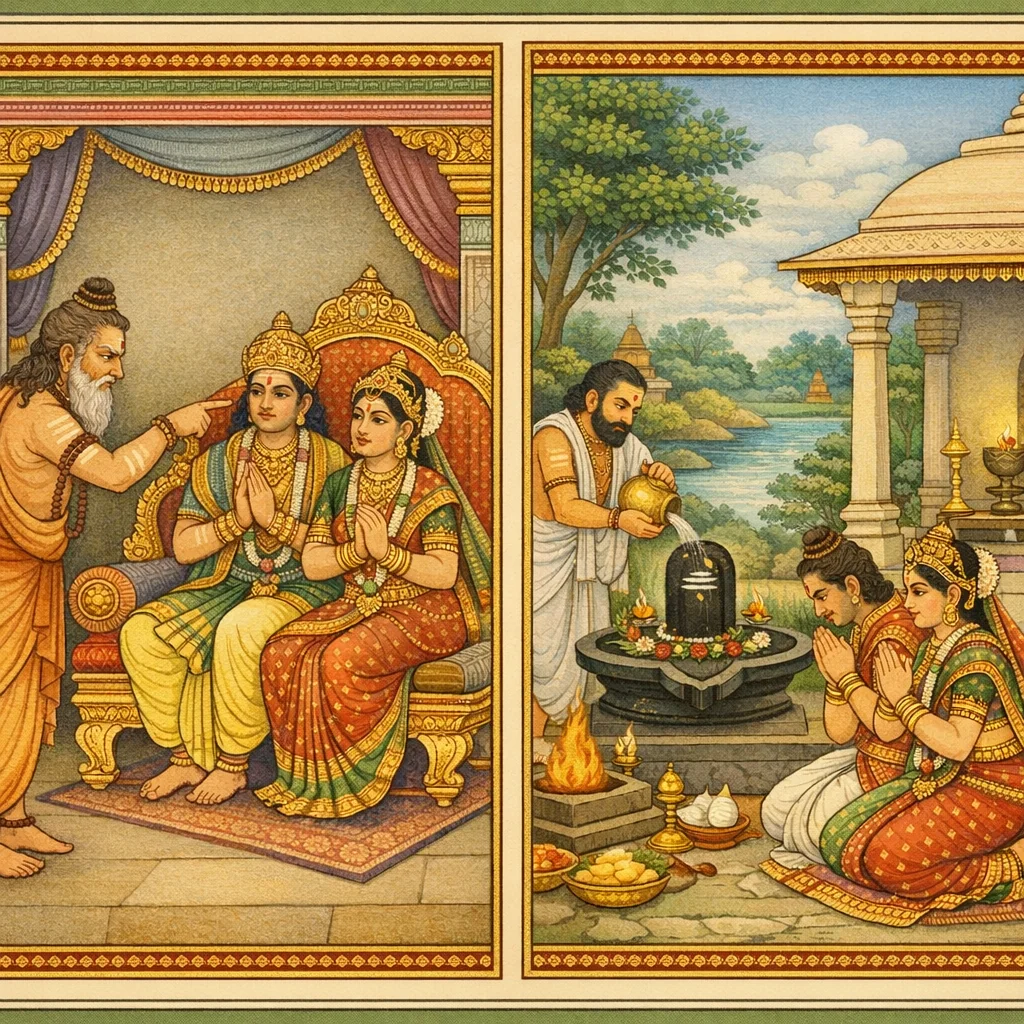
Chapter 37 portrays an assembly of learned Brahmins absorbed in Vedic interpretation, ritual discussion, and debate, yet clouded by scholarly pride. The visiting sage Durvāsā asks them to indicate a place where a Śiva abode (āyatana/prāsāda) may be established, but they fail to respond. Seeing their arrogance, Durvāsā utters a curse as a moral critique of three intoxications—knowledge, wealth, and lineage—foretelling lasting social discord. An elder Brahmin, Suśīla, follows the sage, apologizes, and offers land for the temple. Durvāsā accepts, performs auspicious rites, and builds the Śiva shrine accordingly. The wider Brahmin group, angered by Suśīla’s unilateral gift, ostracizes him and maligns both him and the project, declaring the structure “incomplete” in name and repute and associating it with the designation Duḥśīla. Yet the narrative ends by affirming the shrine’s renown: mere darśana is said to remove sin, and beholding the central liṅga on Śuklāṣṭamī with contemplative attention is declared to prevent the seer from experiencing hell-realms. The chapter contrasts humility and restitution with factional pride, while upholding the ritual-theological power of temple foundation and liṅga-darśana.
Shlokas
Verse 2
। सूत उवाच । अथापश्यत्स विप्राणां वृन्दं वृन्दारकोपमम् । संनिविष्टं धरापृष्ठे लीलाभाजि द्विजोत्तमाः । एके वेदविदस्तत्र वेदव्याख्यानतत्पराः । परस्परं सुसंक्रुद्धा विवदंति जिगीषवः
Sūta said: Then he beheld a multitude of brāhmaṇas, like a host of gods, seated upon the earth in that place of sacred play. Some were knowers of the Veda, intent on expounding it; yet, inflamed against one another, they disputed, each eager to prevail.
Verse 3
यज्ञविद्याविदोऽन्येऽपि यज्ञाख्यानपरायणाः । तत्र विप्राः प्रदृश्यंते शतशो ब्रह्मवादिनः
Others too were versed in the science of sacrifice, devoted to the lore and exposition of the yajñas. There, hundreds of brāhmaṇas—teachers who discourse on Brahman—were to be seen.
Verse 4
अन्ये ब्राह्मणशार्दूला वेदांगेषु विचक्षणाः । प्रवदंति च संदेहान्वृन्दानामग्रतः स्थिताः
Other brāhmaṇas, tiger-like in prowess, expert in the Vedāṅgas, stood at the fore of the gathered circles and openly discussed their doubts and questions.
Verse 5
वेदाभ्यासपराश्चान्ये तारनादेन सर्वशः । नादयंतो दिशां चक्रं तत्र सम्यग्द्विजोत्तमाः
Others—excellent twice-born—were wholly intent on Vedic recitation, sounding the resonant ‘tāra’ chant everywhere, so that the entire circle of directions echoed there.
Verse 6
अन्ये कौतूहलाविष्टाः संचरान्विषमान्मिथः । पप्रच्छुर्जहसुश्चान्ये ज्ञात्वा मार्गप्रवर्तिनम्
Others, seized by curiosity, moved about among the uneven paths; some questioned, while others laughed, having recognized the one who was guiding the way.
Verse 7
स्मृतिवादपराश्चान्ये तथान्ये श्रुतिपाठकाः । संदेहान्स्मृतिजानन्ये पृच्छंति च परस्परम्
Some were devoted to expounding the Smṛti, while others recited the Śruti; and those learned in Smṛti questioned one another about their doubts.
Verse 8
कीर्तयंति तथा चान्ये पुराणं ब्राह्मणोत्तमाः । वृद्धानां पुरतस्तत्र सभामध्ये व्यवस्थिताः
So too, other foremost brāhmaṇas, seated in the midst of the assembly before the elders, recited and celebrated the Purāṇa there.
Verse 9
अथ तान्स मुनिर्दृष्ट्वा ब्राह्मणान्संशितव्रतान् । अभिवाद्य ततः प्राह सादरं विनयान्वितः
Then the sage, seeing those brāhmaṇas firm in their vows, respectfully greeted them and spoke with reverence and humility.
Verse 10
मम बुद्धिः समुत्पन्ना शम्भोरायतनं प्रति । कर्तुं ब्राह्मणशार्दूलास्तस्मात्स्थानं प्रदर्श्यताम्
A resolve has arisen in me to build a sanctuary of Śambhu; therefore, O tiger-like brāhmaṇas, please point out the proper site.
Verse 11
तवाहं देवदेवस्य शम्भोः प्रासादमुत्तमम् । विधायाराधयिष्यामि तमेव वृषभध्वजम्
For you, I shall construct an excellent temple of Śambhu, the God of gods, and I shall worship that very Lord whose banner bears the bull.
Verse 12
स एवं जल्पमानोऽपि मुहुर्मुहुरतंद्रितः । न तेषामुत्तरं लेभे शुभं वा यदि वाशुभम्
Though he spoke thus again and again without weariness, he received no reply from them—neither favorable nor unfavorable.
Verse 13
ततः कोपपरीतात्मा समुनिस्तान्द्विजोत्तमान् । शशाप तारशब्देन यथा शृण्वंति कृत्स्नशः
Then the sage, his mind overcome by anger, cursed those excellent twice-born—uttering it with a piercing ‘tāra’ sound, so that all could hear it clearly.
Verse 14
दुर्वासा उवाच । विद्यामदो धनमदस्तृतीयोऽभिजनोद्भवः । एते मदावलिप्तानामेत एव सतां दमाः
Durvāsā said: “Pride of learning, pride of wealth, and third, pride born of noble lineage—these are the very intoxications that stain the arrogant; and these very same factors become the disciplines, the means of restraint, for the truly good.”
Verse 15
तत्र येऽपि हि युष्माकं मदा एव व्यवस्थिताः । यतस्ततोऽन्वयेऽप्येवं भविष्यति मदान्विताः
“And those among you who are established only in such prides—wherever they go, even in their family line, the same condition will arise: they will be marked by pride.”
Verse 16
सदा सौहृदनिर्मुक्ताः पितरोऽपि सुतैः सह । भविष्यंति पुरे ह्यस्मिन्किं पुनर्बांधवादयः
“In this city, even fathers together with their sons will always be bereft of goodwill; what then need be said of other relatives and the rest?”
Verse 17
एवमुक्त्वा स विप्रेन्द्रो निवृत्तस्तदनन्तरम् । अपमानं परं प्राप्य ब्राह्मणानां द्विजोत्तमाः
Having spoken thus, that foremost brāhmaṇa withdrew at once. And the best of the twice-born, having received the gravest insult from the brāhmaṇas, departed.
Verse 18
अथ तन्मध्यगो विप्र आसीद्वृद्धतमः सुधीः । सुशील इति विख्यातो वेदवेदांगपारगः
Then, among them there was a brāhmaṇa—very aged and wise—known as Suśīla, who had mastered the Vedas and the Vedāṅgas.
Verse 19
स दृष्ट्वा तं मुनिं क्रुद्धं गच्छंतमपमानितम् । सत्वरं प्रययौ पृष्ठे तिष्ठ तिष्ठेति च ब्रुवन्
Seeing that sage, angry and departing after being insulted, he hurried after him, calling out, “Stop, stop!”
Verse 20
अथासाद्य गतं दूरं प्रणिपत्य मुनिं च सः । प्रोवाच क्षम्यतां विप्र विप्राणां वचनान्मम
Then, reaching the sage who had gone far, he bowed down to him and said: “O brāhmaṇa, please forgive, on account of the words spoken by us brāhmaṇas.”
Verse 21
एतैः स्वाध्यायसंपन्नैर्न श्रुतं वचनं तव । नोत्तरं तेन संदत्तं सत्यमेतद्ब्रवीम्यहम्
“These men—though endowed with sacred study (svādhyāya)—did not listen to your words, nor did they offer you any reply. This I declare to be the truth.”
Verse 22
तस्माद्भूमिर्मया दत्ता शंभुहर्म्यकृते तव । अस्मिन्स्थाने द्विजश्रेष्ठ प्रासादं कर्तुमर्हसि
Therefore I have granted you this land for the building of Śambhu’s temple-mansion. O best of the twice-born, in this very place you should raise a prāsāda, a sacred shrine.
Verse 23
तस्य तद्वचनं श्रुत्वा दुर्वासा हर्षसंयुतः । क्षितिदानोद्भवां चक्रे स्वस्ति ब्राह्मणसत्तमाः । प्रासादं निर्ममे पश्चात्तस्य वाक्ये व्यवस्थितः
Hearing those words, Durvāsā, filled with joy, uttered an auspicious blessing born of the gift of land. Then, abiding by his own word, that foremost brāhmaṇa later built the prāsāda, the temple.
Verse 24
अथ ते ब्राह्मणा ज्ञात्वा सुशीलेन वसुन्धरा । देवतायतनार्थाय दत्ता तस्मै तपस्विने
Then those brāhmaṇas, learning that Suśīla had granted the land to that ascetic for the purpose of building a shrine for the deity, were stirred within.
Verse 25
सर्वे कोपसमायुक्ताः सुशीलं प्रति ते द्विजाः
All those twice-born brāhmaṇas, filled with anger, turned against Suśīla.
Verse 26
ततः प्रोचुः समासाद्य येन शप्ता दुरात्मना । वयं तस्मै त्वया दत्ता प्रासादार्थं वसुन्धरा
Then they approached him and said: “By that wicked man we have been cursed. And by you this land has been granted to him for the sake of building a prāsāda, a temple.”
Verse 27
तस्मात्त्वमपि चास्माकं बाह्य एव भविष्यसि । सुशीलोऽपि हि दुःशीलो नाम्ना संकीर्त्यसे बुधैः
Therefore you too shall be cast outside our community. Though you are named Suśīla, the wise will proclaim you by the name ‘Duḥśīla’.
Verse 28
एषोऽपि तापसो दुष्टो यः करोति शिवालयम् । नैव तस्य भवेत्सिद्धिश्चापि वर्षशतैरपि
This ascetic too is wicked—he who builds a Śiva-temple. For him there will be no accomplishment, not even after hundreds of years.
Verse 29
तथा कीर्तिकृतां लोके कीर्तनं क्रियते नरैः । ततः संपश्यतां चास्य कीर्तिर्नास्य तु दुर्मतेः
So too, in the world, people celebrate those who create true renown; but though all may look on, this ill-minded man will have no enduring fame.
Verse 30
एष दुःशीलसंज्ञो वै तव नाम्ना भविष्यति । प्रासादो नाममात्रेण न संपूर्णः कदाचन
By your very name, this will indeed come to be known as ‘Duḥśīla’. And the temple shall remain a temple only in name—never fully completed.
Verse 31
यस्मात्सौहृदनिर्मुक्ताः कृतास्तेन वयं द्विजाः । मदैस्त्रिभिः समायुक्ताः सर्वान्वयसमन्विताः
Because by him we brāhmaṇas have been made devoid of goodwill—though we were endowed with noble lineage and possessed of the three kinds of pride—therefore this consequence shall follow.
Verse 32
तस्मादेषोऽपि पापात्मा भविष्यति स कोपभाक् । तप्तं तप्तं तपो येन संप्रयास्यति संक्षयम्
Therefore, this sinful man too will become an heir to wrath; and the austerities (tapas) he has practiced again and again will, in the end, come to ruin.
Verse 33
एवमुक्त्वाथ ते विप्राः कोपसंरक्तलोचनाः । दुःशीलं संपरित्यज्य प्रविष्टाः स्वपुरे ततः
Having spoken thus, those brāhmaṇas—eyes reddened with anger—abandoned Duḥśīla and then entered their own city.
Verse 34
दुःशीलोऽपि बहिश्चक्रे गृहं तस्य पुरस्य च । देवशर्मा यथापूर्वं संत्यक्तः पुरवासिभिः
Though Duḥśīla acted otherwise, Devaśarmā’s house was kept outside that town; and, as before, Devaśarmā remained abandoned by the city’s residents.
Verse 35
तस्यान्वयेऽपि ये जातास्ते बाह्याः संप्रकीर्तिताः । बाह्याः क्रियासु सर्वासु सर्वेषां पुरवासिनाम्
Even those born in his lineage were declared ‘outsiders’; in all rites and customary acts, all the townspeople treated them as outside the community.
Verse 36
सूत उवाच । एवं तेषु द्विजेंद्रेषु शापं दत्त्वा गतेषु च । दुर्वासाः प्राह दुःशीलं कोपसंरक्तलो चनः
Sūta said: When those foremost brāhmaṇas had thus pronounced their curse and departed, Durvāsā—his eyes reddened with anger—addressed Duḥśīla.
Verse 37
मम सिद्धिं गता मंत्राः समर्थाः शत्रुसंक्षये । आथर्वणास्तथा चान्ये वेदत्रयसमुद्भवाः
The mantras have attained success through me; they are capable of destroying enemies—Atharvanic mantras as well as others that arise from the three Vedas.
Verse 38
तस्मादेतत्पुरं कृत्स्नं पशुपक्षि समन्वितम् । नाशमद्य नयिष्यामि यथा शत्रोर्हि दुष्टकः
Therefore I shall today bring this entire city—together with its beasts and birds—to ruin, just as one would destroy a wicked enemy.
Verse 39
दुःशील उवाच । नैतद्युक्तं नरश्रेष्ठ तव कर्तुं कथंचन । ब्राह्मणानां कृते कर्म ब्राह्मणस्य विशेषतः
Duḥśīla said: “This is not proper for you to do in any way, O best of men—an act done on account of brāhmaṇas, and especially affecting a brāhmaṇa.”
Verse 40
निघ्नंतो वा शपंतो वा वदंतो वापि निष्ठुरम् । पूजनीयाः सदा विप्रा दिव्यांल्लोकानभीप्सुभिः
Whether they strike, or curse, or even speak harshly, brāhmaṇas should always be honored by those who seek the divine worlds.
Verse 41
ब्राह्मणैर्निर्जितैर्मेने य आत्मानं जयान्वितम् । तामिस्रादिषु घोरेषु नरकेषु स पच्यते
He who, though overcome by brāhmaṇas, still imagines himself victorious—he is cooked in dreadful hells such as Tāmisra.
Verse 42
आत्मनश्च पराभूतिं तस्माद्विप्रात्सहेत वै । य इच्छेद्वसतिं स्वर्गे शाश्वतीं द्विजसत्तम
Therefore one should endure even one’s own humiliation at the hands of a brāhmaṇa, O best of brāhmaṇas, if one desires an everlasting dwelling in heaven.
Verse 43
एतेषां ब्राह्मणेंद्राणां क्षेत्रे सिद्धिं समागताः । मंत्रास्ते तत्कथं नाशं त्वमेतेषां करिष्यसि
In the very sacred field of these foremost brāhmaṇas, those mantras have attained their efficacy; how, then, will you bring about the destruction of these?
Verse 44
ब्रह्मघ्ने च सुरापे च चौरे भग्नवते तथा । निष्कृतिर्विहिता सद्भिः कृतघ्ने नास्ति निष्कृतिः
For the slayer of a brāhmaṇa, for the drinker of liquor, for the thief, and likewise for one who violates trust, the righteous have prescribed means of expiation; but for the ungrateful person, no expiation is declared.
Verse 45
तस्मात्कोपो न कर्तव्यः क्षेत्रे चात्र व्यवस्थितैः । क्षमां कुरु मुनिश्रेष्ठ कृपां कृत्वा ममोपरि
Therefore, let no anger be shown by those dwelling here in this sacred field. O best of sages, grant forgiveness—show compassion toward me.
Verse 46
सूत उवाच । स तथेति प्रतिज्ञाय तत्र कृत्वावसत्तपः । प्राप्तश्च परमां सिद्धिं दुर्लभां त्रिदशैरपि
Sūta said: ‘He assented, saying “So be it,” and, having taken up residence there, he performed austerities. He attained the highest spiritual accomplishment—one difficult to obtain even for the gods.’
Verse 47
दुःशीलाख्यः क्षितौ सोऽपि प्रासादः ख्याति मागतः । यस्य संदर्शनादेव नरः पापात्प्रमुच्यते
That shrine on earth, known as “Duḥśīla,” also became renowned—by merely beholding it, a person is released from sin.
Verse 48
तस्य मध्यगतं लिंगं शुक्लाष्टम्यां सदा नरः । यः पश्यति क्षणं ध्यात्वा नरकं स न पश्यति
The liṅga set in its center—whoever, on the bright eighth lunar day (Śuklāṣṭamī), beholds it, even for a moment with mindful contemplation, he does not behold hell.