Adhyaya 36
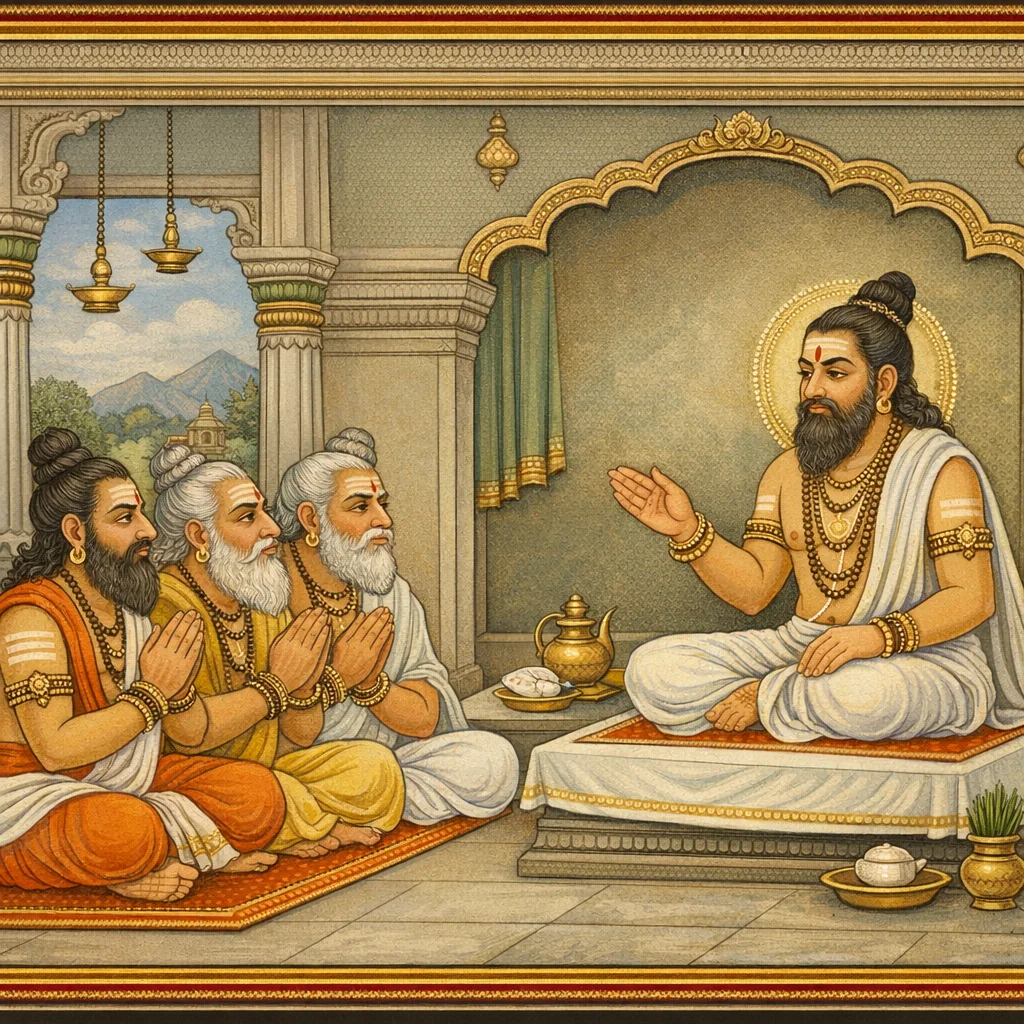
The chapter unfolds as a dialogue: the ṛṣis ask about the measure and potency of the Citreśvara pīṭha, said to have been established by Agastya. Sūta replies by extolling the site’s greatness in exalted terms and then lists the practical fruits of mantra-japa performed there. Japa at Citreśvara grants siddhi to yogins and fulfills aims such as obtaining sons, protection, and relief from afflictions; it also brings social and political favor, prosperity, and success in travel. It is further said to lessen dangers including disease, graha-pīḍā (planetary affliction), bhūta-troubles, poison, serpents, wild animals, theft, disputes, and enemies. The ṛṣis then ask how japa becomes effective. Sūta recounts a tradition heard from his father, connected with a conversation involving Durvāsas, and sets out a staged discipline: first lakṣa-japa, then additional counts, and a homa in the daśāṁśa (one-tenth) proportion, with offerings adapted to benevolent rites. The conclusion scales the regimen by yuga (kṛta, tretā, dvāpara, kali) and depicts successful completion that increases the practitioner’s agency. The power is framed as a rule-governed, controllable system rather than a random miracle.
Shlokas
Verse 1
ऋषय ऊचुः । चित्रेश्वरमिदं पीठमगस्त्यमुनिनिर्मितम् । यत्प्रमाणं यत्प्रभावं तदस्माकं प्रकीर्तय
The sages said: This sacred seat called Citreśvara was established by the sage Agastya. Tell us its measure (form and extent) and its spiritual power—describe it to us.
Verse 2
सूत उवाच । तस्य पीठस्य माहात्म्यं वक्तुं नो शक्यते द्विजाः । सहस्रेणापि वर्षाणां मुखानामयुतैरपि
Sūta said: O twice-born sages, the greatness of that sacred pīṭha cannot be fully described—even if one were to speak for a thousand years, even with tens of thousands of mouths.
Verse 3
तत्र सिद्धिमनुप्राप्ताः शतशोऽथ सहस्रशः । अनुध्यानसमायुक्ता योगिनः शंसितव्रताः
There, hundreds and thousands of yogins have attained perfection (siddhi)—absorbed in unbroken contemplation, and established in praised, disciplined vows.
Verse 4
अन्यपीठेषु या सिद्धिर्वर्षानुष्ठानतो भवेत् । दिनेनैकेन तां सिद्धिं लभंते योगिनो ध्रुवम्
The perfection that at other sacred seats may arise only through observances performed over years—here yogins surely obtain that same perfection in a single day.
Verse 5
यस्तत्राथ र्वणान्मंत्राञ्जपेच्छ्रद्धासमन्वितः । तेषामर्थोद्भवं कृत्स्नं फलं प्राप्नोति स ध्रुवम्
Whoever, filled with faith, recites there the mantras of the Atharva tradition surely attains the complete fruit that arises from their meaning and sacred power.
Verse 6
पुत्रकामो नरस्तत्र पुंलिंगान्यो जपेन्नरः । स लभेतेप्सितान्पुत्रान्यद्यपि स्याज्जरान्वितः
A man desiring sons should recite there the masculine-gender formulas; even if advanced in age, he obtains the sons he longs for.
Verse 7
गर्भोपनिषदं तत्र पुत्रकामो जपेन्नरः । अपि वन्ध्याप्रसंगेन स्यात्स पुत्रसमन्वितः
There, a man desiring sons should recite the Garbhopaniṣad; even if the misfortune of barrenness is present, he becomes endowed with offspring.
Verse 8
शत्रुलोकविनाशाय यो जपेच्छतरुद्रियम् । तस्मिन्पीठेऽरयस्तस्य सद्यो गच्छंति संक्षयम् ०
For the destruction of hostile forces, whoever recites the Śatarudriya—at that pīṭha, his enemies quickly go to ruin.
Verse 9
भूतप्रेतपिशाचादिरक्षार्थं तत्र मानवः । यो जपेद्वामदेव्यं च स स्याद्धि निरुपद्रवः
For protection from bhūtas, pretas, piśācas, and the like, a person who recites the Vāmadeva hymn there becomes truly free from affliction.
Verse 10
कोऽदादिति नरस्तत्र कन्यार्थं यो जपेदृचम् । यां कन्यां ध्यायमानस्तु स तां प्राप्नोत्यसंशयम्
A man who, in that place, recites the ṛk beginning with “Ko ’dād iti” to obtain a bride, while meditating upon the maiden he desires, attains her without doubt.
Verse 11
यो भूपालप्रसादार्थमिमं देवा निशं जपेत् । निरर्गलः प्रसादः स्यात्तस्य पार्थिवसंभवः
O gods, whoever recites this at night to gain a king’s favor receives unobstructed royal grace, born of the ruler’s goodwill.
Verse 12
स्वस्त्रीस्नेहकृतेयस्तु तं पत्नीभिरिति द्विजाः । जपेद्भार्या भवेत्साध्वी तस्य सा स्नेहवत्सला
O twice-born ones, whoever recites here the mantra beginning “taṃ patnībhir …” to win his wife’s affection—his wife becomes virtuous and devoted, loving him with steadfast tenderness.
Verse 13
यो लोकानुग्रहार्थाय जपेददितिरित्यपि । तस्य लोकानुरागः स्यात्सलाभश्च विशेषतः
Whoever, desiring the welfare of the people, recites also the (mantra) “aditir …” gains the goodwill of all, and attains special prosperity and success.
Verse 14
वित्तार्थी यो जपेत्तत्र श्रीसूक्तं मनुजो द्विजाः । सर्वतस्तस्य वित्तानि समागच्छंत्यनेकशः
O brāhmaṇas, the man who seeks wealth and recites the Śrīsūkta there—wealth comes to him from all directions, in many ways.
Verse 16
जपेद्रथंतरं साम यानार्थं तत्र यो नरः । स प्राप्नोति हि यानानि शीघ्रगानि शुभानि च
He who, desiring conveyances, recites there the Rathaṃtara Sāman—he indeed obtains auspicious vehicles and swift-going means of travel.
Verse 17
गजार्थी यो जपेत्तत्र गणानां द्विजसत्तमाः । स प्राप्नोति गजान्मर्त्यो मदप्लावितभूतलान्
O best of the twice-born, whoever there recites the (hymn) beginning “gaṇānām …” seeking elephants—such a mortal obtains elephants that, in their rut, flood the very ground with might and majesty.
Verse 18
न तद्रक्षेति यो मन्त्रं जपेद्र क्षाकृते नरः । तस्य स्यात्सर्वतो रक्षा समेषु विषमेषु च
The man who recites the mantra “na tad rakṣe …” for protection gains protection from every side, in both safe situations and perilous ones.
Verse 19
सप्तर्षय इति श्रेष्ठां यो जपेत्तु समाहितः । ऋचं रोगविनाशाय स रोगैः परि मुच्यते
Whoever, with concentrated mind, recites the excellent ṛc beginning “saptarṣayaḥ …” for the destruction of disease is completely freed from illnesses.
Verse 20
यदुभी यो जपेत्तत्र ग्रहपीडार्दितो जनः । सानुकूला ग्रहास्तस्य प्रभवंति न संशयः
A person afflicted by planetary troubles who recites there the verse beginning “yadubhī …”—the planets become favorable to him; of this there is no doubt.
Verse 21
भूतपीडार्दितो यश्च बृहत्साम जपेन्नरः । पितृवज्जायते तस्य स भूतोऽप्यंतकोऽपि चेत्
A man afflicted by tormenting spirits who recites the Bṛhatsāman—toward him that spirit becomes like a father, even if it were a deadly being.
Verse 22
यात्रासिद्धिकृते यश्च जपेत्सूक्तं च शाकुनम् । तस्य संसिध्यते यात्रा यद्यपि स्यादकिंचनः
Whoever recites the Śākunasūkta for the success of a journey—his journey is accomplished successfully, even if he is without resources.
Verse 23
सर्पनाशाय यस्तत्र सार्पसूक्तं जपेन्नरः । न तस्य मंदिरे सर्पाः प्रविशंति कथंचन
For the destruction of serpents, whoever recites there the Sārpa-sūkta—serpents do not enter his dwelling by any means.
Verse 24
विषनाशाय यस्तत्र जपेच्छ्र द्धासमन्वितः । उत्तिष्ठेति विषं सद्यस्तस्य नाशं प्रयास्यति
For the destruction of poison, whoever, endowed with faith, recites there the mantra beginning with “Uttiṣṭha—Arise!”, the poison in his case quickly proceeds to destruction.
Verse 25
स्थावरजगमं वापि कृत्रिमं यदि वा विषम् । तस्य नाम्ना विनिर्याति तमः सूर्योदये यथा
Whether the poison is from the immovable or the moving, or even if it is artificial, by uttering the name of that mantra it departs—like darkness at sunrise.
Verse 26
व्याघ्रसाम जपेद्यस्तु तत्र श्रद्धासमन्वितः । तस्य व्याघ्रादयो व्याला जायंते सौम्यचेतसः
But whoever, endowed with faith, recites there the Vyāghra-sāman, for him tigers and other fierce beasts become gentle-minded.
Verse 27
कृषिकर्मप्रसि द्ध्यर्थं यो जपेल्लांगलानि च । वृष्टिहीनेऽपि लोकेऽस्मिन्कृषिस्तस्य प्रसिध्यति
For success in agricultural work, whoever recites there the (mantras called) Lāṅgalāni, even in a world lacking rain his farming becomes successful.
Verse 28
ईतिनाशाय तत्रैव जपेद्देवव्रतं नरः । ततः संकीर्त्तना देव ईतयो यांति संक्षयम्
For the destruction of calamities and pestilences, a man should recite right there the Devavrata; by that praising and recitation, the afflictions go to ruin.
Verse 29
अनावृष्टिहते लोके पंचेंद्रं तत्र यो जपेत् । तस्य हस्तकृते होमे तन्मंत्रैः स्याज्जलागमः
When the world is stricken by lack of rain, whoever recites there the Pañcendra—then, in his fire-offering performed by hand, through those mantras the coming of water (rain) occurs.
Verse 30
दंष्ट्राभ्या मिति यस्तत्र नरश्चौरार्दितः पठेत् । नोपद्रवो भवेत्तस्य कदाचिच्चौरसंभवः
And the man afflicted by thieves who recites there “Daṁṣṭrābhyām” suffers no disturbance arising from thieves at any time.
Verse 31
विवादार्थं जपेद्यस्तु संसृष्टमिति तत्र च । विवादे विजय स्तस्य पापस्यापि प्रजायते
Whoever there recites “Saṁsṛṣṭam” for the sake of dispute—even in a dispute, victory arises for him, even if he is sinful.
Verse 32
यो रिपूच्चाटनार्थाय नरो रुद्रशिरो जपेत् । तस्य ते रिपवो यांति देशं त्यक्त्वा कुबुद्धितः
For driving away enemies, the man who recites the Rudraśiras—his foes, by their own misguided intent, abandon the place and depart.
Verse 33
मोहनाय रिपूणां च यो जपेद्विष्णुसंहिताम् । तस्य मोहाभिभूतास्ते जायंते रिपवो ध्रुवम्
Whoever recites the Viṣṇu-saṁhitā to delude enemies—his foes surely become overcome by bewilderment.
Verse 34
वशीकरणहेतोर्यः कूष्मांडीः प्रजपेन्नरः । शत्रवोऽपि वशे तस्य किं पुनः प्रमदादयः
A man who repeats the Kūṣmāṇḍī-mantra for attraction and control—even his enemies come under his influence; how much more, then, others such as women and the like.
Verse 35
यः स्तंभाय रिपूणां वै प्राजापत्यं च वारुणम् । मंत्रं जपेद्द्विजश्रेष्ठाः सम्यक्छ्रद्धापरायणः । मंत्रसंस्तंभितास्तस्य जायंते सर्वशत्रवः
O best of the twice-born, whoever—steadfast in proper faith—recites the Prājāpatya and Vāruṇa mantras to immobilize enemies: all his adversaries surely become bound and ‘stopped’ by that mantra.
Verse 36
जपेत्काली करालीति यः शोषाय नरो द्विजाः । स शोषयति तत्कृत्स्नं यच्चित्ते धारयेन्नरः
O twice-born, the man who repeats “Kālī, Karālī” with the intent of drying up an obstruction causes to wither away completely whatever he holds in his mind as the intended object.
Verse 37
एष मंत्रस्तदा जप्तो ह्यगस्त्येन महात्मना । यत्प्रभावान्नदीनाथस्तेन संशोषितो ध्रुवम्
This very mantra was once recited by the great-souled Agastya; by its power, he surely caused the Lord of Rivers to dry up.
Verse 38
एतत्प्रभावं यत्पीठं मंत्राणां सिद्धिकारकम् । ऐहिकानां फलानां च तन्मया वः प्रकीर्तितम्
Thus I have proclaimed to you the power of that sacred seat (pīṭha), which brings success to mantras and also yields worldly fruits.
Verse 39
यो वांछति पुनः स्वर्गं स तत्र द्विजसत्तमाः । स्नानं करोतु दानं च श्राद्धं चापि विशेषतः
O best of the twice-born, whoever desires heaven should, at that place, perform ritual bathing, give charity, and—most especially—offer the śrāddha rites.
Verse 40
अथ वांछति यो मोक्षं विरक्तो भवसागरात् । निष्कामस्तत्र संतुष्टस्तपस्तप्येत्सुबुद्धिमान्
But whoever seeks liberation—dispassionate toward the ocean of worldly becoming—free of selfish desire and content there, should practice austerity with clear understanding.
Verse 41
ऋषय ऊचुः । मंत्रजाप्यस्य माहात्म्यं यत्त्वया नः प्रकीर्तितम् । तत्कथं सिद्धिमायाति मंत्रजाप्यं हि सूतज
The sages said: “You have proclaimed to us the greatness of mantra-recitation; but how does mantra-japa attain accomplishment, O son of Sūta?”
Verse 42
सूत उवाच । अत्र तत्कथयिष्यामि यन्मया पितृतः श्रुतम् । वदतो ब्राह्मणेंद्रस्य पुरा दुर्वाससो मुनेः
Sūta said: “Here I shall explain that which I heard from my father—formerly, from the words of the foremost of brāhmaṇas, the sage Durvāsas.”
Verse 43
तेन पूर्वं पिताऽस्माकं पृष्टो दुर्वाससा द्विजाः । मंत्रवादकृते यच्च शृणुध्वं सुसमाहिताः
Before this, O brāhmaṇas, our father was questioned by Durvāsā about the practice of mantra-lore. Listen to what he said, with your minds fully collected.
Verse 44
दुर्वासा उवाच । साधयिष्याम्यहं मन्त्रमभीष्टं कमपि व्रती । तस्य सिद्धिकृते ब्रूहि विधानं शास्त्रसंभवम्
Durvāsā said: “I, a man of vows, wish to accomplish some desired mantra. Tell me the scripturally grounded procedure by which that mantra attains perfection.”
Verse 45
लोमहर्षण उवाच । मंत्राणां साधनं कष्टं सर्वेषामपि सन्मुने । प्रत्यवायसमोपेतं बहुच्छिद्रसमाकुलम्
Lomaharṣaṇa said: “O noble sage, mantra-practice is difficult for all. It is attended by risks of adverse results, and it is beset with many pitfalls.”
Verse 46
तस्मान्मंत्रकृते सिद्धिं यदि त्वं वांछसि द्विज । चमत्कारपुरे क्षेत्रे तत्र त्वं गंतुमर्हसि
Therefore, O twice-born, if you desire success in mantra-practice, you should go to the sacred kṣetra of Camatkārapura.
Verse 47
तत्र चित्रेश्वरीपीठमगस्त्येन विनिर्मितम् । सद्यः सिद्धिकरं प्रोक्तं मन्त्राणां हृदि वर्तिनाम्
There stands the Citreśvarī Pīṭha, established by Agastya. It is declared to grant immediate perfection to those whose mantras abide within the heart.
Verse 48
न तत्र जायते छिद्रं प्रत्यवायो न च द्विज । नासिद्धिर्वरदानेन सर्वेषां त्रिदिवौकसाम्
There no flaw arises, O twice-born, nor any adverse consequence. By the boon-bestowing grace of that pīṭha, there is no failure—as acknowledged by all the dwellers of heaven.
Verse 49
चातुर्युंग्यं हि तत्पीठं स्थितानां सिद्धिमाह रेत् । युगानुरूपतः सद्यस्ततो वक्ष्याम्यहं द्विज
That pīṭha is effective across all four yugas; for those who remain there, it brings attainment—swiftly, in a manner suited to each age. Therefore, O twice-born, I shall now explain.
Verse 50
यो यं साधयितुं मन्त्रमिच्छति द्विजसत्तम । स तस्य पूर्वमेवाथ लक्षमेकं जपेन्नरः
Whoever wishes to accomplish a particular mantra, O best of the twice-born, should first of all chant it one lakh (100,000) times.
Verse 51
ततो भवति संसिद्धो मंत्रार्हः स नरः शुचिः । जपेद्ब्राह्मणशार्दूल ततो लक्षचतुष्टयम् । दशांशेन तु होमः स्यात्सुसमिद्धे हुताशने
Then that person becomes fully accomplished—pure and fit to bear the mantra. Next, O tiger among brāhmaṇas, he should chant a further four lakhs (400,000). Then a fire-offering (homa) should be performed as one-tenth of the japa, into a well-kindled sacred fire.
Verse 52
ततस्तु जायते सिद्धिर्नूनं तन्मंत्रसंभवा । तत्र सौम्येषु कृत्येषु होमः सिद्धार्थकैः सितैः
Thereupon, mantra-born success surely arises. In that place, for gentle and auspicious rites, the fire-offering (homa) should be made with white mustard seeds.
Verse 53
तर्पणैः कन्यकानां च होमः स्यात्स फलप्रदः
Offerings of libation (tarpaṇa) and a fire-oblation (homa) performed for the benefit of maidens (kanyās) become truly fruit-giving, bestowing the intended merit.
Verse 54
एतत्कृतयुगे प्रोक्तं मंत्रसाधनमुत्त मम् । सर्वेषां साधकानां च मया प्रोक्तं द्विजोत्तम
This supreme method of mantra-practice is declared for the Kṛta Yuga; and it has been taught by me for all practitioners, O best of the twice-born.
Verse 55
एतत्त्रेतायुगे प्रोक्तं पादोनं मन्त्रसाधनम् । युग्मार्धं द्वापरे कार्यं चतुर्थांशं कलौ युगे
In the Tretā Yuga, this mantra-discipline is taught as reduced by one quarter; in the Dvāpara it should be done at half; and in the Kali Yuga, at one fourth.
Verse 56
एवं तत्र समासाद्य सिद्धिं मंत्रसमुद्भवाम् । तत्र पीठे ततः कृत्यं साधयेत्स्वेच्छया नरः
Thus, having attained there the siddhi born of mantra, a man may, at that very sacred seat (pīṭha), accomplish whatever undertaking he desires.
Verse 57
शापानुग्रहसामर्थ्यसंयुतस्तेज साऽन्वितः । अजेयः सर्वभूतानां साधूनां संमतस्तथा
Endowed with the power to curse and to bless, and possessed of spiritual radiance, he becomes unconquerable by all beings—and is likewise approved by the righteous sādhus.
Verse 58
सूत उवाच । तच्छ्रुत्वा स मुनिस्तस्य पितुर्मम वचोऽखिलम् । ततश्चित्रेश्वरं पीठं समायातोऽथ सन्मुनिः
Sūta said: Having heard in full these words of mine—spoken on behalf of his father—that noble sage then came to the sacred seat of Citreśvara.
Verse 59
तत्र संसाधयामास सर्वान्मंत्रान्यथाक्रमम् । विधिना शास्त्रदृष्टेन श्रद्धया परया युतः
There he duly accomplished all the mantras in proper sequence, following the procedure sanctioned by the śāstras, endowed with supreme faith.
Verse 60
इति संसिद्धमंत्रः स चमत्कारपुरं गतः । विप्राणां प्रार्थनार्थाय भूमिखंडकृते द्विजाः
Thus, perfected in mantra, he went to Camatkārapura—O twice-born—on account of the brāhmaṇas’ petition concerning the matter of a divided tract of land.