Adhyaya 34
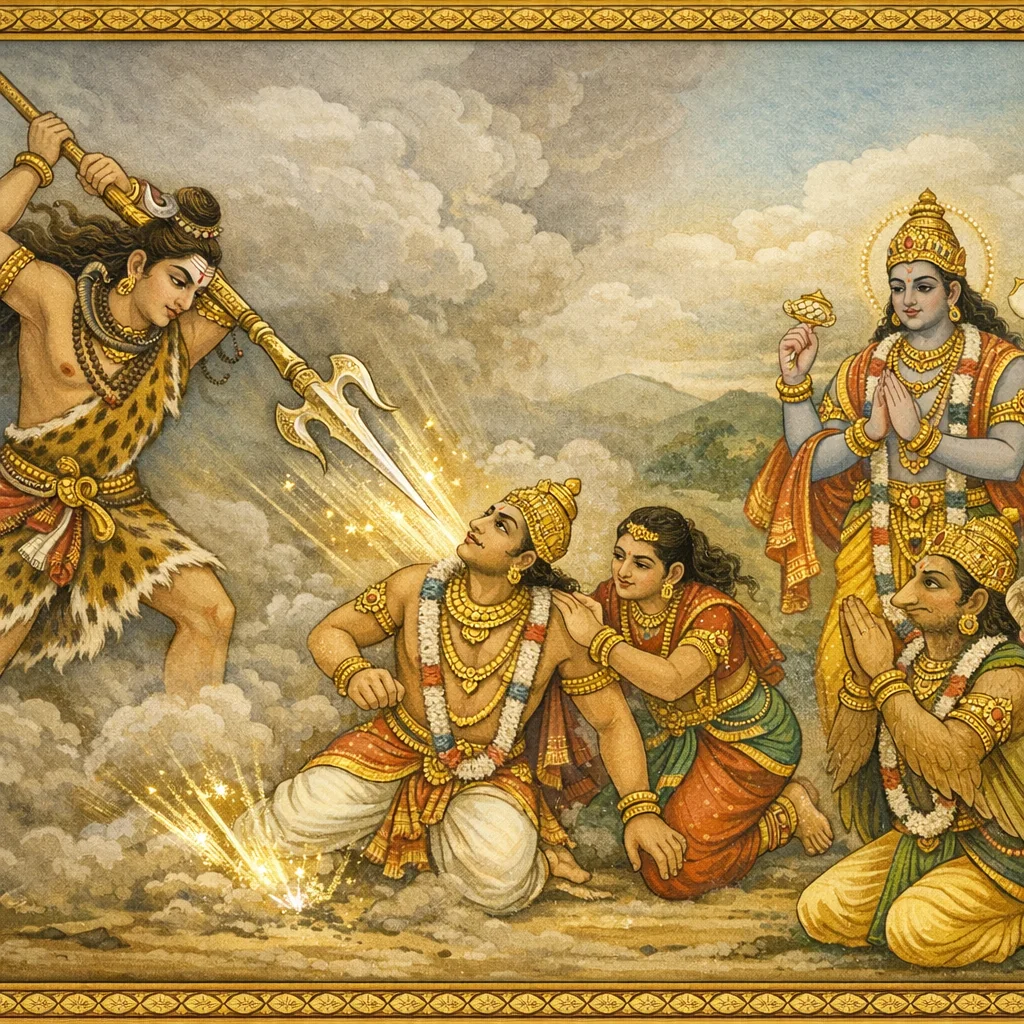
Chapter 34 begins with the ṛṣis questioning Sūta about an earlier tale involving a muni and the “ocean of milk” (payasāṃ-nidhi), prompting him to recount a past crisis. Mighty dānavas known as the Kāleyas/Kālikeyas arise, draining the devas’ vigor and shaking the stability of the three worlds. Seeing the devas’ distress, Viṣṇu appeals to Maheśvara, declaring that the threat demands immediate confrontation. Led by Viṣṇu, Rudra, and Indra, the devas assemble and a world-shaking war erupts. Indra’s clash with the dānava Kālaprabha turns dire: his vajra is seized and he is struck down by a fearsome mace, sending the devas into fearful retreat. Viṣṇu counterattacks from Garuḍa, cutting through nets of missiles and scattering the dānavas, but Kālakhañja wounds both Viṣṇu and Garuḍa; even the release of the Sudarśana-cakra meets bold resistance, heightening Viṣṇu’s strain. At this critical moment Śiva, as Tripurāntaka, intervenes decisively—slaying the assailant with a śūla and routing the leading dānava commanders, including Kālaprabha and others bearing “kāla-” epithets. With enemy leadership broken, Indra and Viṣṇu regain composure, praise Mahādeva, and the devas drive the wounded, leaderless dānavas into flight, who seek refuge in Varuṇa’s abode. The chapter underscores divine protection and the restoration of dharmic order through united deva effort, crowned by Śiva’s stabilizing grace.
Shlokas
Verse 1
। ऋषय ऊचुः । यदेतद्भवता प्रोक्तं तं मुनिं प्रति सूतज । त्वया पुरा सुरार्थाय प्रपीतः पयसांनिधिः
The sages said: “O son of Sūta, concerning that sage of whom you spoke—how was it that long ago, for the gods’ sake, the Ocean of Milk was drunk up?”
Verse 2
तत्त्वं सूतज नो ब्रूहि विस्तरेण महामते । यथा तेन पुरा पीतो मुनिना पयसांनिधिः
“Tell us the truth of it in detail, O wise Sūtaja—how, in former times, the Ocean of Milk was drunk by that sage.”
Verse 3
सूत उवाच । कालेया इति विख्याताः पुरा दानवसत्तमाः । संभूताः सर्वदेवानां वीर्योत्साहप्रणाशकाः
Sūta said: “Long ago there arose the foremost of the Dānavas, renowned as the Kāleyas—destroyers of the vigor and resolve of all the gods.”
Verse 4
ततस्तैः पीडितं दृष्ट्वा विष्णुना प्रभविष्णुना । त्रैलोक्यं शक्तियोगेन प्रोक्तो देवो महेश्वरः
Seeing the three worlds afflicted by them, Viṣṇu—the mighty Lord—by the power of his divine Śakti addressed the god Maheśvara.
Verse 5
एतदीशान दैतेयैस्त्रैलोक्यं परिपीडितम् । कालिकेयैर्महावीर्येस्तस्मात्कार्यो महाहवः । अद्यैव तैः समं देव समासाद्य धरातलम्
“O Īśāna, the three worlds are grievously oppressed by the Daityas—the mighty Kālikeyas. Therefore a great battle must be undertaken. O Deva, meet them upon the earth this very day and engage them.”
Verse 6
ततो विष्णुश्च रुद्रश्च सहस्राक्षः सुरैः सह । शितशस्त्रधराः सर्वे संप्राप्ता धरणीतलम्
Then Viṣṇu and Rudra, and Sahasrākṣa (Indra) along with the gods, all bearing keen and gleaming weapons, arrived upon the surface of the earth.
Verse 7
अथ ते दानवाः सर्वे श्रुत्वा देवान्समागतान् । युद्धार्थं सहसा जग्मुः संमुखाः कोपसंयुताः
Hearing that the gods had assembled, all those Dānavas at once advanced for battle—coming straight on, seized by anger.
Verse 8
ततोऽभवन्महायुद्धं देवानां दानवैः सह । त्रैलोक्यं कंपितं येन समस्तं भय विह्वलम्
Then a great war arose between the gods and the Dānavas, by which the entire three worlds were shaken, all trembling in fear.
Verse 9
अथ कालप्रभोनाम दानवो बलगर्वितः । स शक्रं पुरतो दृष्ट्वा वज्रोच्छ्रितकरं स्थितम् । प्रोवाच प्रहसन्वाक्यं मेघगम्भीरनिःस्वनः
Then a Dānava named Kālaprabha, swollen with pride of strength, seeing Śakra (Indra) standing before him with arm uplifted holding the vajra, spoke with a mocking laugh—his voice deep like thunderclouds.
Verse 10
मुंच वज्र सहस्राक्ष पश्यामि तव पौरुषम् । चिरात्प्राप्तोऽसि मे दृष्टिं दिष्ट्या त्वं त्रिदिवेश्वरः
“Cast your vajra, O Thousand-eyed one—let me see your valor. After long you have come within my sight; by fortune indeed you are the lord of the threefold heaven!”
Verse 11
ततश्चिक्षेप संक्रुद्धस्तस्य वज्रं शतक्रतुः । सोऽपि तल्लीलया धृत्वा जगृहे सव्यपाणिना
Then Śatakratu (Indra), enraged, hurled his vajra at him; but he, catching it with ease as if in sport, seized it with his left hand.
Verse 12
ततः शक्रं समुद्दिश्य गदां गुर्वीं मुमोच सः । सर्वायसमयीं रौद्रां यमजिह्वामिवापराम्
Then, aiming at Śakra, he flung a massive mace—entirely of iron, fierce and terrible, like another “Tongue of Yama,” a death-dealing weapon.
Verse 13
तया हतः सहस्राक्षो विसंज्ञो रुधिरप्लुतः । ध्वजयष्टिं समाश्रित्य संनिविष्टो रथोपरि
Struck by it, Sahasrākṣa (Indra) fell senseless, drenched in blood; leaning upon the flagstaff, he remained slumped upon his chariot.
Verse 14
अथ तं मातलिर्दृष्ट्वा विसंज्ञं वलघातिनम् । प्राङ्मुखं च रथं चक्रे संस्मरन्सारथेर्नयम्
Seeing Valaghātin (Indra) fallen senseless, Mātali turned the chariot to face the east, remembering the proper stratagem of a charioteer.
Verse 15
ततः पराङ्मुखीभूते रथे शक्रस्य संगरे । दुद्रुवुर्भयसंत्रस्ताः सर्वे देवाः समंततः
Then, when Śakra’s chariot in the battle turned away, all the gods—stricken with fear—fled in every direction.
Verse 16
आदित्या वसवो रुद्रा विश्वेदेवा मरुद्गणाः । व्रीडां विहाय विध्वस्ताः पृष्ठदेशे शितैः शरैः
The Ādityas, the Vasus, the Rudras, the Viśvedevas, and the hosts of Maruts—casting aside all shame—were shattered, their backs pierced by sharp arrows.
Verse 17
अथ भग्नं बलं दृष्ट्वा दानवैर्मधुसूदनः । आरुह्य गरुडं तूर्णं कालप्रभमुपाद्रवत्
Then, seeing the army broken by the Dānavas, Madhusūdana swiftly mounted Garuḍa and rushed upon Kālaprabha.
Verse 19
स तैराच्छादितो विष्णुः शुशुभे च समंततः । सम्यक्पुलकितांगश्च रक्ताचल इवापरः
Though covered all around by them, Viṣṇu shone brilliantly on every side; his limbs thrilled with heroic ardor, and he appeared like another red mountain.
Verse 20
ततः शार्ङ्गविनिर्मुक्तैः शरैः कंकपतत्रिभिः । छेदयित्वेषुजालानि दैतेयान्निजघान सः
Then, with arrows released from Śārṅga—feathered with heron-plumes—he cut apart the nets of missiles and struck down the Daityas.
Verse 21
ततो दैत्यगणाः सर्वे हन्यमाना सुरारिणा । त्रातारं नाभ्यगच्छंत मृगाः सिंहार्दिता इव
Then all the hosts of Daityas, being slain by the foe of the gods, found no protector—like deer tormented by a lion.
Verse 22
एतस्मिन्नंतरे दैत्यः कालखंज इति स्मृतः । स कोपवशमापन्नो वासुदेवमुपाद्रवत्
Just then, a Daitya known as Kālakhaṃja—overcome by rage—charged at Vāsudeva.
Verse 23
स हत्वा पञ्चभिर्बाणैर्वासुदेवं शिला शितैः । जघान गरुडं क्रुद्धो दशभिर्नतपर्वभिः
With five stone-sharp arrows he struck Vāsudeva; then, in fury, he hit Garuḍa with ten arrows whose joints were bent (barbed).
Verse 24
ततः सुदर्शनं चक्रं तस्य दैत्यस्य माधवः । प्रमुमोच वधार्थाय ज्वालामालासमावृतम्
Then Mādhava hurled the Sudarśana discus at that Daitya to slay him—encircled by a garland of flames.
Verse 25
सोऽपि तच्चक्रमालोक्य वासुदेवकराच्च्युतम् । आगच्छंतं प्रसार्यास्यं ग्रस्तुं तत्संमुखो ययौ
Seeing the discus released from Vāsudeva’s hand and rushing toward him, he too opened his mouth wide to swallow it and went straight forward to meet it face to face.
Verse 26
अग्रसच्च महादैत्यस्तिष्ठतिष्ठेति चाब्रवीत् । वासुदेवं समुद्दिश्य ततश्चिक्षेप सायकान्
The great Daitya pressed forward and cried, “Stand! Stand!” Then, taking aim at Vāsudeva, he hurled his missiles.
Verse 27
ततश्चक्री स दैत्येन ग्रस्तचक्रेण ताडितः । सुपर्णेन समायुक्तो जगाम विषमां व्यथाम्
Then the wielder of the discus (Śakra/Indra) was struck by the Daitya who had seized that very discus; even with Suparṇa (Garuḍa) aiding him, he fell into grievous distress.
Verse 28
एतस्मिन्नंतरे क्रुद्धो भगवांस्त्रिपुरांतकः । दृष्ट्वा हरिं तथाभूतं शक्रं चापि पराङ्मुखम्
At that moment the Blessed Tripurāntaka (Śiva), wrathful, beheld Hari in that plight and saw Śakra too turned away in retreat.
Verse 29
ततः शूलप्रहारेण तं निहत्य दनोः सुतम् । शरैः पिनाकनिर्मुक्तैर्जघानोच्चैस्तथा परान्
Then, with a thrust of the trident, he slew that son of Danu; and with arrows released from Pināka, he struck down the other foes as well.
Verse 30
कालप्रभं प्रकालं च कालास्यं कालविग्रहम् । जघान भगवाञ्छंभुस्तथान्यानपि नायकान्
Then the Blessed Śambhu struck down Kālaprabha, Prakāla, Kālāsya, and Kālavigraha, and likewise other leaders as well.
Verse 31
ततः प्रधानास्ते सर्वे दानवा अपिदारुणाः । पलायनपरा जाता निरुत्साहा द्विषज्जये
Then all those chief Dānavas—though fierce—became intent only on flight, losing heart in the face of the enemy’s victory.
Verse 32
ततः शक्रश्च विष्णुश्च लब्धसंज्ञौ धृतायुधौ । श्लाघयंतौ महादेवं संस्थितौ रणमूर्धनि
Then Śakra and Viṣṇu, regaining their composure and taking up their weapons, stood at the forefront of battle, praising Mahādeva.
Verse 33
एतस्मिन्नंतरे भग्नान्समुद्वीक्ष्य दनोः सुतान् । जघ्नुः शरशतैः शस्त्रैः सर्वे देवाः सवासवाः
Meanwhile, seeing the sons of Danu broken and routed, all the gods—together with Vāsava (Indra)—slew them with hundreds of arrows and weapons.
Verse 34
अथ ते हतभूयिष्ठा दानवा बलवत्तराः । हन्यमानाः शितैर्बाणैस्त्रिदशैर्जितकाशिभिः
Then those Dānavas—though exceedingly strong—were mostly slain, being struck by the sharp arrows of the gods, radiant with victory.
Verse 35
अगम्यं मनसा तेषां प्रविष्टा वरुणालयम् । शस्त्रैश्च क्षतसर्वांगा हतनाथाः सुदुःखिताः
Beyond what their minds could conceive, they entered Varuṇa’s abode; their bodies were wounded all over by weapons, their leaders slain, and they were plunged into great sorrow.