Adhyaya 3
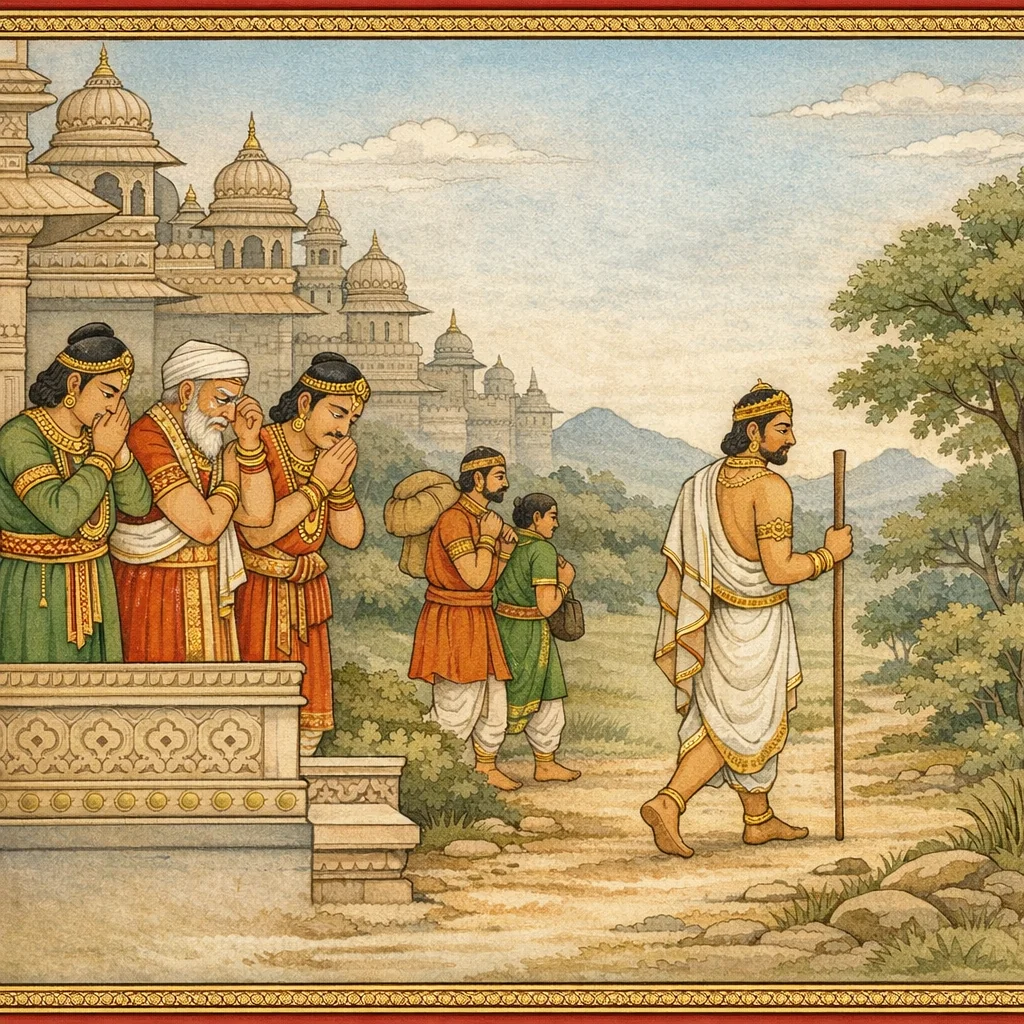
Sūta recounts that King Triśaṅku, after earlier approaching Vasiṣṭha, goes to Vasiṣṭha’s sons and asks them to conduct a sacrifice so that he may reach heaven with his physical body. The sages refuse; when the king threatens to replace them with another officiant, they answer with harsh words and pronounce a curse, turning him into an antyaja/caṇḍāla, branded with social disgrace. His change is portrayed through bodily signs and public humiliation, as he is harassed, excluded, and driven away. Triśaṅku grieves that the customs of his lineage have collapsed, fears facing his family and dependents, and even considers ending his life while reflecting on the fruit of his ambition. At night he returns to the gate of his deserted city, summons his son and ministers, and recounts the curse. The court mourns, criticizes the sages’ severity, and offers to share his fate. The king appoints his eldest son Hariścandra to succeed him in rule and administration, declares his resolve to seek either death or embodied ascent to heaven, and departs into the forest in renunciation. The ministers then install Hariścandra as king amid ceremonial sounds.
Shlokas
Verse 1
। सूत उवाच । ततः प्रणम्य भूयः स वसिष्ठं मुनिपुंगवम् । ययौ तत्र सुतास्तस्य यत्र ते शतसंख्यकाः
Sūta said: Then, bowing once more to Vasiṣṭha, the foremost of sages, he went to the place where that seer’s sons—numbering in the hundreds—were present.
Verse 2
तानपि प्राह नत्वा स तमेवार्थं नराधिपः । वसिष्ठवचनं कृत्स्नं तस्य तैरपि शंसितम्
Having bowed to them as well, the king addressed them on that very matter; and Vasiṣṭha’s instruction in its entirety was affirmed by them too.
Verse 3
ततस्तान्स पुनः प्राह युष्माकं जनकोऽधुना । अशक्तो मा दिवं नेतुं सशरीरं विसर्जितः
Then he said to them again: “Your father has now been dismissed from that task, for he is unable to lead me to heaven together with this very body.”
Verse 4
तस्माद्यदि न मां यूयं याजयिष्यथ सांप्रतम् । परित्यज्य करिष्यामि शीघ्रमन्यं पुरोहितम्
“Therefore, if you do not officiate my sacrifice right now, I shall abandon you and quickly appoint another priest.”
Verse 5
यो मां यज्ञप्रभावेन नयिष्यति सुरालयम् । अनेनैव शरीरेण सहितं गुरुपुत्रकाः
“O sons of the guru, whoever by the power of yajña, the sacred sacrifice, shall lead me to the abode of the gods together with this very body—to him shall I turn.”
Verse 6
तस्य तद्वचनं श्रुत्वा सर्वे ते मुनिसत्तमाः । परं कोपं समाविष्टास्तमूचुः परुषाक्षरैः
Hearing his words, all those foremost sages were seized by fierce anger and addressed him in harsh speech.
Verse 7
यस्मात्त्वया गुरुस्त्यक्तो हितकृत्पापवानसि । तस्माद्भवाधुना पाप चंडालो लोकनिंदितः
“Because you have abandoned the guru who sought your welfare, you are sinful; therefore, O sinner, become now a caṇḍāla, scorned by the world.”
Verse 8
अथ तद्वचनांते स तत्क्षणात्पृथिवीपतिः । बभूवांत्यजरूपाढ्यो विकृताकारदेहभृत्
At the end of those words, that lord of the earth instantly took on the form of an outcaste, bearing a body of distorted appearance.
Verse 9
यवमध्यः कृशग्रीवः पिंगाक्षो भुग्ननासिकः । कृष्णांगः शंकुवर्णश्च दुर्गंधेन समावृतः
He became narrow-waisted and thin-necked, tawny-eyed and broken-nosed; dark-limbed, pallid in hue, and shrouded in a foul stench.
Verse 10
अथात्मानं समालोक्य विकृतं स नराधिपः । चण्डालधर्मिणं सद्यो लज्जयाऽधोमुखः स्थितः
Then, seeing himself transformed, the king—now living by the ways of a caṇḍāla—at once stood with face lowered in shame.
Verse 11
याहियाहीति विप्रैस्तैर्भर्त्स्यमानो मुहुर्मुहुः । सर्वतः सारमेयैश्च क्लिश्यमानो निरर्गलैः । काककोकिलसंकाशो जीर्णवस्त्रावगुंठितः
Repeatedly reviled by those brāhmaṇas with cries of “Go! Go!”, and tormented on all sides by unrestrained dogs, he appeared like a crow or a cuckoo, wrapped in tattered garments.
Verse 12
ततः स चिन्तयामास दुःखेन महता वृतः । किं करोमि क्व गच्छामि कथं शांतिर्भविष्यति
Then he fell into anxious reflection, overwhelmed by intense sorrow: “What should I do? Where should I go? How will peace ever come to me?”
Verse 13
किं मयैतत्सुमूर्खेण वांछितं दुर्लभं पदम् । तत्प्रभावेन विभ्रष्टः कुलधर्मोऽपि मे स्वकः
“Why did I—such a fool—desire that hard-to-attain state? By the force of that (misguided desire), even my own ancestral dharma has slipped away from me.”
Verse 14
किं जलं प्रविशाम्यद्य किं वा दीप्तं हुताशनम् । भक्षयामि विषं किं वा कथं स्यान्मृत्युरद्य मे
“Should I enter the waters today? Or should I throw myself into blazing fire? Should I swallow poison? In what way might death come to me today?”
Verse 15
अनेन वपुषा दारान्वीक्षयिष्यामि तान्कथम् । तादृशेन शरीरेण याभिः संक्रीडितं मया
With this body, how shall I look upon my wives—those with whom I once sported, when I had a body like that?
Verse 16
कथं पुत्रांस्तथा पौत्रान्सुहृत्संबंधिबांधवान् । वीक्षयिष्यामि तान्भूयस्तथान्यं सेवकं जनम्
How shall I again face my sons and grandsons, my friends, relatives, and kinsmen—and likewise the other people who serve me?
Verse 17
तेऽद्य मामीदृशं श्रुत्वा हर्षं यास्यंति निर्भयाः
Hearing that I have become like this, they will today rejoice—without any fear.
Verse 18
ये मया तर्पिता दानैर्ब्राह्मणा वेदपारगाः । तेऽद्य मामीदृशं श्रुत्वा संभविष्यंति दुःखिताः
Those Brāhmaṇas, masters of the Vedas, whom I satisfied through gifts—hearing today that I have become like this—will surely be distressed.
Verse 19
तथा ये सुहृदोऽभीष्टा नित्यं मम हिते रताः । कामवस्थां प्रयास्यन्ति दृष्ट्वा मां स्थितमीदृशम्
And my dear friends, always devoted to my welfare—seeing me standing in such a condition—will be driven into a wretched state of anguish.
Verse 20
भद्रजात्या गजा ये मे मदान्धाः षष्टिहायनाः । मया विना मिथो युद्धे कस्तानद्य नियोक्ष्यति
Those elephants of mine, noble-bred—maddened with rut, sixty years of age—when they fight among themselves, who today, without me, will restrain and deploy them?
Verse 21
अश्वास्तित्तिरकल्माषाः सुदांताः सादिभिर्दृढैः । कस्तांश्चित्रपदन्यासैर्नियाम्यति मया विना
My horses—tittira- and kalmāṣa-colored, well-trained and firmly reined—who, without me, will guide and restrain them with their artful paces?
Verse 22
तथा मे भृत्यवर्गास्ते कुलीना युद्धदुर्मदाः । मां विना कस्य यास्यंति समीपेऽद्य सुदुःखिताः
And my retinue of servants—men of noble house, proud in battle—without me, to whose side will they go today, plunged into deep sorrow?
Verse 23
संख्याहीनस्तथा कोशस्तादृङ्मे बहुरत्नभाक् । कस्य यास्यति संभोगं मया हीनस्तु रक्षितः
And my treasury too—once filled with many jewels—will be diminished. Deprived of me, under whose protection will it find security and enjoyment?
Verse 24
तथा मे संख्यया हीनं धान्यं गोजाविकं महत् । भविष्यति कथं हीनं मयाभीष्टैस्तु रक्षितम्
So too my great stores—grain, cattle, and flocks of goats and sheep—will be reduced in number. How can what has been safeguarded by me and my trusted men become thus diminished?
Verse 25
एवं बहुविधं राजा स विलप्य च दुःखितः । जगाम नगराभ्याशं पद्भ्यामेव शनैःशनैः
Thus, lamenting in many ways and overcome with grief, the king went toward the outskirts of the city, walking on foot—slowly, step by step.
Verse 26
ततो रात्रौ समासाद्य स्वं पुरं जनवर्जितम् । द्वारे स्थित्वा समाहूय पुत्रं मंत्रिभिरन्वितम्
Then, at night, he reached his own city—now deserted of people. Standing at the gate, he summoned his son, accompanied by ministers.
Verse 27
कथयामास वृत्तांतं सर्वं शापसमुद्भवम् । दूरे स्थितः स पुत्राणां वसिष्ठस्य महात्मनः
He then recounted the entire course of events—everything that had arisen from the curse—while keeping himself at a distance from the sons of the great-souled Vasiṣṭha.
Verse 28
वज्रपातोपमं वाक्यं तेऽपि तस्य निशम्य तत् । बाष्पपर्याकुलैरास्यै रुरुदुः शोकसंयुताः
Hearing his words—like a thunderbolt’s strike—they too began to weep, their faces overwhelmed with tears, filled with grief.
Verse 29
हा नाथ हा महाराज हा नित्यं धर्मवत्सल । त्वया हीना भविष्यामः कथमद्य सुदुःखिताः
“Alas, O lord! Alas, O great king—ever tender toward dharma! Bereft of you, how shall we live today, crushed by sorrow?”}]}}
Verse 30
किमेतद्युज्यते तेषां वासिष्ठानां दुरात्मनाम् । शापं ददुः स्वयाज्यस्य विशेषाद्विनतस्य च
How is this fitting—that those Vāsiṣṭhas, of wicked intent, should give a curse—especially against one who is humble and devoted to their own sacrificial rites?
Verse 31
ते वयं राजशार्दूल परित्यज्य गृहादिकम् । अन्त्यजत्वं गमिष्यामस्त्वया सार्धमसंशयम्
Therefore, O tiger among kings, abandoning our homes and all else, we shall surely go with you—even into the condition of the lowest outcast.
Verse 32
त्रिशंकुरुवाच । भक्तिश्चेदस्ति युष्माकं ममोपरि निरर्गल । तन्मे पुत्रस्य मंत्रित्वं सर्वे कुरुत सांप्रतम्
Triśaṅku said: “If your devotion toward me is truly unhindered, then appoint my son at once—let all of you make him the minister (and chief counsellor) now.”
Verse 33
हरिश्चंद्रः सुपुत्रोयं मम ज्येष्ठः सुवल्लभः । नियोजयध्वमव्यग्राः पदव्यां मम सत्वरम्
“This Hariścandra is my noble son—my eldest and most beloved. Without hesitation, quickly install him in my position (office and station).”
Verse 34
अहं पुनः करिष्यामि यन्मे मनसि संस्थितम् । मृत्युं वा संप्रयास्यामि सदेहो वा सुरालयम्
“I, for my part, shall carry out what is fixed in my mind. Either I will go to death—or I will reach the abode of the gods in this very body.”
Verse 35
एवमुक्त्वा परित्यज्य सर्वांस्तान्स महीपतिः । जगामारण्यमाश्रित्य पद्भ्यामेव शनैः शनैः
Having spoken thus, the king abandoned them all and, taking refuge in the forest, went on foot—slowly, step by step.
Verse 36
तेपि सन्मंत्रिणस्तूर्णं पुत्रं तस्य सुसम्मतम् । राज्ये नियोजयासमासुर्नादवादित्रनिःस्वनैः
Those worthy ministers, too, swiftly installed his well-approved son in the kingdom, amid the resounding sounds of music and instruments.