Adhyaya 272
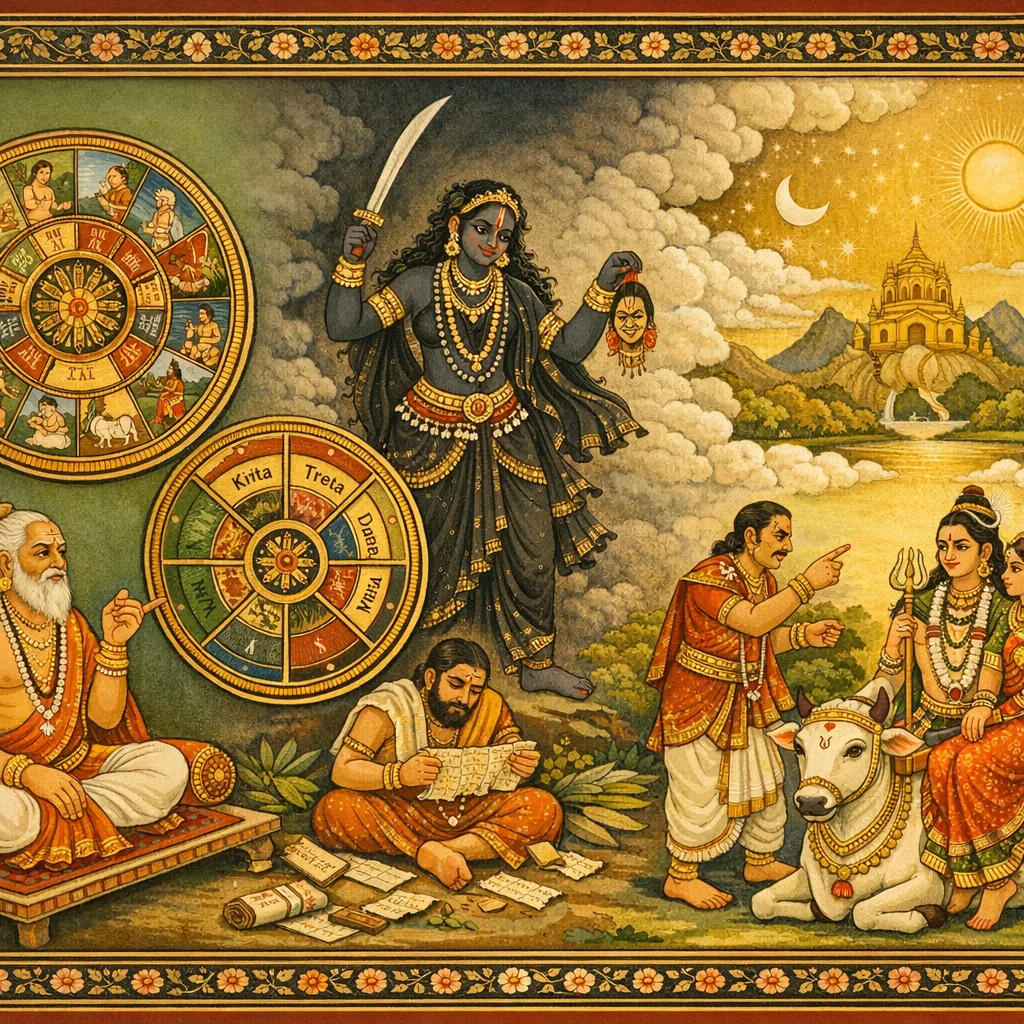
This chapter unfolds as a question-and-answer teaching: the sages ask about the measure of a “day” earlier mentioned in connection with Īśāna and a king, and Sūta replies by setting out a precise hierarchy of time-units—from the smallest perceptible measures up through day and night, month, season, ayana, and year. It then turns from calendrical reckoning to yuga-doctrine, portraying Kṛta, Tretā, Dvāpara, and Kali by moral proportion (dharma versus pāpa), by social and ethical conditions, and by the ritual culture that follows—especially sacrificial practice and its relation to heavenly attainments. Kali is depicted through a catalogue of disruptions: greed and hostility, the decline of learning and conduct, motifs of scarcity, and distortions in the stages of life. The chapter concludes with the theme of cyclical return (a future Kṛta-yuga) and a macrocosmic scaling that links these measures to Brahmā’s day and year and to Śiva–Śakti cosmological imagery. The colophon places it in the Nāgara Khaṇḍa’s Hāṭakeśvara-kṣetra-māhātmya and names it “Yugasvarūpavarṇana”.
Shlokas
Verse 1
ऋषय ऊचुः । यदेतद्भवता प्रोक्तमीशानस्य महीपतेः । ईश्वरेण पुरा दत्तमायुर्यावत्स्ववासरम्
The sages said: “What you have spoken about Īśāna—the lordly ruler—namely, the lifespan formerly granted by Īśvara up to the measure of his own ‘day’… please tell us further.”
Verse 2
किंप्रमाणं भवेत्तस्य दिवसस्य ब्रवीहि नः । सूत उवाच । अहं वः कीर्तयिष्यामि प्रमाणं दिवसस्य तु
“What is the measure of that ‘day’? Tell us.” Sūta said: “I shall declare to you the true measure of a day.”
Verse 3
माहेश्वरस्य विप्रेन्द्राः श्रूयतां गदतः स्फुटम् । निमेषस्य चतुर्भागस्त्रुटिः स्यात्तद्द्वयं लवः
O best of brāhmaṇas, hear clearly as I explain the time-measure belonging to Maheśvara: a truṭi is one-fourth of a nimeṣa, and two truṭis make one lava.
Verse 4
लवद्वयं यवः प्रोक्तः काष्ठा ते दश पंच च । त्रिंशत्काष्ठाः कलामाहुः क्षणस्त्रिंशत्कलो मतः
Two lavas are said to be one yava; fifteen of those make one kāṣṭhā. Thirty kāṣṭhās are called a kalā, and a kṣaṇa is held to be thirty kalās.
Verse 5
क्षणैः षष्ट्या पलं प्रोक्तं षष्ट्या तेषां च नाडिका । नाडिकाद्वितयेनैव मुहूर्तं परिकीर्तितम्
Sixty kṣaṇas are called one pala; sixty of those make one nāḍikā. By two nāḍikās a muhūrta is defined.
Verse 6
त्रिंशन्मुहूर्त्तमुद्दिष्टमहोरात्रं मनीषिभिः । मासस्त्रिंशदहोरात्रैद्वौ द्वौ मासावृतुं विदुः
The wise declare a day-and-night (ahorātra) to consist of thirty muhūrtas. A month is reckoned as thirty such day-nights, and every two months are known as a season (ṛtu).
Verse 7
ऋतुत्रयं चाप्ययनमयने द्वे तु वत्सरम् । मानुषाणां हि सर्वेषां स एव परिकीर्तितः
Three seasons make an ayana (half-year); two ayanas constitute a year. This indeed is the reckoning proclaimed for all human beings.
Verse 8
स देवानामहोरात्रं पुराणज्ञाः प्रचक्षते । अयनं चोत्तरं शुक्लं यद्देवानां दिनं च तत् । यद्दक्षिणं तु सा रात्रिः शुभकर्मविगर्हिता
That yearly cycle is called the day-and-night of the gods by those who know the Purāṇas. The bright northern course (Uttarāyaṇa) is the day of the gods; the southern course (Dakṣiṇāyaṇa) is their night, a period regarded as unfavorable for auspicious undertakings.
Verse 9
यथा सुप्तो न गृह्णाति किंचिद्भोगादिकं नरः । तथा देवाश्च यज्ञांशान्न गृह्णन्ति कथं चन
Just as a sleeping man does not truly partake of any enjoyment or object of sense, so too the gods do not, in any way, accept the sacrificial portions when the proper condition (of awareness/fitness) is absent.
Verse 10
अनेनैव तु मानेन मानवेन द्विजोत्तमाः । लक्षैः सप्तदशाख्यैस्तु वत्सराणां प्रकीर्तितम्
By this very human measure, O best of the twice-born, the count of years is declared to be seventeen lakhs.
Verse 11
अष्टाविंशत्सहस्रैस्तु वत्सराणां कृतं युगम् । तस्मिञ्छ्वेतोऽभवद्विष्णुर्भगवान्यो जगद्गुरुः
The Kṛta Yuga consisted of twenty-eight thousand years; in that age, Viṣṇu—Bhagavān, the Guru of the world—was of a white, radiant form.
Verse 12
लोकाः पापविनिर्मुक्ताः शांता दांता जितेन्द्रियाः । दीर्घायुषस्तथा सर्वे सदैव तपसि स्थिताः
People were freed from sin—peaceful, self-restrained, and masters of their senses; all were long-lived and ever established in austerity (tapas).
Verse 13
यो यथा जन्म चाप्नोति तथा स म्रियते नरः । न पुत्रसंभवो मृत्युर्वीक्ष्यते जनकैः क्वचित्
As a man is born, so does he die; and, as parents observe, death is never seen to arise from childbirth (mothers do not die in delivery).
Verse 14
कामः क्रोधस्तथा लोभो दंभो मत्सर एव च । न जायते नृणां तत्र युगे तु द्विजसत्तमाः
Desire, anger, greed, hypocrisy, and envy did not arise among people in that yuga, O best of the twice-born.
Verse 15
ततस्त्रेतायुगं भावि द्वितीयं मुनिसत्तमाः । पादेनैकेन पापं तु रौद्रं धर्मे तदाविशत्
Then came the second age, Tretā Yuga, O best of sages; by one quarter, fierce sin entered into dharma.
Verse 16
ततो रक्तत्वमभ्येति भगवान्मधुसूदनः । पापांशेऽपि च संप्राप्ते सस्पर्द्धो जायते जनः
Thereafter Bhagavān Madhusūdana assumes a red, radiant aspect; and when even a portion of sin has appeared, people are born with rivalry and competitive hostility.
Verse 17
स्वर्गमार्गकृते सर्वे चक्रुर्यज्ञांस्ततः परम् । अग्निष्टोमादिकांस्तत्र बहुहोमादिकांस्तथा
Then, seeking the path to heaven, all performed sacrifices—Agniṣṭoma and other rites there, and also those with many fire-offerings (homa).
Verse 19
देवलोकांस्ततो यांति मूलाद्यावच्चतुर्दश । ब्रह्मलोकस्य पर्यंतं स्वकीयैर्य ज्ञकर्मभिः
Through their own sacrificial acts, they then go to the divine worlds—through the fourteen realms from the lower foundations upward—reaching even up to Brahmaloka.
Verse 20
जनके विद्यमाने च स्व ल्पदोषाः प्रकीर्तिताः । कामक्रोधादयो ये च भवंति न भवंति च
When such a ruler, a true “father of the people,” is present, only minor faults are spoken of; and the vices beginning with desire and anger—though they may arise—do not truly take hold.
Verse 21
एकया वेलया तत्र वापितं सस्यमुत्तमम् । सप्तवारान्प्रगृह्णंति वैश्याः कृषिपरायणाः
There, the finest crops sown in a single season are harvested seven times; the Vaiśyas, devoted to agriculture, gather them again and again.
Verse 22
सर्वा घटस्रवा गावो महिष्यश्च चतुर्गुणाः । प्रयच्छंति तथा क्षीरमुष्ट्र्यस्तासां चतुर्गुणम्
All cows yield milk in potfuls; buffaloes give four times as much; and female camels yield milk four times even that.
Verse 23
अजाविकास्तथा पादं नार्यः सर्वास्तथैव च । वेदाध्ययनसंपन्नाः प्रतिग्रहविवर्जिताः । शापानुग्रहकृत्येषु समर्थाः संभवंति च
Likewise, goats and sheep yield their produce in full measure; and all women too are the same. Endowed with Vedic study and free from accepting gifts, people are also capable in the acts of cursing and blessing.
Verse 24
क्षत्रियाः क्षात्रधर्मेण पालयंति वसुंधराम् । न तत्र दृश्यते चौरो न च जारः कथंचन । स्वधर्मनिरताः सर्वे वर्णाश्चैव व्यवस्थिताः
The Kṣatriyas protect the earth in accordance with the warrior’s dharma. There, no thief is seen, nor any adulterer at all. All are devoted to their own duties, and the social orders remain properly established.
Verse 25
तच्च द्वादशभिर्लक्षैर्वत्सराणां प्रकीर्तितम् । षण्णवत्या सहस्रैस्तु द्वितीयं युगमुत्तमम्
That first age is declared to span twelve lakhs of years; and with ninety-six thousand more, the second excellent yuga is described.
Verse 26
ततश्च द्वापरं भावि तृतीयं द्विजसत्तमाः । द्वौ पादौ तत्र पापस्य द्वौ च धर्मस्य संस्थितौ । भगवान्वासुदेवश्च कपिलस्तत्र जायते
After that comes the Dvāpara, the third age, O best of the twice-born. There, two quarters belong to sin and two quarters stand in dharma. In that age, the Lord Vāsudeva is born, and Kapila as well.
Verse 27
तच्चाष्टलक्षमानेन वत्सराणां प्रकीर्तितम् । चतुःषष्टिभिरन्यैस्तु सहस्राणां द्विजोत्तमाः
That Dvāpara-yuga is proclaimed to measure eight lakhs of years, along with another sixty-four thousand, O best of the twice-born.
Verse 28
कामः क्रोधस्तथा लोभो दंभो मत्सर एव च । षडेते तत्र जायंते ईर्ष्या चैव तु सप्तमी
Desire, anger, greed, hypocrisy, and envy—indeed these six arise there; and jealousy is the seventh.
Verse 29
अथ संसेवितास्तैस्तु मानवाश्च परस्परम् । विरुद्धांश्च प्रकुर्वंति नाप्नुवंति यथा दिवम्
Then, being influenced by those vices, human beings turn against one another, creating conflicts—and thus they do not attain heaven as they ought.
Verse 30
केचित्तत्रापि जायंते शांता दांता जितेंद्रियाः । न सर्वेऽपि द्विजश्रेष्ठा यतोऽर्द्धं पातकस्य तु
Even there, some are born who are peaceful, self-restrained, and masters of their senses. Yet not all—even among the best of the twice-born—are so; for sin still remains to the extent of one half.
Verse 31
ततः कलियुगं प्रोक्तं चतुर्थं च सुदारुणम् । एकपादो वृषो यत्र पापं पादैस्त्रिभिः स्थितम्
Thereafter is declared the Kali Yuga—the fourth age, exceedingly terrible—where the Bull of Dharma stands on only one leg, while sin is established on three legs.
Verse 32
कृष्णत्वं याति देवोऽपि तत्र चैव चतुर्भुजः । एक पादोऽपि धर्मस्य यावत्तावत्प्रवर्तते
There even the Lord—though four-armed—assumes a darkened form; and even the single remaining ‘foot’ of Dharma continues only for so long as it can.
Verse 33
पश्चान्नाशं समभ्येति यावत्तावच्छनैःशनैः । प्रमाणं तस्य निर्दिष्टं लक्षाश्चत्वार एव हि
Afterwards, it gradually moves toward destruction, little by little. Its measure is declared precisely as four lakṣas (four hundred thousand).
Verse 34
द्वात्रिंशच्च सहस्राणि युगस्यैवांतिमस्य च । कलिना तत्र संपृष्टा मर्त्याः सर्वे परस्परम्
And thirty-two thousand more belong to that final yuga as well. There, mortals are all mutually afflicted—touched and overrun by Kali.
Verse 36
विबुधैस्ते प्रवर्तंते रागद्वेषपरायणाः । यस्ययस्य गृहे वित्तं तथा नार्यो मनोरमाः
They are set in motion even by the ‘learned,’ devoted to passion and hatred. Wherever there is wealth in a household, there too are sought delightful women.
Verse 37
लोकद्वयविनाशः स्याद्यतश्चेतो न शुध्यति । प्रावृट्कालेऽपि संप्राप्ते दुर्भिक्षेण प्रपीडिताः
There would be ruin in both worlds (here and hereafter), because the mind is not purified. Even when the rainy season arrives, people are oppressed by famine.
Verse 38
भ्रमंति च कलौ लोका गगनासक्तदृष्टयः । जानाति चापि तनयः पिता चेन्निधनं व्रजेत्
In Kali, people wander about with their gaze fixed on the sky (ever distracted and unsettled). Even a son anticipates it in his mind if his father should go to death.
Verse 39
ततोहं गृहपो भूयां बांधवो ह्यपि बांधवम् । स्नुषापि वेत्ति चित्तेन यदि श्वश्रूः क्षयं व्रजेत्
Then one thinks, “May I become the master of the household,” and even a kinsman plots against a kinsman. Even the daughter-in-law knows it in her heart and makes plans, should the mother-in-law pass away.
Verse 40
मम स्याद्गृह ऐश्वर्यं तत्सर्वं नान्यथा व्रजेत् । काव्यैरुपहता वेदाः पुत्रा जामातृकैस्तथा
“May the household’s prosperity be mine; may all of it go in no other way.” The Vedas are wounded by mere poetic display, and sons likewise are swayed by sons-in-law and worldly bonds.
Verse 41
शालकैर्बांधवाश्चैव ह्यसतीभिः कुलस्त्रियः । शूद्रास्तपस्विनश्चैव शूद्रा धर्मस्य सूचकाः
In the age of Kali, women of noble households are surrounded by in-law kin and relations, and by those of unchaste conduct. Even Śūdras assume the guise of ascetics, and Śūdras come to be the ones who “indicate” and define what is called dharma.
Verse 42
ब्राह्मणानां ततः शूद्रा उपदेशं वदंति च । अल्पोदकास्तथा मेघा अल्पसस्या च मेदिनी
Then, Śūdras will even offer instruction to Brāhmaṇas. Clouds will carry little water, and the earth will yield scant harvests.
Verse 43
अल्पक्षीरास्तथा गावः क्षीरे सर्पिस्तथाऽल्पकम् । सर्वभक्षास्तथा विप्रा नृपा निष्करुणास्ततः । कृष्या लज्जंति वैश्याश्च शूद्रा ब्राह्मणप्रेषकाः
Cows will give little milk, and even from milk there will be little ghee. Brāhmaṇas will become indiscriminate eaters; kings will turn merciless. Vaiśyas will feel shame about agriculture, and Śūdras will command and dispatch Brāhmaṇas.
Verse 44
हेतुवादरता ये च भंडंविद्यापराश्च ये । तेते स्युर्भूमिपालस्य सदाऽभीष्टाः कलौ युगे
Those who delight in contentious reasoning, and those devoted to frivolous arts and showy learning—such people will always be favored by rulers in the age of Kali.
Verse 45
श्वःश्वःपापीयदिवसाः पृथिवी गतयौवना । अतिक्रांत शुभाः कालाः पर्युपस्थितदारुणाः
Day by day the times become more sinful; the earth has lost her youthful vigor. Auspicious seasons have passed away, and dreadful ones have drawn near.
Verse 46
यथायथा युगं भावि वृद्धिं यांति स्त्रियो नराः । तथातथा प्रयांति स्म लघुतां जंतुभिः सह
As the coming age advances, women and men increase in worldly ways; yet just so, together with other creatures, they sink into triviality and smallness of character.
Verse 47
द्वादशमे चैव कन्या स्याद्भर्तृसंयुता
By the twelfth year, a girl will already be joined to a husband.
Verse 48
ततः षोडशमे वर्षे नराः पलितयौवनाः । शौचाचारपरित्यक्ता निजकार्यपरास्तथा
Then, by the sixteenth year, men will appear aged even in youth; abandoning purity and right conduct, they will be devoted only to their own affairs.
Verse 49
भविष्यंति युगस्यांते नराः अंगुष्ठमात्रकाः । गृहं च तेऽथ कुर्वंति बिलैराखुसमुद्भवैः
At the end of the age, people will be only thumb-sized; then they will make their dwellings from holes that arise from rats.
Verse 52
पश्चात्कृतयुगं भावि भूयोऽपि द्विजसत्तमाः
Afterwards, O best of the twice-born, the Kṛta-yuga will come again.
Verse 53
एवं युगसहस्रेण संप्राप्तेन ततः परम् । ब्रह्मणो दिवसं भावि रात्रिश्चैव ततः परम्
Thus, when a thousand yuga-cycles have elapsed, there comes the Day of Brahmā; and thereafter, in due course, comes his Night as well.
Verse 54
ततश्चानेन मानेन षष्ट्या युक्तैस्त्रिभिः शतैः । ब्रह्मणो वत्सरं भावि केशवस्य च तद्दिनम्
Then, by this very measure, three hundred and sixty such days constitute a year of Brahmā; and that same span is reckoned as a single day of Keśava.
Verse 55
आत्मीये जीविते ब्रह्म यावद्वर्षशतं स्थितः । केशवोऽपि स्वमानेन वर्षाणां जीविते शतम्
In his own lifespan, Brahmā abides for a hundred years; and Keśava too—according to his own measure—has a lifespan of a hundred years.
Verse 56
वर्षेण वासुदेवस्य दिनं माहेश्वरं भवेत् । निजमानेन सोप्यत्र याव द्वर्षशतं स्थितः
By one year of Vāsudeva, there comes to be a “Māheśvara day”; and he too, by his own measure, abides here for a hundred years.
Verse 57
ततः शक्तिस्वरूपः स्यात्सोऽक्षयी कीर्त्यते यतः । सदाशिवस्य निःश्वासः शैवं वर्षशतं भवेत् । उच्छ्वासस्तु पुनस्तस्य शक्तिरूपेण संस्थितः
Thereafter, one becomes of the very nature of Śakti; hence she is proclaimed “imperishable.” A hundred Śaiva years are said to be a single exhalation of Sadāśiva; and his inhalation again abides established as Śakti in form.
Verse 58
सूत उवाच । एतद्वः सर्वमाख्यातं शिवशक्तिसमुद्भवम् । यावदायुः प्रमाणं च मानुषाढ्यं च यद्भवेत्
Sūta said: All this has been fully explained to you—arising from Śiva and Śakti—namely the measure of lifespan and whatever pertains to human prosperity and allotment.
Verse 59
भवद्भिः शांकरं पृष्टो द्विजा अस्मि दिनं पुरा । मया पुनस्तु सर्वेषां मर्त्यादीनां तु कीर्तितम्
O twice-born ones, you formerly asked me about the day belonging to Śaṅkara; and now, for my part, I have also set forth the reckoning for all beings—beginning with mortals.
Verse 91
एवं जाते ततो लोके ब्राह्मणो हरिपिंगलः । कल्किगोत्रसमुत्पन्नस्तान्सर्वा न्सूदयेत्ततः
When things have thus come to pass in the world, a brāhmaṇa named Haripiṅgala—born in the lineage of Kalki—then slays them all.
Verse 272
इति श्रीस्कांदे महापुराण एका शीतिसाहस्र्यां संहितायां षष्ठे नागरखण्डे हाटकेश्वरक्षेत्रमाहात्म्ये युगस्वरूपवर्णनंनाम द्विसप्तत्युत्तरद्विशततमोअध्यायः
Thus ends the chapter entitled “Yugasvarūpa-varṇana” (Description of the nature of the Yugas), in the Hāṭakeśvara-kṣetra-māhātmya of the sixth Nāgara-khaṇḍa of the Śrī Skanda Mahāpurāṇa, within the Ekāśīti-sāhasrī Saṃhitā.