Adhyaya 242
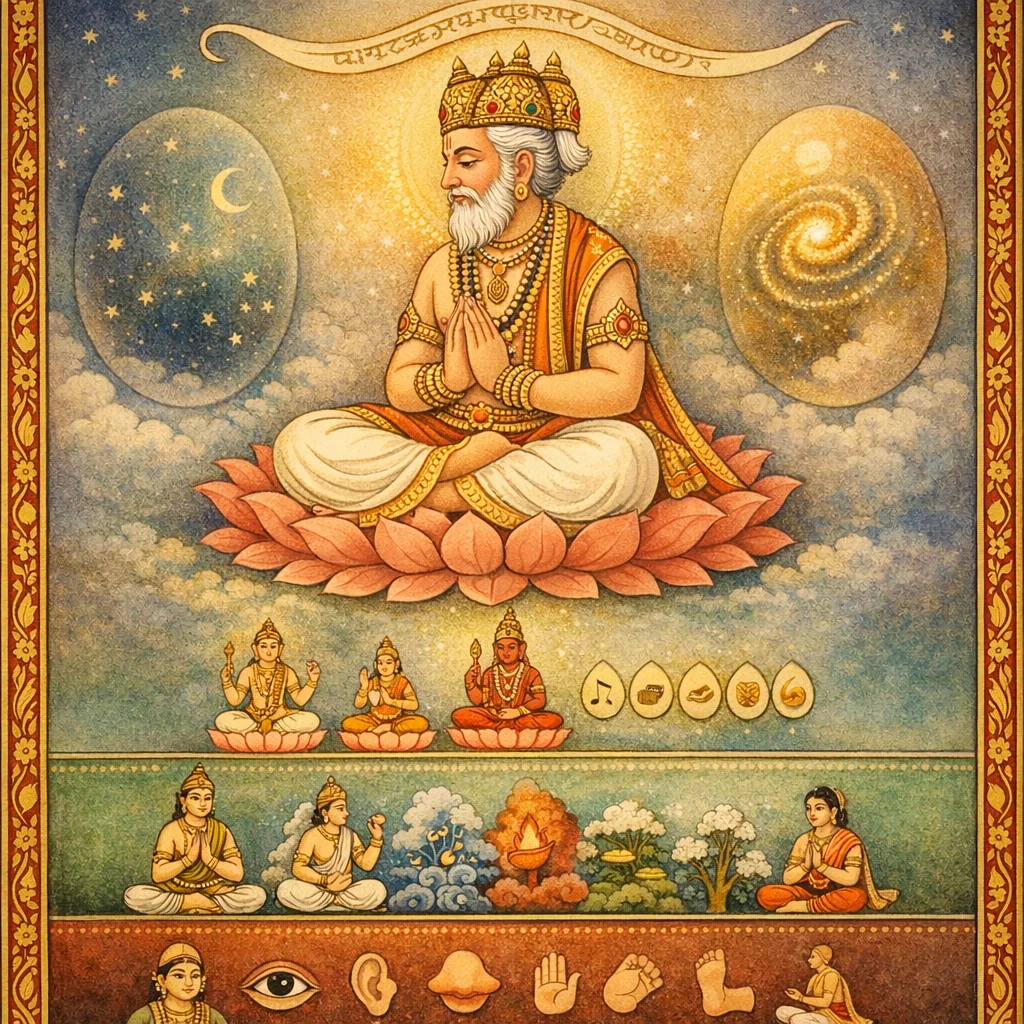
This chapter unfolds as a theological and ethical dialogue between Brahmā and Nārada, set within a tīrtha-māhātmya narrative frame. Nārada asks about the “aṣṭādaśa prakṛtayaḥ” (the eighteen natures/classes) and their proper vṛtti—right livelihood and conduct. Brahmā first recalls a cosmogonic memory: his arising from the lotus, beholding countless cosmic eggs, falling into inertia, and being corrected with the injunction to perform tapas, after which he is authorized to create. The teaching then turns from creation to social dharma, outlining varṇa-linked duties for brāhmaṇa, kṣatriya, vaiśya, and śūdra, stressing restraint, learning, devotion, protection of the vulnerable, and righteous economic stewardship, along with devotional practice accessible through non-mantric acts. It further lists occupational groupings within the “eighteen,” arranging them schematically as higher, middle, and lower, and concludes that Viṣṇu-bhakti is universally auspicious across varṇa, āśrama, and prakṛti. The phalaśruti declares that hearing or reciting this purifying Purāṇic unit removes accumulated demerit and leads one toward Viṣṇu’s abode, provided one remains committed to right conduct.
Shlokas
Verse 1
ऋषय ऊचुः । नारद उवाच । अष्टादश प्रकृतयः का वदस्व पितामह । वृत्तिस्तासां च को धर्मः सर्वं विस्तरतो मम
The sages said. Nārada said: “O Grandfather Brahmā, tell me what the eighteen ‘natures/classes’ are, and what livelihood and dharma belong to them—explain everything to me in detail.”
Verse 2
ब्रह्मोवाच । मज्जन्माभूद्भगवतो नाभिपंकजकोशतः । स्वकालपरिमाणेन प्रबुद्धस्य जगत्पतेः
Brahmā said: “My birth occurred from the lotus-calyx at the navel of the Blessed Lord, the Master of the worlds, when He awakened according to His own measure of time.”
Verse 3
ततो बहुतिथे काले केशवेन पुरा स्मृतः । स्रष्टुकामेन विविधाः प्रजा मनसि राजसीः
After a long time, I was recalled by Keśava of old; and as He desired to create, diverse beings—impelled by rajas—arose within His mind.
Verse 4
अहं कमलजस्तत्र जातः पुत्रश्चतुर्मुखः । उदरं नाभिनालेन प्रविश्याथ व्यलोकयम्
There I was born as the lotus-born, the four-faced son; and then, entering through the navel-stalk, I looked into the interior.
Verse 5
तत्र ब्रह्मांडकोटीनां दर्शनं मेऽभवत्पुनः । विस्मयाच्चिंतयानस्य सृष्ट्यर्थमभिधावता
There again I beheld crores of cosmic eggs (universes). Astonished, I reflected—hastening onward for the sake of creation.
Verse 6
निर्गम्य पुनरेवाहं पद्मनालेन यावता । बहिरागां विस्मृतं तत्सर्वं सृष्ट्यर्थकारणम्
Then, emerging again through the lotus-stalk, when I came outside, all of that was forgotten—the very cause and means for creation.
Verse 7
पुनरेव ततो गत्वा प्रजाः सृष्ट्वा चतुर्विधाः । नाभिनालेन निर्गत्य विस्मृतेनांतरात्मना
Again I went forth and created beings of four kinds; and, after emerging by the navel-stalk, my inner self fell into forgetfulness.
Verse 8
तदाहं जडवज्जातो वागुवाचाशरीरिणी । तपस्तप महाबुद्धे जडत्वं नोचितं तव
Then I became as if inert; but a bodiless voice spoke: “Perform austerity, O great-minded one. Such dullness is not fitting for you.”
Verse 9
दशवर्षसहस्राणि ततोऽहं तप आस्थितः । पुनराकाशजा वाणी मामुवाचाविनश्वरा
Therefore I undertook austerity for ten thousand years. Again, an imperishable voice born of the sky spoke to me.
Verse 10
वेदरूपाश्रिता पूर्वमाविर्भूता तपोबलात् । ततो भगवताऽदिष्टः सृज त्वं बहुधा प्रजाः
Formerly, supported by the form of the Vedas, I manifested through the power of austerity. Then, commanded by the Lord, I was instructed: “Create the beings in many ways.”
Verse 11
राजसं गुणमाश्रित्य भूतसर्गमकल्मषम् । मनसा मानसी सृष्टिः प्रथमं चिंतिता मया
Taking refuge in the rājasa quality, I conceived—pure and stainless—the creation of beings; first of all, I contemplated a mind-born creation.
Verse 12
ततो वै ब्राह्मणा जाता मरीच्यादिमुनीश्वराः । तेषां कनीयांस्त्वं जातो ज्ञानवेदांतपारगः
Then indeed were born the Brahmin sages—lords among seers—beginning with Marīci. Among them, you were born the younger one, a master who has crossed to the far shore of knowledge and Vedānta.
Verse 13
कर्मनिष्ठाश्च ते नित्यं सृष्ट्यर्थं सततोद्यताः । निर्व्यापारो विष्णुभक्त एकांतब्रह्मसेवकः
Those sages were ever established in action, constantly striving for the work of creation. But you are free from worldly occupation—a devotee of Viṣṇu, devoted exclusively to the service of Brahman.
Verse 14
निर्ममो निरहंकारो मम त्वं मानसः सुतः । क्रमान्मया तु तेषां वै वेदरक्षार्थमेव च
Free from possessiveness and ego, you are my mind-born son. In due order, I appointed you among them, indeed, for the very purpose of safeguarding the Vedas.
Verse 15
प्रथमा मानसी सृष्टिर्द्विजात्यादिर्विनिर्मिता । ततोहमांगिकीं सृष्टिं सृष्टवांस्तत्र नारद
First, the mind-born creation was fashioned—beginning with the twice-born. Thereafter, O Nārada, I produced the bodily (physical) creation.
Verse 16
मुखाच्च ब्राह्मणा जाता बाहुभ्यः क्षत्रिया मम । वैश्या ऊरुसमुद्भूताः पद्भ्यां शूद्रा बभूविरे
From My mouth the Brāhmaṇas were born; from My arms, the Kṣatriyas; the Vaiśyas arose from the thighs; and from the feet, the Śūdras came into being.
Verse 17
अनुलोमविलोमाभ्य ांक्रमाच्च क्रमयोगतः । शूद्रादधोऽधो जाताश्च सर्वे पादतलोद्भवाः
Through the successive processes of anuloma and viloma unions, and by the sequence of such combinations, others were born in descending order below the Śūdra—all said to arise from the sole of the foot.
Verse 19
ताः सर्वास्तु प्रकृतयो मम देहांशसंभवाः । नारद त्वं विजानीहि तासां नामानि वच्मि ते
All those innate dispositions are born from portions of My own being. O Nārada, understand this well; I shall now tell you their names.
Verse 20
वृत्तिरध्यापनाच्चैव तथा स्वल्पप्रतिग्रहात् । विप्रः समर्थस्तपसा यद्यपि स्यात्प्रतिग्रहे
A brāhmaṇa’s livelihood should be through teaching, and through accepting only a small gift, even if by austerity he is capable of receiving more.
Verse 21
तथापि नैव गृह्णीयात्तपोरक्षा यतः सदा । वेदपाठो विष्णुपूजा ब्रह्मध्यानमलोभता
Even so, he should not accept much, for the safeguarding of austerity must always be maintained—through Vedic recitation, worship of Viṣṇu, meditation on Brahman, and freedom from greed.
Verse 22
अक्रोधता निर्मलत्वं क्षमासारत्वमार्यता । क्रियातत्परता दानक्रिया सत्यादिभिर्गुणैः
Freedom from anger, purity, patience as one’s very essence, noble conduct, zeal in righteous duties, the practice of giving, and virtues such as truth—by these qualities one is adorned.
Verse 23
भूषितो यो भवेन्नित्यं स विप्र इति कथ्यते । क्षत्रियेण तपः कार्यं यजनं दानमेव च
He who is ever adorned with such virtues is called a brāhmaṇa. A kṣatriya should practice austerity (tapas), sponsor sacrifices (yajña), and give in charity as well.
Verse 24
वेदपाठो विप्रभक्तिरेषां शस्त्रेण जीवनम् । स्त्रीबालगोब्राह्मणार्थे भूम्यर्थे स्वामिसंकटे
For them (kṣatriyas), Vedic recitation and devotion to brāhmaṇas are enjoined; their livelihood is by the weapon—used for the sake of women, children, cows, and brāhmaṇas, for the protection of the land, and in times of danger to their lord.
Verse 25
संप्रतिशरणं चैव पीडितानां च शब्दिते । आर्तत्राणपरा ये च क्षत्रिया ब्रह्मणा कृताः
They are to be the immediate refuge when the afflicted cry out in distress. Those kṣatriyas, fashioned by Brahmā, are devoted to rescuing the suffering.
Verse 26
धनवृद्धिकरो वैश्यः पशुपालः कृषीवलः । रसादीनां च विक्रेता देवब्राह्मणपूजकः
The vaiśya is one who increases wealth—tending cattle, cultivating the land, selling goods such as juices and the like, and worshipping the gods and honoring brāhmaṇas.
Verse 27
अर्थवृद्धिकरो व्याजा यज्ञकर्मादिकारकः । दानमध्ययनं चेति वैश्यवृत्तिरुदाहृता
Through commerce he increases his resources and performs works connected with sacrifice (yajña) and the like; charity (dāna) and sacred study as well—thus is the vaiśya’s livelihood declared.
Verse 28
एतान्येव ह्यमंत्राणि शूद्रः कारयते सदा । नित्यं षड्दैवतं श्राद्धं हन्तकारोऽग्नि तर्पणम्
These very rites—without mantras—a śūdra may have performed continually: the daily śrāddha connected with the six deities, and tarpaṇa, offerings of satisfaction to the fire (Agni).
Verse 29
देवद्विजातिभक्तिश्च नमस्कारेण सिद्ध्यति । शूद्रोऽपि प्रातरुत्थाय कृत्वा पादाभिवंदनम्
Devotion toward the Devas and reverence toward the twice-born are perfected through humble salutations; even a śūdra, rising early in the morning and bowing at the feet of the worthy, attains this merit.
Verse 30
विष्णुभक्तिमयाञ्श्लोकान्पठन्विष्णुत्वमाप्नुयात् । वार्षिकव्रतकृन्नित्यं तिथिवाराधिदैवतः
By reciting verses filled with devotion to Viṣṇu, one may attain nearness to Viṣṇu; and the performer of yearly observances (vrata), ever devoted to the presiding deities of lunar days (tithi) and weekdays, gains continual merit.
Verse 31
अन्नदः सर्वजीवानां गृहस्थः शूद्र ईरितः । अमंत्राण्यपि कर्माणि कुर्वन्नेव हि मुच्यते
The householder who gives food to all beings is declared a true “śūdra” (in the sense of service); and even while performing works that require no mantras, he is indeed liberated.
Verse 32
चातुर्मास्यव्रतकरः शूद्रोऽपि हरितां व्रजेत् । शिल्पी च नर्तकश्चैव काष्ठकारः प्रजापतिः
Even a Śūdra who undertakes the Cāturmāsya vow may attain the blessed state, the verdant realm of prosperity; and among the callings are named the artisan, the dancer, and the wood-worker (carpenter), here connected with the order of Prajāpati.
Verse 33
वर्धकिश्चित्रकश्चैव सूत्रको रजकस्तथा । गच्छकस्तन्तुकारश्च चक्रिकश्चर्मकारकः
Also enumerated are the carpenter, the painter, the tailor, and the washerman; likewise the carrier, the weaver, the wheel-maker, and the leather-worker.
Verse 34
सूनिको ध्वनिकश्चैव कौल्हिको मत्स्यघातकः । औनामिकस्तु चंडालः प्रकृत्याष्टादशैव ते
The butcher, the drummer/musician, the kaulhika (a specified artisan group), and the slayer of fish; and the aunāmika is said to be a caṇḍāla—these are eighteen by their natural classification.
Verse 35
शिल्पिकः स्वर्णकारकश्च दारुकः कांस्यकारकः । काडुकः कुम्भकारश्च प्रकृत्या उत्तमाश्च षट्
The artisan, the goldsmith, the wood-worker, the bronze-worker, the kāḍuka, and the potter—these six are said to be ‘excellent’ by their natural classification.
Verse 36
खरवाह्युष्ट्रवाही हयवाही तथैव च । गोपाल इष्टिकाकारो अधमाधमपञ्चकम्
The donkey-driver, the camel-driver, and the horse-driver; likewise the cowherd and the brick-maker—these five are described as the lowest among the low.
Verse 37
रजकश्चर्मकारश्च नटो बुरुड एव च । कैवर्त्तमेदभिल्लाश्च सप्तैते अन्त्यजाः स्मृताः
The washerman, the leather-worker, the actor or dancer, and the buruḍa; and the kaivartta, the meda, and the bhilla—these seven are remembered as ‘antyajas’, those set at the social margins.
Verse 38
यो यस्य हीनो वर्णेन स चाष्टादशमो नरः । सर्वासां प्रकृतीनां च उत्तमा मध्यमाः समाः
Whoever is inferior to another by varṇa is reckoned as the eighteenth person in that scheme; and among all natural groupings, the ‘excellent’ and the ‘middling’ are regarded as comparable in this classification.
Verse 39
भेदास्त्रयः समाख्याता विज्ञेयाः स्मृतिनिर्णयात् । शिल्पिनः सप्त विज्ञेया उत्तमाः समुदाहृताः
According to the determinations of the Smṛtis, three categories are taught and should be known. Among them, seven kinds of artisans are to be understood, and they are declared to be the foremost.
Verse 40
स्वर्णकृत्कंबुकश्चैव तन्दुलीपुष्पलावकः । तांबूली नापितश्चैव मणिकारश्च सप्तधा
They are sevenfold: the goldsmith, the conch-worker, the preparer of rice and flowers, the provider of roasted grain, the betel-leaf vendor, the barber, and the jeweller.
Verse 41
न स्नानं देवताहोमस्तपोनियम एव च । न स्वाध्यायवषट्कारौ न च शुद्धिर्विवाहिता
For these groups, there is no obligatory injunction of ritual bathing, no deity-directed fire offerings (homa), nor the disciplines of austerity and formal restraints; neither Vedic self-recitation (svādhyāya) with the vaṣaṭ-call, nor the purifications enjoined for the marriage rite.
Verse 42
एतासां प्रकृतीनां च गुरुपूजा सदोदिता । विप्राणां प्राकृतो नित्यं दानमेव परो विधिः
For these dispositions and communities, reverence to the teacher is ever praised. For such persons, constant giving to brāhmaṇas is declared the highest rule.
Verse 43
सर्वेषामेव वर्णानामाश्रमाणां महामुने । सर्वासां प्रकृतीनां च विष्णुभक्तिः सदा शुभा
O great sage, for all varṇas and all āśramas—and for every disposition—devotion to Viṣṇu is always auspicious.
Verse 44
इति ते कथितं सर्वं यथाप्रकृतिसंभवम् । कथां शृणु महापुण्यां शूद्रः शुद्धिमगाद्यथा
Thus I have told you everything according to what arises from each disposition. Now hear a most meritorious account—how a Śūdra attained purity.
Verse 45
इदं पुराणं परमं पवित्रं विशुद्धधीर्यस्तु शृणोति वा पठेत् । विधूय पापानि पुरार्जितानि स याति विष्णोर्भवनं क्रियापरः
This Purāṇa is supremely holy. Whoever, with purified understanding, listens to it or recites it—shaking off sins accumulated in the past—goes to the abode of Viṣṇu, devoted to righteous action.
Verse 242
इति श्रीस्कांदे महापुराण एकाशीतिसाहस्र्यां संहितायां षष्ठे नागरखण्डे हाटकेश्वरक्षेत्रमाहात्म्ये शेषशाय्युपाख्याने ब्रह्मनारदसंवादे चातुर्मास्यमाहात्म्येऽष्टादशप्रकृतिकथनंनाम द्विचत्वारिंशदुत्तरद्विशततमोऽध्यायः
Thus ends Chapter 242, called “The Teaching on the Eighteen Dispositions,” in the Śrī Skanda Mahāpurāṇa—within the eighty-one-thousand-verse collection—located in the sixth, the Nāgara Khaṇḍa, in the Māhātmya of the Hāṭakeśvara sacred region, in the Śeṣaśāyī episode, in the dialogue of Brahmā and Nārada, in the Māhātmya of Cāturmāsya.